
ERP in the footwear and apparel industry: a sales tool in the era of omnichannel retail
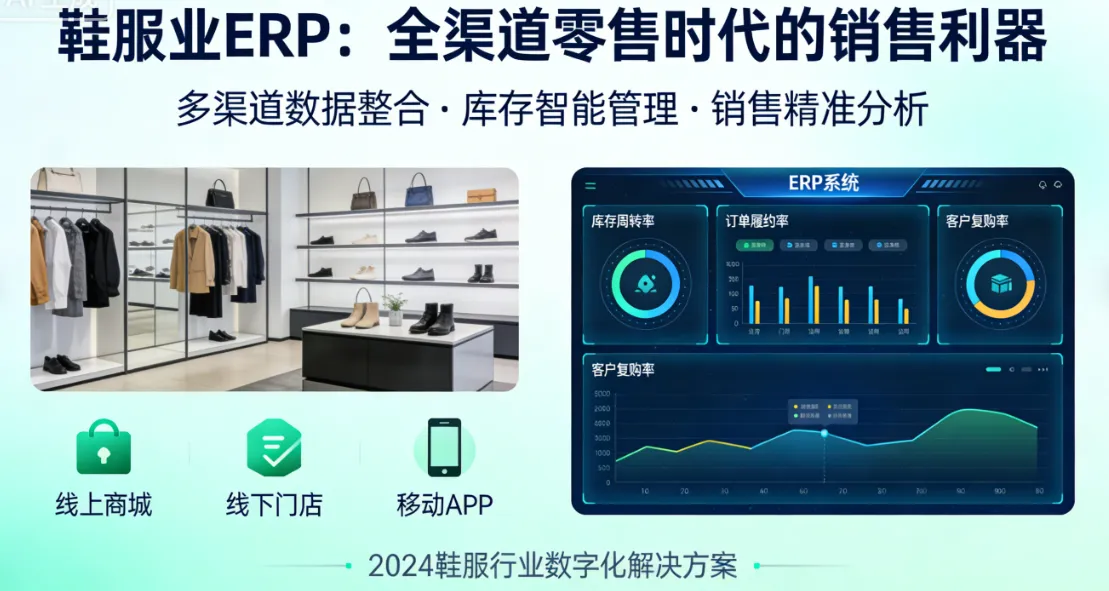
When multiple channels such as online e-commerce, offline stores, community live streaming, and influencer sales are deeply integrated, the footwear and apparel industry officially enters a new era of omnichannel retail. According to statistics, the size of the domestic footwear and apparel market will reach 1.87 trillion yuan in 2026, with omnichannel sales accounting for over 60%. However, behind the expansion of channels, most footwear and apparel enterprises are facing sales difficulties such as "channel fragmentation, inventory mismatch, member dispersion, and experience discontinuity" - the coexistence of online and offline stockouts, the inability to communicate member benefits, inefficient order fulfillment, and blind marketing investment, which seriously restrict sales conversion and brand growth. In this context, the shoe and clothing specific ERP system breaks through traditional management boundaries, with omnichannel collaboration as the core, connects the entire sales chain, and becomes a core tool to solve industry pain points and activate sales momentum, helping enterprises seize the initiative in global competition.
The core pain points of omnichannel retail are "data barriers and scattered resources", while the core value of shoe and clothing ERP lies in building a globally collaborative sales system, breaking down channel barriers, and achieving integrated control of the four core elements of "inventory, membership, orders, and marketing". Unlike the limitations of general ERP that focus on internal management, the shoe and clothing specific ERP is deeply adapted to retail scenarios, fitting the industry characteristics of multiple SKUs, fast iteration, and strong seasons of shoes and clothing. It collects and integrates data from all channels such as online e-commerce platforms, offline stores, communities, and live broadcasts to form a unified sales data center, allowing each sales point to achieve efficient linkage and completely bid farewell to the embarrassing situation of "channels fighting independently".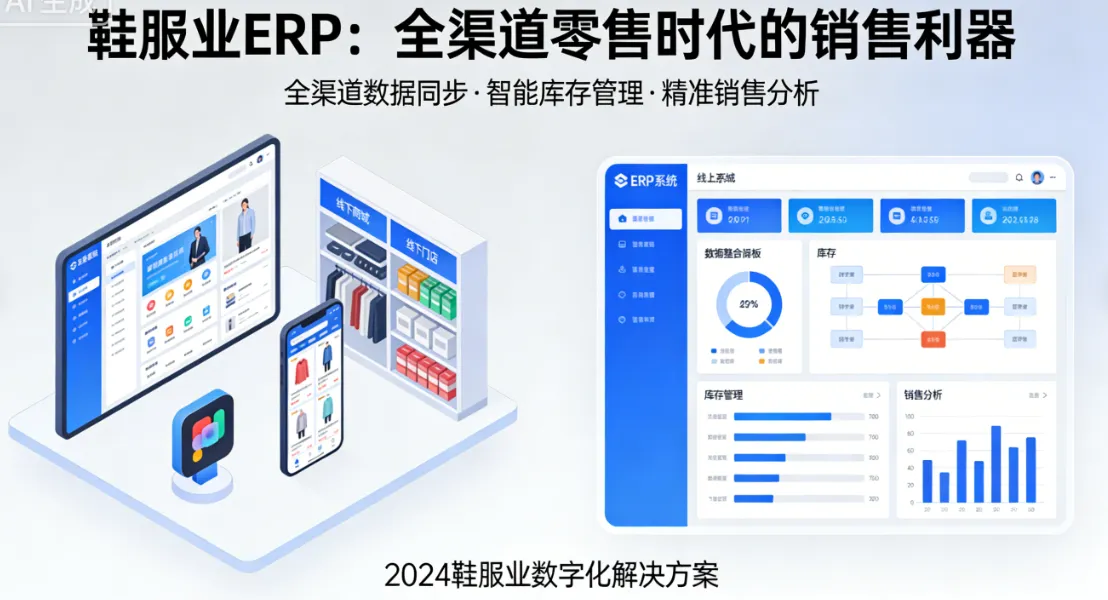
Empowering inventory collaboration, solving the sales pain points of "out of stock and backlog coexistence", and maximizing the capture of sales opportunities. The multi size, multi color, and multi style SKU characteristics of the footwear and apparel industry, combined with an omni channel layout, make inventory control a key bottleneck in sales. Under the traditional model, online and offline inventory data are fragmented, often resulting in shortages of hot selling products online, backlogs of the same products online, or shortages of products in regional stores while other channels have them but cannot allocate them. According to industry data, the sales opportunity loss rate caused by channel fragmentation exceeds 20%. The shoe and clothing ERP utilizes a "global inventory management system" to connect inventory across all channels, including general warehouses, sub warehouses, offline stores, and online e-commerce, achieving real-time synchronization and accurate visualization of inventory data.
The system can intelligently generate inventory allocation plans based on the sales popularity and seasonal trends of various channels. When a certain size is out of stock in offline stores, it can quickly allocate from surrounding stores or general warehouses to improve real-time conversion; Simultaneously setting safety stock thresholds and unsold warnings, combined with sales data to provide replenishment suggestions, to avoid missing out on best-selling products and opportunities, while promoting cross channel clearance of unsold products to reduce inventory backlog. After a certain sports brand achieved omnichannel inventory collaboration through ERP, the SKU matching accuracy increased from 78% to 99%, the out of stock rate decreased by 22%, and the inventory turnover rate increased by 35%, effectively activating inventory resources and empowering sales growth.
Member wide operation, activating user value, improving repurchase rate and average customer value, and building a solid foundation for sales growth. In the era of omnichannel, consumer demand is becoming more personalized. However, under the traditional membership management model, multi-channel membership data is scattered and cannot form a complete user profile. Personalized marketing is difficult to implement, resulting in low user loyalty. The shoe and clothing ERP integrates omnichannel member data, builds a unified member ID system, realizes the universal use of points, coupons, and consumption records across all channels, breaks down barriers to member rights exchange, and enhances the consumption experience.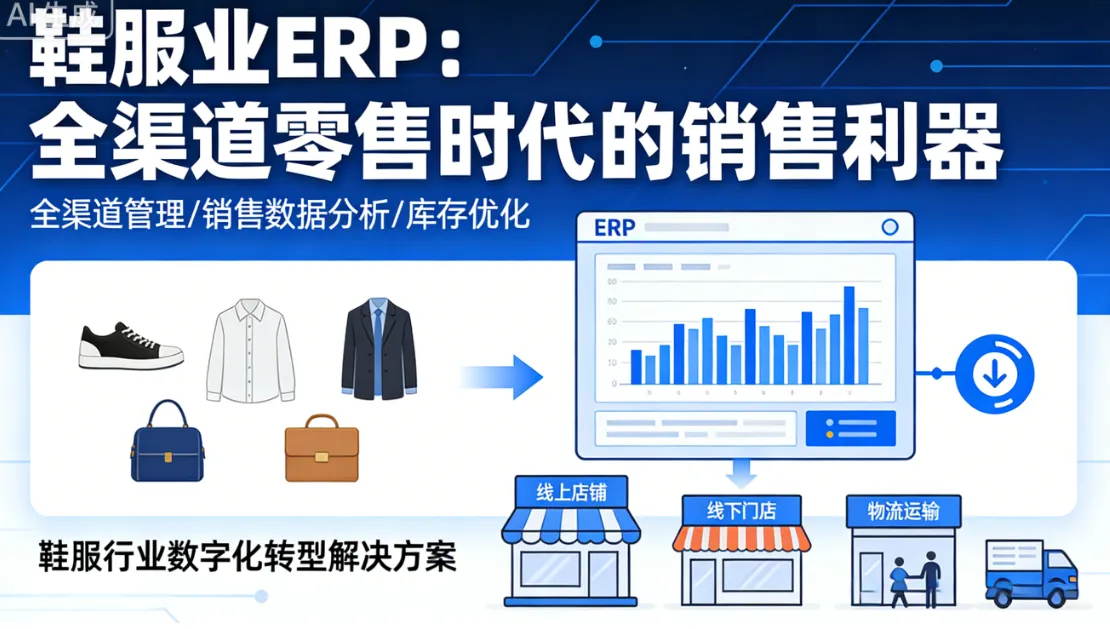
At the same time, the system collects over 200 dimensions of data, such as user browsing trajectories, try on records, and consumption preferences, to generate dynamic user tags, accurately outline user profiles, and support personalized marketing push - pushing simple clothing for commuting style users in the workplace, pushing exclusive discounts for price sensitive users, and providing customized services and priority purchase rights to high net worth members. A certain women's clothing brand has utilized the membership operation function of ERP to increase the click through rate of AI recommendations by 42%, resulting in a 28% increase in sales rate. The repurchase rate of private domain users has increased by three times compared to public domain users, fully demonstrating the empowering value of ERP for user operation and sales conversion.
Integrate order fulfillment, optimize consumer experience, enhance brand reputation, and support long-term sales growth. In the omni channel retail scenario, the sources of orders are diverse and the fulfillment requirements are complex. Online orders need to support store self pickup and same city delivery, while offline orders need to be linked to inventory allocation. The traditional order processing mode is inefficient, prone to errors and omissions, and affects the consumer experience. The shoe and clothing ERP realizes the unified collection and intelligent processing of omnichannel orders, equipped with intelligent order splitting algorithms, automatically matches the optimal delivery nodes based on inventory distribution and delivery distance, and optimizes delivery routes with AI path planning to shorten delivery time. After the application of a fast fashion brand, the O2O order fulfillment cost has been reduced by 18%, and the "same day delivery" commitment fulfillment rate has reached 98.7%.
At the same time, the system enables full process traceability of orders, allowing consumers to view logistics status in real-time. After sales returns and exchanges can be processed across channels, greatly improving consumer satisfaction. In addition, ERP is integrated with store POS systems and live streaming sales platforms to achieve real-time synchronization of order data, avoiding oversold and missed orders, and supporting the smooth implementation of pre-sale, group buying and other marketing activities, helping enterprises expand sales scenarios and increase order volume.
Data driven marketing decision-making, precise adaptation to market demand, and improved marketing input-output ratio. In the era of omnichannel, scattered marketing resources and blind investment are important pain points for enterprise sales, and most enterprises are trapped in the marketing dilemma of "high investment, low conversion". The shoe and clothing ERP integrates sales data, user data, and marketing data from various channels. Through BI visualization dashboards, it intuitively presents core indicators such as sales contribution rate, product sales rate, and marketing activity conversion effect of each channel. At the same time, it is equipped with AI demand forecasting models, combined with historical sales data, weather factors, social media popularity and other variables, to predict market trends and explosive potential, providing accurate support for product selection, pricing, and marketing.
For example, the system can identify popular styles and sizes in a certain region, guiding enterprises to accurately stock up and carry out regional marketing; By analyzing marketing activity data, optimizing activity strategies, focusing on high conversion channels to allocate resources, and reducing marketing costs. At the same time, ERP adapts to the small order quick response mode, transmitting real-time terminal sales signals to the production process, helping enterprises quickly respond to market changes, launch products that meet user needs, reduce unsold risks, and improve sales efficiency.
Currently, the omnichannel integration of the footwear and apparel industry has become an inevitable trend, and sales competition has been upgraded to a competition between global collaboration capabilities and user operation capabilities. Shoe and clothing ERP is no longer a simple management tool, but a "core tool" that runs through all channel sales. It solves pain points such as channel fragmentation, inventory mismatch, and member dispersion, achieves inventory collaboration, precise member operation, efficient order fulfillment, and scientific marketing decision-making, fully activates sales momentum, helps enterprises broaden sales boundaries, and improve sales performance. Whether it is the global layout of large chain brands or the omnichannel breakthrough of small and medium-sized brands, shoe and clothing ERP can accurately adapt to demand, empowering enterprises to stand firm in the era of omnichannel retail and achieve long-term sales growth.