
Unveiling ERP Systems: The Digital Bottom Logic Behind Efficient Operations
In the process of enterprise digital transformation, ERP systems have long surpassed "simple management tools" and become the core digital foundation that supports efficient operation of enterprises. Whether it is flexible production in manufacturing enterprises, omni channel retail in the footwear and apparel industry, or fine control in small and medium-sized enterprises, ERP can break through operational barriers, activate data value, and solve pain points such as process redundancy, data fragmentation, and blind decision-making through hidden underlying logic. Most enterprises only see the surface functions of ERP, but overlook the core underlying design of "data unification, process standardization, collaborative integration, and decision dataization" behind it - these four logics support each other and form a closed loop, which is the key to ERP empowering enterprises to operate efficiently and achieve cost reduction and efficiency improvement.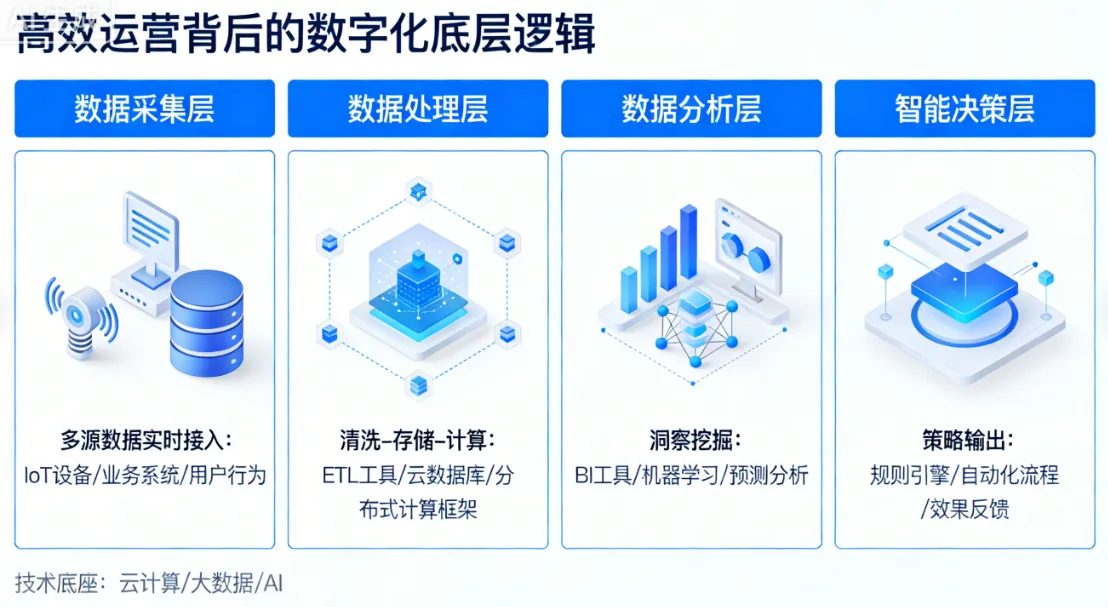
Data standardization and global interoperability are the fundamental building blocks of ERP systems and the core logic for breaking down "data silos". The core asset of enterprise operation is data. However, under traditional management models, data from departments such as procurement, production, inventory, and sales are stored in a scattered manner, with chaotic coding and inconsistent standards, forming independent data islands. This results in data being unable to be reused, inefficient circulation, and even the embarrassment of "multiple versions and calibers of the same data". The primary task of the underlying design of an ERP system is to establish a unified data standard and coding system, standardize and sort out the entire business data chain of the enterprise, and achieve "one-time entry, full domain reuse".
From the perspective of the underlying architecture, ERP integrates core data from various business processes, including material information, order data, employee information, customer information, etc., through modular data collection ports. It consolidates data scattered across departments into a unified database, breaking down departmental data barriers. For example, the three-dimensional data of "style color size" of shoe and clothing enterprises, production process parameters of manufacturing enterprises, and member consumption data of retail enterprises can all be included in the ERP system through unified coding, achieving real-time synchronization and accurate matching of data. This underlying design not only solves the efficiency problem of data flow, but also ensures the accuracy and consistency of data, providing a reliable foundation for subsequent process collaboration and data analysis - without a unified data standard, all surface functions will become "castles in the air".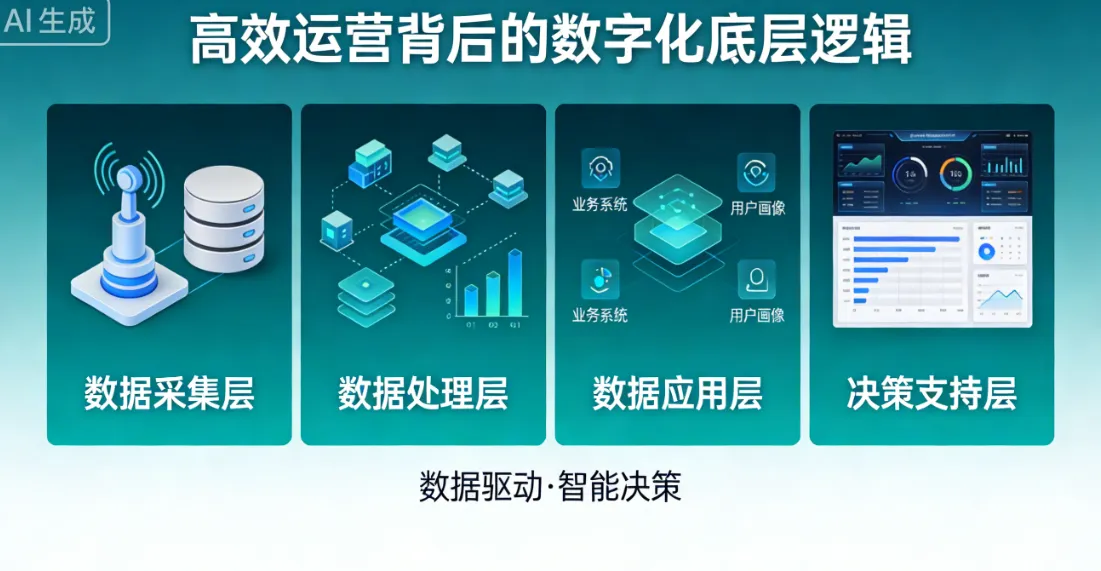
Process standardization and modular reconstruction are the core underlying logic of ERP empowering process efficiency, achieving "simplification of complex processes and standardization of fuzzy processes". Enterprises of different industries and scales have different operational processes, but the logical framework of core business has commonalities. The underlying design of ERP systems is not a one size fits all approach, but rather a modular architecture that balances standardization and flexibility. The core idea is to break down the complex operational processes of an enterprise into standardized business modules, each corresponding to a clear business scenario and operational specifications, and then achieve seamless connection between modules through underlying interfaces, forming a standardized business flow chain.
For example, the procurement process is broken down into standardized modules such as "procurement application - supplier screening - order issuance - arrival quality inspection - warehousing settlement", and the production process is broken down into "order scheduling - process allocation - progress tracking - finished product inspection - warehousing" modules. The operation process, responsible parties, and time nodes of each module are standardized and defined. This underlying design, on the one hand, eliminates the problem of "high human operation arbitrariness and fuzzy process connection" in traditional processes, reducing process redundancy and operational errors; On the other hand, enterprises can flexibly combine modules, adjust process details, and adapt to the characteristics of different industries according to their own business needs. Manufacturing enterprises can strengthen the linkage between production modules and inventory modules, while shoe and clothing enterprises can optimize SKU management and adapt to omnichannel order modules, achieving a balance of "standardized architecture+personalized adaptation" and improving process operation efficiency from the bottom.
Collaborative integration and closed-loop management are the underlying logic for ERP to break down departmental barriers and achieve global collaboration, building an operational system of "seamless linkage across the entire chain". In traditional enterprise operations, it is common for departments to work independently: production departments are not aware of inventory levels, which can lead to work stoppages and material shortages; The sales department is not clear about the production schedule and cannot accurately commit to the delivery cycle; The finance department relies on manual reconciliation, making it difficult to quickly connect business data. This collaborative gap is essentially the separation of underlying processes and data, and the core of ERP's underlying design is to build a collaborative closed loop of "data process department".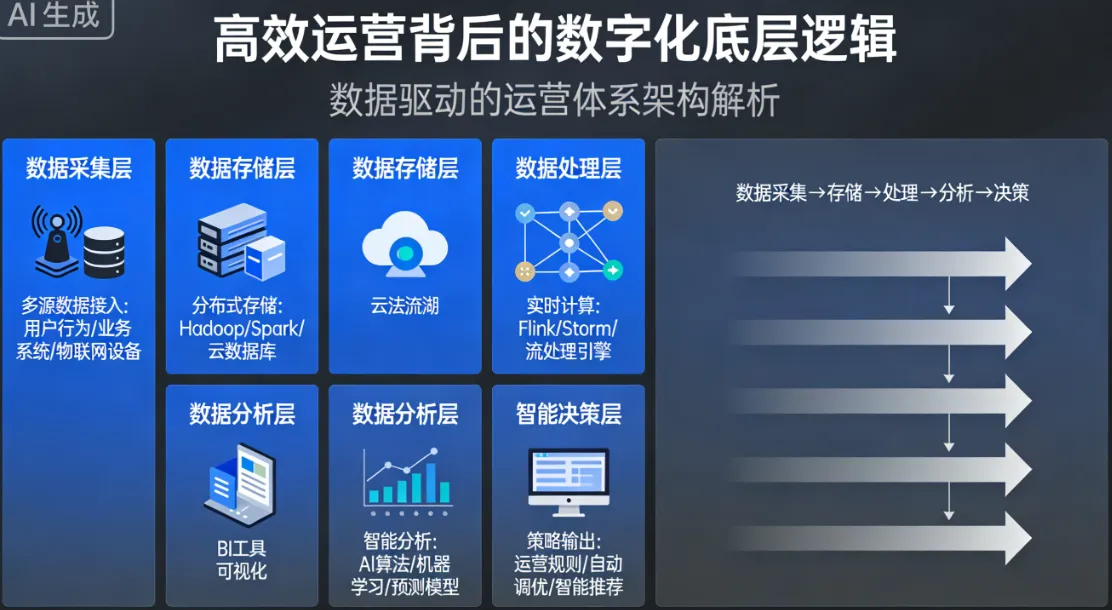
From the perspective of underlying logic, ERP drives process collaboration through data flow. When data changes occur in a certain business process, the system will automatically synchronize with the associated module and corresponding department, triggering subsequent business actions. For example, after the sales department signs the order, the ERP system will automatically synchronize the order data to the production, inventory, and finance modules: the production department receives the order information and starts the production scheduling; The inventory department checks the completeness of materials and triggers procurement requirements synchronously; The finance department prepares in advance for accounts receivable accounting. This bottom-up collaborative design connects previously dispersed departments and fragmented processes, achieving "one person operation, global linkage", completely changing the operating mode of "departments fighting independently", significantly reducing communication costs and collaboration losses, and improving the overall operational efficiency of the enterprise.
Decision dataization and intelligent prediction are the underlying logic of ERP empowering enterprises to make scientific decisions, shifting decision-making from "experience driven" to "data-driven". The key to efficient operation of enterprises lies in accurate decision-making, while traditional decision-making often relies on the experience and judgment of management, lacks data support, and is prone to decision-making deviations. The underlying design of the ERP system not only achieves data unification and circulation, but also embeds data analysis and intelligent prediction models, providing precise support for decision-making through mining and analysis of global data.
From the perspective of underlying technology, ERP uses built-in BI analysis tools to break down business data from multiple dimensions, generate visual reports, and intuitively present the operational status of the enterprise, including core indicators such as revenue, cost, inventory turnover, and order fulfillment. Management can quickly grasp operational pain points and growth opportunities. At the same time, the underlying intelligent prediction model can predict market demand, inventory changes, production bottlenecks, etc. in combination with historical data and industry trends, and provide decision-making suggestions for enterprises - for example, predict the hot sale trend of a product, and adjust production and inventory plans in advance; Warning of stagnant inventory risks and recommending clearance plans. A manufacturing enterprise has improved decision accuracy by 40% and reduced operational risk by 35% through the data analysis and prediction functions of ERP, fully demonstrating the value of data-driven decision-making.
In summary, the efficient empowerment of ERP systems is never simply the superposition of surface functions, but the deep implementation of its underlying digital logic - data standardization lays a solid foundation, process modularization improves efficiency, collaborative integration breaks down barriers, decision digitization avoids risks, and the four major logics support each other, forming a closed loop and constructing the core skeleton of enterprise digital operation. In the era of digital economy, competition among enterprises has upgraded to competition in operational efficiency, and the underlying digital logic of ERP is the key to helping enterprises overcome operational bottlenecks and activate development momentum. Whether it is the global collaboration of large enterprises or the refined control of small and medium-sized enterprises, only by understanding and implementing the underlying logic of ERP can its digital value be truly realized, achieving efficient operation and sustained growth.