
Unlock the potential of ERP and embark on a new chapter of efficient operation for enterprises
In today's era where the digital economy deeply empowers the real economy, enterprise operations have entered a new stage of "refinement and quality improvement" from "extensive expansion". Efficient operation, cost reduction and efficiency improvement have become the core demands for enterprise survival and development. As the core foundation of enterprise digital transformation, ERP system is no longer just a "process recording tool", but a value carrier that carries data integration, process optimization, collaborative empowerment, and decision support. However, although most enterprises have deployed ERP systems, they are trapped in the dilemma of "idle when online" and "unused functions", failing to truly unlock their core potential, and still plagued by problems such as process redundancy, data fragmentation, and blind decision-making. Only by deeply exploring the intrinsic value of ERP and connecting the entire operation chain can we activate the development momentum of enterprises and open up a new chapter of efficient operation.
The primary prerequisite for unlocking the potential of ERP is to break the "tool thinking" and achieve precise adaptation based on enterprise business scenarios, transforming ERP from a "universal template" to a "customized empowerment carrier". Many enterprises fall into the misconception of "going live with the trend", ignoring their own industry characteristics and business pain points, blindly applying universal ERP functions, resulting in a disconnect between the system and the business, and the inability to unleash potential. True ERP empowerment requires a focus on the essence of the industry and precise matching of business needs - manufacturing enterprises focus on production scheduling, material collaboration, and capacity control, footwear and apparel enterprises focus on multi SKU management, omnichannel inventory linkage, and piece rate accounting, retail enterprises focus on order fulfillment, membership operation, and marketing collaboration, and small and medium-sized enterprises prioritize unlocking lightweight core functions to avoid redundant designs that are "large and comprehensive".
For example, small and medium-sized manufacturing enterprises can prioritize unlocking the production and inventory core modules of ERP, optimize process connections through intelligent scheduling, reduce downtime and material shortages, and rely on accurate inventory management to control the flow of active funds; Large chain enterprises can unlock the full domain collaboration function of ERP, achieve data exchange between headquarters and branch offices, online and offline channels, and break down management barriers. This "on-demand unlocking and precise adaptation" model is the only way for ERP to get rid of the embarrassment of "tool idle", truly fit the operational scenarios of enterprises, and lay the foundation for potential release.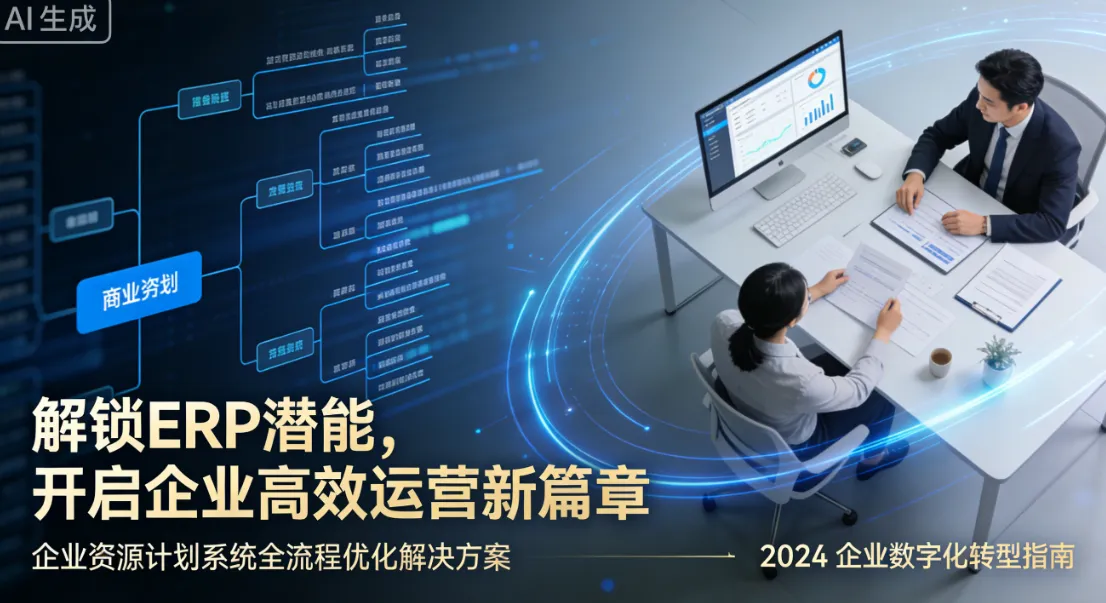
Unlocking the potential of data collaboration, breaking down data silos, and building a "data-driven" operational system are the core keys to empowering efficient operations with ERP. Data has become the core asset of enterprises, and under traditional management models, data from departments such as procurement, production, inventory, and sales is stored in a scattered manner with different calibers, forming independent data islands that make it difficult to reuse and extract value. The core advantage of an ERP system is the integration of data across the entire chain, but to unleash its potential, it is necessary to open up data flow channels, achieve real-time synchronization, precise matching, and deep reuse of data.
By unlocking the data integration function of ERP, enterprises can collect business data scattered in various departments into a unified database, achieving "one-time entry, global reuse" and avoiding errors and efficiency losses caused by manual duplicate entry; Unlocking the data linkage function enables automatic synchronization between business data and financial data, as well as production data and inventory data. For example, after a sales order is generated, it automatically triggers production scheduling and inventory verification, reducing communication costs between departments; Unlock the data analysis function, which can visually present the core indicators of enterprise operations through visual reports, explore the operational pain points and growth opportunities behind the data, and provide support for subsequent optimization decisions. After unlocking the potential of ERP data collaboration in an electronic manufacturing enterprise, the data error rate decreased by 90%, cross departmental communication costs decreased by 40%, and operational efficiency significantly improved.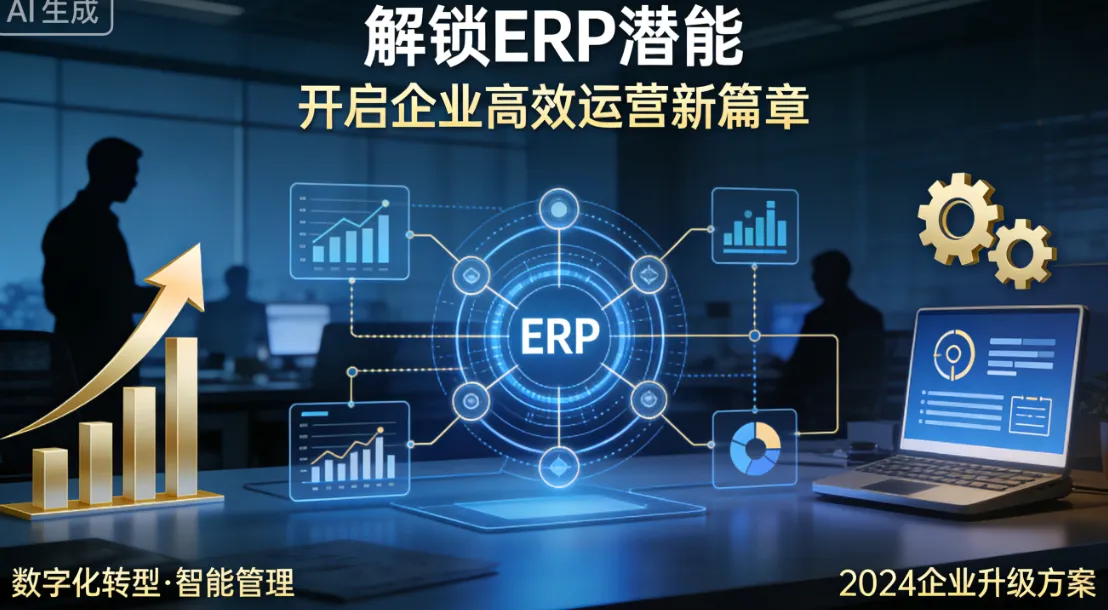
Unlocking the potential for process optimization, simplifying redundant processes, and achieving "standardization+flexibility" operations are the core paths for ERP to improve operational efficiency. In enterprise operations, cumbersome approval processes, vague division of responsibilities, and rigid process design often lead to low operational efficiency, delayed response, and especially difficulty in adapting to rapidly changing market demands. The ERP system has built-in standardized business process templates, but its potential lies not in simply copying the templates, but in combining with the actual business of the enterprise, optimizing processes, streamlining links, and achieving "simplification of complex processes, standardization of fuzzy processes, and flexibility of standard processes".
By unlocking the process customization function of ERP, enterprises can eliminate redundant approval nodes, transform traditional multi link offline approvals into online one click circulation, and improve the efficiency of processes such as monthly settlement and reconciliation by more than 50%; Clearly define the responsible parties and time nodes for each process, and eliminate buck passing and buck passing; At the same time, it retains the flexibility of the process, adapts to flexible production of small and multiple batches, or meets the order fulfillment needs of omnichannel retail. When the market changes or business adjustments occur, it can quickly optimize the process and improve the response speed of the enterprise. For example, after unlocking the potential of ERP process optimization, a fast fashion brand reduced the approval cycle for new product launches from 15 days to 3 days, and shortened the order fulfillment cycle by 28%, successfully adapting to the industry demand for "small order quick response".
Unlocking the potential for full staff adaptation and continuous iteration, and building a solid foundation for implementation, is an important guarantee for the long-term release of ERP potential. After many enterprises go online with ERP, their functions become idle and their potential diminishes due to employees' lack of proficiency, resistance to use, or long-term lack of system upgrades. The release of ERP potential cannot be achieved without the deep participation of all employees and continuous iteration of the system - through targeted training, helping employees quickly master system operations, especially frontline employees in workshops, warehouses, etc., simplifying operation processes, relying on convenient functions such as scanning codes, and reducing the threshold for use; Establish a feedback mechanism to collect issues and needs from employees during use, and continuously optimize system functionality; By combining cutting-edge technologies such as AI and big data, unlocking advanced functions such as intelligent prediction and automatic warning, ERP can always keep up with the pace of enterprise development.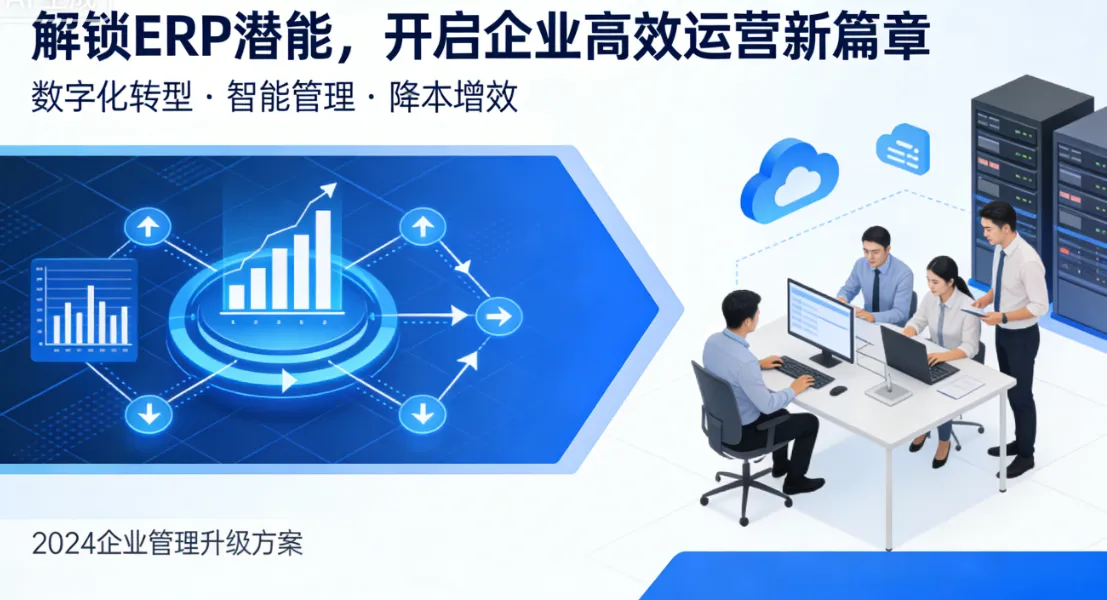
Currently, digital transformation has become an inevitable choice for enterprises, and the value of ERP as a core digital tool lies not in "owning", but in "unlocking". From precise adaptation to business scenarios to activating the collaborative value of data; The process of optimizing processes to improve efficiency, adapting to all employees through continuous iteration, and unlocking the potential of ERP is also a process of restructuring the operational system and enhancing core competitiveness for enterprises. For large enterprises, unlocking the full domain collaboration and high-level analysis potential of ERP can support scale expansion and refined operations; For small and medium-sized enterprises, lightweight unlocking of core functions can achieve management upgrades and efficiency leaps at low cost.
Unlocking the potential of ERP is not a one-time project, but a long-term practice that progresses step by step and meets the needs. Only by abandoning "tool thinking", focusing on business value, and deeply exploring the inherent potential of ERP can we break down operational barriers, activate development momentum, and truly make ERP a "booster" for efficient operation of enterprises, helping enterprises open a new chapter of efficient operation in the wave of digital economy and achieve high-quality development.