
On February 25th, the ERP concept sector fell by 2%, causing multiple stocks to suffer setbacks
On February 25th, the ERP (Enterprise Resource Planning) concept sector in the A-share market experienced a significant pullback, with the sector index falling by 2% in a single day, attracting market attention. Industry leaders represented by UFIDA Network, Kingdee International, and Inspur International have collectively declined, with some small and medium-sized software service providers experiencing even more significant declines. This green color contrasts sharply with the image of the sector that has been thriving under the banner of "digital economy" and "localization substitution" in recent years. Is this adjustment a normal technical correction on the rise, or has there been a subtle change in the underlying logic that supports its high valuation? The market is looking for answers.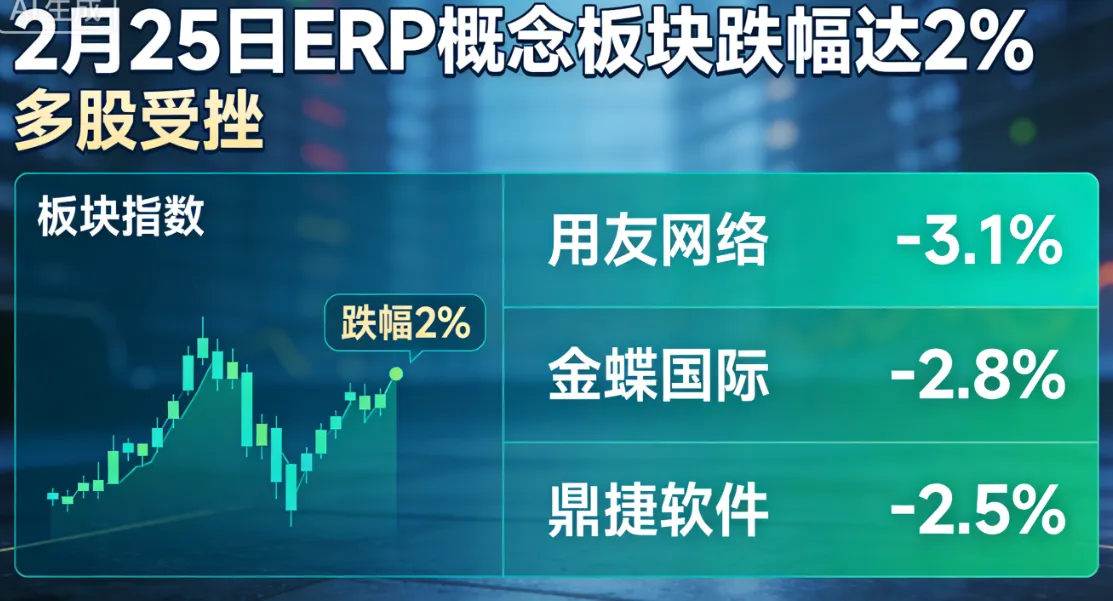
Appearance: The market sentiment has cooled down due to the general decline
From the market data, this decline shows obvious characteristics of sector linkage and is not an independent market trend of individual stocks. industry leaderYonyou NetworkLeading the decline, as a barometer of sector market value and sentiment, its fluctuations have a significant impact on overall morale. At the same time, deepening the manufacturing industryDingjie SoftwareProviding enterprise information technology servicesHand InformationThe simultaneous decline also reflects the widespread selling pressure in various links of the industrial chain. This collective correction usually points to common factors at the sector level, rather than occasional negative news for individual companies.
The timing of this adjustment is also worth pondering. On the one hand, the market is in a sensitive period of transition from thematic investment to performance verification; On the other hand, after experiencing continuous catalysis based on policy expectations in the early stage, the valuation of the sector has reached a relatively high historical level, and there is a need for technical adjustments. On that day, the entire technology growth style was under pressure, and funds showed signs of rotating towards defensive sectors. ERP, as an important component of the software service field, was inevitably affected by the overall decline in risk appetite.
Deep Exploration: Short term Resonance of Three Forces
Setting aside the surface fluctuations in market sentiment, the reason behind this decline is the concentrated release and resonance of short-term negative factors.
Firstly, the shift in market style and the rebalancing of liquidity are direct drivers.Recently, with some changes in macro expectations, some safe haven funds have started to flow out of technology growth sectors with significant gains and higher valuations in the previous period, and instead into areas with higher dividend yields or clearer short-term prosperity. As a typical growth track, the valuation of the ERP sector is particularly sensitive to market interest rates and risk preferences. During the window period of style switching, it is normal to encounter outflow pressure from the capital level.
Secondly, there is a dual pressure of "poor policy expectations" and "performance vacuum period".For a long time, the digital economy and information technology innovation policies have been the strongest narratives supporting the valuation of the ERP sector. However, after experiencing multiple rounds of expected hype, the market needs to see clearer and larger scale policy orders landing to validate the logic. At present, we are in a "window period" between specific policy details and large-scale bidding orders. If the high expectations in the early stage are not filled in by substantial performance in a timely manner, it is easy to have a "buy expectations, sell facts" cash adjustment. Meanwhile, the first quarter is usually the off-season for software companies to sign contracts and generate revenue, with low visibility of short-term performance, exacerbating investors' wait-and-see sentiment.
Furthermore, the individual performance of leading companies amplifies the volatility of the sector.As the absolute core of the sector, the performance and strategic trends of leading companies such as Yonyou Network affect the overall situation. The market has both long-term expectations for its ongoing transition from traditional software licensing to cloud service subscription models, as well as concerns about potential revenue growth fluctuations and profit margin pressures that may arise during the transformation process. Any rumors or expected changes regarding its major customer orders or cloud business growth quality will be rapidly amplified within the sector, triggering a chain reaction.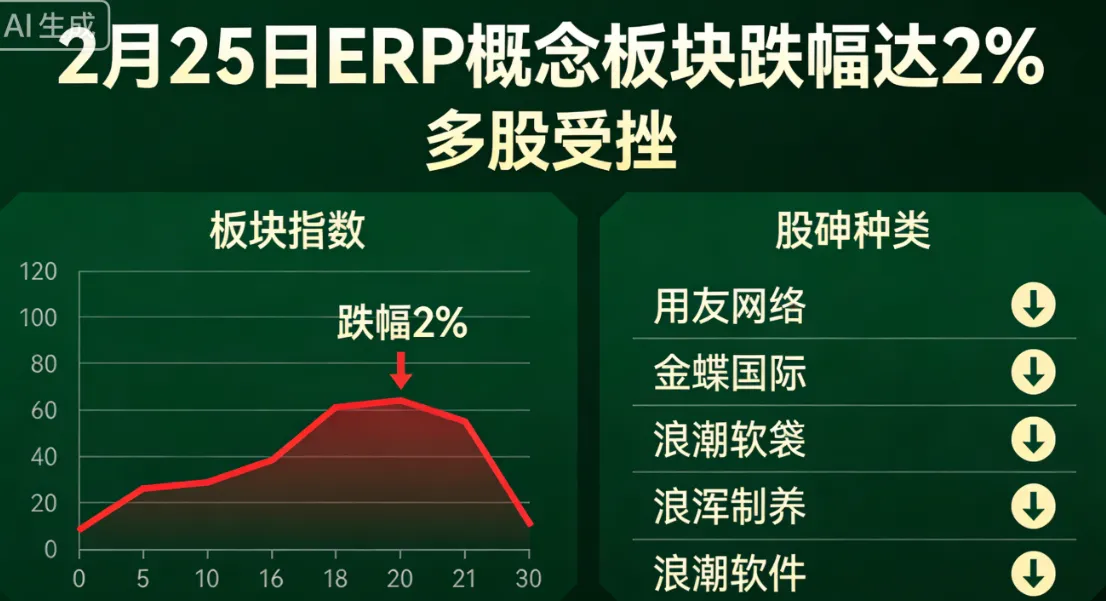
Influence and Reflection: Differentiation may become the new normal
The overall correction of this sector may not only be a price adjustment, but also a stress test of investment logic. It clearly reminds the market that even on the long-term positive gold track, the evolution of stock prices is not a one-sided upward trend.
One possible significant impact is that internal differentiation within the sector will intensify. After the general rise, market funds will become more discerning. Companies that rely solely on concepts but lack a solid customer base, clear cloud transformation path, and sustained product competitiveness may be consistently abandoned. On the contrary, top companies that can continuously prove their rapid growth in cloud business, strong customer stickiness, and substantial progress in the integration of new technologies such as AI through financial reports will have a more prominent investment value after adjustment. This decline is essentially a preliminary process of "eliminating falsehood and preserving truth".
In addition, this also prompts investors to re-examine the match between valuation and growth. The value reshaping story of ERP enterprises - from selling software at once to continuously charging service fees, from management tools to empowering intelligent decision-making platforms - is a lengthy process that takes several years to complete. The patience of the market is sometimes there, sometimes it fades away. When short-term valuations run too fast and the footsteps of performance realization fail to keep up, the pendulum of emotions will swing back.
Future outlook: Long term cornerstone remains unshaken, waiting for new catalysts
Despite facing a single day setback, the core long-term cornerstone that supports the development of the ERP industry has not been shaken.Enterprise digital transformationThe trend from "optional" to "mandatory" is becoming increasingly firm, which constitutes the fundamental chassis of industry demand.Localization replacement of key softwareThe clear national strategic direction has opened up the high-end market space previously monopolized by international giants for top domestic manufacturers, and this process is still in its infancy. More importantly,Deep integration of artificial intelligence (especially generative AI) and ERPIt is opening up a new dimension of value growth, with applications such as intelligent process automation and AI assisted decision-making, which are expected to significantly increase product unit price and customer stickiness.
Therefore, the current fluctuations should be seen more as a 'mid rain shower' rather than a 'seasonal transition'. The key to the future trend of the sector lies in when new catalysts will emerge. This may include:Firstly, leading companies deliver quarterly financial reports that exceed expectationsEspecially the improvement of cloud business revenue and gross profit margin;Secondly, the announcement of the landing of iconic large-scale innovation or digital project ordersVerify the business value driven by policies;Thirdly, mainstream manufacturers have launched revolutionary "AI+ERP" products or successful benchmark casesReignite the market's imagination space for technological integration.
In summary, the decline in the ERP concept sector on February 25th was the result of a combination of short-term market sentiment, a shift in funding style, and a temporary expectation vacuum. It reveals the inherent volatility and thirst for instant verification in the capital market under a long-term optimistic narrative. For investors, instead of being fixated on daily fluctuations, it is better to return to the essence of the industry: in the irreversible wave of digitization and intelligence, those companies that truly possess core technologies, have a deep understanding of the industry, and can transform technology into customer value will eventually move steadily and steadily in the ups and downs of the market. Short term adjustments may be the best time to examine and identify them.