
Customized ERP System Solution: A Digital Transformation Guide to Improve Enterprise Efficiency
In the grand narrative of digital transformation, the deployment of enterprise resource planning systems has become a crucial battle for future competitiveness. However, a common misconception is that companies often equate digital transformation with purchasing and installing an industry-leading standardized ERP software. In fact, the true transformation effectiveness does not come from the fame or functionality of the software itself, but from the unique business processes, management wisdom, and strategic intentions of the system and the enterpriseDeep bite and precise adaptationTherefore, customized ERP solutions are not optional "embellishments" in project implementation, but rather the core link that determines the success or failure of digital transformation and transforms universal technology into exclusive competitiveness. It is a systematic methodology aimed at bridging the gap between "standardized products" and "personalized business".
The essence of customization: from "cutting to fit" to "tailoring"
Standardized ERP products encapsulate a wide range of industry best practices, like a well crafted set of ready to wear clothing. But for a company with a unique business model, exclusive process flow, or special compliance requirements, directly applying it often means changing one's own healthy "bones" and "muscles" to adapt to "clothes", which is the dilemma of "cutting feet to fit shoes". The result is often employee resistance, process distortion, and ineffective performance.
The essence of customization is to tailor it according to individual needs. It begins with a deep diagnosis and respect for the core value chain of the enterprise. This requires companies and implementers to jointly penetrate the surface and clarify: which processes are the "genes" that reflect our core competitive advantages and must be solidified and strengthened? What are the "leftovers" that stem from historical inertia and urgently need to be innovated through digitalization? Customization is not just about meeting all the current situations, but about using professional digital architecture to streamline enterprise business processesRational reshaping, optimization, and sublimationThe goal is to enable software to flexibly serve the strategy and business of the enterprise while ensuring system architecture stability and technical maintainability, rather than the opposite. For example, a high-end equipment manufacturer designed according to orders, whose core value lies in the process management and precise cost collection of complex projects, must focus on customization around the entire life cycle of project manufacturing, and create highly integrated project management and financial accounting modules, which are often areas that standardized products cannot deeply cover.
Implementation Path: Precise Creation under Framework Constraints
Successful customization is not a free spirited secondary development, but should follow a rigorous path and achieve a delicate balance between "flexible adaptation" and "system stability".
The first stage is forward-looking blueprint design and scope anchoring.This is the most important strategic link. Enterprises need to work with consulting partners with industry insights to depict the "what it should be" rather than just the "existing" based on future development strategies. Through workshops and process analysis, transform business requirements into clear system functional requirements, and strictly distinguish between core customization (related to core competitiveness), necessary adaptation (meeting key business rules), and icing on the cake. All customization points must be evaluated for their contribution to business value and long-term impact on system upgrades and operational complexity, ensuring that every investment is directed towards improving critical efficiency.
The second stage is to adopt a sustainable technological architecture for implementation.Wise customization will fully utilize the scalability provided by modern ERP platforms. priority adoptionConfiguring and parameterizingTo meet the flexibility requirements, consider usingThe development tools and open interfaces provided by the platform are used for secondary developmentTry to avoid directly modifying the core code of the system as much as possible. For example, customizing unique approval paths using workflow engines, developing dedicated analysis views using reporting tools, and integrating with professional self-developed systems using API interfaces. This model of "building on the platform" rather than "overturning the platform" ensures the core stability of the system, meets flexibility, and reserves space for future iterative upgrades.
The third stage is the continuous data governance and change management.The effectiveness of customized systems relies on high-quality and standardized master data. It is necessary to promote the cleaning and standardization of master data such as materials, customers, and suppliers in parallel with customized development. More importantly, any customization means a change in work habits. Therefore, strong change management must be equipped to enable business personnel to understand the value of customized functions through training, communication, and piloting, transforming them from passive recipients to active users and optimization proposers, ensuring that customized results can be effectively absorbed by the organization.
Value Sublimation: From Efficiency Tools to Innovation Engines
When customized solutions are implemented correctly, their value will go beyond addressing current efficiency pain points and become the cornerstone of sustained digital transformation for enterprises.
Its direct value is reflected inAccurate improvement of operational efficiencyThe process that fits the business reduces unnecessary detours and waiting; Automated data flow eliminates duplicate entries and human errors; Personalized data dashboards enable managers to gain real-time insights into the essence of business operations. For example, customizing real-time synchronization and automatic fulfillment logic for online and offline inventory for retail enterprises can directly improve order fulfillment rates and customer experience.
The deeper value lies in the fact that it builds a foundation for the enterpriseEvolutionary Digital CoreA good customized architecture is like building an easily adjustable internal layout on a solid foundation. When enterprises expand their business and innovate their models, they can quickly adjust or expand new functional modules based on this core without having to start over from scratch. This endows enterprises with unique agility in responding to market changes.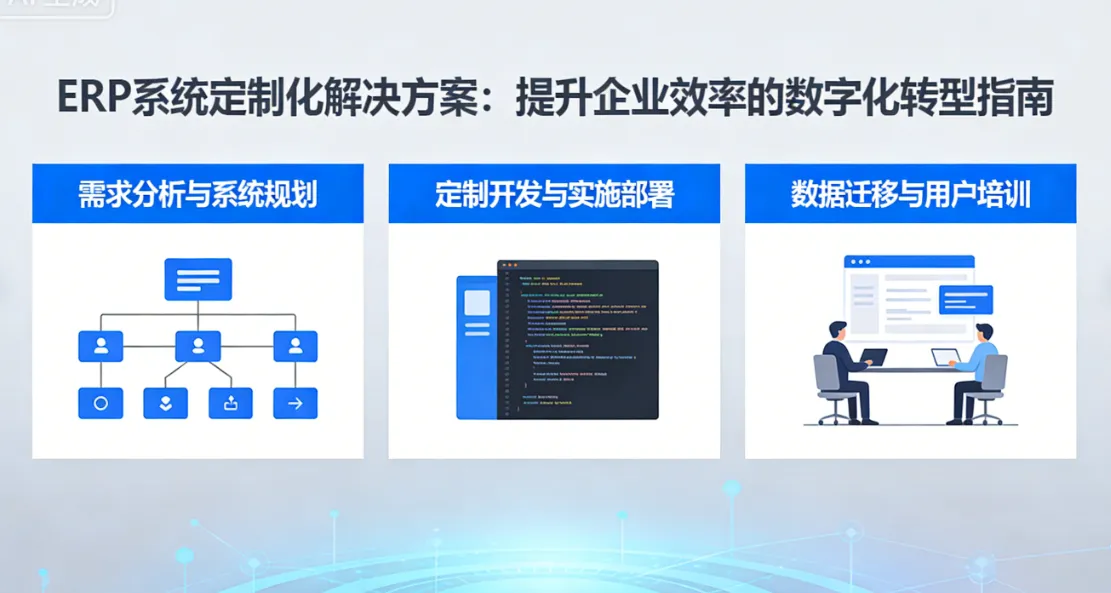
Ultimately, top-level customized solutions can push ERP from the backend recording system to the frontendBusiness Empowerment and Innovation PlatformIt has formed digital assets and intelligent capabilities that are difficult for competitors to replicate by digitizing and modeling the unique operational knowledge and management rules of the enterprise. This marks the digital transformation of enterprises, from the "reference stage" of introducing external best practices to the "leading stage" of creating their own best practices and driving future development. In this process, customization has evolved from a technological choice to a smart art that integrates technology, management, and strategy, truly guiding enterprises through the complex deep-water area of digitization and reaching the other shore of continuous efficiency upgrading.