
ERP system implementation and business process optimization in footwear enterprises | Digital transformation enhances operational efficiency
In the footwear industry, which combines fashion sensitivity and precision manufacturing logic, efficiency and agility are directly related to the survival space of enterprises. The rapid change of seasonal trends, dynamic management of a massive number of SKUs (style number x color x size), and the complex supply chain from leather procurement to global store shelving together constitute the industry's unique operational maze. Many enterprises have long relied on experience driven and fragmented systems, resulting in information silos, high inventory costs, and slow market response. Therefore, with ERP system implementation as the core and synchronous driving of profound business process optimization, it is no longer a simple IT upgrade, but a systematic revolution aimed at reconstructing the core competitiveness of enterprises and achieving digital survival and development.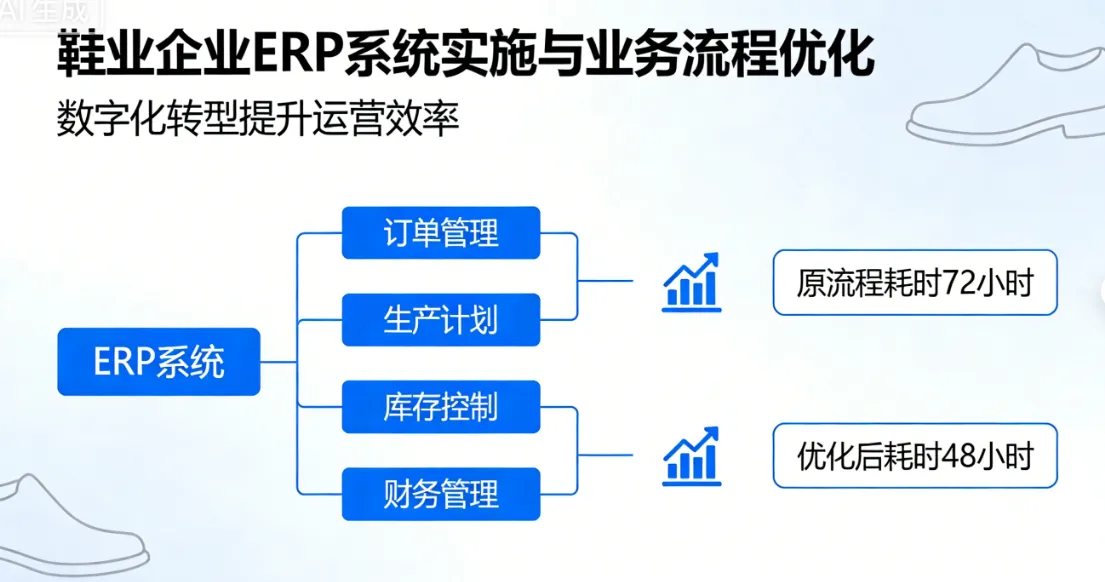
Core challenge: The intersection of industry pain points and the necessity of transformation
The management pain points of footwear enterprises are rooted in the essence of their business.The product lifecycle is short and difficult to predictA shoe may only be out of season for a few months from design, and misjudgment of fashion trends can directly lead to inventory backlog or missed opportunities for explosive products.Complex supply chain collaborationIt involves multi-level suppliers such as fabrics, accessories, and outsourced factories, and any delay in any link will trigger a chain reaction.Mixed production modeThere are both large quantities of standard orders and small quantities of quick response replenishment orders, which require extremely high flexibility in production scheduling.Omnichannel sales have become the normThe inventory, prices, and promotional strategies of online, direct sales, franchise and other channels need to be integrated and coordinated.
The traditional management model often falls short in the face of these challenges. The data of each department is fragmented: the sales end cannot see real-time inventory and production progress, the procurement end places orders based on fuzzy forecasts, and the finance end can only calculate costs at the end of the month with difficulty. The implementation of ERP system is precisely to build aUnified, real-time, and transparent digital operation centerBut if only the old process is simplified and digitized, it is no different from using new pipelines to transport old sludge. Only by deeply linking system implementation with Business Process Reengineering (BPR) can we connect the two channels of responsibility and supervision, and unleash the true effectiveness of digitization.
Implementation Path: Systematic Engineering Led by Process Reengineering
Successful implementation begins with top-level design and ends with business value. It must be a systematic engineering driven by strategy, business leadership, and technology empowerment.
The first stage is strategic diagnosis and process blueprint designThis is not a simple requirement gathering, but a thorough "dissection" of existing business processes. The core lies in drawing the current 'value stream map', visualizing the entire chain from conceptual design, raw material procurement, production and manufacturing to finished product distribution, and store sales, accurately identifying waiting, redundancy, rework, and bottlenecks. For example, did the review and confirmation process take several weeks due to repeated mailing of samples? Does cross channel allocation rely heavily on manual phone communication? Based on these insights, companies and implementation consultants collaborate to design future 'target process blueprints'. The key principles of the blueprint are:Taking customer orders (market demand) as the sole driving source, connect the entire chain; Compressing non value added processes to achieve process automation and intelligent decision-makingFor example, establishing an "order driven production" model that integrates design data, material requirements, and production instructions online.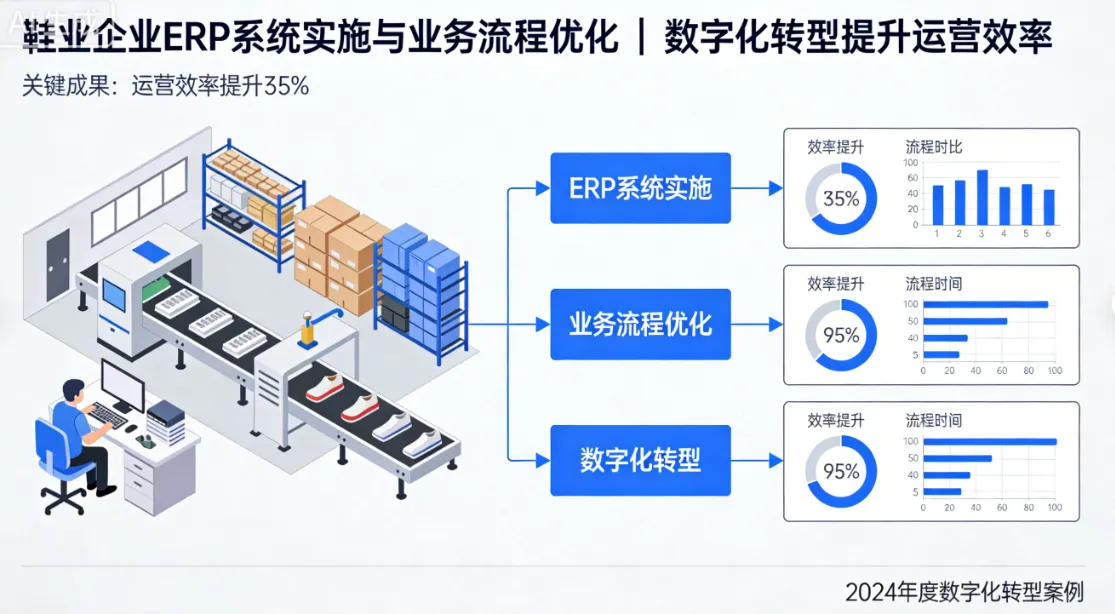
The second stage is system configuration, development, and data foundationAt this stage, the ERP system serves as an enabling tool for configuration and necessary customized development based on the consensus business blueprint. Focus on the core scene of the footwear industry: establishingCentral Commodity WarehouseUnify the coding, attributes, and lifecycle status of all SKUs; buildFlexible Material List, supports quick copying and changes; developmentSupply Chain Collaboration PortalEnable suppliers to view forecasts, confirm delivery dates, and receive orders online. At the same time, the "data foundation" project must be launched in parallel to clean and standardize historical material, customer, and supplier data, which is the lifeline for the system to provide accurate insights.
The third stage is organizational change and empowermentThis is the most easily overlooked but decisive factor in success or failure. The new process and system have changed the responsibilities and work habits of employees. A strong change management mechanism must be established: ensuring skill transfer through hierarchical training (with executives focusing on decision boards and key users focusing on process operations); Establish an internal support network by setting up roles of "process owner" and "super user"; Adjust performance evaluation indicators to link them with new process efficiencies such as order fulfillment cycles and inventory turnover rates, in order to guide behavior and transform transformation resistance into motivation.
Process optimization focus: value reconstruction of the three core businesses
The implementation of ERP should focus on optimizing the following key processes that determine the life and death of footwear enterprises:
Collaborative optimization of supply chain and productionThe traditional push supply chain has been replaced by demand driven pull supply chain. The system integrates historical sales, market trends, and real-time store data to generate more accurateGraded prediction(At the regional and store level). Based on this, executeIntelligent Material Requirements PlanningDrive precise procurement. In the production process, the system supportsAdvanced SchedulingCoordinate the production capacity of molds, production lines, and outsourcing factories, and allow for the reservation of "flexible production capacity" for potential explosive products. When the fast response order is triggered, the system can automatically calculate the optimal production schedule and notify all relevant links synchronously.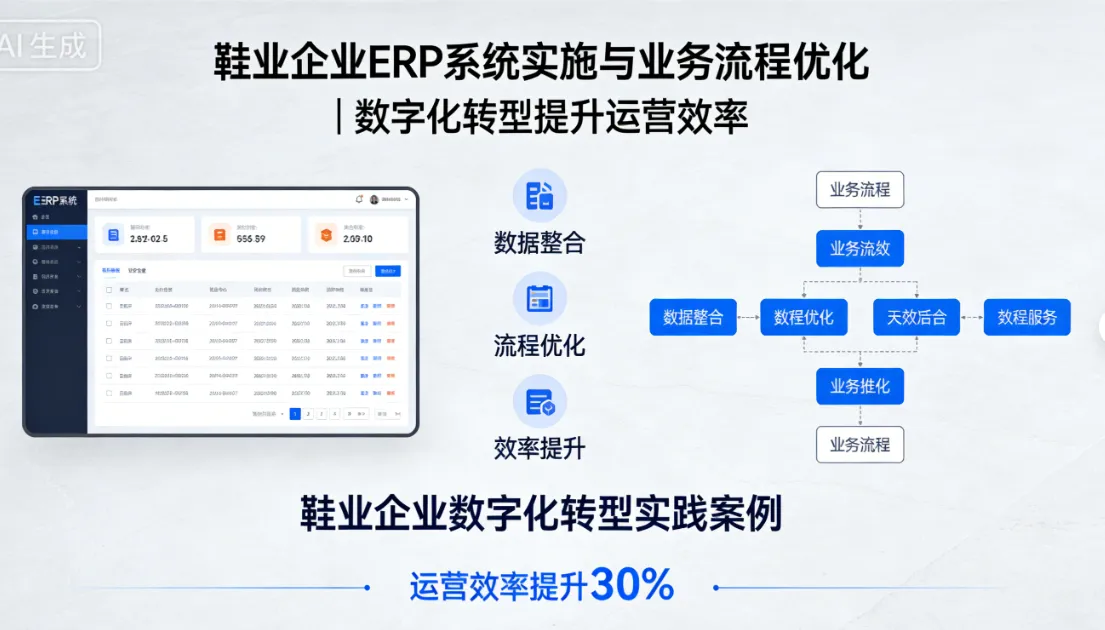
Omnichannel inventory and sales integrationBuild a global inventory view to achieve the management of all warehouses, stores, and in transit inventoryVisible, sellable, and adjustableThe system can automatically execute intelligent allocation based on preset rules such as geographic location, inventory depth, and logistics costs. Online orders can be automatically assigned to the nearest store for shipment; When the store is out of stock, customers can be guided to place orders online or check nearby inventory. This transforms inventory from a cost center to a liquid profit center, greatly improving spot rates and customer satisfaction.
Product lifecycle and refined financial managementRealize online tracking and data analysis of the entire process from product planning, listing, order flipping to final clearance. The system can automatically alert and recommend products to enter the next lifecycle stage (such as initiating promotions, transferring or clearing inventory) based on actual sales rates and inventory levels. On the financial side, business and finance integration is achieved, with each transaction automatically generating vouchers and cost accounting traceable to specific orders and processes, allowing managers to understand the true profitability of various brands and channels in real time.
Value realization: from efficiency improvement to intelligent insight
Successful implementation and optimization will ultimately translate into quantifiable and sustainable business value. Significant improvement in operational efficiency: order delivery cycle may be shortened by 30%, inventory turnover rate increased by over 40%, and financial monthly settlement time reduced from days to hours. The decision-making mode has undergone a qualitative change: the management makes decisions based on real-time and unified digital cockpit, shifting from "experience guessing" to "data insight".
More importantly, the enterprise has thus built a future oriented approachCore digital capabilitiesA deeply optimized business process system running on intelligent ERP endows enterprises with unprecedented agility and resilience. It can capture trends faster, organize production more accurately, and allocate resources more efficiently. This is not only an efficiency revolution, but also a core moat built for enterprises in a fiercely competitive market, based on data and processes that are difficult to imitate. The ultimate goal of digital transformation is to enable footwear companies not only to "run" faster, but also to "run" in the right direction and win the future through such systematic reengineering.