
Artificial intelligence drives ERP system innovation: a new era of automated process upgrading and intelligent decision-making
In the deep waters of digital transformation, enterprise resource planning systems are undergoing a paradigm revolution from the inside out. The core driving force of this revolution is artificial intelligence technology represented by machine learning and natural language processing. It drives ERP to evolve from an "operational record system" that records transactions and solidifies processes to an "enterprise intelligence core" that can perceive, analyze, predict, and autonomously optimize. This is not only an enhancement of functionality, but also a transition in the essence of the system from a "tool" to a "partner", marking a new era of enterprise operation and management that emphasizes both automation and intelligent decision-making.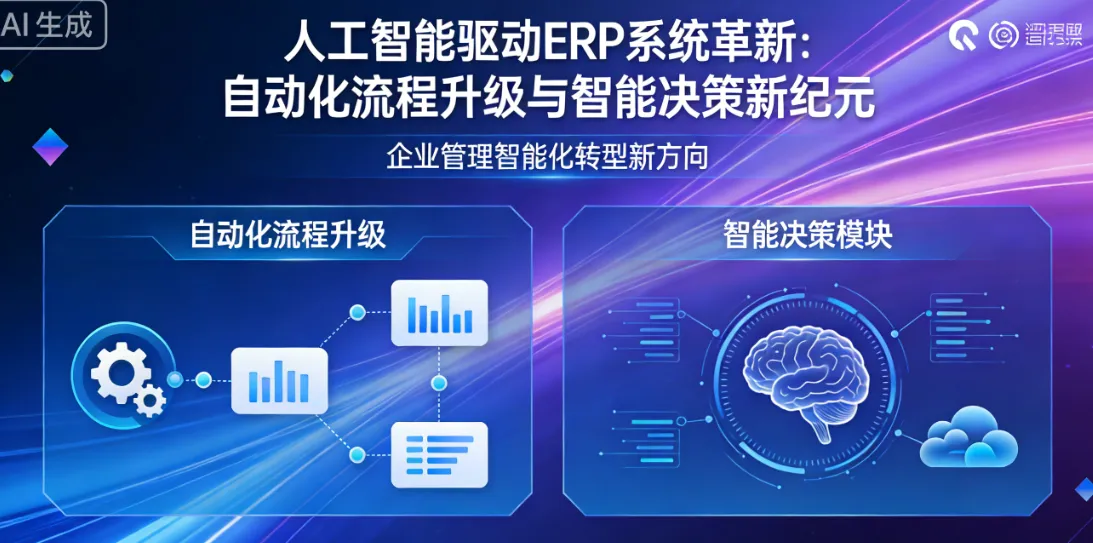
Paradigm shift: from "process automation" to "intelligent automation"
The core value of traditional ERP lies in its implementation through pre-set rulesProcess automationFor example, automatically generating purchase orders or triggering financial vouchers. However, this automation is static, mechanical, and fragile, requiring manual intervention in case of situations outside of the rules. The introduction of artificial intelligence has brought fundamental changesIntelligent Automation 。
Intelligent ERP systems can understand the deep logic and context of business processes through machine learning models. It can process unstructured data such as contract text, email communication, sensor logs, extract key information from it, and automatically fill it into the system. For example, in the procurement process, AI can not only automatically place orders based on inventory thresholds, but also analyze suppliers' historical delivery performance, market fluctuations, and even social media public opinion,Dynamically assess supply chain risks, intelligently recommend optimal suppliers and procurement timingAnd automatically complete the entire process from sourcing to placing an order. In the financial field, AI robots can not only reconcile accounts, but also understand subtle anomalies in invoice content and identify potential fraud patterns. This automation has the ability to learn, adapt, and judge, upgrading from "executing clear instructions" to "achieving goals in complex contexts".
Process Upgrade: Building Self Aware and Self Optimizing Business Processes
The empowerment of core business processes by artificial intelligence is comprehensive, transforming them from rigid pipelines into intelligent fluids.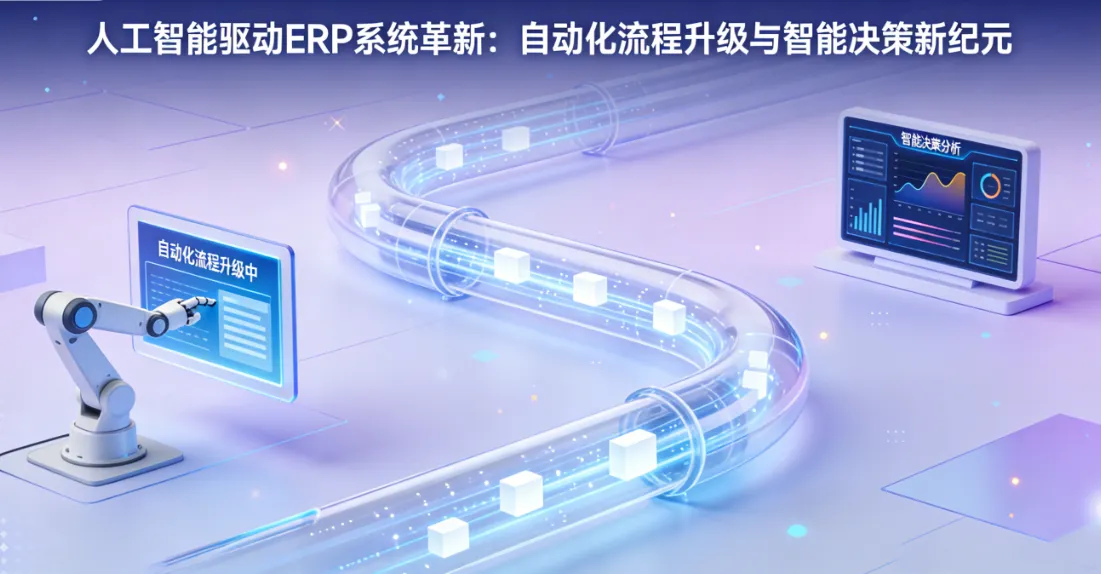
在Supply Chain and Manufacturing Field, AI has driven a fundamental shift from "responsive" to "predictive". Traditional material requirement planning relies on fixed lead times and historical average consumption, while AI can integrate historical sales data, real-time market trends, weather forecasts, and even macroeconomic indicators for multi-dimensional, high-precision planningDemand perception and predictionOn this basis, the system can performDynamic and real-time production scheduling and schedulingWithin milliseconds, respond to disturbances such as equipment failures, material delays, or emergency order insertion, recalculate the optimal solution, and maximize overall production capacity and efficiency. For example, leading manufacturing companies have begun deploying AI driven "closed-loop control systems" that can automatically fine tune process parameters and achieve self optimization of the production process based on real-time output and quality data from the production line.
在Finance and Compliance Field, AI has achieved a leap from "post event recording" to "in-process control and pre event insight". The intelligent system can continuously monitor every transaction flow 24/7, using natural language processing technology to interpret contract terms and reimbursement vouchers, and automatically execute complex tasksCompliance review and risk warningIt can not only detect reimbursement that violates policies, but also identify hidden fraud patterns or abnormal related transactions. At the end of month settlement, AI can automatically collect costs, complete allocation, generate notes, and intelligently associate financial results with business drivers (such as a marketing campaign or a new product line), providing financial analysis reports with business insights.
New Era of Decision making: From "Report Assistance" to "Prediction and Prescription"
Decision support is the highest manifestation of the value of ERP, and AI has brought about disruptive changes here. Traditional ERP provides historical data through reports and dashboards, and decision-making still heavily relies on the experience and intuition of managers. AI powered ERP has become aDecision Simulation and Optimization Engine。
Firstly, the decision-making processThe spatiotemporal scale is greatly compressedManagers do not need to wait for the end of month report, and can inquire about the business status at any time through natural language dialogue: "Compare the profit margin and return rate differences between newly listed running shoes in East China and South China, and analyze the main reasons." The system can instantly call data for correlation analysis, generating insights with graphics and text. This shifts management from a "rearview mirror" based review to a "real-time dashboard" based driving.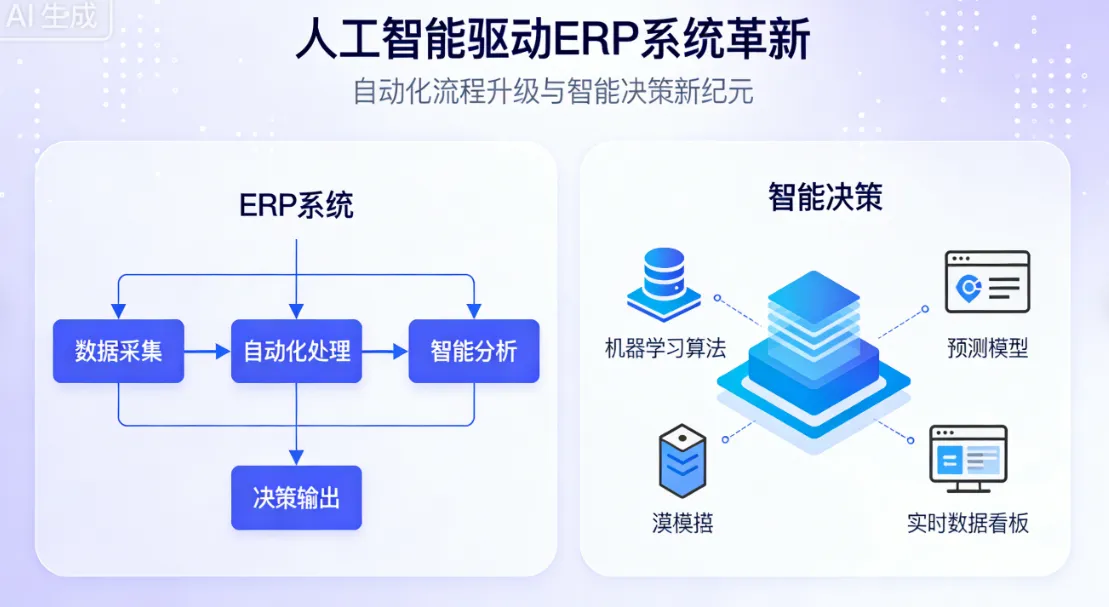
More importantly, the nature of the decision depends onDescriptive and DiagnosticJumping toPredictive and PrescriptionThe system can not only tell you 'what happened' and 'why it happened', but also predict 'what will happen' and suggest 'what should be done'. For example, AI can predict the price trend of key raw materials in the next quarter, the demand explosion point of a certain product line in a specific region, or the potential supply interruption risk of a core supplier. Furthermore, it can provide multiple response strategies based on simulation, such as adjusting safety stock, booking forward contracts, and initiating alternative suppliers, and quantitatively evaluate the expected costs, benefits, and risks of each strategy, providing managers with actionable "decision prescriptions".
Future Vision: From Enterprise Intelligence Core to Ecological Collaborative Brain
Looking ahead, the integration of AI and ERP will give rise to more advanced forms. ERP systems will evolve from multipleSpecialized AI intelligent agentA collaborative network is formed - one responsible for cash flow forecasting and optimization, one focused on supply chain resilience, and the other monitoring talent development and organizational effectiveness. These intelligent agents work together to bring enterprise operations closer to the state of "autonomous driving".
Ultimately, the intelligent ERP of individual enterprises will evolve intoCollaborative intelligent nodes of industrial ecologyUnder the premise of ensuring data sovereignty and privacy through technologies such as blockchain, the AI capabilities of core enterprises can collaborate with the secure data of their upstream and downstream partners under certain rules to achieve cross enterprise joint demand forecasting, capacity balancing, and risk hedging. Competition will evolve from a competition of efficiency between enterprises to a competition of overall intelligence and collaborative efficiency within the ecosystem network.
ConclusionThe ERP revolution driven by artificial intelligence is redefining the boundaries of enterprise operations. It not only greatly improves operational efficiency and resilience, but also fundamentally changes the role of enterprise managers by infiltrating intelligent automation into every business process and endowing each decision-making link with predictive and prescription capabilities - from operators of tedious affairs and decision-makers relying on experience to strategic direction setters and collaborators of intelligent systems. Enterprises embracing this transformation will be the first to gain the crucial competitive advantages of agility, foresight, and sustainability in an era of uncertainty, truly entering a new era of intelligent driven growth.