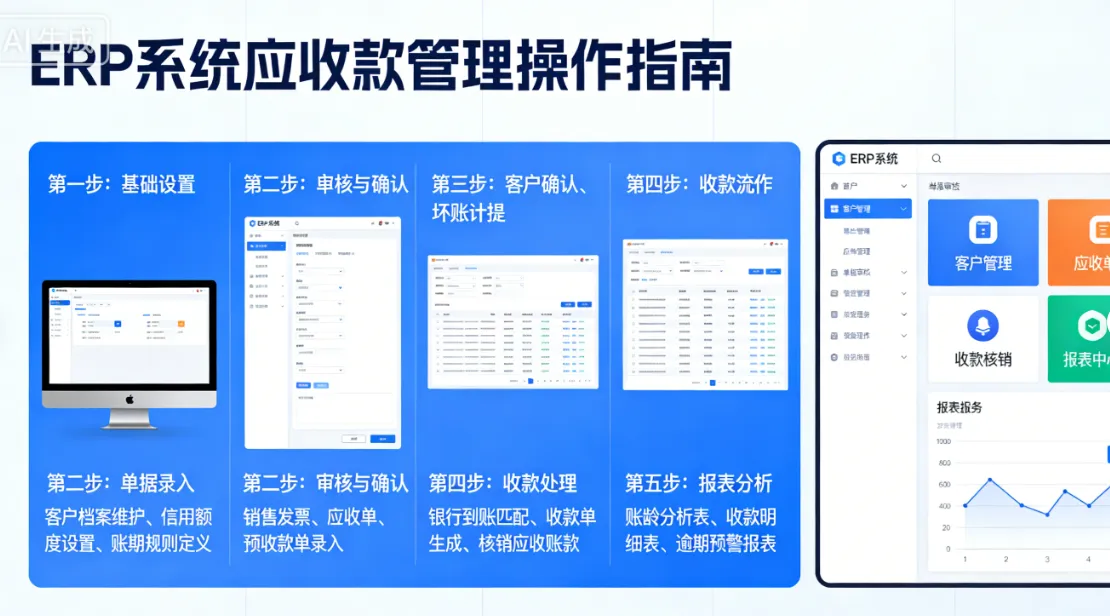
How to use ERP system for accounts receivable management
In the blood cash flow cycle of enterprises, the management efficiency of accounts receivable is directly related to the lifeline of survival and growth vitality. A overdue payment is not only a number on the balance sheet, but also represents occupied working capital, potential bad debt risks, and additional costs required for recovery. The traditional accounts receivable management model that relies on spreadsheets and manual follow-up is prone to confusion, lag, and passivity when the business scale expands. And modern enterprise resource planning systems, through their core features of integration, automation, and intelligence, have built a set of processes for enterprises from transaction occurrence to secure payment retrievalFull process, closed-loop scientific management system for accounts receivableThis system not only ensures the smooth flow of funds, but also transforms accounts receivable data into valuable assets that drive sales strategies and customer relationship management.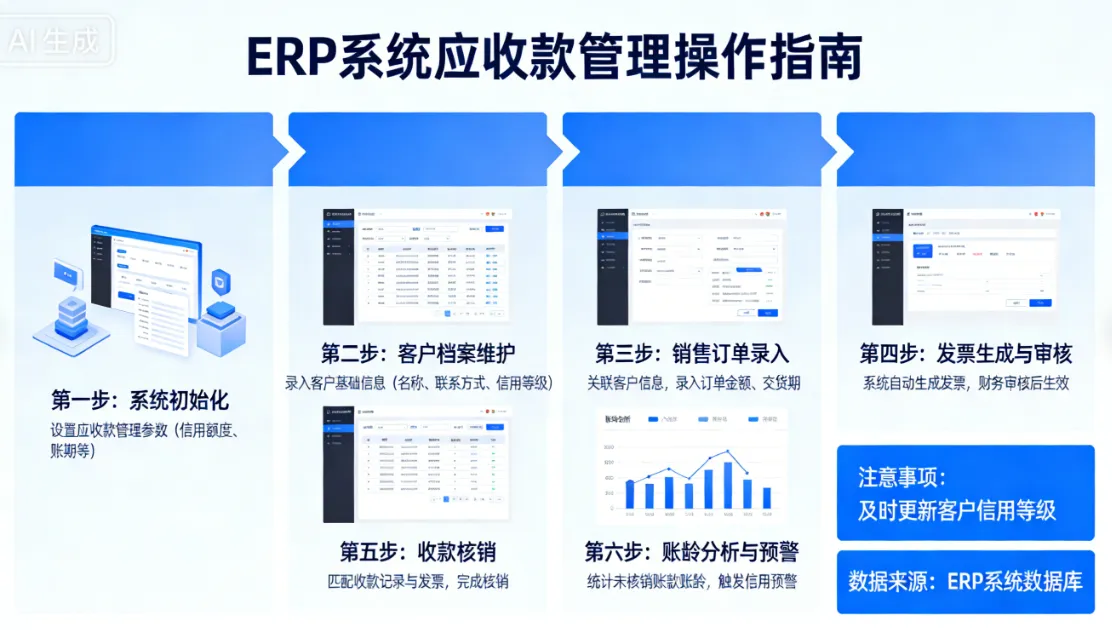
The cornerstone of effective management lies in the seamless integration and accurate origin of business and financial data through the use of ERP.The lifecycle of accounts receivable begins with a sales revenue that meets the recognition criteria. In an integrated ERP environment, when sales orders are shipped or services are provided and invoices are issued, the system will follow pre-set revenue recognition principles,Automatically and synchronouslyGenerate corresponding accounts receivable entries in the finance module. This automation process is crucial as it ensures that every receivable is accurately matched to a specific customer, sales contract, shipment batch, and even related salesperson, eliminating errors, omissions, or delays that may arise from manual input from the source. All original document information, such as contract terms, payment conditions, credit limits, etc., become associated attributes of the receivable, providing a complete and traceable business context for subsequent tracking, analysis, and collection. This establishes the data quality foundation for accounts receivable management, allowing management actions to be based on a unique and authentic 'data truth'.
The core link of management is to establish a systematic credit control and risk warning mechanism.ERP systems allow enterprises to set differentiated credit policies for each customer, including credit limits, payment terms, and payment conditions. Before creating or shipping a sales order, the system can automatically perform a credit check: real-time comparison of the customer's outstanding accounts receivable with the established credit limit. Once the preset risk threshold is exceeded, the system will automatically freeze subsequent transactions or trigger the upgrade approval process. This changes from 'post collection' to 'pre prevention', placing risk control points in advance. In addition, the system can automatically classify accounts receivable into layers based on aging and generate dynamic aging analysis reports. Managers can easily see the distribution of accounts receivable in different time periods (such as 30 days, 60 days, and over 90 days), and quickly identify customers and aging ranges with concentrated risks. Advanced ERP systems can also establish predictive models based on customer payment history, industry risks, and other data to provide early scoring and warning of potential bad debt risks, shifting management from passive response to proactive insight.
Efficient execution and collection rely on the process automation and collaborative work platform provided by ERP.The system can automatically send statements and payment reminders to customers via email or system messages before the invoice due date according to preset rules. For overdue accounts, ERP can automatically trigger different levels of collection processes based on the number of overdue days: for example, if the overdue is 7 days, the system will send a mild reminder, and if the overdue is 30 days, a collection task will be automatically generated and assigned to the designated credit administrator or customer manager, while marking the customer as "key focus". All collection activities, including phone records, email correspondence, promised payment dates, etc., can be centrally recorded under the customer's account to form a complete collection history file. This ensures the continuity and traceability of the collection process, avoids information gaps caused by personnel changes or negligence, and provides a complete evidence chain for subsequent legal actions against stubborn debts.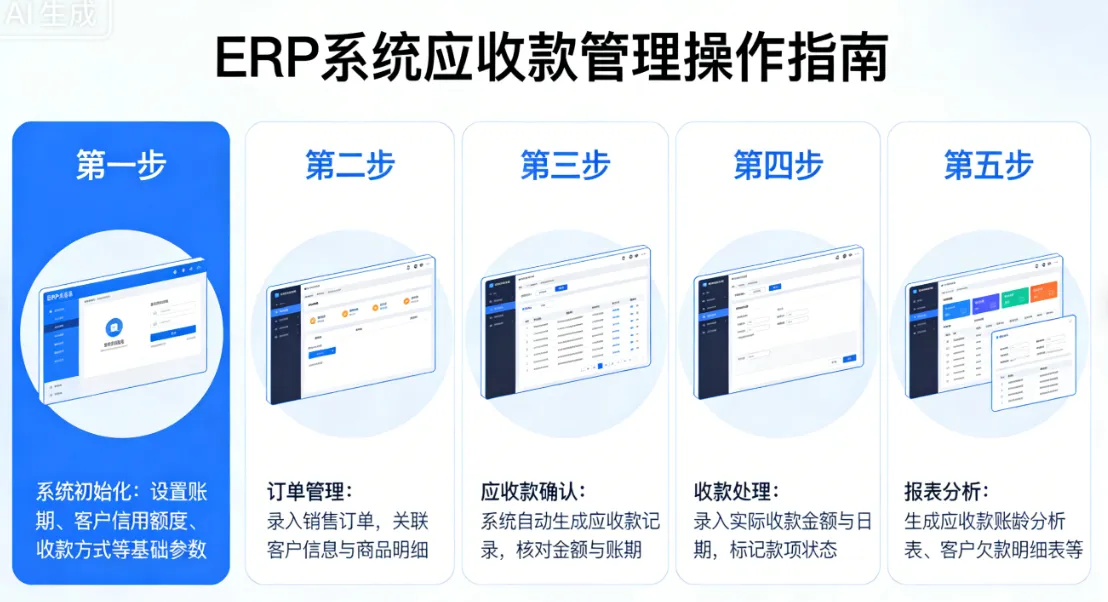
Beyond collection itself, the deep value of ERP lies in transforming accounts receivable data into insights for strategic decision-making.The various accounts receivable analysis reports generated by the system, such as customer payment behavior analysis, DSO (Accounts Receivable Turnover Days) trends, and changes in bad debt rates, are key dashboards for evaluating sales policies, customer quality, and overall financial health. For example, analyzing the differences in DSO across different product lines or sales regions can reveal which businesses have taken up too long capital cycles; Evaluating the on-time payment rate of key customers directly affects their sales strategy and resource allocation. These insights can guide the front-end sales department to adjust credit policies, optimize customer structure, and even affect product pricing and contract negotiations, thereby optimizing working capital efficiency at the overall level of the company and achieving deep synergy between finance and business.
Therefore, the essence of using ERP system for accounts receivable management lies in building aIntelligent cycle integrating prevention, control, execution, and analysisIt transforms decentralized, lagging, and passive management into centralized, real-time, and proactive control through technological means. This not only accelerates cash flow and ensures operational safety, but also empowers the finance department through data, freeing it from tedious bookkeeping and debt collection work, transforming it into a strategic partner for business development, jointly safeguarding the lifeline of enterprise value creation, and driving the enterprise to achieve sustainable growth on the basis of healthy cash flow.