
ERP System: A Solution for Efficient Management of Enterprise Core Business
The digital central nervous system of modern enterprise management
Driven by the dual forces of global competition and digitalization, efficient management of core business has become a key factor determining the survival and development of enterprises. The traditional operational model that relies on manual processes, decentralized systems, and departmental barriers is facing severe challenges such as slow response, high costs, and delayed decision-making. As a comprehensive digital solution for modern enterprise management, the enterprise resource planning system integrates key business processes, data, and resources to build a unified, transparent, and intelligent operational management center. It not only improves the efficiency of enterprise operations, but also reshapes the management model, becoming the core engine for enterprises to achieve strategic goals.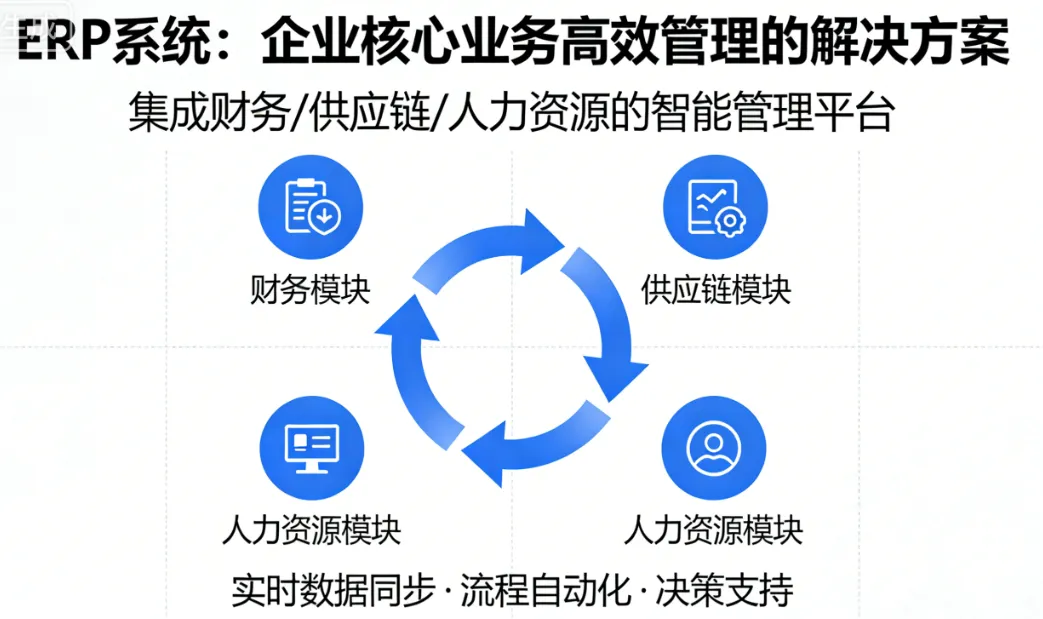
Process integration: breaking down departmental barriers and building efficient collaboration
The most direct value of an ERP system lies in its ability to comprehensively integrate and optimize the core business processes of the enterprise. In traditional enterprises, key departments such as sales, procurement, production, warehousing, and finance often use independent systems, forming "information islands" that lead to business process disruptions, distorted information transmission, and low collaboration efficiency. The ERP system achieves end-to-end process automation across departments by building a unified data platform and process engine.
Taking order management as an example, in the traditional model, a sales order needs to be circulated among multiple departments such as sales, production, procurement, warehousing, and finance, relying on paper documents and manual communication. The entire process is time-consuming and prone to errors. The ERP system fully digitizes this process: after the sales order is entered, the system automatically checks inventory availability and synchronously triggers production plans or procurement requirements; After the materials are in place, the system generates production instructions; After the product is completed, the system arranges shipment and updates inventory; Finally, the system automatically generates invoices and accounts receivable. The entire process is seamlessly connected, greatly reducing manual intervention and waiting time. After implementing an ERP system in a manufacturing enterprise, the order processing cycle was shortened from an average of 15 days to 7 days, and the on-time delivery rate of orders increased from 78% to 95%, significantly improving customer satisfaction and market competitiveness.
Data driven decision-making: from empirical judgment to precise insights
In the era of information explosion, the quality of enterprise decision-making increasingly depends on the completeness, accuracy, and timeliness of data. The ERP system integrates data from various business processes of the enterprise to build a "single data source" at the enterprise level, providing comprehensive, consistent, and real-time data support for management decisions. The management can use the built-in analysis tools and visual reports in the system to real-time grasp the operational status of the enterprise, identify business trends, and predict market changes.
More importantly, ERP systems support deep data analysis and mining. The system can analyze multidimensional data such as product sales trends, customer purchasing behavior, supplier performance, and production cost composition, providing enterprises with business insights that are difficult to obtain through traditional methods. A certain retail enterprise utilized the sales data analysis function of the ERP system to discover differences in consumer preferences among customers in different regions. Based on this, the regional inventory structure and marketing strategy were optimized, resulting in an average increase of 18% in regional sales. At the same time, the system can also help managers discover problems in a timely manner and take corrective measures through pre-set key performance indicators and warning mechanisms, achieving a transition from passive response to proactive management.
Resource optimization and allocation: improving overall operational efficiency
The resources of an enterprise, including funds, materials, equipment, and manpower, are always limited. How to optimize the allocation of these limited resources is the core challenge of enterprise management. The ERP system achieves global visualization and dynamic optimization of resources through integrated planning and execution modules. The system comprehensively considers multiple factors such as market demand, resource capacity, and cost constraints to generate the optimal resource allocation plan.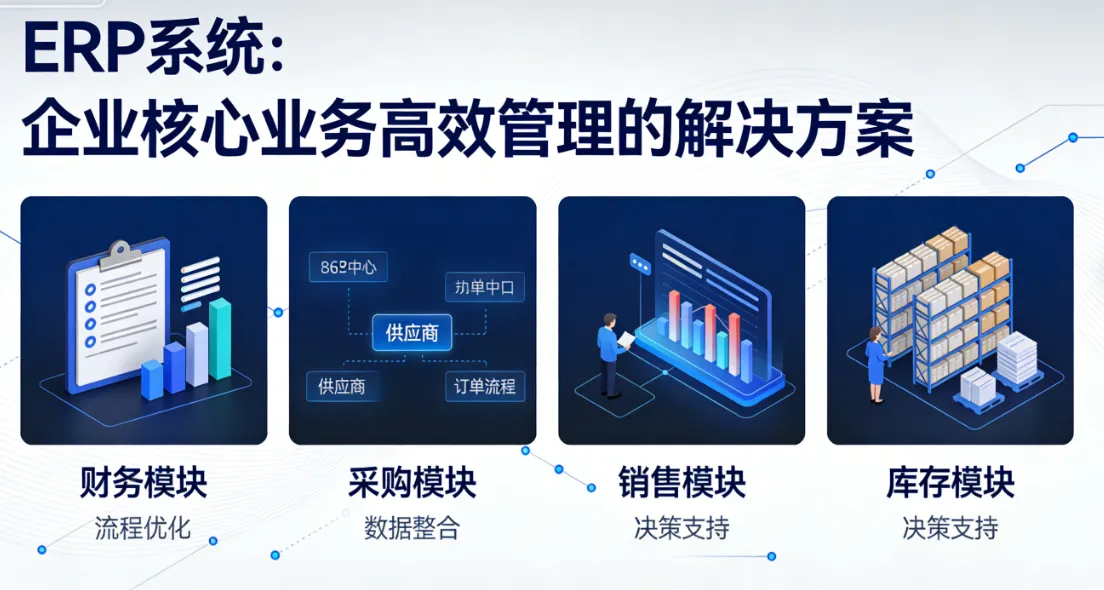
In the field of manufacturing, the advanced planning and scheduling functions of ERP systems can balance multiple constraints such as order priority, equipment capacity, and material supply, generate optimal production plans, and maximize equipment utilization and on-time delivery of orders. A certain automotive parts enterprise has improved the comprehensive utilization rate of equipment from 65% to 82% through scheduling optimization of the ERP system, while shortening the average delivery cycle of orders by 25%. In terms of supply chain management, the system is based on demand forecasting and inventory strategy, intelligently calculates procurement plans and inventory levels, and minimizes inventory costs while ensuring supply. In terms of financial management, the ERP system has achieved deep integration between business and finance, with each business activity reflected in real-time as financial data, supporting accurate cost accounting and cash flow management.
Standardization and Compliance: Building a Robust Management Foundation
With the expansion of enterprise scale and the increase of business complexity, standardized management and compliance control have become increasingly important. The ERP system establishes a standardized operational system for enterprises by solidifying best practices into standard processes. New employees can quickly learn standard operating procedures through the system, and successful models can be quickly replicated during business expansion, reducing reliance on personal experience and improving the robustness and scalability of the organization.
In terms of compliance, ERP systems ensure that business operations comply with internal policies and external regulatory requirements through built-in approval processes, permission controls, and audit trails. Especially in highly regulated industries such as pharmaceuticals, food, and finance, the complete traceability capability and strict process control provided by ERP systems have become important guarantees for enterprises to meet compliance requirements. A pharmaceutical company has achieved full process traceability from raw material procurement to finished product sales through the batch tracking function of the ERP system. This not only meets regulatory requirements, but also shortens the product recall time from an average of 5 days to 2 hours, significantly reducing risk losses.
Continuous Improvement and Innovation: Organizational Capability to Adapt to Change
In the rapidly changing business environment, the continuous improvement and innovation capabilities of enterprises are crucial. The ERP system not only optimizes current operations, but also builds a digital foundation for continuous improvement for enterprises. The accumulated business data of the system provides objective basis for process optimization, and standardized processes provide a reliable platform for the implementation of improvement measures.
Enterprises can establish a continuous improvement cycle of "plan execute check action" through ERP systems: based on system data analysis to identify improvement opportunities, design and implement optimization plans, monitor improvement effects through the system, and then further optimize. A certain engineering enterprise identified efficiency bottlenecks in design change management through project cost analysis using an ERP system. After optimizing the change process, the change processing time was shortened by 40%, and the cost overruns caused by changes were reduced by 35%.
The core engine of digital transformation
ERP system, as a solution for efficient management of enterprise core business, has far exceeded the scope of traditional management software in terms of value. It enhances collaborative efficiency through process integration, improves decision quality through data-driven approaches, improves operational efficiency through resource optimization, and strengthens organizational resilience through standardized management. In today's era where digital transformation has become a necessary path for the survival and development of enterprises, ERP systems have transformed from optional management tools to essential digital infrastructure.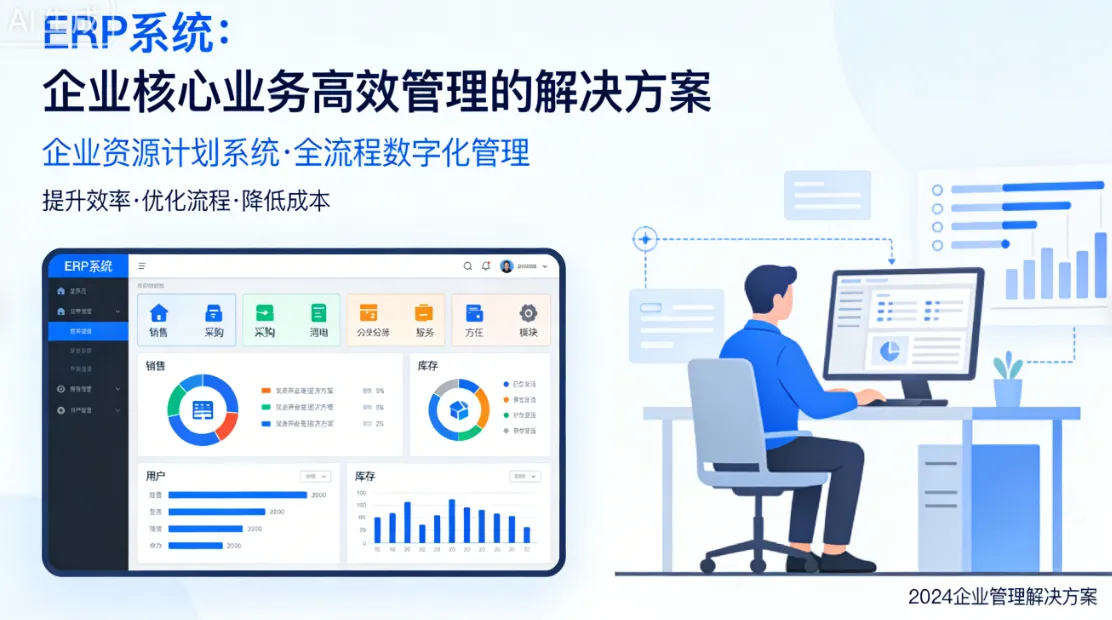
However, the successful implementation and continuous value creation of the ERP system not only depend on the progressiveness of the technical system, but also on the recognition of the enterprise as a management change rather than a pure technical project. Only when enterprises reconstruct business processes with an open mind, drive organizational change with firm determination, and continuously invest in building a data culture, can ERP systems truly become a solution for efficient management of enterprises, helping them build lasting competitive advantages in complex and changing business environments and achieve sustainable high-quality development. In the wave of digital economy, enterprises that can effectively utilize ERP systems to optimize core business management will occupy a favorable position in the future competitive landscape and win broader development space.