
Training Management System - Enterprise Training Plan and Student Management Platform
Training Management Challenges in the Era of Talent Development
In today's era of accelerated knowledge iteration and shortened skill half lives, enterprise training has evolved from an auxiliary function of the human resources department to a core engine supporting strategic implementation, talent development, and organizational capability reshaping. However, the reality of training management is full of contradictions: the annual training plan is formulated with great fanfare, but the execution process is incomplete; The investment in training resources has been increasing year by year, but the training effect is difficult to quantify; Employees complain about the disconnect between training and work, while managers question the unclear input and output of training. The root of these problems often lies not in the quality of the training content itself, but in the extensive and outdated training management methods. The Shuntong Training Management System was born to solve this dilemma. It focuses on the full lifecycle management of training plans, integrating requirements research, resource integration, project implementation, effectiveness evaluation, and file management to build a standardized, transparent, and measurable digital platform for training operations for enterprises.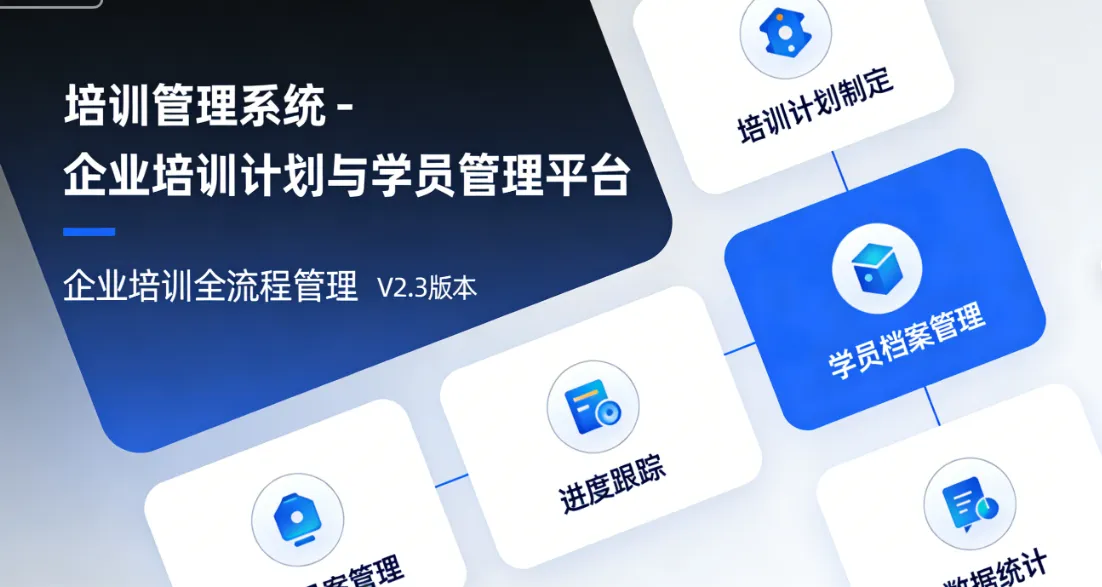
Training Plan Management: From Annual Checklist to Dynamic Closed Loop
The formulation of traditional training plans often falls into a "brainstorming" mode - the human resources department distributes questionnaires to collect demands, and each department randomly fills out a few items, summarizing them into a long course list, which is then shelved after approval. The Shuntong training management system has upgraded plan management from a static list to a dynamic closed-loop. The system has a built-in job competency model library, and enterprises can set differentiated compulsory courses and credit requirements for employees of different job levels and sequences based on strategic priorities and business goals. When preparing the annual training plan, the system automatically compares the job competency requirements with the existing employee competency assessment data, generates a list of training needs for gaps, and shifts the plan from "what courses are needed" to "what skills need to be supplemented".
Implement full process visualization and tracking of plan execution. The system decomposes the annual plan into quarterly plans, monthly plans, and even specific implementation projects. The status of each training task - requirement confirmation, lecturer implementation, venue booking, student registration, course implementation, evaluation feedback - is updated in real-time and penetrated layer by layer. Managers can access core indicators such as training plan completion rate, budget execution progress, and per capita training hours at any time. After a manufacturing enterprise applied the system, the annual training plan execution rate jumped from 62% to 91%, and the phenomenon of training budget overruns completely disappeared. The human resources department was liberated from the tedious task of spending a week every month compiling reports.
Student Lifecycle Management: From Passive Reception to Active Development
The perspective of trainees has long been neglected in traditional training management. Employees do not know what they need to learn, when suitable courses will be available, and what value completing them will bring to them. Training becomes an assigned task rather than an actively pursued development opportunity. The Shuntong Training Management System has built a student-centered digital learning archive, which fully records the entire training history of each employee from onboarding to development.
Employees can log in to the personal portal to clearly view the credit map based on job requirements, completed courses and gaps, recent course recommendations, historical training scores and certificates. The system intelligently pushes personalized course learning packages based on employees' job promotion paths, performance shortcomings, and project participation records. When a certain R&D engineer is appointed as a project manager, the system automatically pushes them supporting course resources such as project management basics, team collaboration, and cross departmental communication, so that training resonates with business development. The registration process for students has been simplified, with course information, time and location, and instructor introductions at a glance. The entire process of registration, check-in, and evaluation can be completed with just one click on the mobile phone, significantly increasing employee participation willingness. A service-oriented enterprise has been online for three months, and the proportion of employees registering for courses independently has increased from 35% to 78%. Training is no longer a one-man show for the human resources department.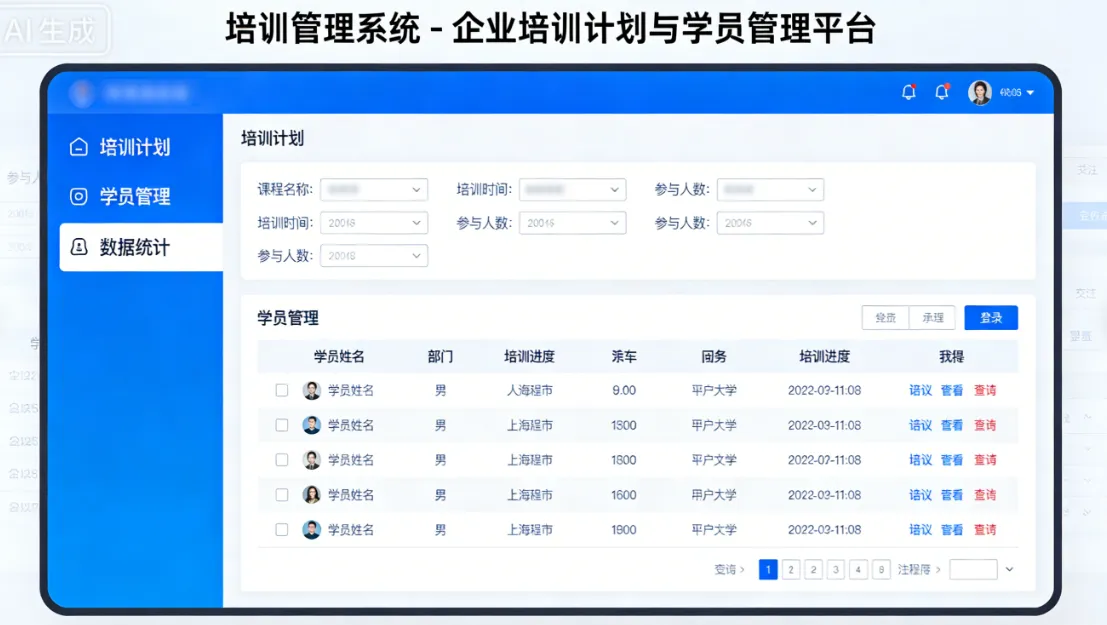
Construction of Training Resource Library: From Decentralized Accumulation to Intensive Sharing
Many companies have abundant training resources but fail to effectively utilize them - internal lecturer courseware is scattered on personal computers, external procurement course CDs are piled up in filing cabinets, and excellent experience is lost as employees leave. The Shuntong Training Management System establishes an intensive digital resource center to systematically precipitate, structurally store, and conveniently reuse dispersed training assets.
The system supports the unified upload and management of various formats of course resources, including videos, audios, PPTs, PDFs, H5 interactive courseware, etc. Each course is associated with complete metadata such as lecturer information, target audience, course duration, and content introduction, and can be classified and labeled according to multiple dimensions such as job sequence, skill area, and difficulty level. Enterprises can set access permissions and learning conditions for courses according to their needs. Some core courses are only available for employees in specific positions, while some general courses are open to all staff. Resource retrieval supports full-text search and intelligent recommendation. Employees can quickly locate relevant courses, lecture notes, cases, and test questions by entering keywords. After a certain financial institution integrated nearly a hundred internal courses scattered across various departments into the system, the course reuse rate increased fourfold, and the phenomenon of repeated procurement of similar external courses was completely eliminated, saving over one million yuan in annual training procurement costs.
Training effectiveness evaluation: from satisfaction rating to behavioral level transformation
Training effectiveness evaluation is a widely recognized challenge in the industry, and many companies stop at the first level evaluation of Ke's. At the end of the course, a satisfaction questionnaire is sent out, and students give a score and write a few positive comments. The training is considered a successful end. As for what the students have learned, how much they have applied back, and what impact it has had on their performance, no one knows. The Shuntong training management system extends the evaluation perspective from classroom satisfaction to behavior transformation and business contribution.
After the course is completed, the system automatically pushes multidimensional evaluation tasks. The reaction layer evaluation is conducted by students filling out standardized questionnaires online, generating real-time course satisfaction analysis reports, and presenting advantages and improvement points based on dimensions such as lecturer, content, organization, and environment. The learning level assessment tests the level of knowledge mastery through online exams, homework submissions, and practical assessments. The system supports question bank management, automatic grading, and score analysis. More importantly, the evaluation of behavior and outcome layers - three to six weeks after the training is completed, the system will push a behavior transformation observation questionnaire to the trainees' superiors to assess whether they have applied what they have learned to work practice, whether the behavior changes are significant, and whether they have a positive impact on team performance. After a certain chain retail enterprise applied this function, it was found that some management courses had high classroom ratings, but the behavior conversion rate was extremely low. After analysis, it was found that the course content was disconnected from the actual scene of the store. Based on this, the course design was adjusted, and the behavior conversion rate increased from 23% to 61%.
Training Compliance and Archive Management: Traceable Organizational Memory
For strongly regulated industries such as pharmaceuticals, food, aviation, and finance, training records are not only management materials, but also compliance evidence. The Shuntong Training Management System follows strict electronic record standards and establishes tamper proof audit trails for each training activity. Training plan approval, course change records, student registration and withdrawal, assessment and scoring process, certificate issuance records, all operations are recorded in detailed logs for complete traceability.
Employee training records achieve full career coverage. From onboarding training, job qualification certification, on-the-job promotion learning to promotion and development training, every course score, every training certificate, and every assessment result are permanently saved in the system. It supports employees to self query and print, as well as authorized access for professional title evaluation, qualification application, and customer factory inspection. When a pharmaceutical company was conducting an audit for foreign clients, the auditor requested to randomly select the three-year training records of fifty production employees. The system completed the entire process of file retrieval, export, and packaging within three minutes, and the auditor highly praised it after verifying each one, calling it the most standardized example of training management among suppliers. The enterprise not only successfully passed the audit, but also obtained additional orders.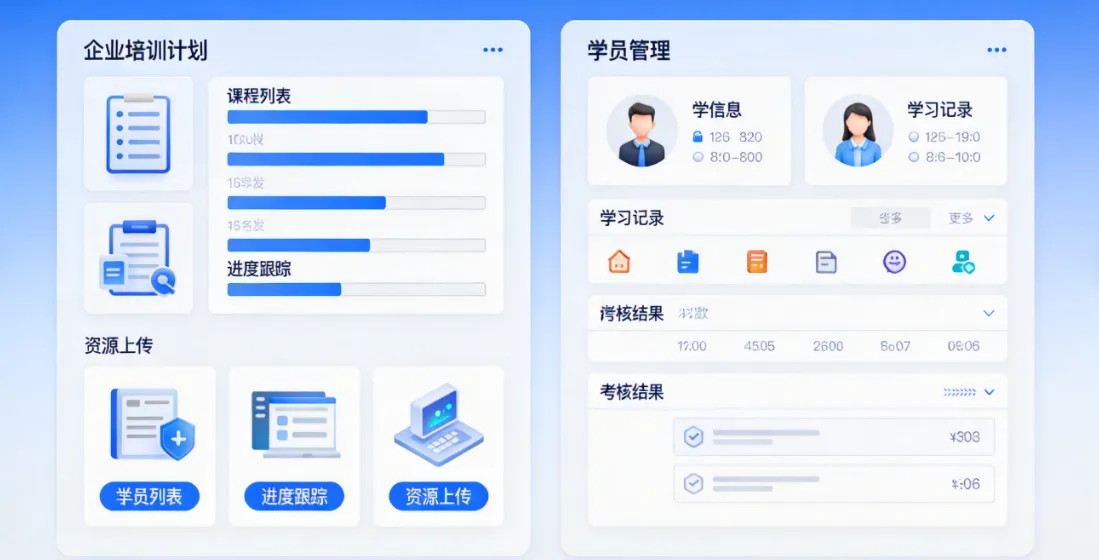
Building a digital foundation for a learning organization
The deep value of Shuntong Training Management System goes far beyond moving the training process from offline to online. It aligns training plans with strategic goals, integrates learning resources with business scenarios, and resonates student development with organizational needs, providing a digital foundation for enterprises to build a learning organization. On this foundation, training is no longer an isolated functional activity of the human resources department, but an organic component that permeates into daily business processes; Learning is no longer a passive task accepted by employees, but a conscious behavior integrated into career development; Knowledge is no longer just fragments of documents sleeping in personal computers, but intellectual assets that flow, reuse, and add value at the organizational level. When these transformations truly occur, the value of training management systems goes beyond the tool level and becomes a strategic infrastructure for enterprises to cope with uncertainty and build sustained competitiveness.