
Digital Campus Student Course Selection Information Management System - Introduction and Functions
From academic difficulties to digital breakthroughs
Course selection is the core node of university teaching operation and also one of the most challenging aspects in academic management. During the course selection season, thousands of students flood into the system simultaneously, causing server pressure, page lag, and login failures; Popular course spots are quickly available, and students complain that 'grabbing classes is harder than grabbing train tickets'; The complex rules of training programs, prerequisite requirements, credit limits, and time conflicts are intertwined, and manual review is time-consuming and laborious; After the completion of course selection, the demand for changes such as course adjustment, withdrawal, and by election is still continuous. The root of these difficulties lies in the traditional course selection management model simplifying the complex allocation of teaching resources into a "quota allocation" problem, compressing the dynamic adjustment process that should run throughout the entire semester into centralized operations at several time nodes. The digital campus student course selection information management system is designed to solve this dilemma. It is student-centered, focuses on training programs, and aims to optimize resource allocation. It upgrades course selection management from a "ticket grabbing" emergency operation to a "planning" intelligent service, becoming a key hub connecting academic management, teaching resources, and student learning in the construction of a digital campus.
Training program driven: returning course selection to the essence of academic planning
Course selection should not be an isolated act, but rather a specific path for students to complete their academic plans. In the traditional mode, the training plan is printed in the student handbook, and students check each course against the paper document during course selection, which easily leads to missing compulsory courses, selecting restricted courses incorrectly, and selecting courses without prerequisite qualifications. The problem was only discovered during the credit review before leaving school, and there is no opportunity for remedy. The first core function of the digital course selection system is to transform the training program from a static file into a dynamic engine.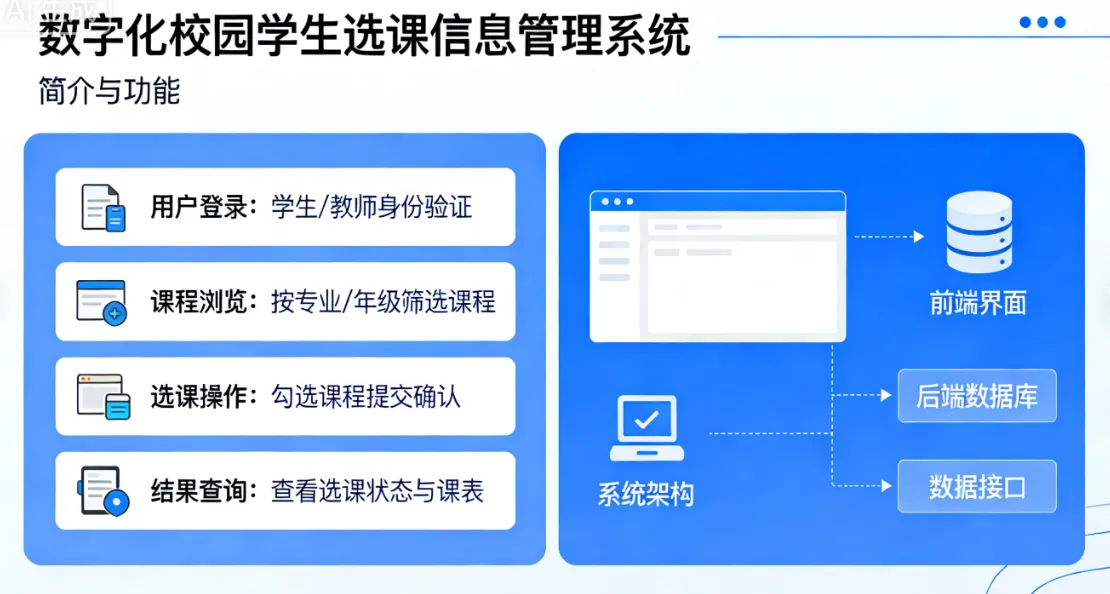
The system pre sets a complete training plan data structure for each major, grade, and direction, including course categories, credit requirements, starting semester, prerequisite courses, mutually exclusive courses, and other complete rules. Students log in to the course selection interface, and the system automatically identifies their major and training version, presenting a personalized and visual academic progress map - checked courses have been taken, recommended courses for this semester are highlighted, and courses to be taken in future semesters are clearly arranged. When students select courses, the system checks the matching degree between the selected courses and the training plan in real time. If they do not meet the credit category requirements, they will be automatically intercepted. If they do not meet the prerequisite conditions, they will be immediately alerted, and time conflicts will be intelligently prompted. After the implementation of this module in a comprehensive university, the number of course selection errors caused by misunderstandings of the training program decreased by 73%. The average processing time for the final review of graduation qualifications was reduced from 27 minutes to 3 minutes per person. Students can clearly see whether they meet the graduation requirements in the first semester of their senior year and calmly complete the process of identifying and filling gaps.
Intelligent course scheduling and resource optimization: from experience allocation to scientific scheduling
The curriculum is the most complex resource allocation table in universities, involving multiple constraints such as classroom capacity, teacher time, equipment conditions, and student groups. Traditional course scheduling relies on the personal experience of academic administrators, takes several months, and is difficult to achieve global optimization. It often leads to unreasonable phenomena such as hundreds of courses being arranged in 40 classrooms and cross campus courses being arranged back-to-back. The value of a course selection system lies not only in handling course selection operations, but also in improving resource utilization efficiency from the source through course scheduling optimization.
The system is equipped with an intelligent scheduling engine, which takes classroom resource library, teacher time preferences, course nature requirements, student grade distribution and other data as input variables. The objective function is to maximize classroom utilization, minimize student walking distance, and optimize teacher time satisfaction. It automatically generates multiple scheduling plans for educational decision-makers to compare and choose from. The scheduling results are seamlessly integrated with the course selection module, and the classroom capacity is the real-time remaining quota when students choose courses, eliminating over selection and missed selection. After applying intelligent scheduling in a multi campus university, the average utilization rate of public classrooms increased from 58% to 79%, the average time for students to transfer between different campuses was shortened by 22 minutes, the scheduling cycle was reduced from two months to one week, and the academic staff transformed from "firefighters" to teaching resource analysts.
Graded warning and process intervention: from final accounting to daily support
Course selection management should not be limited to selecting courses, but should also extend to tracking and supporting the learning process after selection. In the traditional mode, students only realize that they cannot keep up with the course schedule during mid-term exams or even at the end of the semester. At this time, the deadline for withdrawing from the course has passed, and the record of failing the course is difficult to recover. The digital course selection system prioritizes academic support through data collection and grading warning mechanisms throughout the entire process.
The system is linked in real-time with online learning platforms, academic performance systems, and attendance management systems to collect multidimensional behavioral data such as student classroom interaction, homework submission, test scores, and attendance. When a student fails to submit their homework for three consecutive weeks or their test score falls below the threshold, the system automatically triggers an alert and pushes it in a hierarchical manner according to preset rules - a blue alert is sent to the student to remind them to adjust their learning engagement; Yellow warning will be synchronously pushed to the teachers and counselors, and it is recommended to proactively discuss and assist them; A red alert will be reported to the dean of the college's teaching department, and multiple departments will be activated for collaborative intervention. After piloting this module in a certain university for two semesters, the failure rate of students in the pilot college decreased by 31%, and the number of warnings for dropping out decreased by 42%. The earlier the intervention, the more significant the effect. The course selection system has evolved from "one-time service at the beginning of the semester" to "full companionship throughout the semester".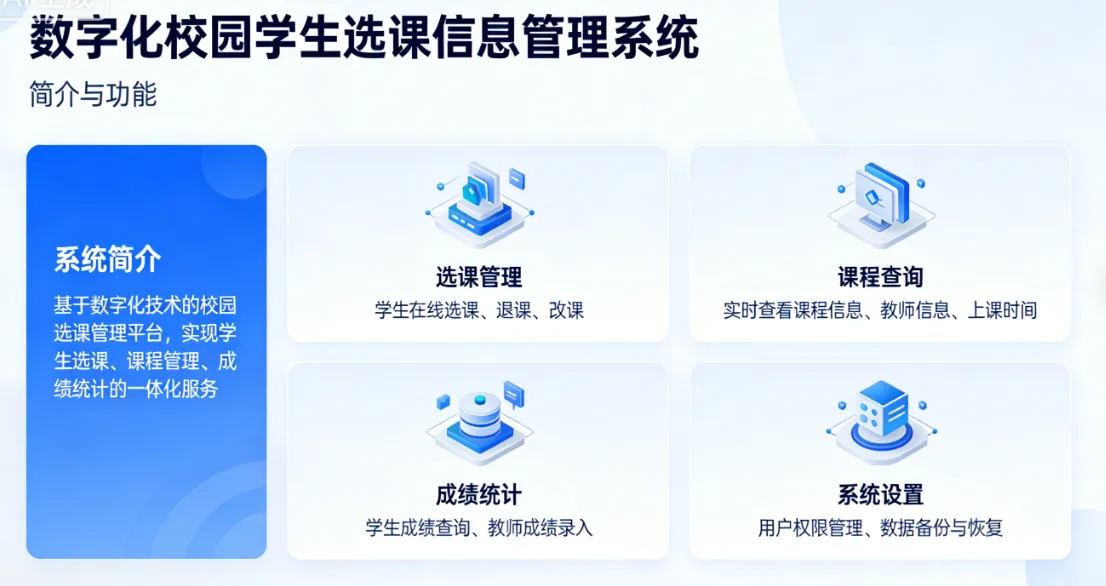
Flexible adjustment and closed-loop selection: a dynamic mechanism for responding to changes
The academic progress of students cannot remain unchanged. After taking a leave of absence due to illness and resuming classes, it is necessary to take remedial courses, adjust the training path after professional diversion, and appropriately reduce the academic burden during the postgraduate entrance examination review stage - these demands are not "exceptional situations", but objects that must be routinely handled in teaching management. The digital course selection system transforms change operations such as by election, withdrawal, and replacement from a special approval process to a normalized online service.
When students submit course change requests, the system automatically checks whether there are still available spots for the target course, whether the changed credits meet the upper and lower limit requirements, and whether the course time conflicts with other courses already taken. Change requests that comply with the rules will take effect immediately and the system will update the student schedule, teacher roster, and classroom usage records synchronously; For applications that do not comply with the rules, the system will clearly indicate the reasons for rejection to avoid students repeatedly running errands between various functional departments. After the make-up and refund selection window is closed, the system automatically generates the final course selection list for each course, seamlessly connecting with downstream systems such as grade input, textbook subscription, and teaching evaluation. After applying this module in a certain university, the average processing cycle for course changes during the semester has been shortened from 5.6 days to real-time completion, and student satisfaction with teaching affairs has increased from 67% to 91%.
Data Analysis and Decision Support: From Empirical Governance to Evidence Based Governance
The digital course selection system operates day after day, accumulating a massive amount of valuable data: which courses are fully open and which courses are unpopular, reflecting whether the training plan is disconnected from market demand; Which time periods have the most concentrated student course selection and which server resources remain tight, revealing the optimization direction of information infrastructure; Which teacher courses have a high dropout rate and which teacher courses are popular for interdisciplinary electives, providing quantitative basis for teacher motivation and training.
The system has a built-in course selection big data analysis module, which presents panoramic insights to academic administrators in the form of a visual cockpit. Analysis report on the rationality of the training plan, accurately identifying specific courses in the long-term "oversupply" or "supply shortage" of each professional curriculum system; Classroom resource benefit analysis report, clearly displaying the distribution and optimization potential of usage rates for each campus, time period, and type of classroom; A report on student study behavior analysis reveals the course selection preferences, credit progress, and academic risks of students in different grades and majors. A research university found through systematic data analysis that students in a certain major have been facing excessive credit pressure for three consecutive terms in the second semester of their junior year. After conducting a source investigation, the training program was adjusted accordingly, and some courses were diverted to the first semester of their senior year. The average weekly classroom time of students decreased by 4.6 hours, and the evaluation of academic pressure significantly improved.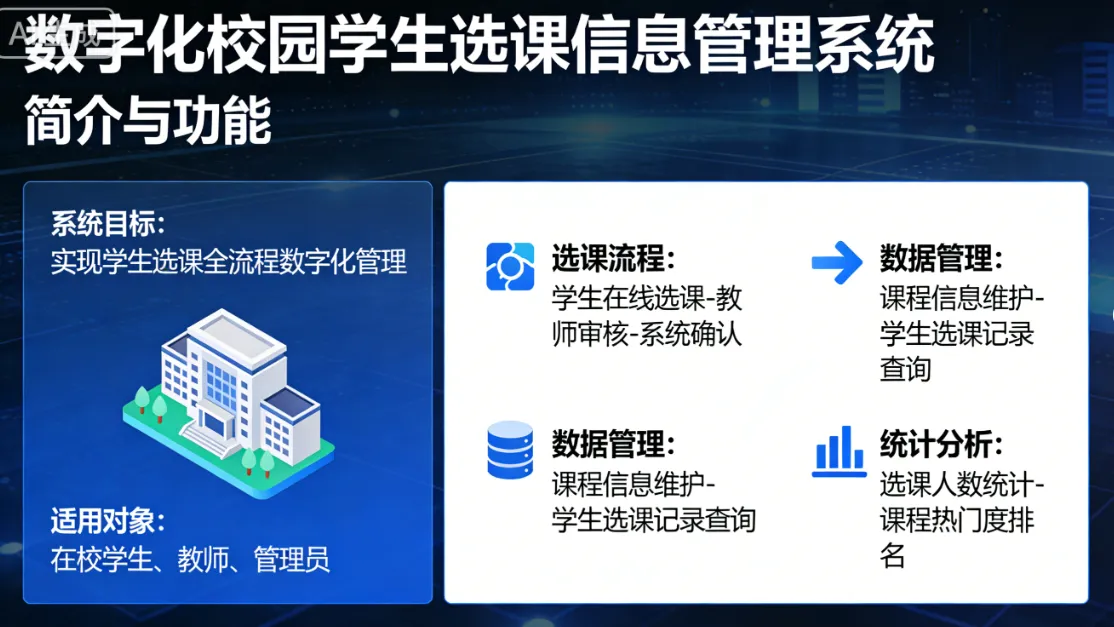
A digital bridge connecting teaching and learning for mutual growth
The deep value of the digital campus student course selection information management system lies in its reconstruction of the relationship between students, teachers, and administrators. Students transition from passive course recipients to active academic planners; Teachers have expanded from only focusing on knowledge transmitters in the classroom to becoming educational partners who care about students' full cycle growth; Managers have evolved from transaction handlers who rely on experience to data-driven teaching governance experts. Course selection is no longer a one-time intense competition for spots at the beginning of each semester, but a continuous dialogue that runs through the four years of university - students understand themselves and plan for the future through interaction with the system, and the system accumulates data and optimizes services through interaction with students. When this digital bridge is solid and intelligent enough, it not only carries course selection data, but also represents the possibility of higher education evolving from large-scale training to personalized education.