
One stop Human Resource Management System | Digital HR Solution - Full Module Coverage
The era proposition of digital leap in human resource management
The human resources department has long played a paradoxical role within the company - managing people while also being difficult to quantify; Claiming to be a strategic partner, but being overwhelmed by transactional work on a daily basis. Recruitment resume screening, attendance statistics and summary, salary calculation and distribution, social security and housing fund application, training organization evaluation, performance goal setting and scoring, every task is indispensable and time-consuming. What's even more serious is that these functional modules often operate independently in the traditional mode - the recruitment system is provided by supplier A, the attendance machine is deployed by manufacturer B, salaries are calculated in Excel, and training records are scattered everywhere. Data fragmentation leads to manual assembly of human analysis reports, which takes several weeks and is severely delayed when received. The birth of a one-stop human resource management system is a systematic response to this dilemma. It takes organizational personnel master data as its core and integrates all functional modules of human resource management on a unified platform, achieving a digital leap from recording to insight, from control to empowerment, and from isolation to collaboration.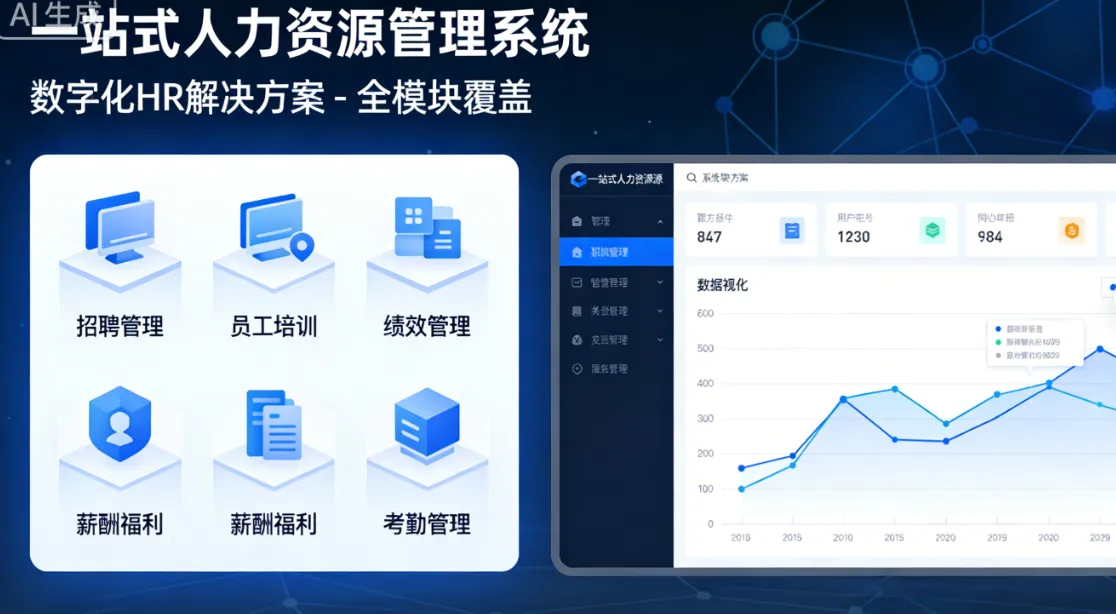
Organizational personnel master data: eliminate duplicate entries and establish a single source of facts
The operation of all modules of human resource management relies on accurate, complete, and consistent organizational and personnel basic data. However, in the traditional model, employees fill out paper registration forms upon joining, recruitment specialists enter them into the recruitment system, attendance specialists import them into the attendance system, salary specialists enter them into the salary system, and social security specialists establish social security accounts. The name, ID number, entry date and position rank of the same employee are repeatedly entered in different systems, with different formats and frequent errors. Resignation requires separate operations in multiple systems, which is easy to miss. The core foundation of a one-stop HR system is the unified organizational personnel management module.
The system will centrally manage basic data such as organizational structure, job system, personnel files, job qualifications, labor contracts, etc., with one-time entry and global sharing. When an employee joins, the HR specialist enters basic information and uploads an electronic version of the onboarding materials. The system automatically provides feedback on the recruitment completion status to the recruitment system, synchronizes personnel information with the attendance system and generates attendance cards, synchronizes the start date of the onboarding salary with the salary system, and pushes the recruitment application data to the social security system. When employees are transferred, they only need to complete the job change operation in the organizational personnel module, and the department ownership, approval authority, and cost center of all downstream systems will be automatically synchronized and updated. After the resignation process is initiated, the system sequentially triggers chain tasks such as attendance settlement, salary settlement, social security reduction, asset recovery, account cancellation, etc., to ensure the complete compliance of the resignation closed loop. After applying this module in a certain group enterprise, the average time for employee onboarding procedures has been reduced from 3.5 days to 0.5 days, and cross system data inconsistency incidents have decreased by 96%. The efficiency of HR shared service center personnel has also increased by 40%.
Comprehensive Salary Management: From Salary Calculation Tools to Incentive Engines
Salary accounting is the function with the lowest fault tolerance and highest timeliness requirements in human resource management, and it is also the link with the highest manual dependence in traditional models. Attendance data needs to be exported from the attendance machine, sorted in Excel, and imported into the salary system; Performance ratings need to be collected from various departments and manually entered after verification; The social security and housing provident fund base needs to be adjusted year by year, and the differences in policies in different regions need to be maintained by dedicated personnel. Before monthly salary distribution, HR and finance departments double check to avoid errors or omissions that may lead to employee complaints. The comprehensive salary management module of the one-stop HR system upgrades salary accounting from "month end assault battle" to "automated assembly line".
The system is linked in real-time with the attendance module, performance module, and social security policy library. After the monthly attendance cycle ends, the system automatically summarizes the attendance days, overtime hours, leave types, and annual leave balances of each employee, and calculates the amount to be deducted and supplemented according to preset rules. After the performance evaluation is completed, the scores submitted by each evaluator are automatically weighted to generate performance coefficients, which are linked in real-time to performance-based salary accounting. The social security and housing fund module is equipped with the latest payment ratios and upper and lower limits of the base in major cities across the country. The system automatically determines the new annual base based on the average monthly salary of employees in the previous year, generates payment details on a monthly basis, and pushes them to the salary accounting interface. When calculating salary, the system completes the calculation of payable salary, personal income tax deduction, and actual salary with one click based on employee job level, salary structure, and attendance performance data, and automatically generates salary slips to push to the employee self-service end. After a certain chain retail enterprise applied the salary module, the monthly salary accounting cycle was shortened from 7 working days to 1.5 working days, the salary accounting position was reduced from 6 to 3 people, and employee salary inquiries and complaints decreased by 89%.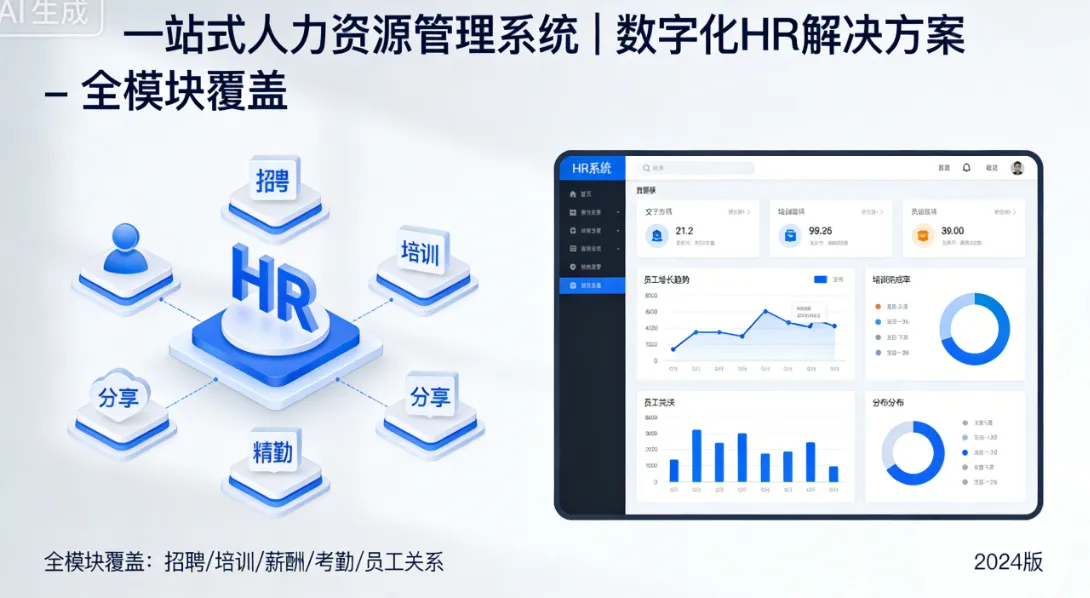
Smart Attendance and Labor Management: From Supervision Tools to Efficiency Assistants
Attendance management has long been regarded by employees as a 'control tool', and the fundamental reason is that traditional attendance systems only record tardiness, early departure, and absenteeism days, but cannot effectively connect with business needs. Frontline employees' overtime cannot be approved online, and scheduling adjustments require repeated phone communication. The balance of annual leave needs to be checked with HR. The intelligent attendance module of the one-stop HR system extends the management perspective from "compliance" to "efficiency".
The system supports parallel management of various working hour systems such as fixed shift system, flexible working hours, comprehensive working hours, and flexible working hours. The scheduling function supports visual drag and drop scheduling by team, production line, and store. The system automatically verifies whether the scheduling duration meets the upper limit of labor regulations, and employees can view their shifts in real time through the mobile terminal. Mobile clocking in parallel with fixed attendance machines, supporting multiple verification methods such as Wi Fi geofencing, GPS positioning, and facial recognition, Du Juedai clocking in. Attendance data is calculated in real-time, and employees can check their accumulated working hours, overtime hours, and remaining annual leave for the current month at any time. The more advanced value is reflected in the level of labor analysis, where the system automatically generates performance hour ratio, labor cost ratio, absenteeism trend and other analysis reports, providing quantitative basis for managers to optimize scheduling efficiency and control labor costs. After applying the labor analysis module, a manufacturing enterprise identified a common issue of idle personnel in the afternoon on three production lines. By adjusting the scheduling structure, the production capacity was increased by 12% without increasing staff.
Full cycle of talent development: the complete chain from recruitment to succession
Talents are the core assets of enterprises, but in the traditional model, talent data is divided into recruitment resume database, training record table, performance evaluation file, and promotion approval form, which cannot form a complete talent portrait. High potential employees rely on subjective recommendations from department supervisors to quickly initiate external recruitment after key positions are lost. The one-stop HR system integrates all aspects of talent development into a unified view.
The recruitment management module aggregates resumes from various recruitment channels, and the system automatically parses key fields of resumes and intelligently matches them with job requirements. Interview evaluations and assessment reports are recorded online, and after the employment approval is passed, the data is directly pushed to the organizational personnel module to complete the onboarding process without the need for secondary input. The training management module supports various forms such as online courses, offline training, and blended learning. The employee's learning profile is fully recorded, and the training assessment results are automatically associated with the employee's job qualification promotion conditions. The performance management module supports multiple modes such as KPI, OKR, 360 evaluation, etc. The entire process of goal setting, progress feedback, performance scoring, and result confirmation is online, and the evaluation results are linked to salary, training, and promotion. On this basis, the system constructs talent inventory and succession planning functions, visualizes talent distribution through tools such as the nine grid, automatically identifies high potential talents and key position succession candidates, and provides decision-making support for management team building. After applying the talent development module in a certain technology company, the internal filling rate of key positions increased from 38% to 67%, and the turnover rate of high potential talents decreased by 25 percentage points.
Employee Self Service: From Passive Acceptance to Active Participation
The pressure of traditional human resource management largely comes from employees' frequent and repetitive daily consultations. How many days of annual leave are left, when will the payslip be issued, how to apply for the social security card, and when will the overtime compensatory leave deadline - these information that should be independently controlled by employees can only be obtained by asking HR in the era of system fragmentation, and both parties are exhausted. The employee self-service module of the one-stop HR system returns the right to know and the right to operate to employees.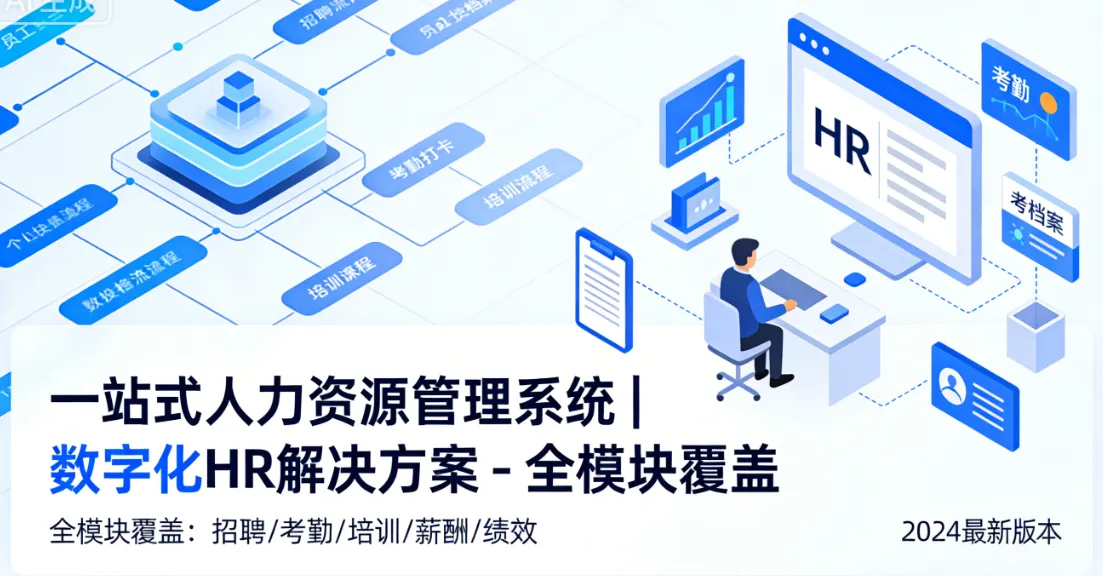
Employees can query their personal profile information, attendance records, salary details, performance ratings, training experience, and labor contracts at any time through mobile or PC portals, without relying on HR to query on their behalf. Daily affairs such as vacation application, overtime declaration, business trip declaration, training registration, and certificate issuance are initiated online by employees, automatically circulated and approved by the system, and the results are feedback in real time. The approval progress is fully visible throughout the process. Managers can view the team's manpower panorama at any time through the superior portal, including the distribution of team members, vacation plans, overtime workload, performance progress, and approval task aggregation processing, without the need to switch login between different systems. After a certain group applied the employee self-service module, the number of inquiries answered by the HR department decreased by 65%, and the satisfaction of employees with human resources services increased from 63% to 88%.
Human Capital Analysis: From Statistical Reports to Strategic Decision Support
The ultimate value of a one-stop HR system lies in transforming dispersed human data into organizational insights that can guide strategic decision-making. Traditional human resources reports are mainly characterized by static, lagging, and summary types - the personnel turnover rate for this month can only be obtained at the end of this month, and the recruitment efficiency for the previous quarter can only be reviewed at the beginning of the next quarter. The built-in human capital analysis module of the system associates human data with business data, presenting a real-time panoramic dashboard of organizational health.
The management can access multidimensional indicators such as key talent loss warning, key position vacancy duration, organizational atmosphere research trends, changes in per capita output efficiency, and analysis of labor cost composition at any time. The data penetration capability supports cascading down from the group level to the department, team, and even individual dimensions, accurately locating problem units. When the per capita profit of a business unit declines for two consecutive quarters, managers can analyze the personnel structure changes, performance distribution trends, and training investment intensity of the unit through system correlation analysis, providing data basis for organizational diagnosis and resource allocation. When the industry cycle fluctuates and requires adjustment of manpower scale, the system simulates the quantitative impact of different adjustment plans on costs, efficiency, and production capacity based on historical data and business forecasts, supporting management to make scientific decisions rather than making decisions based on intuition.
The Strategic Leap of Digital HR
The one-stop human resource management system not only upgrades paper forms into electronic interfaces, but also elevates the role of human resource management from "administrative support" to "strategic co creation". When transactional work is efficiently processed by the system, HR practitioners can focus their energy on truly creating value through organizational diagnosis, talent development, cultural construction, and change promotion; When employees regain a sense of control over their own personnel affairs through self-service, the human resources department transforms from a "manager" to an "enabler"; When human data resonates with business data, talent decision-making shifts from relying on intuition based empiricism to evidence-based management. In this digital driven functional transition, integration and full module coverage are no longer optional, but rather the infrastructure for human resources departments to respond to corporate strategic expectations and fulfill professional commitments.