
Shuntong Smart Meeting Reservation Management System - Improving Conference Room Resource Utilization and Meeting Efficiency
The invisible efficiency black hole of conference room management
In many companies, conference rooms are a strategically scarce resource that is severely underestimated. On the surface, companies invest heavily in high-definition video equipment, intelligent whiteboards, and audio and video systems. However, in actual operation, there are absurd paradoxes: on the one hand, employees can continuously refresh dozens of times on office software but still cannot get conference rooms, and on the other hand, a large number of pre booked conference rooms are vacant during prime time; On one hand, managers complain that meetings consume too much work time, and on the other hand, employees settle for private discussions in the workstation area because they cannot find a suitable venue. Behind this resource mismatch is the systemic failure of traditional conference management models - paper registration books cannot be updated in real time, email reservations are easily overlooked, group appointment information is chaotic, and equipment status is disconnected from venue status management. The Shuntong Smart Conference Reservation Management System was born to solve this dilemma. It focuses on the digital management of conference room resources throughout their lifecycle, integrating four functional modules: reservation, check-in, device linkage, and data analysis. It helps enterprises transform conference rooms from an embarrassing asset of "rushing to use but not using it well" to an efficient and valuable productivity tool.
Visual reservation: Make conference room resources panoramic and transparent
The primary pain point of conference room management is invisibility. Employees do not know which conference rooms are currently available, which ones have been reserved, and whether the equipment is in good condition. They can only knock on the door one by one to inquire or send a group email to search for a needle in a haystack. The Shuntong Smart Conference Reservation Management System builds a fully scene covered conference room resource visualization network through interactive intelligent screens deployed at the entrance of the office area, elevator halls on each floor, and in front of conference room doors, as well as lightweight applications embedded in mobile work platforms such as enterprise WeChat, DingTalk, and Feishu.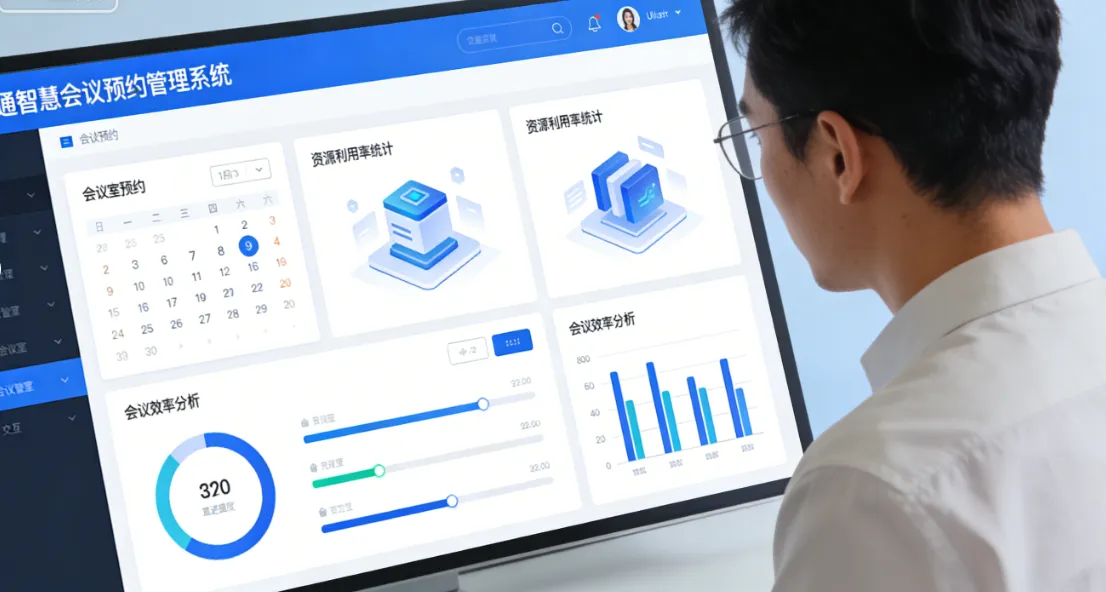
The employee opens the appointment interface, and the system clearly displays the real-time status of all meeting rooms in floor plan or list view - green represents available for appointment, red represents occupied, and yellow represents about to start. Click on any conference room icon to view the detailed profile of the venue, including seating capacity, equipment configuration, layout type, and historical usage evaluation. The reservation process is simple, selecting the desired time slot, filling in the conference theme, and adding participants. The system automatically verifies that the scheduled time slot conflicts with the already booked time for the conference room. If there is a conflict, it will immediately prompt for adjacent time slots or other available conference rooms on the same floor. The approval process can be configured as needed. Ordinary internal meetings do not require approval and take effect immediately. For special scenarios such as customer reception, executive participation, and cross departmental coordination, designated approvers can be set up. After successful booking, the system automatically generates an electronic meeting notification, synchronously pushes it to the participants' calendar, and sends a reminder message containing the meeting time, location, and agenda. After a certain technology company applied the visualization booking module, the average time for employees to book a single meeting decreased from 8 minutes to 45 seconds, and the time for finding and coordinating meeting rooms was reduced by 90%.
Intelligent check-in and attendance control: Ending booking breaches and resource idleness
Breaking a reservation is the most common and persistent challenge in conference room management. Employees habitually book multiple time slots in bulk or occupy fixed time slots for a long time to prevent temporary inability to find meeting rooms. However, the actual meeting rate is less than 50%, which leads to other teams with real needs being unavailable. The Shuntong Smart Conference Reservation Management System has upgraded the allocation logic of conference room resources from "reservation and occupancy" to "use and confirmation" through an intelligent check-in and attendance control mechanism.
The system configures QR code doorplates or Bluetooth beacons for each conference room. 15 minutes before the scheduled meeting time, the system will push a check-in reminder to the meeting initiator; After the attendees arrive, they can automatically sign in by scanning the QR code on their mobile phones or approaching the access control. If no one signs in within 15 minutes after the scheduled meeting starts, the system will automatically release the conference room resources and push a vacancy notification to the waiting queue. For user accounts that frequently breach appointments without reason, the system will accumulate records of dishonesty and automatically restrict their conference room reservation permissions for the next 30 days. After successfully signing in and opening the meeting, the meeting door screen will switch to the "Meeting in Progress" status in real time, displaying the meeting theme, start and end times, and host information to prevent others from entering and disturbing. After a financial enterprise applied the intelligent check-in module, the actual utilization rate of the conference room jumped from 58% to 89%, which is equivalent to creating nearly 40% of the incremental conference resources for the enterprise without adding any physical venue conditions.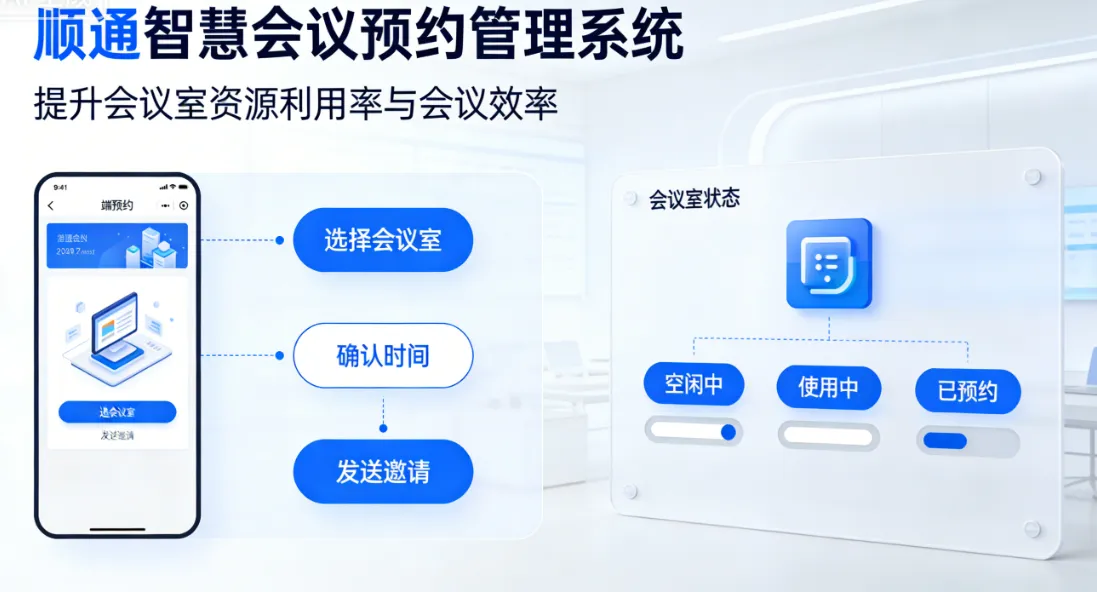
Equipment and environment linkage: making technology serve the conference itself
The value of modern conference rooms lies not only in their physical space, but also in the audio and video, screen mirroring, and remote collaboration devices they are equipped with. In the traditional mode, device management and conference room reservation are separated from each other - after employees book the conference room, they need to contact the IT department to enable device permissions and debug video conferences. Even after ten minutes of the meeting, they are still tinkering with cable interfaces. The Shuntong Smart Conference Reservation Management System integrates device control and environmental regulation into a unified scheduling system.
The system is deeply integrated with IoT terminals such as conference room audio and video equipment, projectors, electronic whiteboards, lighting, air conditioning, etc. After the conference reservation is successful, the system automatically generates an equipment authorization token for the conference. Five minutes before the scheduled time slot starts, the conference room access control is automatically unlocked, the lighting is automatically turned on to the preset brightness, the air conditioning is automatically adjusted to a comfortable temperature, and the video conference terminal is automatically awakened and connected to the conference. At the end of the meeting, the system detected that no one was staying indoors, and after a delay of several minutes, it automatically performed energy-saving operations such as shutting down the equipment, turning off the lights, and resetting the air conditioning. After a multinational enterprise applied the device linkage module, the average meeting preparation time for employees was reduced from 12 minutes to no waiting time, and the IT department received a 76% decrease in conference equipment repair and operation consultation.
Data Cockpit: From Experience Management to Scientific Operations
The deep dilemma of conference room resource management lies in the lack of quantitative basis for managers. How many conference rooms should a company allocate reasonably? How to allocate the proportion of large, medium and small venues? Is the video conference room sufficient? Traditional decision-making relies on personal observation and scattered feedback from administrative supervisors, making it difficult to form systematic optimization plans. The Shuntong Smart Meeting Reservation Management System is equipped with a built-in business intelligence analysis engine, which converts the daily meeting reservation and usage data into precise input for management decisions.
The system automatically generates a panoramic cockpit for conference room operations, presenting core indicators such as usage rate of each conference room, distribution of reservation lead times, analysis of time slot popularity, ranking of failure rates, frequency of equipment calls, and proportion of cross departmental meetings. Managers can drill down layer by layer to access detailed data in any meeting room or at any time period. Based on the historical trend model, the system can also predict the future demand for conference room resources - by calculating the total number of conference rooms required for the next year and the ratio of various types of venues based on the enterprise's employee growth plan and historical per capita meeting time data, providing quantitative basis for the planning and design of new office areas. Through data analysis, an Internet enterprise found that the utilization rate of its four bedroom small conference room was as high as 98%, while the average daily use of large conference rooms with more than 20 people was less than 2. Based on this, the decoration plan was adjusted, and some large conference room partitions were transformed into small flexible spaces. The overall utilization rate of conference room resources increased by 34%, and the waiting time for employee conference rooms decreased by 57%.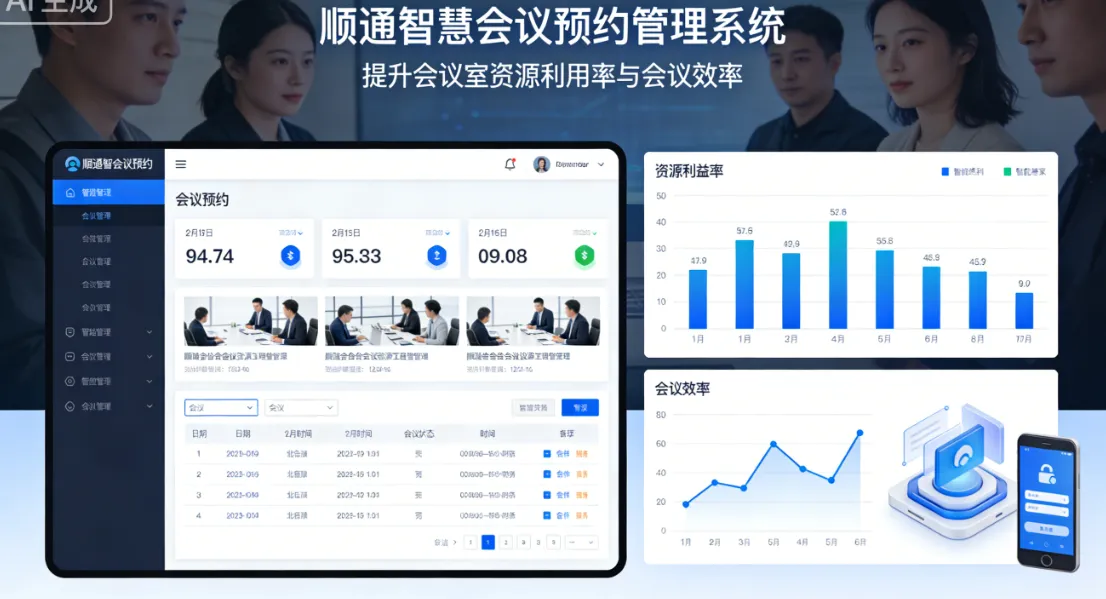
The value transition from efficiency to culture
The deep value of Shuntong Smart Meeting Reservation Management System goes far beyond upgrading conference room reservations from manual operations to online operations. It significantly expands the conference capacity of enterprises without increasing venue costs by releasing physical resources occupied by inefficient management; Establish a culture of resource utilization with equal rights and responsibilities by eliminating free riding behavior that violates reservations; Through the automatic linkage of equipment and environment, employees are freed from the technical anxiety of debugging before the meeting, so that they can focus on the meeting content itself; By continuously accumulating data assets, we aim to promote the evolution of conference room resource allocation from the personal judgment of the Chief Executive to evidence-based decision-making based on scientific calculations.
When the conference room no longer needs to be booked several days in advance, when the conference organizer no longer worries about the reservation being cancelled without reason, and when participants no longer waste collective time debugging equipment, the conference itself completes the cognitive transfer from "cost burden" to "value creation". In this sense, the intelligent meeting reservation management system optimizes not only the utilization rate of conference room resources, but also the time concept, collaborative culture, and decision-making quality within the organization. This may be the most profound strategic gift that this seemingly efficient system brings to enterprises.