
Shuntong Footwear Trade ERP System - Helps Enterprises Efficiently Manage Supply Chain and Inventory
In the footwear trade industry, the inherent characteristics of the industry include interconnected supply chains, complex inventory categories, and frequent order circulation. From shoe material procurement, style research and development sampling, to finished product warehousing and multi-channel shipping, any information disconnection or management negligence in any link may lead to inventory backlog, delivery delays, and cost increases, becoming a hindrance to enterprise development. With the deepening of digital transformation, traditional manual bookkeeping, offline communication, and experiential management models are no longer suitable for the large-scale and refined development needs of the industry. An ERP system that fits the characteristics of the footwear trade industry has become the core lever for enterprises to overcome management bottlenecks and achieve cost reduction and efficiency improvement. Shuntong Footwear Trade ERP System deeply cultivates industry pain points, using digital and intelligent management solutions to build a full chain management system for footwear trade enterprises. From supply chain collaboration to fine inventory control, it realizes data exchange and process closure at all links, helping enterprises break through management bottlenecks and enhance core competitiveness.
The supply chain management of footwear trading enterprises has always had problems such as scattered suppliers, non-standard procurement processes, and difficulty in controlling delivery times. There are numerous types of shoe materials, with suppliers of leather, rubber, shoelaces, accessories, and other materials scattered throughout the country. Under the traditional procurement model, enterprises need to communicate quotations and delivery dates through phone and WeChat, and purchase information is recorded in scattered forms or documents, which can easily lead to information omissions, unclear price comparisons, and inability to track the progress of purchase order execution in real time; At the same time, there is a lack of data support for supplier ratings, making it difficult to screen high-quality suppliers, and low-quality suppliers affecting supply efficiency, which in turn leads to production or shipping delays. The Shuntong Footwear Trade ERP System has created an integrated supplier management and procurement collaboration module to address the pain points of supply chain management. From supplier entry and information filing to procurement demand reporting, order issuance, shipment tracking, and acceptance and warehousing, it achieves full process digital management and control.
The system supports enterprises to establish a comprehensive supplier archive, enter supplier qualifications, main products, quotation system, cooperation history and other information. Through a data-driven supplier rating system, it automatically scores based on dimensions such as on-time delivery rate, product qualification rate, and price advantage, helping enterprises quickly screen high-quality partners and optimize supplier structure. In the procurement process, each department can submit purchase requests online based on inventory status and order requirements. Management personnel can approve them with one click, and the system automatically generates purchase orders and synchronizes them to the supplier port. Suppliers can receive orders in real time and provide feedback on production and shipping progress. Enterprise procurement personnel can view order execution status in real-time in the system without repeated communication, and accurately control delivery time. In addition, the system also supports the management of purchase price ledger, automatically recording historical purchase prices, achieving price comparison analysis, avoiding purchase premiums, and reducing purchase costs from the source.
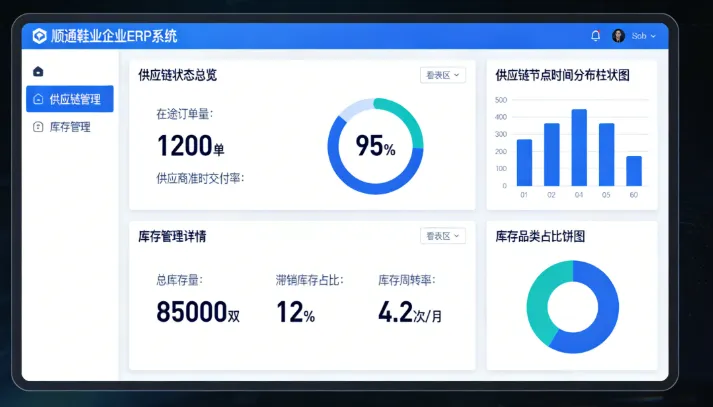
Inventory management is the core operational link of footwear trading enterprises and also the area where industry pain points are concentrated. Shoes are divided by style, size, color, and material, with a large number of SKUs. Traditional inventory management relies on manual inventory and bookkeeping, which is not only inefficient but also prone to problems such as discrepancies between accounts and reality, inventory backlog, and stockouts. Bestselling items miss sales opportunities due to insufficient inventory, while unsold items accumulate for a long time, occupying warehouse space and funds. Clearance at the end of the season also leads to reduced profits; At the same time, the inventory data of multiple warehouses, multiple stores, and multiple e-commerce platforms are not interconnected, making it difficult for enterprises to have a global grasp of inventory distribution. The lack of data support for transfer scheduling further exacerbates the chaos of inventory management. Shuntong Footwear Trade ERP SystemRefinement, intelligence, and globalizationAs the core, we have created an inventory management module that adapts to the characteristics of shoe trade, completely solving the problem of inventory management.
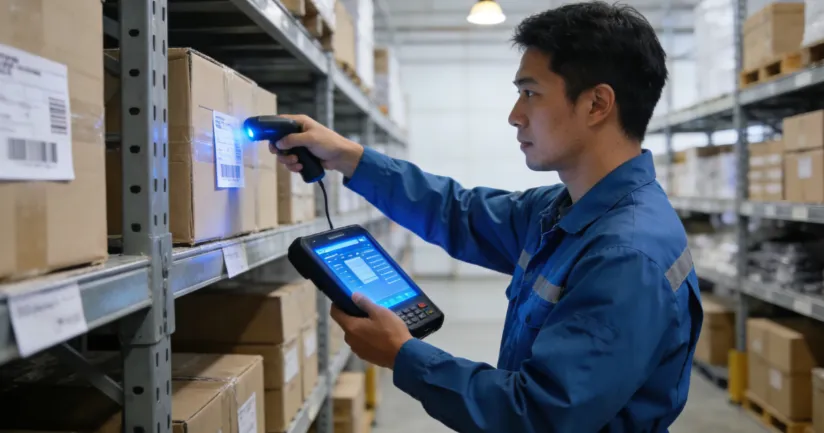
The system supports fine-grained archiving of all SKUs, establishing unique files for different sizes, colors, and materials of each shoe, recording the entire lifecycle data such as inbound, outbound, transfer, inventory, and inventory alerts, achieving real-time updates and accurate statistics of inventory data. For inventory counting, the system provides multiple methods such as scanning code counting and batch counting. The barcode scanner can scan the product barcode to complete the inventory data input. The system automatically compares the book inventory with the actual inventory, generates an inventory difference report, and management personnel can quickly locate the reasons for the differences and adjust them in a timely manner to achieve consistency between accounts and reality. At the same time, the system is equipped with an intelligent inventory warning function. Enterprises can set minimum and maximum inventory thresholds for different SKUs based on sales and procurement cycles. When inventory falls below the minimum threshold, the system automatically triggers a shortage warning to remind the procurement department to replenish in a timely manner; When inventory exceeds the maximum threshold, a backlog warning is triggered to remind the operations department to promptly develop promotional strategies, achieve dynamic inventory balance, and avoid stockouts and backlogs. In addition, the system supports global visualization of inventory data from multiple warehouses and channels. Management personnel can view the inventory quantity and distribution of each warehouse and platform in real-time in the system backend, and issue transfer instructions with just one click based on order demand and inventory distribution, optimizing inventory resource allocation and improving inventory turnover.
The efficient management of supply chain and inventory ultimately depends on the fast and accurate execution of orders, and the core advantage of Shuntong Footwear 'trade ERP system lies in its implementationDeep integration and data exchange of the three core links of supply chain, inventory, and ordersBreaking the information silo and forming a closed-loop management of the entire process from order placement to shipment and payment collection. After the customer places an order, the system automatically matches the order requirements with the inventory data. If the inventory is sufficient, a delivery note is directly generated and synchronized to the warehouse management module. The warehouse staff quickly picks, packages, and ships the goods based on the delivery note, and the system updates the inventory data in real time; If the inventory is insufficient, the system automatically triggers the procurement demand and pushes it to the procurement module. The procurement department quickly connects with suppliers based on the demand to ensure timely fulfillment of orders.
At the same time, the system supports unified management of multi-channel orders, whether it is offline store orders, e-commerce platform orders, or customized orders from large customers, they can all be integrated into the system to achieve centralized statistics and processing of order data, avoiding the problems of wrong orders, missed orders, and duplicate orders caused by scattered management of multi-channel orders. During the order execution process, customers can check the order progress in real time through the system, and enterprise customer service personnel do not need to repeatedly verify information, improving customer service experience. In addition, the system also provides comprehensive data analysis functions, automatically collecting supply chain, inventory, and order related data, generating multidimensional reports such as procurement analysis, inventory analysis, sales analysis, and profit analysis, presenting the operational status of the enterprise in visual charts, providing accurate data support for enterprise managers' procurement decisions, inventory scheduling, and sales strategy formulation, and enabling management to move from "experience based" to "data-driven".
In addition to its core supply chain and inventory management functions, the Shuntong Footwear Trade ERP system also fully considers the diversified operational needs of footwear trade enterprises, creating supporting modules such as customer management, financial management, and employee management to achieve comprehensive management of the enterprise. The customer management module supports functions such as customer information archiving, follow-up records, customer ratings, and payment tracking, helping enterprises maintain high-quality customers and enhance customer stickiness; The financial management module realizes the full process digitization of procurement payment, sales collection, expense reimbursement, financial reconciliation, etc., automatically generates financial vouchers and reports, avoids errors in manual accounting, and improves financial efficiency; The employee management module can set operational permissions based on job positions, achieving clear rights and responsibilities for each department and position, avoiding unauthorized operations, and recording employee work data to provide a basis for performance evaluation.

In the increasingly fierce competition and accelerated digital transformation in the footwear trade industry, the core competitiveness of enterprises lies not only in products and channels, but also in efficient internal management and supply chain collaboration capabilities. Shuntong Footwear Trade ERP System abandons the "one size fits all" model of generic ERP systems, deeply cultivates the characteristics of the footwear trade industry, and directly targets the core pain points of enterprise supply chain and inventory management. With digital management solutions, intelligent functional design, and closed-loop processes throughout the entire chain, it helps enterprises overcome management bottlenecks, optimize resource allocation, reduce operating costs, and improve operational efficiency.
From scattered manual management to systematic digital management, from information silos to data interoperability, from experience decision-making to data decision-making, Shuntong Footwear Trade ERP System provides comprehensive support for the digital transformation of footwear trade enterprises. Whether small and medium-sized shoe trade enterprises want to standardize management and improve efficiency, or large and medium-sized enterprises want to achieve scale expansion and refined operation, Shuntong Shoe Trade ERP System can flexibly adapt to the development needs of enterprises and continuously empower their development. In the future, Shuntong will continue to deeply cultivate the footwear trade industry, keep up with industry development trends and digital technology trends, constantly iterate and upgrade system functions, and provide better products and services to help more footwear trade enterprises break through the digital wave and achieve efficient and sustainable development.