
What are the main functional modules of a clothing ERP system? One article to introduce you to ERP
The special demands of the clothing industry for ERP
The management complexity of the clothing industry far exceeds that of general manufacturing. From the design draft to the hands of consumers, a ready to wear garment goes through dozens of stages, including fabric procurement, color card matching, cutting machine layout, sewing process, post ironing, multi-channel distribution, size allocation, return and exchange processing, and each stage is nested with unique industry logic. General ERP considers SKUs as independent files and cannot process color code 3D matrices; Treating procurement as a standard product transaction cannot support cylinder difference management, shrinkage rate testing, and layout utilization rate calculation; Treating production as a fixed BOM cannot cope with the real-time linkage between piece rate wages and process flow. The functional architecture of the clothing ERP system is a specialized solution designed to respond to the particularities of these industries. It is not a "clothing version" simplified package for general ERP, but a vertical management system restructured from the underlying data structure.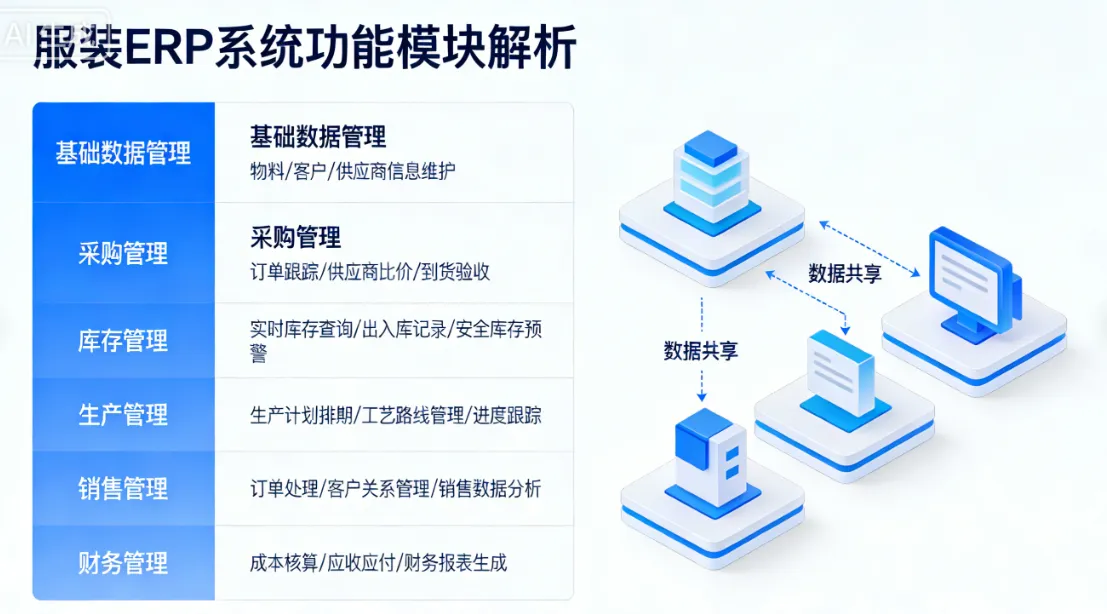
Product R&D Management Module
The lifecycle of clothing begins with research and development, not procurement. The product development management module is the first watershed that distinguishes clothing ERP from general ERP. After the designer completes the style draft, they create a product file in the system and upload the design draft, process sheet, and specifications for materials and accessories. The system automatically generates an initial material list and associates it with the fabric library, accessory library, pattern library, and color standard library. The sampling task is assigned online to the pattern room, and the pattern maker uploads the paper pattern file, coding rules, and process instructions. The progress of sample clothing production is tracked in real-time. After multiple modifications and confirmations, the bill of materials has been locked and become the sole technical basis for subsequent procurement, production, and cost accounting, eliminating the disconnect between design data and workshop execution.
More importantly, the cost estimation function. When the sample garment is completed, the system automatically calculates the theoretical material cost based on the bill of materials, estimates the theoretical labor cost based on the process route, and adds experimental losses and management allocation to output the estimated cost of the sample garment. The cost data is directly transferred to the pricing approval process, providing quantitative decision-making basis for product planning. After applying the R&D management module to a certain women's clothing brand, the accuracy of new product cost estimation increased from 63% to 89%, and the gross profit margin of styles with lower than expected gross margins after listing decreased by 71%.
Supply Chain Collaboration Module
The clothing supply chain is not a linear execution of purchase orders, but a multilateral collaborative network between brand manufacturers, material suppliers, and garment processing factories. The supply chain collaboration module digitizes this network relationship. The system establishes a dynamic performance profile for each supplier, recording the on-time delivery rate, quality pass rate, price competitiveness, and capacity load curve. Brand owners will desensitize the rolling demand forecast for the next four to eight weeks and push it to the supplier portal, based on which suppliers can prepare materials and lock in machines in advance. When a formal purchase order is issued, the system automatically compares the supplier's confirmed delivery date with the required date, and triggers an overdue warning to immediately initiate renegotiation.
The particularity of material procurement lies in the association between cylinder differential management and testing reports. The system is equipped with a three-level mapping library of Pantone color codes, customer color samples, and supplier color cards. Purchase orders can specify color code standards, and the cylinder difference levels will be automatically compared during warehouse acceptance. After uploading the testing reports on fabric shrinkage rate, color fastness, tensile strength, etc., they will be bound to the batch inventory and automatically called upon during subsequent cutting machine layout to avoid batch size deviations caused by differences in fabric characteristics. After applying the supply chain collaboration module, a certain sports brand reduced the average procurement cycle of materials by 14 days, and the scrap of cut pieces due to cylinder difference problems decreased by 58%.
Production Execution Module
Clothing production is a typical composite scenario of discrete manufacturing and piece rate compensation. The production execution module makes the workshop black box transparent. In the cutting process, the system is integrated with the typesetting software in both directions, automatically collecting the typesetting utilization rate of each order and model, comparing it with the standard usage in real time, and pushing any abnormal consumption to the IE engineer for disposal. Track the actual utilization rate of leather materials by grade and batch, providing input for optimizing procurement costs in the future.
The sewing process is the most complex execution site for clothing ERP. The system breaks down the process route to the process level, and each process is configured with standard working hours, piece rate, and quality inspection standards. Workers complete their work orders by scanning them with workstation tablets, PDAs, or RFID, and the system records the completed quantity, labor consumption, and quality inspection results in real-time. The production line balance rate dashboard dynamically displays the stacking situation of products in each process, and the bottleneck workstations are automatically highlighted in red. The team leader can adjust the process allocation in real time. Piece rate wages are linked in real-time with job reporting data, allowing workers to check their daily output and estimated income at any time. The end of month salary calculation has been shortened from a few days to tens of minutes.
In the post ironing and finished product inspection process, the system is integrated with intelligent hanging lines and automatic ironing equipment to collect process parameter curves and compare them with standard parameters. If the threshold is exceeded, the problem batch will be automatically locked and the rework process will be triggered. After applying the production execution module in a certain knitted clothing factory, the production line balance rate increased from 57% to 79%, disputes over piece rate wage accounting decreased by 93%, and the order delivery rate increased by 26 percentage points.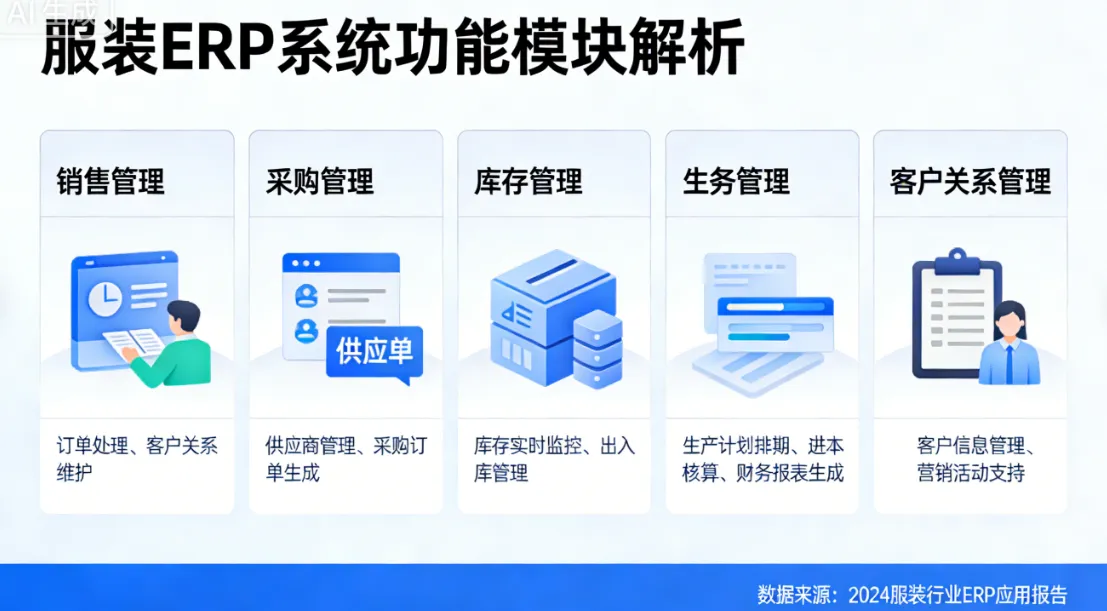
Inventory management module
The core challenge of clothing inventory management is SKU explosion. Develop 5 color options for a down jacket, with 6 sizes for each color option, generating 30 inventory units; The brand operates 200 basic models and 100 seasonal models simultaneously, with a total SKU count easily exceeding 20000. Traditional inventory reports present 20000 rows of data, which managers cannot examine one by one, and unsold items are submerged in the halo of explosive products.
The inventory management module of clothing ERP compresses the SKU ocean into a modifiable list through a multidimensional intelligent analysis model. The system automatically calculates the historical sales speed, safety stock days, and current sellable time of each SKU, and dynamically marks them according to five levels of classification: "hot selling", "best-selling", "flat selling", "unsold", and "dead stock". Inventory warning is no longer triggered by a unified threshold, but by configuring response strategies based on classification differences - if the explosive product is below the safety stock, replenishment suggestions will be automatically generated; if the unsold product exceeds the sellable period, promotion clearance tasks will be automatically pushed; and if the dead inventory reaches six months, scrap approval will be automatically initiated.
The omnichannel inventory sharing hub is another core component of the module. The system integrates the real-time distribution of inventory in the main warehouse, regional sub warehouses, store warehouses, e-commerce warehouses, and outsourced warehouses, and establishes a virtual central inventory pool. When a certain size is out of stock on the e-commerce platform, the system automatically retrieves the real-time inventory of that size in stores across the country, and generates the optimal transfer recommendation by comprehensive sorting based on distance, timeliness, and cost. After applying the inventory management module to a certain casual clothing brand, the overall inventory turnover rate increased by 41%, the proportion of unsold items decreased from 33% to 18%, and the e-commerce out of stock rate decreased by 52%.
Sales and Distribution Module
The clothing sales model exhibits distinct dual track characteristics. Futures ordering will be centralized, ensuring supply chain stability but lacking flexibility; The pursuit of quick response in spot replenishment tests inventory depth and supply chain responsiveness. The online and offline channels are fragmented, and e-commerce bestsellers and store bestsellers are often two stocks of the same brand.
The sales and distribution module connects the dual track of futures and spot. During the futures ordering conference, dealers place orders online through the system portal, and the system summarizes the futures order structure of various regions, channels, and categories in real time, providing input for capacity planning and material preparation. In the spot sales link, the system is directly connected with mainstream e-commerce platforms such as Taobao, Jingdong, Pinduoduo, Tiktok, and Dewu, as well as the POS system API of stores, to capture omni channel sales orders in real time.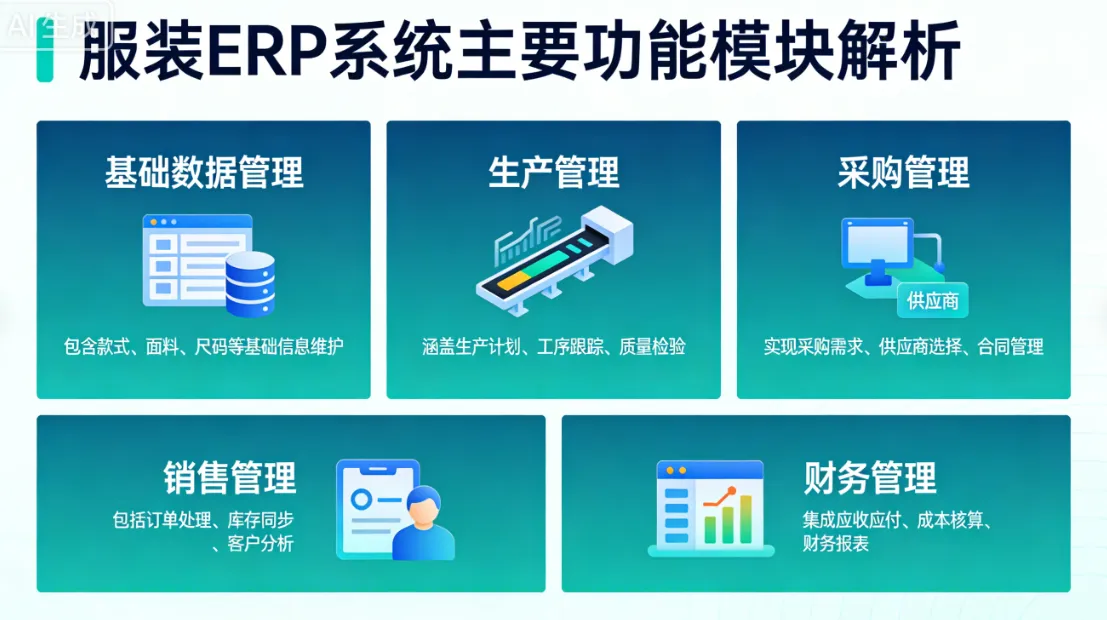
The intelligent replenishment engine is the core algorithm unit of the module. The engine calculates the optimal replenishment time and quantity for each SKU based on individual items, taking into account historical sales speed, real-time traffic trends, promotional activity impact, current inventory depth, and procurement cycle length. It automatically generates procurement suggestions or production work orders. The omni channel order routing engine automatically determines the optimal shipping warehouse based on customer delivery addresses, warehouse inventory distribution, and logistics cost timeliness, connecting e-commerce orders with store inventory. After a certain sports brand applied the sales distribution module, the shortage rate of spot orders decreased by 47%, the on-time delivery rate of futures orders increased by 31%, and the overall channel gross profit margin increased by 3.9 percentage points.
Financial cost accounting module
The biggest pain points in cost accounting for clothing enterprises are data lag and rough granularity. The material cost is calculated based on the average purchase price of the current month, which cannot reflect the differences in purchase prices for different batches of the same fabric; The labor cost is estimated based on the average labor cost of each process, and it is impossible to trace the actual labor cost of specific operators; The manufacturing costs are roughly allocated according to the production ratio, with high complexity styles and simple styles bearing the same cost.
The financial cost accounting module penetrates the granularity of cost accounting to the order level, batch level, and single item level. The system adopts a combination of step-by-step method and activity-based costing method, directly calculating materials based on the actual material requisition quantity of the batch and the corresponding purchase batch unit price, directly calculating manual labor based on the piece rate corresponding to the actual operator of each process, and dynamically allocating manufacturing costs based on the actual working hours of each order. Cost calculation is automatically triggered at the moment of production completion, and financial personnel do not need to rush to calculate at the end of the month. Managers can query the cost details and gross profit contribution of any style or order at any time.
After applying the cost accounting module, a clothing e-commerce enterprise found that the actual gross profit of its main category, which has been growing for three consecutive years, is negative. The root cause is that the outsourcing unit price of a certain special process continues to rise but the selling price has not been adjusted. After timely price adjustment, the category's annual income has increased by more than 6 million yuan.
From module combination to system capability
The seven functional modules of the clothing ERP system - product research and development, supply chain collaboration, production execution, inventory management, sales and distribution, and financial costs - are not isolated functional packages, but rather interconnected and data linked as a whole. The bill of materials generated by the R&D module is the technical basis for supply chain procurement, the inventory data received by procurement is the material guarantee for production execution, the quantity of finished products produced is the sellable resource for sales and distribution, and the performance data of sales orders is the business source for financial cost accounting. The data deviation of any module will be amplified in the system, and the efficiency improvement of any module will be transmitted to other modules.
This holistic feature determines that the implementation of clothing ERP is not a mechanical stacking of modules, but a system reconstruction of enterprise operation logic. When enterprises integrate research and development, procurement, production, inventory, sales, and finance into a unified digital platform and establish data connectivity rules, ERP systems truly internalize from software tools into the digital nervous system of clothing enterprises. This nervous system does not pursue parameter superiority of individual functional modules, but pursues the optimal efficiency of cross module collaboration - this is the essential distinction between clothing ERP and ordinary inventory software.