
ERP Solution for Clothing Industry _ Enterprise Business Collaboration System _ Clothing Supply Chain Management Software
1、 Inter enterprise business collaboration: the core positioning of clothing ERP
Clothing management software ERP is a full process resource management system tailored for fashion category enterprises such as clothing, shoes, hats, and accessories. Its core advantage lies in breaking down the barriers between traditional ERP and e-commerce, and achieving deep integration of logistics, capital flow, and information flow. Unlike general ERP systems, the clothing industry's ERP system precisely fits the core characteristics of the fashion industry, such as "multiple styles, sizes, colors, short cycles, and fast iterations". It seamlessly integrates the core modules of traditional ERP, such as procurement, production, sales, and inventory, with online procurement, online sales, and online fund payment functions in e-commerce scenarios. With electronic technology as the support and business needs as the core, it breaks down the tangible and intangible barriers between regions and industries.
Compared to traditional enterprise management models, the core change of clothing ERP is to promote the shift of enterprise management focus - from focusing on the integration and utilization of internal resources to taking into account the collaborative control of internal and external resources; From business integration within various departments of the enterprise, to full chain business collaboration between the enterprise and suppliers, agents, franchisees, and end stores. The scope of application of this system is highly targeted, mainly covering three types of clothing related enterprises: first, brand clothing, shoe and hat, and accessory companies with a certain scale and fixed orders; Secondly, agents with years of industry experience, especially those who operate multiple brands or franchisees; The third is clothing manufacturers involved in the e-commerce field, covering all clothing industry practitioners who have laid out online channels, providing standardized and customizable management solutions for clothing enterprises of different business models and scales.
2、 ERP Solution for the Clothing Industry: Empowering Enterprise Collaboration with Fine Control
The clothing management software ERP solution, with the core concept of "comprehensive internal control and fine management", has created a comprehensive resource information management system for the management pain points of large and medium-sized fashion enterprises such as clothing, shoes, hats, bags, and home textiles. The aim is to solve the problems of inefficient industry collaboration and loose control through process standardization and data integration. In the industry practice, Yum Brands clothing management software ERP solution is quite representative. It uses an advanced three-tier system architecture and relies on Internet technology to build an integrated enterprise information platform. It integrates and processes the data in the whole business process, such as ordering, production, procurement, distribution, warehousing, distribution, retail, finance, and decision-making, to build an efficient and closed-loop management system.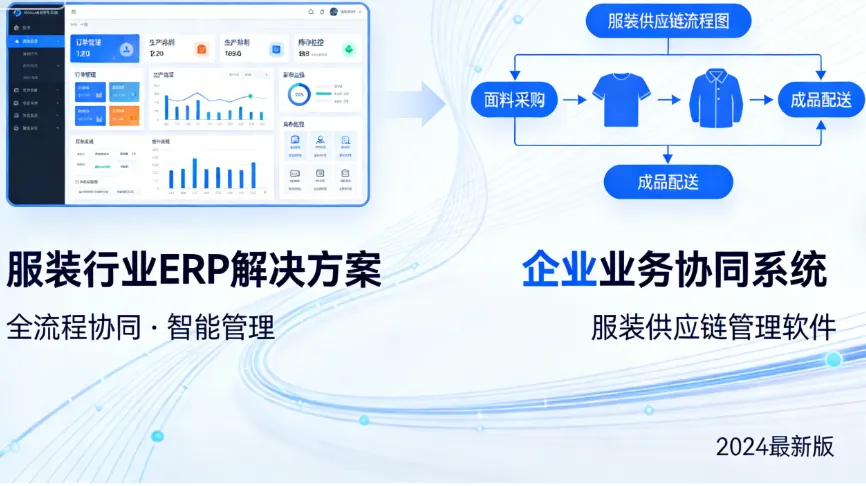
The core value of this solution lies in achieving refined control over the entire enterprise chain: through real-time monitoring of the production process, it helps management to accurately control production progress, quality standards, and avoid problems such as production delays and cost overruns; By optimizing the procurement process, improving the accuracy and timeliness of procurement plans, and reducing inventory backlog caused by blind procurement; By strengthening delivery time management, we can streamline the entire process from order placement to product delivery, enhance on-time delivery capabilities, and increase customer satisfaction; Ultimately achieving the integrated management of enterprise logistics, information flow, and capital flow, breaking down data silos in each link, promoting the transformation of enterprises from "extensive management" to "refined operation", and enhancing core competitiveness.
3、 Introduction to the core functions of ERP in the clothing industry: adapting the entire scene to meet industry needs
The functional design of ERP in the clothing industry closely conforms to the characteristics of the industry, covering the entire operation scenario of enterprises, from basic data management to control of various business modules, and then to optimization of permissions and input systems, forming a comprehensive functional support. Each module is customized according to the exclusive needs of the clothing industry, with strong practicality and adaptability.
(1) Basic data management
Basic data is a prerequisite for the efficient operation of ERP systems. ERP in the clothing industry covers seven core areas: supplier data, customer data, size data, color data, product data, employee data, and user data, achieving standardized management of all dimensional basic information. Among them, size and color information are specially designed for the characteristics of "multiple sizes and colors" in the clothing industry, which can flexibly adapt to the needs of different categories and styles of clothing; The product information is associated with supplier and customer information to achieve traceability throughout the entire lifecycle of the product, providing data support for the control of subsequent procurement, sales, inventory, and other processes; The binding of personnel and permissions between employee and user information ensures accurate integration of corresponding functional modules among personnel in various positions.
(2) Core business module control
1. Order meeting management: As the core business process of clothing enterprises, the order meeting management module supports multiple input methods such as on-site order system input and Excel import, ensuring timely and accurate order entry; Equipped with on-site data analysis function for ordering meetings, it can generate analysis reports from multiple dimensions such as style ranking, delivery time, classification, customer, and ordering ratio, helping enterprises quickly grasp popular styles and customer ordering preferences; Simultaneously supporting the functions of ordering replacement and batch deletion, it can achieve batch style changes (such as fabric replacement) and batch cancellation (such as styles that cannot meet the minimum order quantity), greatly reducing the manual and complicated operations after ordering; In addition, through the order shipment tracking function, real-time viewing of the order, shipment, and shortage details and summary of goods can be achieved, ensuring timely and accurate delivery to customers and avoiding order omissions or delays.
2. Procurement Management: Focusing on the entire process of clothing product procurement, supporting the entry of finished product purchase orders and tracking of purchase receipts. Purchase orders can be generated based on multiple dimensions such as customer ordering, procurement, cutting, return, shortage, inventory, and sales to avoid blind procurement; Support actual cutting number management, real-time tracking of differences in procurement, cutting, and warehousing, generating detailed difference reports to help enterprises discover problems in a timely manner, adjust procurement strategies, and reduce procurement costs.
3. Marketing department management: adapted to the marketing scenarios of the clothing industry, covering core functions such as replenishment orders, distribution orders, return application forms, wholesale price adjustment forms, etc; Automatically generate replenishment orders based on terminal sales data, and view customer orders, shipments, outstanding goods, available inventory, sales data, and customer accounts in real-time during distribution, achieving one-stop distribution; Support custom shipping types (ordering, restocking, buyout, board issuance, hanging), and define exclusive shipping discounts and exchange rates for different shipping types; Personalized return rules can be defined, such as returns for this season's products, returns within 30 days after shipment, etc. When returning, real-time information such as return history, quantity, price, and refundable ratio can be viewed to ensure a standardized and clear return process; At the same time, it supports the development of different shipping discounts based on customers and product categories, as well as the function of adjusting prices at the end of the season to adapt to changing market demands.
4. Backend store management: Focusing on terminal store control, supporting functions such as store sales order input, cash register management, store sales order query, store price adjustment list, store promotion list, etc., to achieve real-time synchronization and standardized management of terminal sales data; It can accurately control the sales situation of each store, adjust promotional strategies and price systems in a timely manner, and improve terminal sales efficiency.
5. Finished product warehouse management: covering the entire process of warehouse operation, including core functions such as product receipt, product return, wholesale sales, wholesale return, transfer shipment, transfer receipt, product inventory, and product adjustment; Adopting the separation of purchase price and cost price processing mode, making the management of accounts payable and cost clearer for enterprises; When entering the product inventory order, the last inventory price can be automatically obtained, without the need for the finance department to manually set the purchase price every time. At the same time, it is strictly controlled within the scope of the purchase order to avoid illegal inventory; Ensure accurate inventory data and reduce inventory loss through transfer and inventory functions.
6. Finance Department Management: Achieve automation and standardization of financial processes, covering functions such as accounts receivable, accounts payable, accounts receivable statements, and accounts payable statements; It can automatically transfer documents to accounts receivable and payable, without the need for manual duplicate registration of financial accounts, greatly improving financial work efficiency; Automatically generate clear and concise statements and classification summaries, synchronously displaying customer credit limits and contract deposits, making it easier for enterprises to control the flow of funds; Adopting strict document management methods, documents cannot be modified after confirmation (only for offsetting), and new documents are not allowed to be inserted after monthly accounting to ensure the accuracy and standardization of financial data; At the same time, flexible and convenient reconciliation reports are provided, which can list all documents and details of relevant account numbers for financial verification.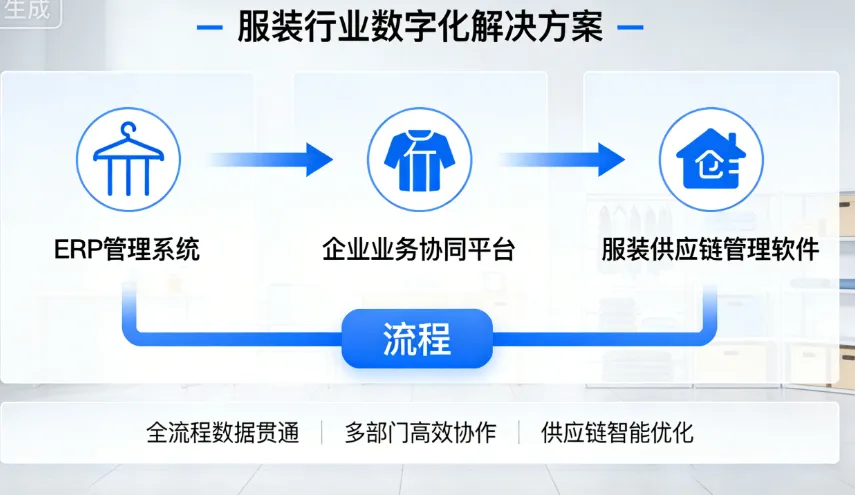
(3) Core role of software
The core role of ERP in the clothing industry is reflected in four aspects: firstly, achieving efficient management, reducing manual operations through process automation, and lowering labor and operational costs; The second is to promote the proceduralization, proceduralization, and standardization of management, avoid human operation loopholes, and improve the operational efficiency of enterprises; The third is to provide data support for enterprise management, provide decision-making guidance for management through data analysis, and assist enterprises in precise layout; The fourth is to achieve information control, sharing, and synchronization, break down data silos in various departments and links, and promote internal and external business collaboration within the enterprise.
(4) Exclusive functional features
1. Product management features: customizable size categories, supporting multiple document formats suitable for clothing enterprises; The definition of goods can vary in length, and their attributes can cover brand, category, subcategory, year, season, color, size, delivery time, etc., adapting to the diversity of categories in the clothing industry; Support style image display, which can be retrieved during inventory and sales queries for quick identification of goods; Supports different retail prices for different colors, unlimited redefinition of product attributes (virtual structure), and supports two types of product sales cost accounting methods: planned cost and monthly weighted cost, meeting the diversified accounting needs of enterprises.
2. Customer management features: It has professional customer lifecycle management functions, covering customer credit limit, deposit, exchange method, sales discount and other information; Support a customer to open multiple stores, and ship directly to the corresponding store when shipping. Financial settlement is only for the customer, simplifying the management process; Support multiple shipping types for the same customer, with different shipping types corresponding to different shipping discounts and exchange rates; Adopting a multi-channel management approach, stores can be divided according to channels (such as directly affiliated stores of the head office and general agent stores), and only stores in the same channel will be displayed when shipping to improve distribution efficiency; Support in transit goods management, which can adopt automatic receipt, manual in transit receipt, or computer inspection methods to adapt to the transfer needs of self operated stores; Different customers can adopt different shipping methods (such as headquarters distribution → shipping, branch direct shipping) to fit the diversified business model of the enterprise.
3. Characteristics of permission management: It can achieve refined permission control, setting browsing, input, modification, deletion, printing, and import permissions for different interfaces; Set browsing and editing permissions for different stores, and define store sales data that users can query; Set up permissions for different documents such as audit, anti audit, confirmation, anti confirmation, review, anti review, and offset; Support users to only view the documents issued by themselves, ensuring data security and controllable permissions, and avoiding data leakage or illegal operations.
4. Input system features: Provides a specialized two-dimensional input method for clothing enterprises, suitable for combination input of size and color, with fast input speed and clear matching of codes; Supporting multiple input methods such as manual, barcode, and inventory machine, enterprises can choose according to their actual needs; Provide sound prompts when scanning errors occur, reduce operational error rates, and improve data entry accuracy.
5. Characteristics of the reporting system: Designed according to the All In One concept, supports report customization, and can generate personalized reports based on enterprise needs; Equipped with professional clothing sales and inventory analysis reports, providing accurate data support for enterprise decision-making.
6. Network management features: Supports multiple networking methods such as FTP, EMAIL, PPTP, etc., to achieve real-time data transmission; Equipped with fully automatic networking function, it can set transmission time on schedule, automatically exchange data without manual operation; Generate clear networking logs, detailing the success and failure of networking, for easy troubleshooting; Customizable networking solutions can be used to transmit different data to different customers, while also supporting the transmission of customized data to enhance system scalability.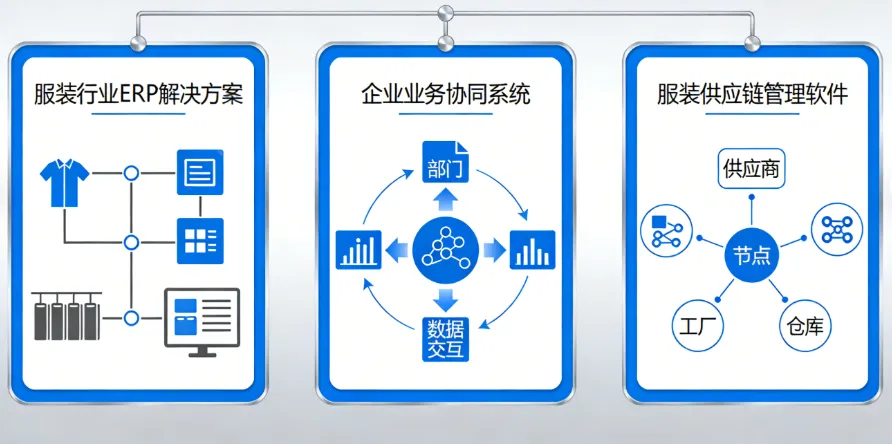
4、 The application value of ERP in the clothing industry: reducing costs and increasing efficiency, enhancing core competitiveness
The application of ERP in the clothing industry can bring comprehensive value enhancement to enterprises, effectively solve industry pain points, and promote high-quality development of enterprises
Firstly, real-time control of terminal sales and inventory information, breaking down information barriers between enterprises and terminal stores, rational allocation of resources, rapid replenishment of best-selling items, timely clearance of unsold items, improving product sales rate, reducing inventory backlog, and lowering inventory costs; Secondly, optimize the entire business process of the enterprise, achieve efficient collaboration in procurement, production, sales, inventory, finance and other links, reduce manual operation links, improve operational efficiency, and reduce labor and operational costs; Thirdly, through efficient, accurate, and timely data analysis, scattered business data can be transformed into decision-making basis, providing strong support for enterprise ordering, production, marketing, capital planning and other decisions, helping enterprises avoid market risks and accurately grasp market opportunities; Fourthly, achieve centralized management of business data, break down data silos among departments, enhance the overall monitoring and decision-making capabilities of the enterprise, promote the upgrading of enterprise management models, and strengthen core competitiveness.
5、 Implementation Method of ERP in the Clothing Industry: Ensuring Effective System Implementation
The successful implementation of ERP systems in the clothing industry relies on suitable software products and scientifically effective implementation methods, which complement each other and are indispensable. Among them, effective implementation methods are the key to ensuring the effectiveness and maximum value of the system, which can be roughly summarized into ten core aspects:
One is the support and commitment of senior management. ERP implementation involves changes in various departments and links of the enterprise, requiring management to take the lead in promoting and coordinating cross departmental resources to ensure the smooth progress of the project; The second is to establish an implementation and consulting team that understands both clothing industry management and ERP software operation, optimize system configuration based on the actual needs of the enterprise, and ensure the compatibility between the system and the enterprise's business; Thirdly, it is necessary to reiterate and clarify the scope of the management information system project, strengthen supervision during the project implementation process, avoid deviations from the actual needs of the enterprise, and ensure that the implementation focuses are highlighted; The fourth is to establish a professional project team, clarify the division of responsibilities among departments and members, promote cross departmental collaboration and cooperation, and timely solve problems in the implementation process; The fifth is to conduct in-depth research on the existing business processes of the enterprise, comprehensively sort out management pain points, ensure that the configuration and adaptation of the ERP system are in line with the actual operational needs of the enterprise, and avoid a one size fits all approach; Sixth, develop a detailed and feasible project plan, clarify the time nodes, task division, and acceptance criteria for each stage, to ensure the orderly progress and timely completion of the project; Seventh, develop a project sustainability plan, plan in advance for iterative upgrades, maintenance, and personnel training after the system goes live, to ensure the long-term stable operation of the system; Eighth, equip the project with appropriate human, material, and financial resources to support system deployment, personnel training, data migration, and other related tasks; Ninth, emphasis should be placed on summarizing experience. At each stage of project implementation, relevant departments should be organized to conduct quality management evaluations, timely identify problems, summarize experience, and optimize implementation plans; The tenth is to do a good job in project conversion management, orderly promote the entire process from system modeling, testing, trial operation to formal operation, do a good job in data migration, personnel training and other connection work, ensure a smooth transition of the system, and minimize the impact on the normal operation of the enterprise.
In summary, as a full process management tool that fits the characteristics of the fashion industry, the ERP solution for the clothing industry effectively solves the pain points of inventory backlog, inefficient collaboration, and non-standard management through full scene functional coverage, refined control, and efficient collaboration. It provides standardized and customizable management paths for clothing enterprises of different sizes and business models. With the continuous deepening of digital transformation in the clothing industry, ERP systems will become an essential tool for enterprises to enhance their core competitiveness, helping them achieve refined operations and high-quality development.