
Enterprise Resource Planning
Enterprise Resource Planning, a management academic term born in 1990, is no longer a cold English abbreviation 35 years later today. It is the algorithmic logic hidden behind every purchase order, the digital river jumping on the workshop production schedule board, and the obsession carrier that enterprise managers try to use certainty to combat uncertainty. ERP is not just a set of software, it is the most complete digital representation of the organizational form of enterprises by humans during the transition from industrial civilization to digital civilization.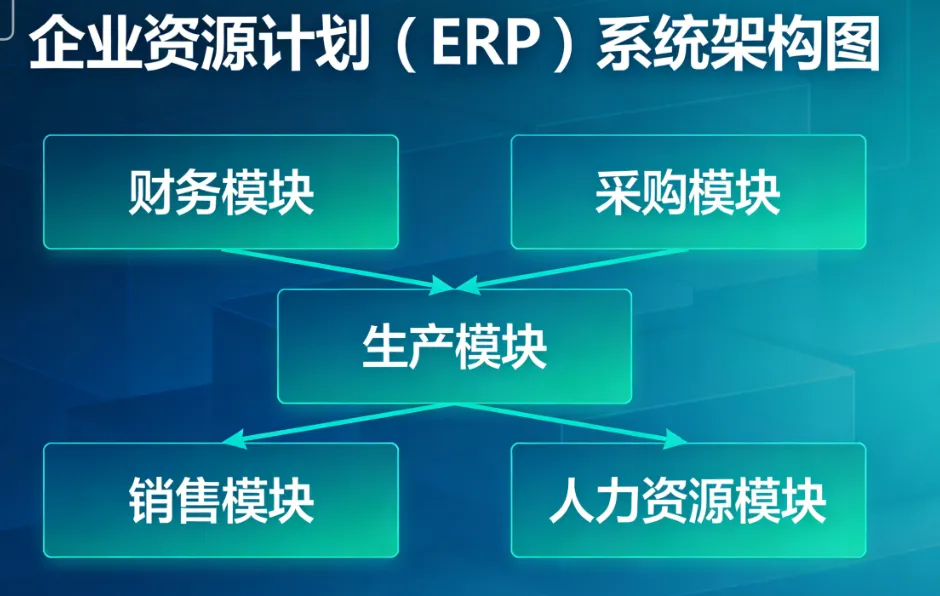
The definition of enterprise resource planning itself implies a cognitive revolution. When Gartner Group first proposed this concept, it was intended to describe a supply chain management philosophy that goes beyond manufacturing resource planning. But soon people realized that the true ambition of ERP goes far beyond just connecting procurement, production, and finance. It compresses the human, financial, material, production, supply and marketing, as well as information flow, capital flow, management flow, and value-added flow of enterprises into the same digital container, attempting to allow decision-makers to see the entire operation trajectory of the business world in one interface. This is not an upgrade in the technological dimension, but a reconstruction of management philosophy: enterprises are no longer mechanical overlays of departmental functions, but organic life forms connected by data.
To understand ERP, we must return to its evolutionary roots. In the 1940s, the order point method was still at the forefront of inventory management, and warehouse managers used their experience to trigger purchases when inventory reached a critical point, which was the germ of planning consciousness. In the 1960s, the intervention of computers made material requirement planning possible, and for the first time, humans were able to use algorithms to answer the ultimate question of the manufacturing industry: "What to produce, what is needed, how much is already available, and how much is still lacking". The closed-loop MRP of the 1970s gave the system the ability to provide feedback and correction, while the manufacturing resource planning of the 1980s embedded the financial module into the production process, allowing enterprises to finally see the outline of profits while scheduling production. Until the 1990s, the concept of ERP completely broke down the walls of enterprises, weaving suppliers, distributors, and customers into the same value network. Competition was no longer a single point of competition between enterprises, but a systematic confrontation between supply chains. This evolutionary logic reveals a truth that has been repeatedly verified: every iteration of ERP is not technology driven, but driven by human greed for resource allocation efficiency that is never satisfied.
Today's ERP has split into complex modular galaxies. The financial management module has long surpassed the original functions of bookkeeping and accounting. It is naturally integrated with procurement, production, and sales, and automatically generates accounting vouchers when business activities occur. The flow of funds and logistics is no longer two separate skins. The supply chain management module extends its tentacles from suppliers to customers, with purchase orders, inventory dynamics, and distribution shipments flowing in real-time on the same plane. As a result, enterprises gain the ability to predict the market rather than passively respond. Production control management has evolved from static work order distribution to dynamic advanced scheduling, where equipment load, personnel skills, and material arrival time are crushed and reorganized by algorithms to generate the globally optimal combat map. The human resource management module integrates organizational staffing, performance-based compensation, and talent pool into the same data system, quantifying the value of people for the first time as a financial language that can communicate with capital. The arrangement and combination of these modules constitute the basic syntax of enterprise digitization, but the real test is never the amount of functionality, but whether they can breathe together in real business scenarios.
The implementation site of enterprise resource planning has always been a battlefield where hope and disillusionment coexist. Countless enterprises spend millions of dollars to purchase systems, but ultimately turn ERP into expensive Excel - data is entered, reports are exported, and decisions in between still rely on the intuition of managers. At its root, it is because too many companies misunderstand ERP as IT engineering rather than organizational change. The standardization of basic data, refinement of material lists, and simplification of business processes before the system goes live are the true turning points for the success or failure of ERP, which may seem tedious governance work. If the coding rules are not unified, the system will fall into a data swamp after running for three months; If the process parameters are not settled, flexible production scheduling is like a castle in the air; Unclear division of employee permissions may result in the leakage of trade secrets from within at any time. Enterprises that have successfully rooted ERP in their organizations have all accepted the premise from the beginning of implementation: instead of adapting the system to the current situation, it is better to use the system to drive evolution.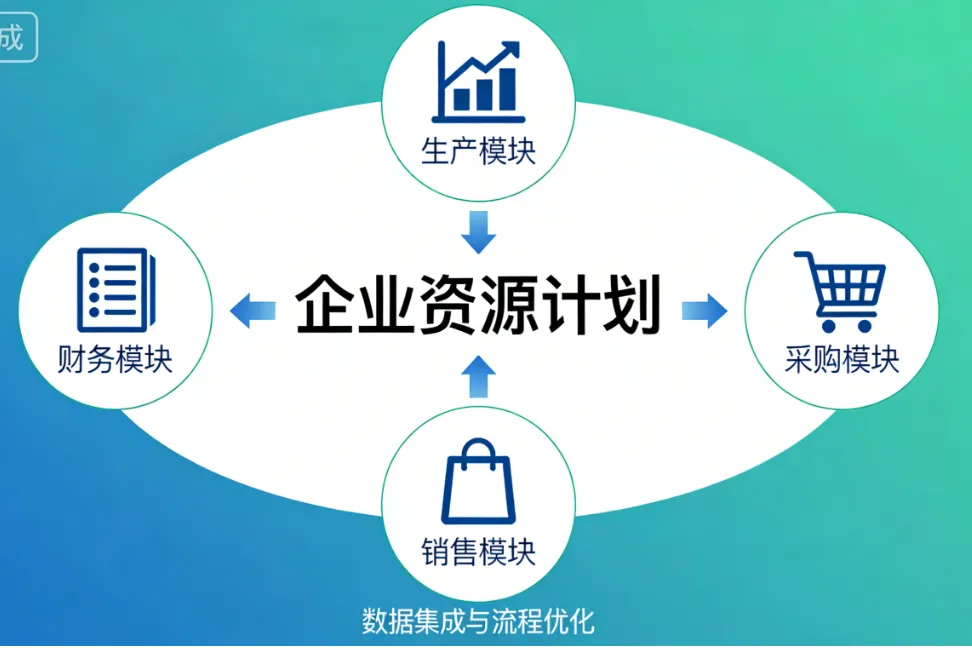
The transformation of Kobe Steel in Japan provides a highly convincing footnote. This comprehensive manufacturer with a hundred years of history has developed about 400 additional components in the field of headquarters accounting alone, and the system is so complex that version upgrades have become a disaster. They ultimately chose an almost brutal path of standardization, increasing the usage rate of SAP standard features from 6% to 82% and cutting three-quarters of add ons. This is not a technical compromise, but a management awakening: what companies truly need is not tools tailored for each department, but to enable all departments to share the same language, follow the same set of rules, and converge towards the same set of goals.
The debate over deployment forms is being redefined by practical choices made by enterprises. Cloud ERP significantly reduces the entry barrier through a subscription model, allowing small and medium-sized enterprises to avoid heavy server procurement costs in the early stages; Local deployment still dominates in high compliance industries due to its controllable data sovereignty; Hybrid architecture has become the golden ratio point for more and more standardized enterprises - customer relationships and supply chain collaboration are placed in the cloud, while production execution and device collection are kept on the intranet. The discussion on deployment methods ultimately converged on a simple principle: ERP does not have the best form, only the delivery method that is most suitable for the business rhythm.
The encounter between enterprise resource planning and Chinese enterprises is a two-way domestication that has lasted for thirty years. From the confusion of foreign manufacturers when they entered in the 1990s, to the flourishing of local manufacturers at the beginning of this century, and to the deep integration of cloud based, intelligent, and industry-specific technologies today, the evolution history of ERP in China is almost a microfilm of modern enterprise management in China. Banking, petroleum, chemical, consulting, retail - ERP has already transcended the boundaries of the manufacturing industry and penetrated into all organizational forms that require optimized resource allocation. The ERP upgrade project of China Chemical Information Center covers business scenarios with significant differences, such as consulting, intelligence, media, and property leasing. Through full hour management and project level collection of labor costs, it achieves precise control of business and finance integration in non manufacturing industries. This proves that the applicability boundary of ERP does not lie in industry attributes, but in whether organizations are willing to face complexity in a systematic way.
The intervention of big data and artificial intelligence is transforming ERP from a ledger that records the past to a crystal ball that predicts the future. Traditional ERP is good at answering what happened, but it is difficult to explain why it happened and what will happen. By combining and analyzing user login logs, operation logs, and permission configuration data, enterprises can identify weak links in the work chain, predict job load, and even select outstanding users to set a benchmark. The massive data that once slept deep in the database has been rediscovered under the illumination of big data technology, and ERP has evolved from a control tool to an insight engine.
But no matter how the technology iterates, the essence of enterprise resource planning has never changed. It is not a decoration to make the enterprise look more digital, not a dashboard for leaders to view in the cockpit, not a beautiful architecture diagram in the consulting company PPT. It is the warning that pops up on the workshop director's phone when the order is overdue, the interception that the system refuses to save the quotation when the cost exceeds, and the link that traces the finished product to the fabric cylinder number within 15 minutes when the customer complaint occurs. It is one of the few determinacy that enterprises can grasp when facing uncertainty.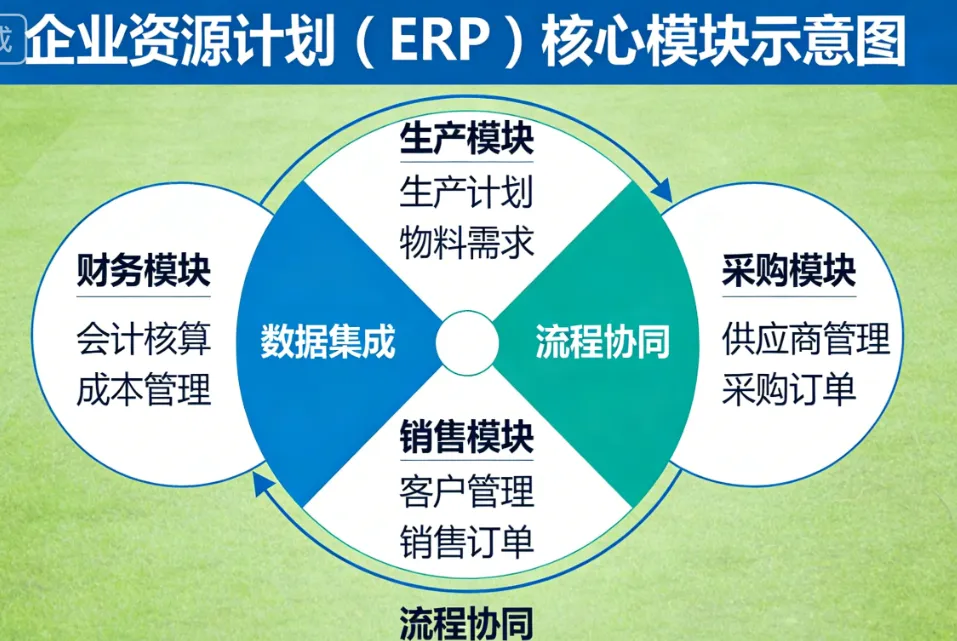
The boundary of ERP is always the boundary of enterprise cognition. The height that an ERP system can achieve will not exceed the depth of understanding of the essence of management by enterprise managers. The companies that truly achieve excess returns from digital transformation are not because they bought the most expensive software or hired the most expensive consultants, but because they have a clear understanding that enterprise resource planning plans resources, reshapes organizations, and tests humanity.