How can shoe production software achieve cost control?
In the footwear industry, a pair of sports shoes undergoes hundreds of precise processes from blueprint to finished product, involving the complex intersection of dozens of materials such as leather, rubber, webbing, and glue, as well as the dual pressure of delivery time pressure and profit margins. This industry, which traditionally relied on the experience of experienced craftsmen and the circulation of paper work orders, is now being deconstructed by a series of production software. The cost control of shoe production software is not about roughly cutting expenses, but about transforming every inch of fabric, every minute of labor, and every kilowatt hour of electricity consumption into visual data assets. Through the collaboration of algorithms and processes, hidden waste is uprooted.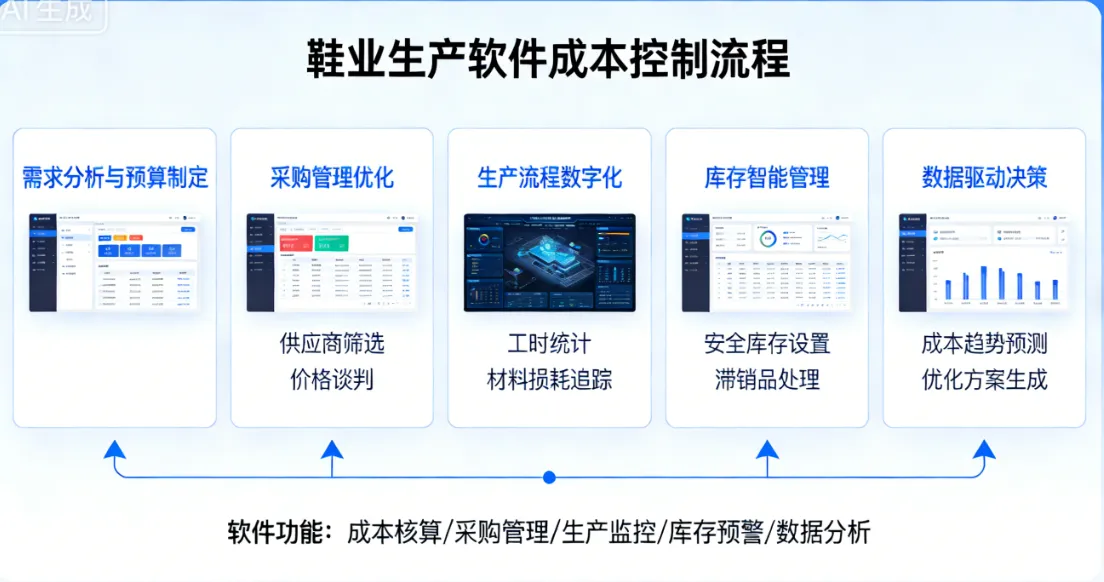
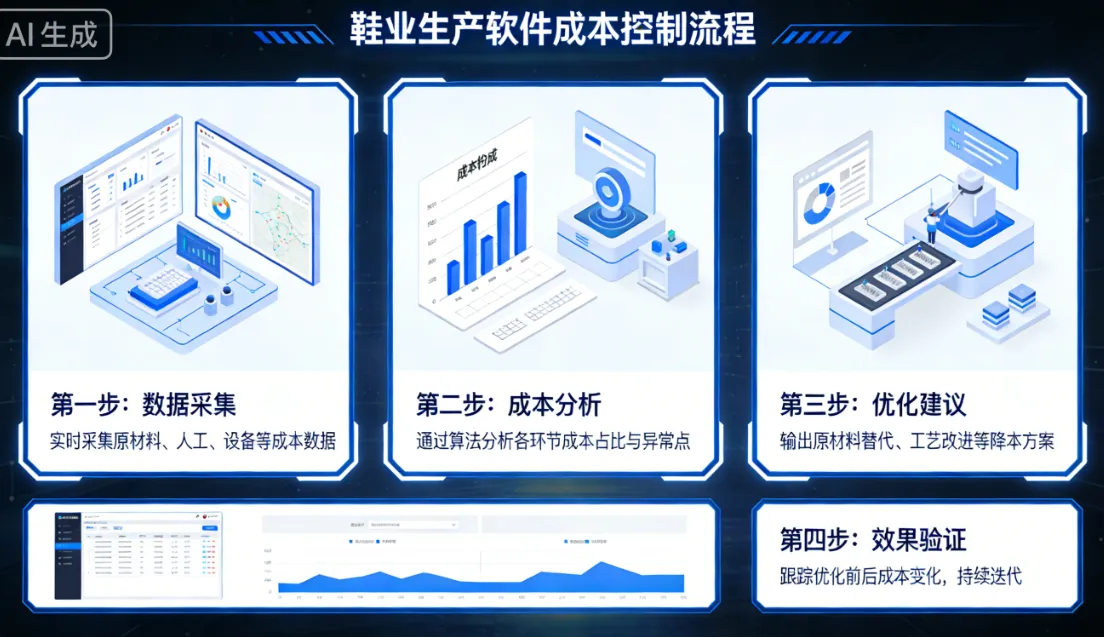
The first hurdle for controlling costs in shoe production software lies in the procurement process. The prices of bulk raw materials such as rubber and leather fluctuate dramatically, and traditional procurement relies on the experience and judgment of buyers. When the market rises, panic and hoard goods, and when prices fall, they are forced to bear the loss of price drops due to inventory backlog. A professional footwear ERP system, through its built-in price prediction model, can combine historical procurement data with market trends to provide optimal procurement window recommendations. The system automatically calculates the material requirement plan, weighting factors such as order demand, existing inventory, materials in transit, and safety stock to generate an accurate purchase list, avoiding premium losses caused by excessive material preparation and emergency procurement. After a rubber shoe factory applied such a system, the cost of raw material procurement decreased by more than 15%, and the phenomenon of work stoppage and waiting for materials caused by material shortage basically disappeared.
Entering the production process, the cost reduction capability of footwear production software begins to penetrate from visible materials to invisible losses. The first step in shoemaking is cutting. Traditional manual cutting relies on steel knives and molds, and the alignment of fabric patterns is entirely determined by the naked eye. Errors exceeding one millimeter are common, and the amount of fabric wasted per day is measured in square meters. After the linkage between intelligent punching equipment and production software, laser positioning, visual recognition, and automatic nesting algorithms work together, not only controlling the cutting accuracy within 0.5 millimeters, but also automatically optimizing the layout density according to the fabric width, pushing the utilization rate of corner leftover materials to the extreme. The smart factory in Suixian County, Henan Province, can save ten square meters of fabric every day with just one improvement. This kind of loss interception is not calculated afterwards, but occurs at the moment when the blade touches the fabric.
Adhesive, ink, solvents and other chemical additives are another hidden bleeding point in shoe factories. These materials have a low unit price, but they require a large amount and are prone to waste. Under the traditional management model, workers brush glue with their hands and replenish materials based on their experience. It is only at the end of the month that abnormal consumption is discovered during inventory checks. The application case of Wanda Bao ERP in a certain shoe factory is highly convincing: the system collects real-time data on glue consumption in the molding process and automatically compares it with the standard BOM consumption. It was found that the glue waste rate in this process was as high as 12%. After targeted optimization of spraying equipment parameters and employee operating standards by managers, the annual material cost savings exceeded 800000 yuan. When the amount of glue applied and the speed of each needle and thread are recorded by the system and linked to standard working hours, there is nowhere to hide any leaks.
The control of labor costs is reflected in the systematic improvement of human efficiency in footwear production software. The footwear industry is a typical labor-intensive industry, with processes such as sewing and molding relying on skilled workers for a long time. The training period and turnover rate of skilled workers have always been a concern for enterprises. After the intelligent production line is paired with a production execution system, the traditional needle sewing line that required thirty workers now only needs fifteen people, and the speed of computerized needle sewing has tripled. The EVA granulation digital automatic production line in Qiuqu, a shoe manufacturer of ANTA Group, is the industry's first full process intelligent production chain. It relies on intelligent weighing technology to achieve precise control of raw material ratios. A single person can complete the entire process control through a visual control console, increasing human efficiency by 43% and doubling single line production capacity. This is not simply replacing humans with machines, but liberating human value from repetitive labor and shifting towards equipment monitoring and anomaly handling.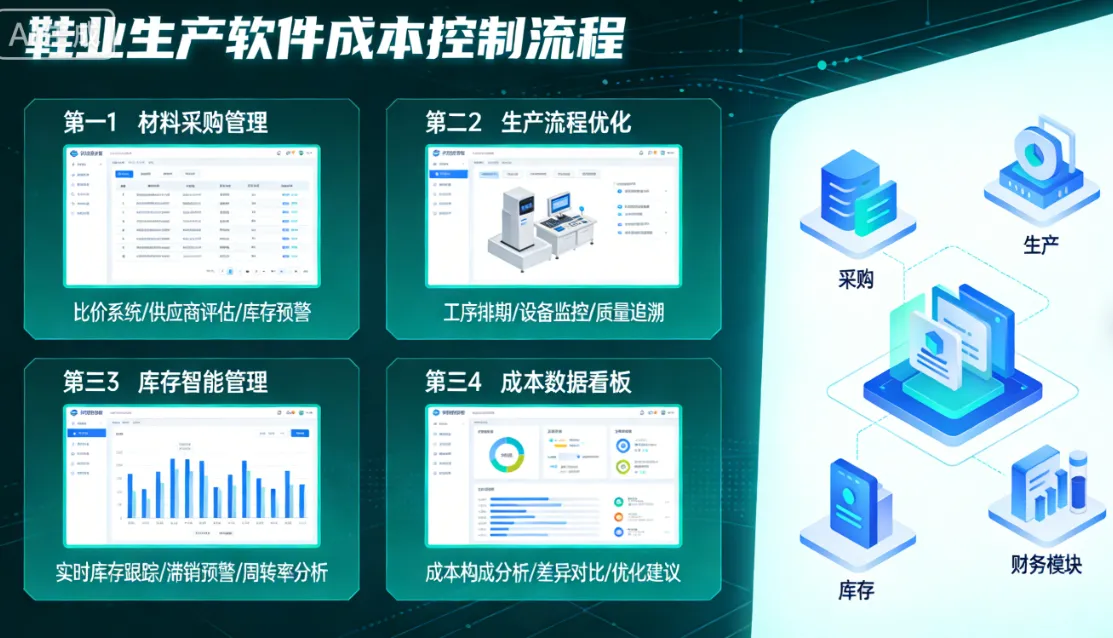
The implicit waste of equipment efficiency is also included in the cost control perspective of production software. The equipment management in traditional factories involves repairing equipment once it breaks down, causing downtime losses and incurring maintenance costs. The footwear ERP system collects real-time device operating parameters through the Internet of Things module, monitors threshold indicators such as vibration, temperature, and current, and issues warnings before faults occur, transforming post repair maintenance into predictive maintenance. ANTA Jinjiang Shoe Material 5G Fully Connected Factory, AGV carts complete over a thousand material handling operations per day, coupled with low latency scheduling of 5G networks, resulting in a 17% increase in production efficiency and an 11% decrease in management costs. Equipment is no longer a passive means of production, but an active member of the production line reporting their health status.
Quality cost is the most difficult and deadly cost black hole for shoe factories to quantify. A pair of shoes was only found to be skewed after molding, and the costs of cutting, sewing, printing, baking, and other processes that were previously invested were all sunk; A batch of goods was found to be unglued in the customer's warehouse, facing not only return compensation but also the disintegration of channel trust. The footwear production software establishes a full process quality traceability system, associating and archiving the cylinder number of each batch of shoe materials, the operator of each process, and the measured values of each quality inspection. Xintai Technology's 5G smart factory, with intelligent fabric inspection robots replacing human eyes, has exponentially improved defect detection efficiency and accuracy. When quality issues occur, the system can complete the reverse traceability from finished products to raw material batches, from quality issues to responsible processes within ten minutes, reducing recall costs to the lowest level and providing precise data anchors for improvement measures.
Cost accounting itself is also being redefined by production software. The cost accounting of traditional shoe-making enterprises is the end of month general ledger, which divides the total material consumption, total labor wages, and total manufacturing expenses of the month into each pair of shoes based on production volume. This extensive model cannot answer a fundamental question: is this shoe and this batch of orders profitable or unprofitable? Professional financial systems such as Haoye Finance use multidimensional cost aggregation models to accurately allocate direct materials, direct labor, and manufacturing costs to product batches or even single shoe levels. The system automatically captures raw documents such as purchase invoices, work hour records, and equipment energy consumption, and generates real-time cost detail reports. A certain shoe factory discovered through the system that the labor cost in the molding workshop was 15% higher than the budget. After checking the schedule, it was determined that there was personnel redundancy during the off-season. After adjustment, the overall cost decreased by 7%. When the granularity of cost accounting shifts from the factory level to the process level and order level, decision-makers truly have pricing and decision-making power.
The case of a rubber soled shoe factory further confirms the value of refined cost accounting. The cost difficulty of such enterprises lies in the drastic fluctuations in rubber raw material prices, the high energy consumption ratio of vulcanization, rubber mixing and other processes, and the huge differences in process complexity among different formulas and bottom patterns. The intelligent cost accounting engine of Haoyecai ERP can automatically collect rubber procurement price differences, accurately allocate energy consumption costs of each process according to the process route, and control the cost calculation error rate within 0.5%. On this basis, the system supports multi version cost simulation: when the price of natural rubber increases by 10%, what is the impact of different procurement plans and formula adjustments on the total cost? What is the difference in marginal cost under different production scheduling paths when receiving an emergency insertion order? These questions can be answered with data support within a few minutes.
The cost control of shoe production software ultimately leads to a more profound proposition: from local cost reduction to systematic competitive advantage. Xintai Technology's 5G smart factory has reduced the order delivery cycle from seven days to 48 hours; ANTA Group's intelligent logistics network has shortened the average turnover time of goods by more than 15 days and reduced the cost of individual logistics by over 20%; More than 600 shoe companies in Sui County have achieved an industrial miracle by relying on intelligent transformation, with three out of every ten pairs of sports shoes in the country being made in Sui County. These achievements are not the credit of a single function, but the spillover effects of digital collaboration across the entire chain of procurement, production, logistics, and finance.
The essence of cost control is not to save money, but to maximize the output efficiency of every penny. The value of footwear production software lies not in its ability to enable companies to calculate more accurate cost figures, but in its ability to free cost awareness from the financial department's books and embed it into the price comparison interface for purchasing staff when placing orders, the screen prompts for cutting and typesetting, and the abnormal warning in the forming line leader's mobile phone. When cost control is no longer a regret at the end of the month review, but a conscious decision at every moment, this shoe factory truly has the confidence to overcome cyclical fluctuations.