
Breaking through industry pain points and leading digital transformation - why shoe and clothing ERP systems have become the new favorite of the industry
In 2026, the footwear and apparel industry is at a critical intersection of "stock competition" and "digital breakthrough", with multiple factors intertwined such as accelerated consumption iteration, rising cost pressure, stricter compliance requirements, and deepening globalization layout, exposing the shortcomings of traditional operating models. From small and medium-sized OEM enterprises to top brand groups, they are all looking for breakthroughs to break through development bottlenecks, and the shoe and clothing exclusive ERP system, with its deep adaptation to industry characteristics, has quickly risen from being a "digital auxiliary tool" to a "survival necessity" and become a new favorite sought after by the entire industry. Its core value lies not in simply digitizing processes, but in accurately addressing industry core pain points, building a digital foundation for full chain collaboration, and helping enterprises achieve quality, efficiency, and long-term growth in fierce competition.
The pain points in the footwear and apparel industry have distinct industry characteristics, which cannot be solved by general management tools. This is also the core prerequisite for the rise of exclusive ERP systems. Firstly, the three-dimensional management problem of "style color code" runs through the entire chain. A garment or a pair of shoes often generates dozens of SKUs. When multiple styles are produced in parallel, the total number of SKUs can easily exceed ten thousand. Traditional Excel recording or manual statistical methods are prone to size confusion, color matching, inventory discrepancies, and other problems. Either it leads to best-selling products missing out on business opportunities, or it causes unsold products to accumulate and occupy funds. Low inventory turnover rate has become a common problem for most enterprises. A certain foreign trade shoe company once had a shortage rate of up to 25% due to extensive inventory management. After launching a dedicated ERP system, this data dropped to 8%, and the inventory backlog rate decreased by 40%, accurately solving the pain point of export orders being unable to be delivered on time due to missing codes.
Secondly, weak supply chain collaboration and low production efficiency mutually constrain each other. The production of shoes and clothing involves the procurement of various types of raw materials such as fabrics, soles, and accessories. The upstream and downstream suppliers are scattered, and in the traditional mode, the procurement plan is disconnected from the production schedule, which can easily lead to production downtime due to raw material shortages or waste caused by excessive procurement of raw materials. At the same time, the production process of shoes and clothing is complex, involving multiple processes such as cutting, sewing, and fitting just for the upper of the shoe. The process routes of different styles vary greatly, and universal management tools cannot achieve precise scheduling of processes, resulting in the accumulation of semi-finished products and prolonged production cycles. In addition, labor costs have been increasing year by year, and fluctuations in raw material prices have intensified, further compressing the profit margins of enterprises, especially for small and medium-sized enterprises. The lack of a refined cost accounting system makes it difficult to achieve precise cost control, and the profit margins continue to shrink.
Furthermore, the problem of data fragmentation and inefficient decision-making in omnichannel operations has become prominent. In 2026, multi-channel layout such as online e-commerce, live streaming sales, offline stores, and cross-border exports will become standard for shoe and clothing enterprises. However, under the traditional management mode, inventory and sales data of various channels cannot be synchronized in real time, which is prone to embarrassing situations of online shortage and offline backlog. At the same time, member data is scattered, making it difficult to achieve precise marketing. More importantly, most enterprises still rely on experience based decision-making and lack accurate prediction of market demand. The model of "ordering based on intuition and stocking based on experience" can easily lead to a disconnect between production and the market, either missing out on opportunities or falling into the dilemma of inventory backlog, making it difficult to adapt to the fast-paced fashion industry's pace of "rapid updates and iterations". In addition, the requirements for green compliance and cross-border compliance are constantly increasing, and enterprises need to track data on the use of environmentally friendly materials, energy consumption and emissions, and connect with customs supervision rules. Traditional management models are difficult to meet compliance needs.
The rise of the shoe and clothing ERP system is precisely due to its precise fit with industry characteristics, providing a full chain solution for the above-mentioned pain points. Its value far exceeds that of general management tools, which is also the core reason why it has become a new favorite in the industry. Unlike general ERP, the shoe and clothing exclusive ERP is based on a three-dimensional architecture of "style color code", which solves the problem of multi SKU management in a targeted manner. By assigning unique codes to each SKU, it achieves precise control of the entire process of inbound, outbound, and inventory, synchronizes inventory dynamics in real time, sets inventory warnings, balances supply and demand relationships, greatly improves inventory turnover efficiency, and avoids the risks of raw material waste and stockouts.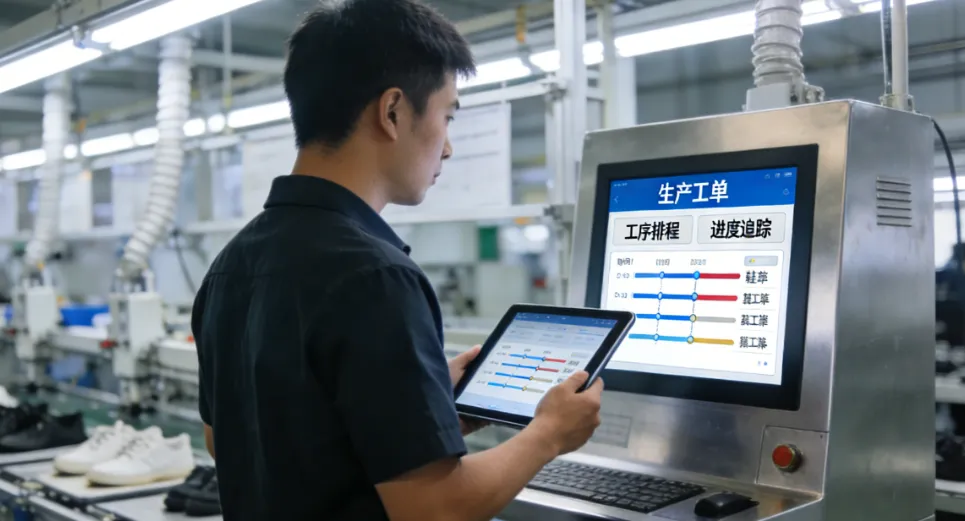
At the level of production and supply chain collaboration, the ERP system connects the entire process data of design, procurement, and production, realizing intelligent scheduling and supply chain collaboration. It can automatically associate BOM lists according to production plans, trigger raw material procurement requests, track supplier delivery progress in real time, warn of delivery delay risks, and support customized process routes according to styles to achieve precise scheduling of processes, adapt to flexible production needs of small batches and multiple varieties, shorten production cycles, and improve production efficiency. In response to the pain points of cost control, ERP systems can achieve full process cost accounting, accurately allocate expenses such as raw material losses, labor costs, equipment depreciation, etc., minimize cost accounting errors, provide accurate data support for product pricing and profit analysis, and help enterprises compress costs and improve profitability.
At the level of omnichannel operation and decision-making, the shoe and clothing ERP system realizes the integration of multi-channel data, connects online and offline inventory and sales data, implements "one inventory" management, supports nearby shipment and cross channel allocation, improves performance efficiency and consumer experience, and integrates member data to help enterprises carry out precise marketing and enhance user stickiness. More importantly, the ERP system has built-in multi-dimensional data analysis functions, integrating production, inventory, sales, market and other full chain data to generate accurate reports, helping managers predict market demand, optimize business decisions, bid farewell to empiricism, achieve data-driven decision-making, and accurately adapt to the iterative pace of the fast fashion industry. In addition, the system can track environmental and energy consumption data, connect with cross-border compliance rules, help enterprises meet green certification and customs supervision requirements, and reduce compliance risks.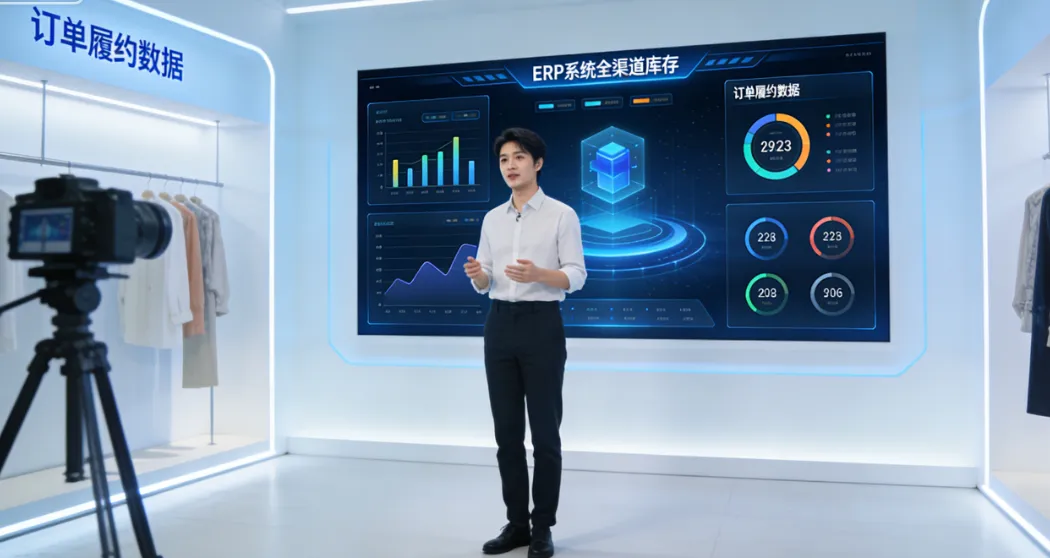
In addition, the improvement of technological maturity and the reduction of usage barriers further promote the popularization of shoe and clothing ERP systems. With the promotion of SaaS model, small and medium-sized enterprises do not need to invest a lot of money to build hardware equipment, and can subscribe annually, greatly reducing the threshold for digital transformation. At the same time, the low code configuration function allows business personnel to adjust processes independently without professional development, adapting to the iterative needs of enterprise business, and saving a lot of customization costs every year. At the same time, domestic ERP manufacturers have emerged, launching more products that meet the needs of local enterprises, balancing cost-effectiveness and localized services, solving the problems of insufficient adaptability to international brands and lagging service response, and better meeting the development needs of industrial cluster enterprises such as Shenzhen.
In 2026, the competition in the footwear and apparel industry has upgraded to a competition for digital capabilities, and digital transformation is no longer an optional option, but a necessary choice for survival and development. The reason why the shoe and clothing ERP system has become a new favorite in the industry is essentially that it accurately solves the core pain points of the industry, builds a digital management base, and achieves multiple goals of "cost reduction, efficiency improvement, quality improvement, and compliance". It not only meets the group control and global layout needs of top enterprises, but also meets the lightweight digital needs of small and medium-sized enterprises, achieving full scale enterprise coverage.
From the perspective of industry development trends, with the deep integration of technologies such as AI and digital twins with ERP systems, functions such as intelligent prediction and scheduling will become more complete, further empowering enterprises to upgrade digitally. For footwear and apparel companies, introducing a dedicated ERP system is not just a simple technological upgrade, but also a reshaping of their operational model. It is a key lever to break through development bottlenecks and seize market opportunities. Driven by the digital wave, the footwear and apparel ERP system will continue to penetrate the entire industry and become the core engine leading the digital transformation of the industry, helping China's footwear and apparel industry to leap from a "manufacturing powerhouse" to a "brand powerhouse".