578 billion market+38% sports shoe market share: China's footwear industry upgrades, ERP becomes the "engine" of digital transformation
As the world's largest producer and consumer of footwear, China's industry continues to unleash resilience, and digital transformation has become the core path to break through growth bottlenecks and consolidate industrial advantages. According to data from the National Bureau of Statistics and the China Leather Association, the total retail sales of China's footwear market will exceed 578 billion yuan in 2024, maintaining steady growth year-on-year. It is expected to climb to 820 billion yuan by 2030, with an average annual compound growth rate of 5.5% -6.5%. In the segmented track, sports shoes have become the core engine of growth, with a market share of over 38% in 2024, an increase of nearly 10 percentage points from 2020. The market size has reached 386 billion yuan, and is expected to increase to 418 billion yuan by 2025. The growth rate of segmented categories such as running shoes and basketball shoes is significant. Driven by multiple factors such as consumption upgrading, policy empowerment, and global competition, China's footwear industry is transitioning from "scale expansion" to "quality improvement". The footwear industry's exclusive ERP system, with its full chain digital collaboration capability, has become the core engine for activating new industrial momentum and supporting industry upgrading.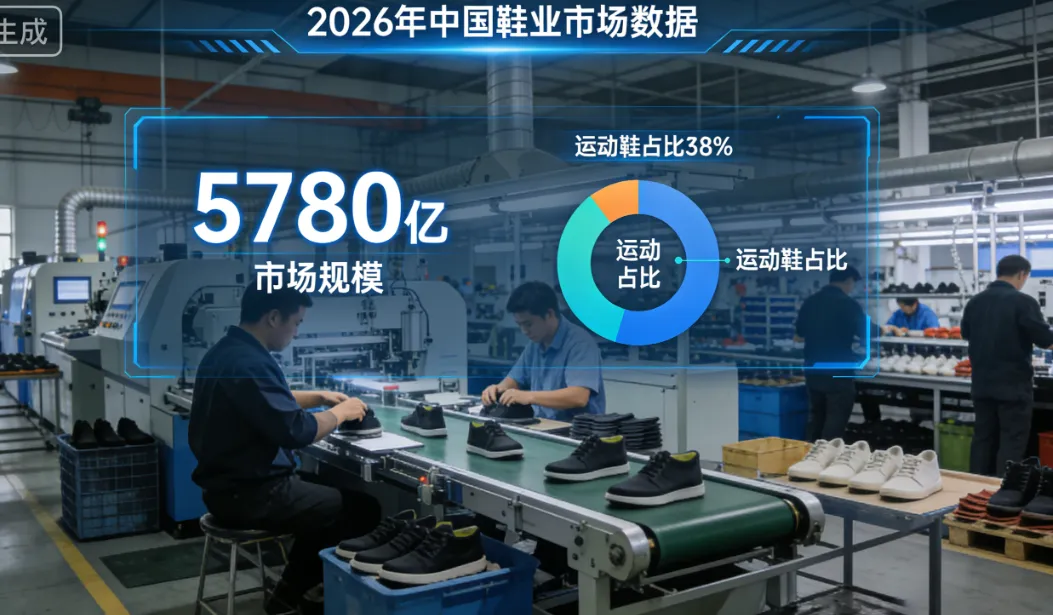
Behind the 578 billion yuan market is a dual transformation of consumer structure iteration and industrial pattern optimization, which not only injects new opportunities for the development of the footwear industry, but also puts higher demands on the digital capabilities of enterprises. On the consumer side, Generation Z and Millennials contributed 68% of the consumption, the per customer price increased from 360 yuan in 2023 to 386 yuan in 2024, and the sales of high-end products (with a unit price of more than 800 yuan) increased to 15.1%. Health functions, environmental materials, and China-Chic culture became core consumption drivers. The outbreak of the sports shoe track is particularly prominent, with the combination of the national fitness craze and sports industry policy support, promoting functional sports shoes to occupy 65% of the sports shoe market, and casual sports shoes to account for 35%. Consumers aged 25-35 have become the main force, and the demand for product technology content and design aesthetics continues to increase. On the channel side, the proportion of online sales continues to rise, and is expected to reach 58% by 2026. Emerging models such as live streaming sales and community marketing contribute 23% of the increase, and the integration of offline stores and online channels has become the norm. Omnichannel operation has become an essential capability for enterprises.
On the industrial side, China's footwear industry is undergoing a profound restructuring, presenting a competitive pattern of "head concentration and small and medium-sized breakthroughs". International brands and domestic brands compete on the same stage, with international brands such as Nike and Adidas accounting for about 45% of the sports shoe market share. Domestic brands such as ANTA and Li Ning have increased their market share to 38%, and it is expected to further expand to over 45% in the next five years. Local brands continue to rise through technological innovation and brand upgrading. At the same time, the industrial cluster effect is prominent, and production areas such as Putian, Jinjiang, and Zhongshan continue to improve their industrial chain supporting facilities. Areas such as Anyue have built the largest sports shoe production base in the western region, gathering more than a hundred shoe and clothing enterprises, with an industrial chain integrity rate of 80%. However, at the same time, the pain points of industry transformation have also become prominent, becoming a key bottleneck restricting enterprises from seizing the 578 billion market and tapping into the potential of the sports shoe track.
The current transformation pain points of China's footwear industry are concentrated in three aspects: insufficient full chain collaboration, low level of digitization, and weak cost control, which are seriously disconnected from the development needs of the 38% sports shoe track. One is the weak coordination of the supply chain. The production of sports shoes involves special raw materials such as functional fabrics and professional shoe soles, with scattered suppliers and a disconnect between procurement plans and production needs, which can lead to shortages or backlogs of raw materials. In addition, frequent fluctuations in raw material prices further drive up procurement costs; Secondly, there is a lack of flexibility in production, with fast iteration of sports shoe styles and complex processes. A large number of SKUs are derived from multiple sizes and colors, and traditional manual production scheduling cannot meet the needs of small batch quick response. The on-time delivery rate of orders is less than 80%, and some enterprises fail to meet quality standards due to rush work; Thirdly, inventory control is extensive, and the multi SKU feature makes warehouse management more difficult. Inconsistencies between accounts and reality, shortage of best-selling products, and backlog of unsold products have become the norm. The inventory turnover cycle of small and medium-sized shoe enterprises can last up to 3-6 months, and a large amount of funds are deposited; The fourth issue is severe data fragmentation, where data from procurement, production, sales, inventory, and other processes cannot be synchronized. Managers rely on experience to make decisions, making it difficult to accurately predict popular styles and sizes, and efficiently connect with market demand, especially in adapting to the growth pace of sports shoe sub categories. In addition, the requirements for green compliance have increased, and the proportion of environmentally friendly materials such as water-based adhesives continues to rise. Enterprises need to track environmental data, and traditional management models are difficult to meet compliance needs.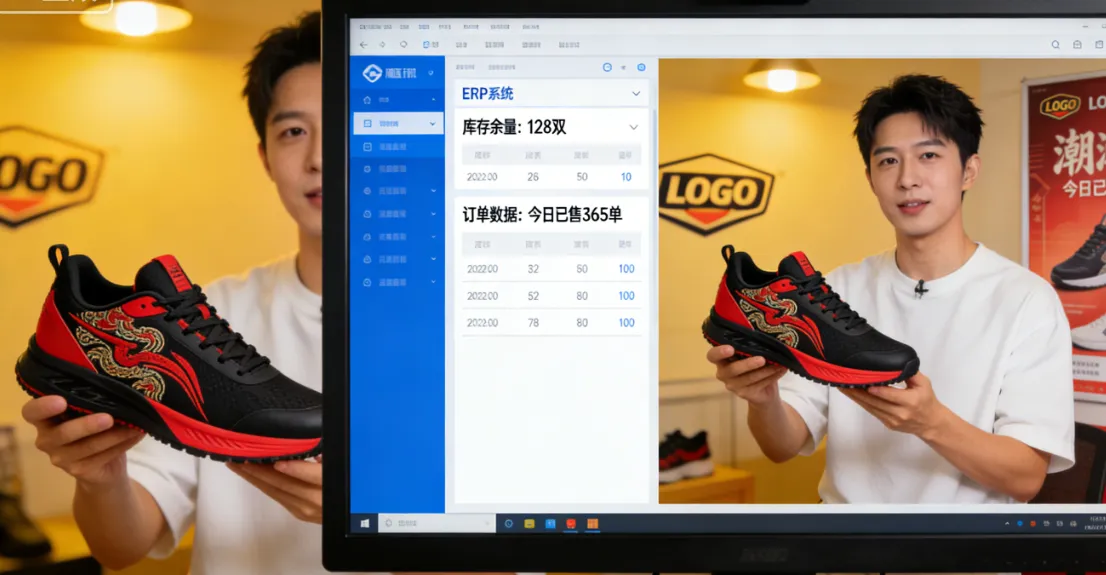
In this industry context, ERP systems are no longer an "optional configuration" for enterprises, but a "core engine" that adapts to market growth, solves transformation pain points, and activates the potential of the sports shoe track. Its full chain digital empowerment capability precisely meets the upgrading needs of China's footwear industry. Unlike the "one size fits all" model of general ERP, shoe specific ERP deeply adapts to the production and operation characteristics of segmented categories such as sports shoes, connects the entire chain of procurement, production, warehousing, sales, and decision-making, realizes digital collaborative control, and helps enterprises improve quality and efficiency, and accurately layout the market.
At the level of supply chain and procurement management, the ERP system establishes a comprehensive supplier management system that can record supplier qualifications, on-time delivery rates, quality qualification rates, and other information, achieve hierarchical management and scientific assessment, and help enterprises screen high-quality partners, especially for supplier control of special raw materials required for sports shoes. At the same time, the system combines production planning and inventory gaps to automatically generate purchase suggestion forms, synchronously compares quotes and delivery times from multiple suppliers, optimizes procurement decisions, sets up raw material price warnings, and responds to price fluctuation risks. In response to green compliance requirements, the system can track the procurement and use data of environmentally friendly materials, record the application of water-based adhesives and other environmentally friendly materials, help enterprises meet VOCs emission standards, and adapt to the trend of industrial green upgrading.
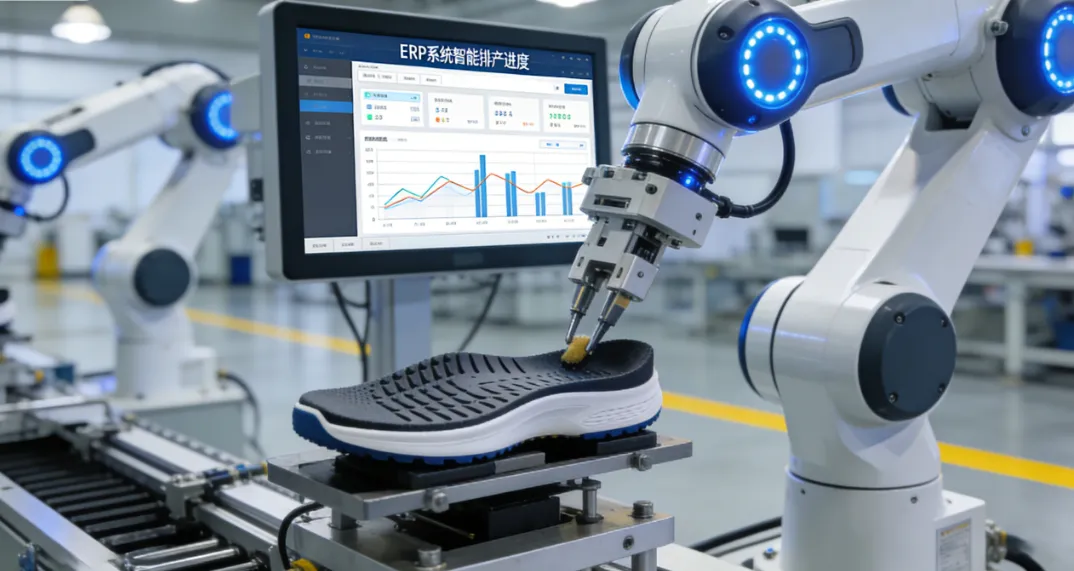
At the production management level, the ERP system is equipped with an exclusive intelligent scheduling module for the footwear and apparel industry, which accurately adapts to the complex processes and fast response requirements of sports shoes. It can automatically generate the optimal scheduling plan based on order priority and equipment capacity, support rapid adjustment of emergency insertion orders, and achieve seamless process connection. Workers can scan codes on their mobile devices to report work progress and material consumption in real-time. Managers can accurately control production nodes, and the system can track the consumption of functional raw materials, reducing the raw material loss rate in sports shoe production from the industry average of 8% -12% to below 5%, balancing efficiency and quality. In addition, the system integrates piece rate salary automatic accounting function, generates salary details based on reported work data, reduces financial burden and salary disputes, and stabilizes the employee team.
At the level of inventory and omni channel management, the ERP system solves the problem of multi SKU control and supports multi-dimensional inventory control based on "style+size+color+batch". Through scanning codes to complete inbound and outbound inventory operations, the inventory accuracy has been improved to 99.9%, and the inventory efficiency has been increased by more than 80%. The system has a built-in intelligent inventory warning mechanism, which combines sales data and market trends of sports shoes to set safety stock thresholds, helping enterprises optimize inventory structure, accelerate turnover, and release accumulated funds. At the same time, the system realizes the integration of all channel data, connects online and offline inventory and sales data, implements "one inventory" management, supports nearby shipment and cross channel allocation, adapts to the operational trend of online and offline integration, and improves performance efficiency and customer experience.
More importantly, the ERP system builds a comprehensive data platform, integrates data from all links, and accurately predicts market demand for segmented categories such as sports shoes through data analysis models, providing scientific support for product design and production planning. Managers can clearly grasp the sales situation and profit level of each SKU through multidimensional reports, accurately identify growth opportunities in the sports shoe track, bid farewell to experiential decision-making, and achieve data-driven refined operations. For cross-border enterprises, ERP systems can integrate customs supervision and multi currency accounting functions, adapt to the trend of China's shoe industry export recovery, help enterprises expand global markets, and enhance international competitiveness.
The expansion of the 578 billion yuan market and the increase in the proportion of 38% sports shoes mark the golden period of high-quality development for China's footwear industry, and digital transformation has become the key for enterprises to seize the market. As the core engine of digital transformation, ERP system can not only solve the pain points of the entire industry chain management, but also help enterprises accurately adapt to the trend of consumer upgrading, tap the potential of the sports shoe track, and achieve a leap from "manufacturing" to "intelligent manufacturing". With the deep integration of AI, big data technology, and ERP systems, their empowerment capabilities will continue to upgrade, helping more shoe companies optimize operational efficiency, reduce costs, and enhance competitiveness. They will seize the opportunity in the 578 billion market, promote China's footwear industry to continue consolidating its position as a global footwear powerhouse, and achieve long-term growth in the wave of industrial upgrading.