
Shoe ERP selection without pitfalls: prioritize core functions, find the right direction for cost reduction and efficiency improvement
For shoe companies, ERP selection is not about "choosing expensive and comprehensive", but about "choosing the right and suitable". At present, the footwear ERP market has a complex range of products, with a mixture of general ERP and industry-specific ERP. Many enterprises have fallen into the selection error of blindly pursuing full functionality and neglecting core requirements, resulting in the inability to solve practical pain points after going online. This not only wastes funds and time, but also misses the key opportunity of digital transformation. In 2025, the refined competition in the footwear industry will continue to upgrade, and "chaotic materials, slow delivery times, and high costs" remain the core pain points. The core logic of ERP selection should revolve around "fitting the characteristics of the footwear industry, focusing on cost reduction and efficiency improvement", clarifying functional priorities, first solving core problems, and then considering long-term expansion, in order to achieve selection without pitfalls and valuable implementation.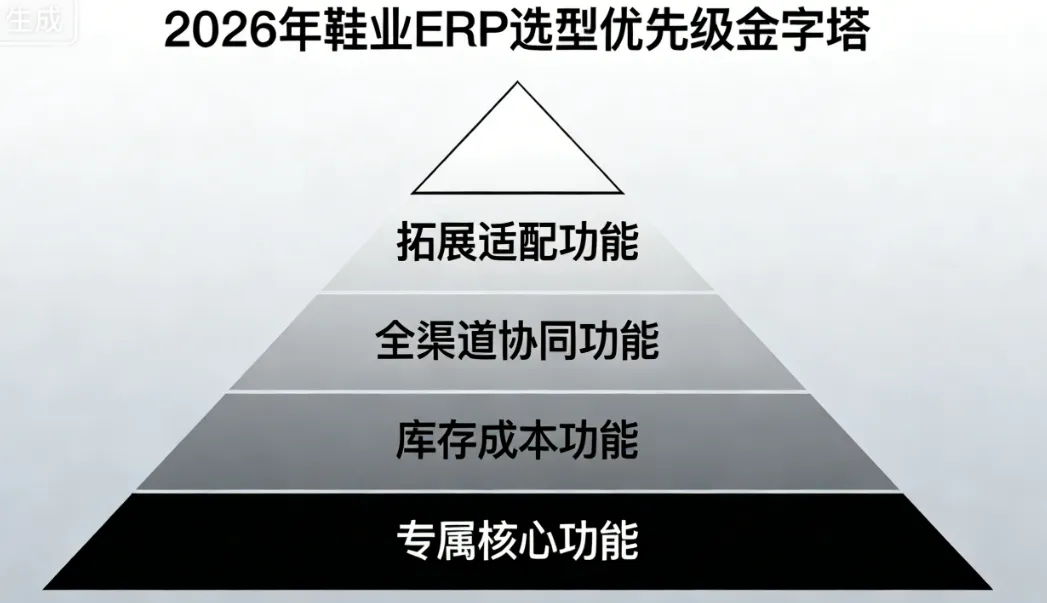
Before sorting out the priority of functions, it is necessary to avoid three common pitfalls in selection, which are the prerequisites for accurate selection. One is to confuse "general ERP" with "shoe specific ERP", ignoring the core characteristics of three-dimensional control of shoe "style color code", multi process collaboration, and complex materials. Choosing a general ERP requires a lot of secondary development, which not only increases costs but may also lead to functional adaptation gaps; Secondly, blindly pursuing "big and comprehensive", overly focusing on expanding functions, neglecting core necessities such as inventory and production, resulting in unresolved core pain points and increased operational difficulty and implementation costs for redundant functions; The third is to ignore the adaptability of landing, only focusing on functional parameters, without considering the size of the enterprise, business model (such as OEM/ODM, own brand), and team operation ability, which leads to the inability to quickly promote the system after it goes online and becomes a "decoration". After avoiding these misconceptions, it is necessary to prioritize the core functions in order to accurately match the needs of the enterprise.
First priority: Exclusive core control function for the footwear industry (a must-have for urgent needs, directly addressing core pain points). This type of function is the core difference between shoe ERP and general ERP, which directly determines whether the system can solve the stubborn problems of "disorderly materials and slow delivery time". It is the foundation for cost reduction and efficiency improvement, and should be given priority consideration by both small and medium-sized shoe enterprises and large groups. The core includes two major segmentation functions, both of which are indispensable.
One, the "style color code" full chain control function. This is the most core exclusive requirement of the footwear industry. A shoe can have dozens of SKUs in multiple sizes and colors, and the lack of exclusive control can directly lead to inventory chaos and material mismatches. A high-quality ERP system should support the construction of unique codes based on "style+color+size+batch", achieving precise control over the entire process from product design, material procurement, production and processing to inventory and outbound. It can quickly query the material consumption, production progress, and inventory balance of a certain SKU, eliminating problems such as size confusion and wrong material delivery. For segmented categories such as sports shoes and leather shoes, it is necessary to support further subdivision and control based on last shape and material, and adapt to the characteristics of the category.
Secondly, the collaborative function between production and materials. Adhering to the production characteristics of multiple processes and materials in the footwear industry, the core solution is to address the issues of "material lag and disorderly production". It should include three major sub functions: intelligent scheduling, material traceability, and process control. Intelligent scheduling can automatically generate the optimal scheduling plan based on order priority, equipment capacity, and material arrival progress, support emergency order insertion and quick adjustment, and adapt to the production rhythm of small batches and multiple orders; Material traceability can track the procurement sources and consumption of various materials such as leather, shoe soles, and accessories, accurately control losses, and especially adapt to the refined management of valuable materials such as genuine leather; Process control can real-time collect the progress of various processes such as cutting, needle sewing, and forming. Workers scan codes to report work, and managers accurately control production nodes to avoid process discontinuity and improve order delivery efficiency.
Second priority: Inventory and cost refinement function (core empowerment, consolidating the foundation of cost reduction). This type of function undertakes core control functions, focuses on the goal of "cost reduction", solves the problems of inventory backlog and cost ambiguity, and is the key to achieving profitability improvement for enterprises, with priority second only to exclusive core functions.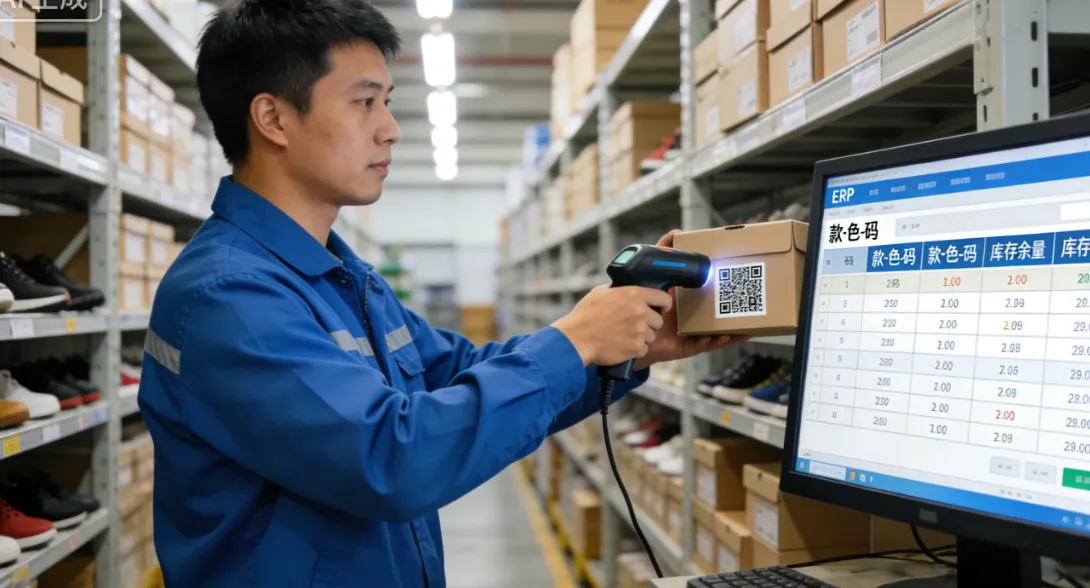
The refined inventory control function needs to break through the limitations of traditional manual ledger, support scanning code for warehousing and scanning code for inventory, improve inventory efficiency and accuracy, and achieve an inventory accuracy rate of over 99% without stopping work for inventory; Built in intelligent inventory warning mechanism, which can set safety stock thresholds based on production plans and sales data. It automatically triggers reminders when best-selling items are out of stock or unsold items accumulate, helping to optimize inventory structure, accelerate inventory turnover, and reduce capital accumulation. At the same time, it is necessary to support the management of stagnant materials, automatically calculate the storage time and loss of backlogged materials, assist enterprises in formulating clearance plans, and reduce material waste.
The cost refinement accounting function needs to be tailored to the complex characteristics of shoe industry cost composition. It can automatically collect various expenses such as raw material procurement, labor costs, equipment depreciation, and process losses, accurately allocate them to each SKU, and generate detailed cost breakdown reports, allowing managers to clearly grasp the profitability of individual products and avoid blind pricing. For enterprises with multiple orders and batches of production, it is also necessary to support cost accounting by order and batch, accurately analyze the profitability level of each order, and optimize the order structure.
Third priority: Omnichannel data collaboration function (advanced empowerment, adapted for long-term development). This type of function is suitable for enterprises with omnichannel layout and brand development needs, which can solve the problems of "data fragmentation and blind decision-making", help enterprises accurately connect with the market, enhance competitiveness. Small and medium-sized shoe enterprises can flexibly consider their own business scale, and large enterprises are recommended to prioritize configuration.
The core includes two major functions: first, omnichannel inventory collaboration, connecting inventory data from multiple channels such as online e-commerce, offline stores, and cross-border exports, achieving "one inventory" management, supporting nearby shipments and cross channel transfers, avoiding the embarrassment of online stockouts and offline backlogs, and improving contract fulfillment efficiency and customer experience; The second is the basic data analysis function, which integrates production, inventory, sales, cost and other full chain data, generates multi-dimensional reports, can accurately predict popular styles and sizes, assist in optimizing production plans and procurement decisions, and bid farewell to empiricism. For cross-border shoe companies, it is also necessary to support multi currency accounting, customs compliance docking, and adapt to overseas needs.
Fourth priority: Expand adaptation functions (optional as needed, considering long-term expansion). These types of functions are not essential and need to be selected based on the size and development plan of the enterprise to avoid blind pursuit and increase implementation costs. The core includes three categories: first, green compliance management function, which can track the use of environmentally friendly materials, energy consumption and emission data, adapt to the control needs of environmentally friendly materials such as water-based adhesives, meet VOCs emission standards, and conform to the trend of industrial green upgrading; The second is the low code expansion function, which supports flexible adjustment of processes based on business iteration, without the need for professional development, and is suitable for the long-term development of enterprises; The third is the integration and adaptation function, which can be connected to WMS warehousing systems, intelligent production equipment, e-commerce platforms, etc., to achieve full chain digital collaboration, suitable for enterprises with large-scale and intelligent development.
In addition to prioritizing functionality, there are two key factors to consider when selecting a product: first, operational adaptability. The system should be simple and easy to understand, tailored to the operational capabilities of the shoe company team (especially workshop workers and warehouse managers), and avoid overly complex operations that increase training costs and promotion difficulties; The second is after-sales and operation and maintenance. It is necessary to choose manufacturers with experience in shoe industry implementation and timely after-sales response, provide targeted training and operation and maintenance services, solve operational difficulties and system failures after launch, and ensure the rapid implementation and effectiveness of the system.
The core logic of shoe ERP selection has never been "more functions are better", but "precise adaptation and priority resolution of core pain points". For shoe companies, it is important to first focus on the core functions of the first and second priorities, ensuring that the core needs of "style color code control, production collaboration, accurate inventory, and clear costs" are addressed. Only by selecting and expanding functions according to their own development plans can they achieve seamless selection. In 2025, digital transformation has become a necessary path for shoe companies to break through. Only by accurately selecting ERP and clarifying functional priorities can the system truly become a "tool" for cost reduction and efficiency improvement, helping enterprises to stand firm in refined competition and achieve long-term development.