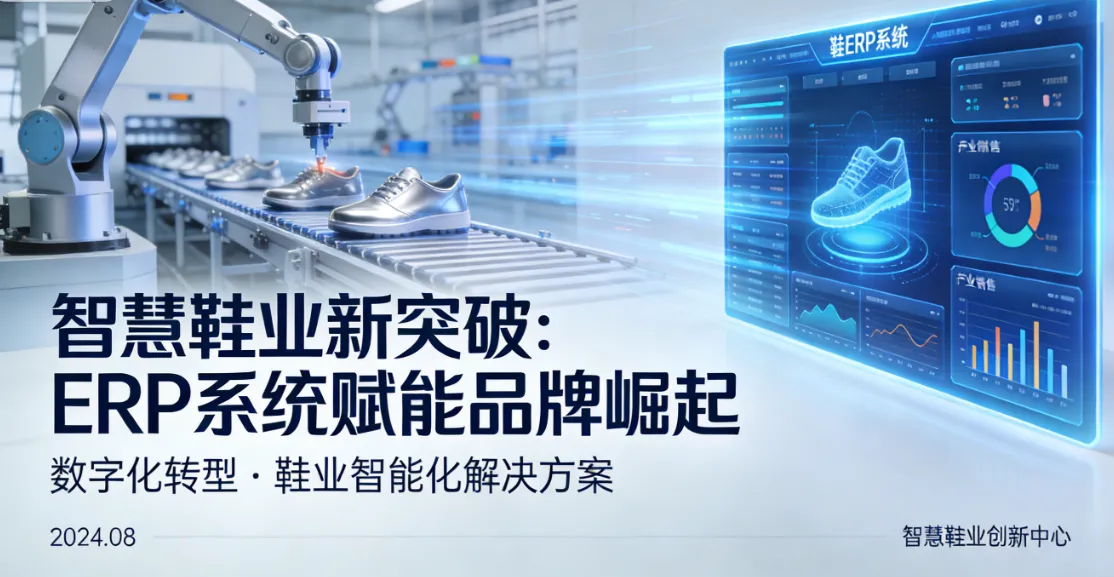
New breakthrough in smart footwear industry: ERP system empowers brand rise
As the smart footwear market continues to expand, with a scale of 4.86 billion yuan by 2024 and an average annual compound growth rate of over 25%, the smart footwear industry is entering a new stage of "scale development" from "technological experimentation", and brand competition is upgrading from traditional production capacity and price competition to a comprehensive competition of digital capabilities, quality control, and user operation. Currently, whether it is the layout of top brands in the "hardware+software+service" ecosystem or small and medium-sized brands seeking differentiation breakthroughs, they are facing common pain points such as insufficient full chain collaboration, weak quality traceability, lagging user demand response, and difficulty in mining data value. As the core hub of digital transformation in smart footwear, ERP system is no longer just a production management tool, but a brand empowerment carrier that runs through the entire process of research and development, production, inventory, marketing, and service, helping footwear brands break through development bottlenecks and achieve a leap from "manufacturing" to "smart manufacturing" and then to "brand leadership".
The first prerequisite for the rise of smart footwear brands is to establish a solid foundation of quality, and the ERP system solves the pain points of uneven quality in traditional footwear through full process quality control, consolidating brand trust. The trend towards high-end and specialized smart footwear is evident, with advanced products integrating AI algorithms, biofeedback, and other technologies, greatly increasing the requirements for production processes and raw material accuracy. Traditional manual quality inspection is difficult to adapt to multi process, high-precision production needs, and is prone to process deviations, quality hazards, and damage to brand reputation. The ERP system deeply integrates the production and manufacturing execution module, achieving full chain quality traceability from raw material procurement to finished product delivery. Standardized parameters are set for each process such as shoe upper sewing, intelligent module embedding, and finished product inspection, and quality inspection data is collected in real time. Once deviations occur, automatic warnings are issued, forcing the production process to rectify. According to industry data, shoe companies that deploy intelligent ERP systems can reduce production loss rates by 19% and increase yield rates to over 99%. Anta Jinjiang Intelligent Production Base relies on ERP control to maintain a single line yield rate of 99.3%, which not only ensures the performance stability of intelligent shoe products, but also strengthens brand competitiveness through quality reputation.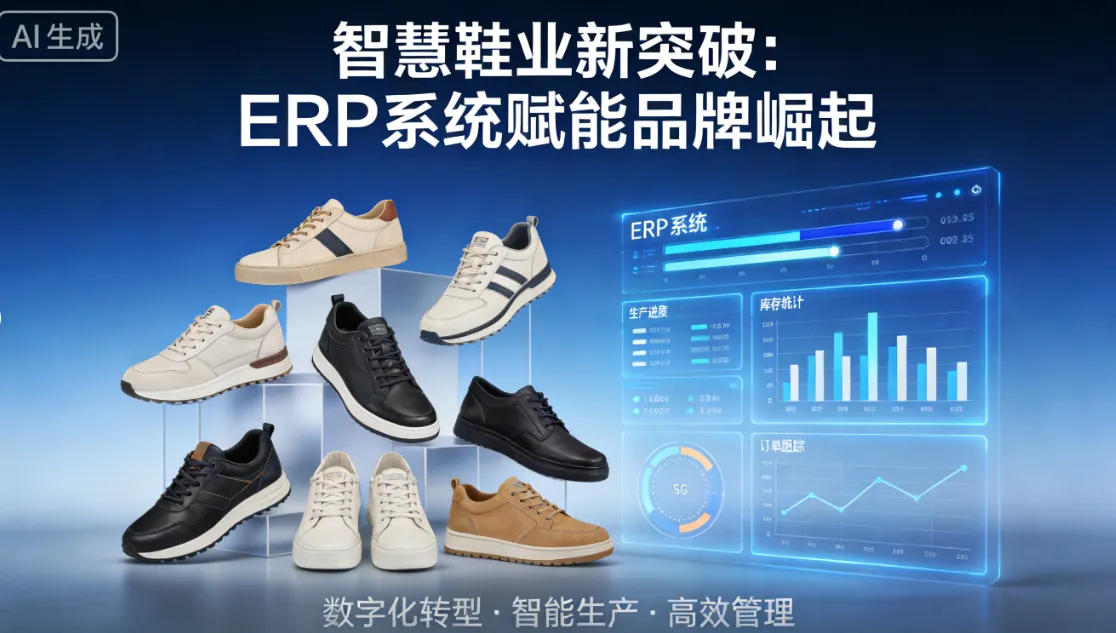
The ERP system solves the problem of the disconnect between research and development, production, and marketing in the smart footwear industry through full chain collaborative control, improves brand market response speed, and seizes market opportunities. One of the core competitiveness of smart footwear is its ability to quickly adapt to market demand. Whether it is the functional iteration of consumer grade smart running shoes or product innovation in segmented scenarios such as elderly care and rehabilitation assistance, efficient linkage between research and development, production, and marketing is required. Traditional shoe industry departments are fighting independently, with research and development plans disconnected from production capacity, and marketing data unable to be synchronized to the production end, resulting in long new product launch cycles, supply-demand imbalances, and missed market opportunities. The ERP system integrates core modules such as research and development, production, inventory, and marketing to achieve real-time data flow. The R&D department can retrieve market demand data through ERP, accurately locate user pain points, and optimize the design of intelligent shoe functions; The production department adapts to the flexible production mode of small batches and multiple categories through ERP intelligent scheduling based on research and development plans and order requirements, reducing product switching time to within 2 hours; The marketing department synchronizes terminal sales and user feedback in real time, driving the production end to quickly adjust production capacity and product specifications. A sports shoe brand in Putian, Fujian Province, has utilized ERP collaboration capabilities to shorten the new product launch cycle from 3 months to 1 month, successfully seizing the consumer trend of intelligent sports equipment and achieving rapid brand awareness enhancement.
Exploring user value and creating differentiated brand experiences are the key to the rise of smart footwear brands, and ERP systems provide support for personalized brand operations through user data integration and analysis. With Generation Z becoming the main consumer force, personalization and scenarization have become the core demands of footwear consumption. Smart shoe users not only focus on functional practicality, but also on customized and exclusive experiences. Traditional brands are difficult to accurately capture user needs and are prone to homogeneous competition. The ERP system integrates user data from all channels, including online e-commerce and offline store consumption records, member information, functional preferences, etc., to build accurate user profiles and help brands create differentiated products and services. For example, in segmented scenarios such as monitoring children's arch development and preventing athlete injuries, brands can analyze user data through ERP and customize exclusive smart shoe products; Through the ERP membership management module, personalized feature upgrade services and exclusive benefits are pushed to enhance user stickiness. At the same time, the data analysis capability of the ERP system can predict market trends and help brands layout emerging tracks in advance, such as green smart shoes with integrated carbon footprint tracking and medical grade rehabilitation smart shoes. Through differentiated positioning, they can seize the high-end market and create brand characteristic labels.
For small and medium-sized shoe brands, ERP systems provide lightweight and low-cost digital solutions to lower the threshold for brand rise and achieve overtaking in corners. The current penetration rate of ERP in the footwear industry continues to increase, and it is expected that the ERP deployment rate of large-scale shoe enterprises will reach over 78% by 2025. Among them, cloud ERP has become the preferred choice for small and medium-sized brands due to its short deployment cycle and low initial investment, and its application proportion will increase from 36% in 2023 to 52%. The modular architecture of ERP system can adapt to the development needs of small and medium-sized brands, and can focus on core links without high investment, such as optimizing multi-dimensional inventory management of "style color size" through inventory control module, reducing capital occupation; Through the supply chain collaboration module, establish data exchange with upstream sensors and flexible material suppliers to reduce procurement costs. Small and medium-sized brands can rely on ERP to achieve refined operations, focusing limited resources on brand building and user services, avoiding production capacity competition with top brands, and achieving brand breakthroughs through deep cultivation of segmented scenarios. For example, brands that focus on intelligent fall prevention shoes for the elderly can use ERP to accurately control production and user operations, gradually establishing brand advantages in segmented fields.
The intelligent upgrade of ERP system helps smart footwear brands build a comprehensive ecosystem of "hardware+software+services" and achieve long-term rise. The current smart footwear industry is moving from a single hardware to ecological development, and brand competition has been upgraded to ecological competition. As a data center, ERP systems can connect with cutting-edge technologies such as AI and the Internet of Things to promote the improvement of brand ecology. Through the production, user and market data precipitated by ERP, combined with AI algorithm to achieve demand forecasting, adjust production and R&D strategies in advance, and reduce business risks; Linking intelligent wearable device terminals to achieve digital management of product function iteration and after-sales operation and maintenance, providing users with full lifecycle services. At the same time, the ERP system has added functions such as carbon footprint tracking and green supplier rating to adapt to global environmental compliance requirements, helping brands build a green brand image and enhance international competitiveness. In the cross-border cooperation between Huawei, Xiaomi, and footwear brands, it is precisely through the ERP system that software and hardware data exchange is achieved, building an ecosystem of "intelligent hardware+digital services", and promoting the continuous improvement of brand value.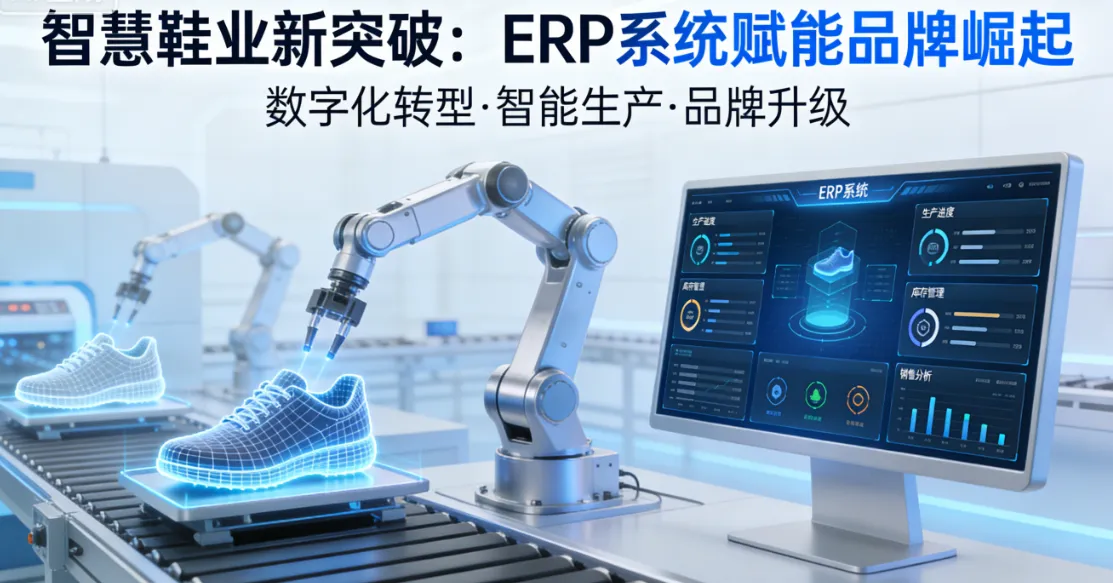
In summary, in the development trend of smart footwear, the rise of brands cannot be separated from the support of digital capabilities, and ERP systems have become the core tool empowering brand rise with advantages such as full process quality control, full chain collaboration, user data mining, and lightweight adaptation. It not only solves the pain points of inefficient operation and uneven quality in traditional footwear industry, but also helps brands achieve quality upgrading, efficiency improvement, experience optimization and ecological construction, adapting to the dual track development pattern of "high-end specialization" and "mass popularization" of intelligent footwear. In the future, with the deep integration of ERP, industrial Internet and AI technology, it will further release the value of data, help more shoe brands break through the bottleneck of development, rise in the track of smart shoes, and lead the industry to high-quality, digital and brand oriented development.