
Intelligent Data Management and Operations of ERP Systems: The Way to Integration, Security, and Optimization
In today's deeply penetrated digital economy, ERP systems have become the core hub for enterprises to integrate full chain business and connect data flow. The level of intelligence in data management and operation directly determines the operational efficiency of ERP systems and is a key support for the implementation of enterprise digital transformation. Traditional ERP data management relies heavily on manual operations, with pain points such as poor data integration, weak security prevention and control, and low operational efficiency, making it difficult to adapt to the needs of massive data iteration and complex business operations. Based on the core demands of enterprise digital operation, we must deeply cultivate the integration, security, and optimization of intelligent data management and operation of ERP systems in order to maximize the release of data value, ensure the stable and efficient operation of ERP systems, and inject lasting momentum into the refined operation of enterprises.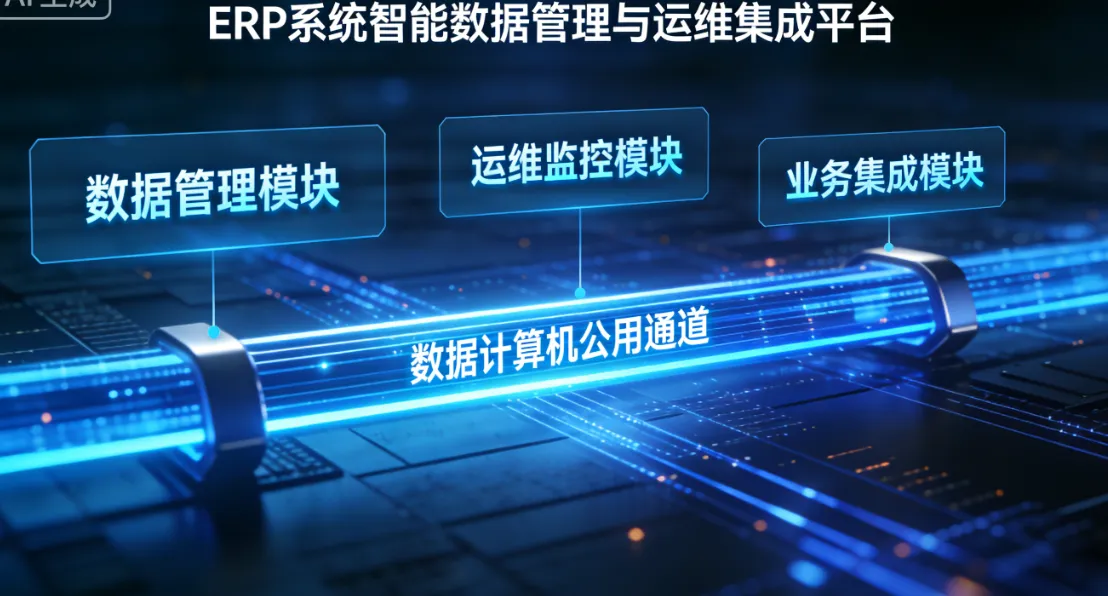
The core of integration is to break down data silos and build a global collaborative data flow system, which is the fundamental prerequisite for ERP intelligent data management. Currently, the ERP systems of most enterprises are facing the dilemma of "data fragmentation". Business modules such as procurement, production, inventory, and finance are stored in a scattered manner and cannot be seamlessly linked with third-party systems such as MES, CRM, and e-commerce platforms, resulting in data redundancy and inconsistent calibers, which cannot form a complete data loop and restrict data value mining. The integration of intelligent data management in ERP systems is not simply data stacking, but rather an intelligent upgrade that achieves "full chain integration and full scenario linkage" through technological empowerment.
At the level of data integration, relying on big data and interface adaptation technology, a standardized data integration framework is built to achieve automatic collection, cleaning, and synchronization of data from various modules within the ERP system, unify data coding and caliber, eliminate the problem of "multiple versions of the same data", and ensure data accuracy and consistency. At the system integration level, strengthen the seamless integration between ERP and upstream and downstream systems, break down internal and external data barriers, and achieve full domain linkage between business data and financial data, front-end sales data and back-end production data, and internal enterprise data and supply chain data. For example, manufacturing enterprises integrate ERP with IoT devices to collect real-time operational data of production equipment and optimize scheduling through linkage with production modules; Shoe and clothing enterprises integrate ERP with e-commerce platforms, automatically synchronizing order data to inventory and financial modules, reducing manual input errors, and improving overall operational efficiency. This comprehensive integration transforms data from "scattered idle" to "collaborative empowerment", laying a solid foundation for ERP intelligent data management.
The key to security is to establish a comprehensive prevention and control system throughout the entire process, and to safeguard the bottom line of data security. This is the core guarantee for ERP intelligent data operation and maintenance. ERP systems store core business data and sensitive information of enterprises, including procurement prices, customer information, financial statements, production formulas, etc. Once data leakage, tampering, or loss occurs, it will bring irreversible economic losses and reputation risks to the enterprise. Compared to traditional operation and maintenance models, intelligent operation and maintenance focuses more on "active prevention and control, precise traceability", and builds a multi-level and full process security protection system through technological upgrades to solve data security pain points.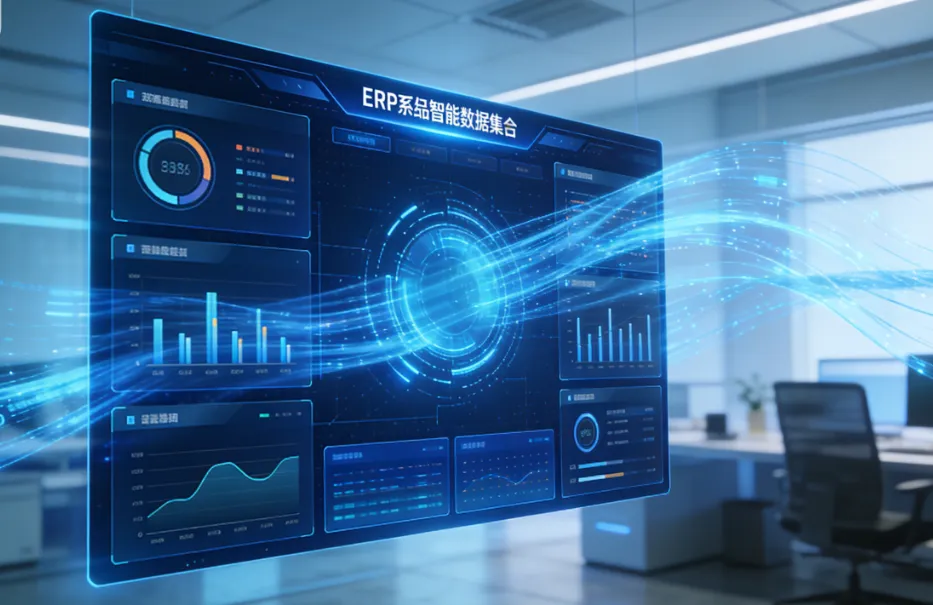
Strengthening the security defense line requires a dual approach of technical prevention and control as well as institutional norms. At the technical level, intelligent technologies such as data encryption, hierarchical control of permissions, and behavioral auditing are adopted to encrypt and protect the entire process of data collection, storage, transmission, and use, preventing illegal acquisition and tampering of data; Through the AI intelligent monitoring system, abnormal operational behavior is captured in real time, automatic safety warnings are triggered, and safety hazards are quickly identified, achieving a leap from "passive disposal" to "active prevention and control". At the institutional level, establish a sound data security management system, clarify the responsible parties for data management, standardize data operation procedures, regularly conduct data security training and emergency drills, enhance the data security awareness of all staff, and prevent security risks caused by human operational errors. At the same time, regular data backup and recovery drills are conducted, adopting a dual mode of remote backup and cloud backup to ensure that data can be quickly restored in extreme situations, and to comprehensively safeguard the security bottom line of enterprise core data.
The core of optimization lies in leveraging intelligent technology to enhance operational efficiency and maximize data value, which is the ultimate goal of ERP intelligent data management and operation. The intelligent optimization of ERP systems is not a single functional upgrade, but a comprehensive iteration around data flow, system operation, and business adaptation. It not only ensures the stable operation of the system, but also enables data to better support enterprise decision-making and business upgrades, achieving the dual value of "operational efficiency improvement and data value-added".
Optimization at the data level, focusing on deep mining of data value, relying on AI algorithms to conduct multidimensional analysis of massive data in ERP systems, mining operational pain points, profit highlights, and potential trends behind the data, generating intelligent analysis reports, and providing precise support for enterprise production plan adjustment, inventory optimization, cost control and other decision-making. For example, by analyzing ERP inventory data, optimizing replenishment strategies, and avoiding risks of stockouts and backlogs; By breaking down financial data, identifying cost control bottlenecks, and enhancing the profitability of the enterprise. At the system level, optimization focuses on improving operational stability by using intelligent operation and maintenance tools to monitor the system's real-time status, automatically identify system vulnerabilities and performance bottlenecks, optimize system resource allocation, reduce system lag and downtime, and enhance system efficiency. At the business level, optimization focuses on adapting to the development dynamics of the enterprise, combining business adjustments and industry trends, flexibly optimizing data processes and system modules, ensuring that the ERP system always fits the business scenario of the enterprise, and achieving synchronous data management, system operation and maintenance, and business development.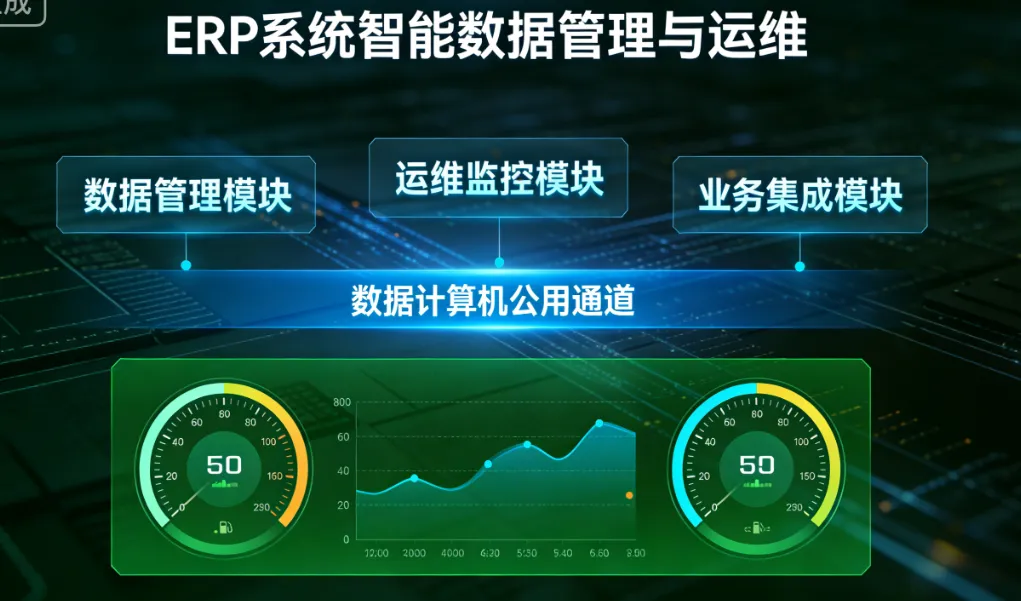
Conclusion: The integration, security, and optimization of intelligent data management and operation in ERP systems complement each other and are indispensable - integration is the foundation, breaking down barriers to data collaboration; Security is the guarantee, guarding the bottom line of core data; Optimization is the goal, maximizing the value of data. In today's continuously deepening digital transformation, enterprises are facing increasingly complex business scenarios, with a continuous surge in data volume, and an increasing demand for intelligent management and operation of ERP system data. Only by deeply cultivating these three core approaches and relying on cutting-edge technologies to achieve data integration, collaboration, security and controllability, optimization and upgrading, can ERP systems truly become the "core engine" of enterprise digital operations, ensuring stable and efficient system operation while maximizing the release of data value, helping enterprises solve operational pain points, enhance core competitiveness, and achieve high-quality development in the digital wave.