
ERP System Solution for Printing Industry: Requirements Analysis, Business Process Optimization, and Implementation Guide
As a typical discrete manufacturing industry, the printing industry has significant characteristics in production and operation, such as a wide variety of orders, large batch differences, complex production processes, and short delivery cycles. In the wave of digital transformation, an ERP system tailored to industry characteristics is no longer an option for enterprises, but a necessary tool to enhance competitiveness and achieve refined management. This article will explore the core essence of ERP solutions in the printing industry from a comprehensive perspective of requirements analysis, business process optimization, and implementation.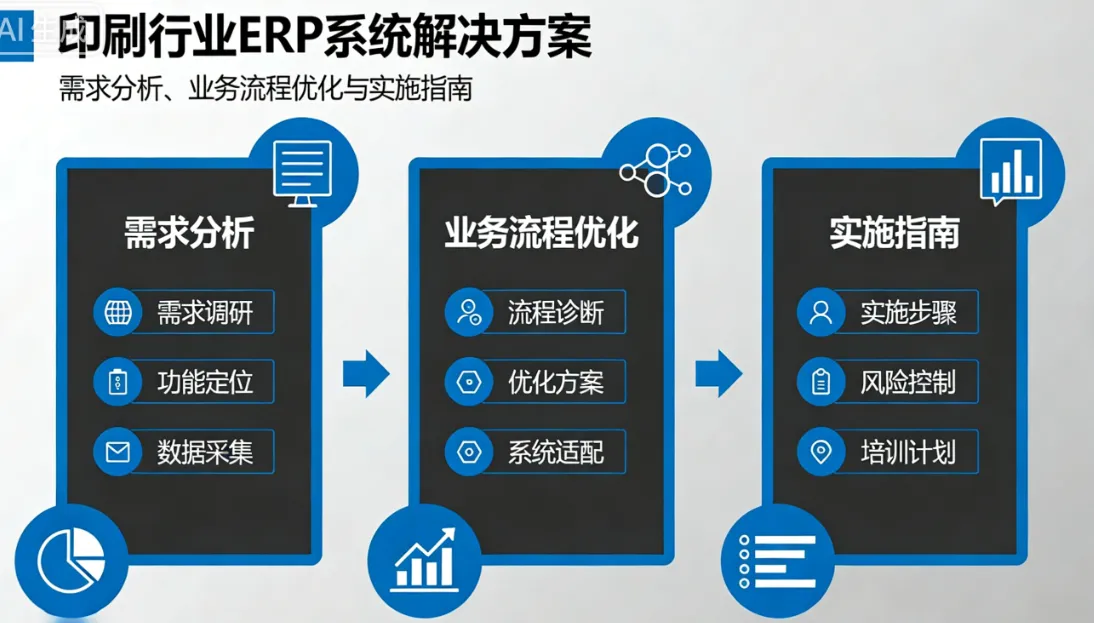
Industry pain point driven demand analysis
The information technology needs of printing enterprises are rooted in their unique operational challenges. In the order taking process, the degree of personalization of customer needs is extremely high - from paper material and weight specifications to printing technology and post-processing, each variable directly affects cost accounting and production arrangements. The traditional valuation model relies on experienced mentors, which is time-consuming and prone to bias. Therefore, the primary requirement of an ERP system is to establishStructured and parameterized intelligent valuation systemBased on historical data and material inventory, it can quickly generate accurate quotations and seamlessly convert them into executable production work orders.
Production planning and scheduling are another core pain point. Printing enterprises often face the dilemma of "urgent insertion and frequent replacement of orders", and there is a strong constraint relationship between production equipment (such as Heidelberg, Komatsu and other specific machines) and process paths. This requires ERP to haveAdvanced scheduling functionIt can comprehensively consider order priority, equipment capacity, material completeness, and delivery time, and perform visual scheduling and dynamic adjustment. At the same time, the system needs to be integrated with workshop production data (such as MES) or equipment networking data to achieve transparent tracking from planning to execution.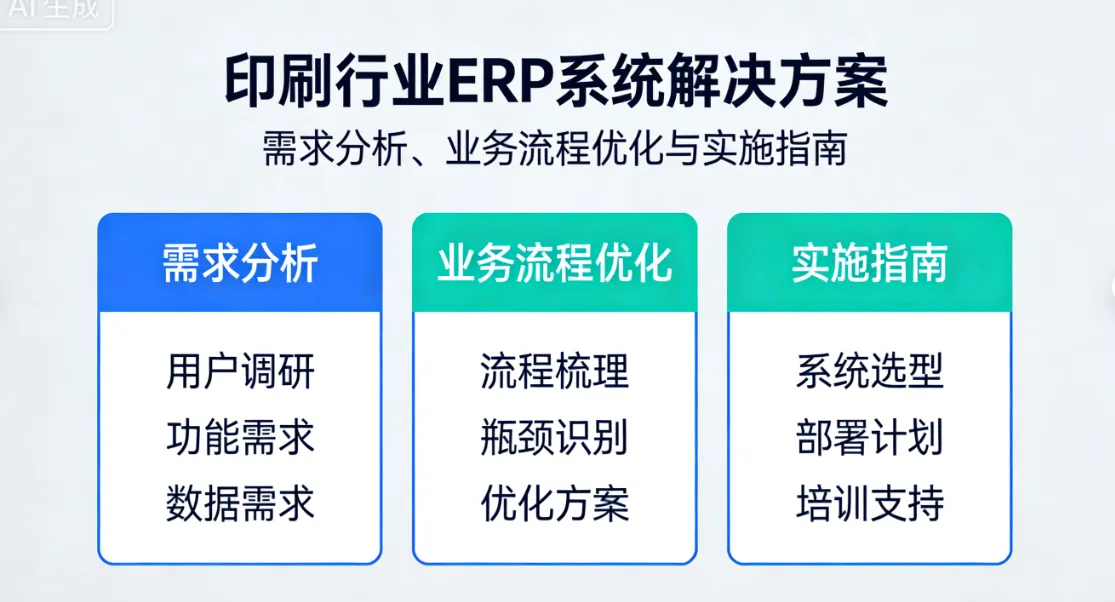
Material management is particularly complex in the printing industry. In addition to regular paper, ink, and plate materials, it is also necessary to manage the circulation of special materials provided by customers, as well as semi-finished products (such as printed sheets) and finished products. The management of paper is difficult due to differences in model, weight, specifications, and storage environment requirements. Therefore, ERP needs to provideRefined material and warehouse management planSupport batch tracking, stock warning, surplus material management, and precise association with production work orders to control costs and losses from the source.
In addition, the industry has strict requirements for color management and quality management. The system needs to be able to record the spot color formula, color standards (such as CMYK values, Lab values), and sample signing process for each order, and run through the production and quality inspection processes to ensure color consistency. At the financial level, ERP support is required due to common situations such as material sharing and co printing during the production processRefined order cost collection and accountingAccurately calculate the marginal profit of each order.
Optimizing business processes with value stream as the core
Introducing ERP is not simply about digitizing offline processes, its core lies inDriven by the system, optimize and restructure business processesFirstly, it is necessary to reconstruct the end-to-end main process from inquiry to receipt. By establishing a unified customer portal and order entry point, standardizing requirement input, and automatically triggering subsequent process reviews, material reservations, and production plans, we can reduce information transmission gaps and delays.
At the production execution level, promoteLean process transformationFor example, by analyzing historical production data through the system, standardizing the process routes and material lists of commonly used products; Promote the production concept of "one flow" and use system dashboards to reduce the accumulation of work in progress; Embed quality inspection standards and nodes into the work order flow to achieve self process completion. In terms of material management, the inventory data and prediction module of ERP can be combined to implement supplier inventory or precise material calling mode, reducing inventory capital occupation.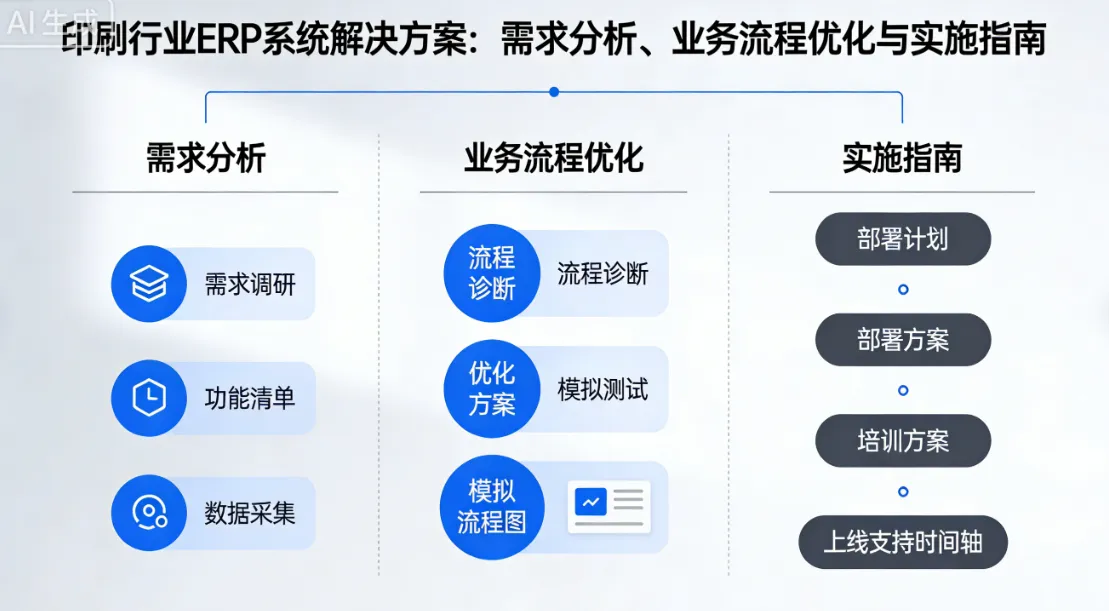
It is particularly important that ERP should assist enterprises in buildingData driven decision-making systemThe system needs to integrate sales, production, inventory, financial and other data, and provide real-time insights to management through visual reports and dashboards. For example, analyzing the profitability of different customers and product categories; Comprehensive efficiency of monitoring equipment; Track the on-time delivery rate of orders, etc. This requires that the business process be designed to ensure that key data at each stage can be accurately and timely collected.
A step-by-step and practical implementation guide for the system
Successful ERP implementation is a systematic project that requires rigorous planning and execution.Pre preparation stageEnterprises should establish a project team led by senior management, with the participation of business backbone and IT personnel, to clarify project goals and scope. The key is to conduct in-depth analysis and diagnosis of existing business processes, identify optimization points, and based on this, develop future process blueprints as the basis for system selection and configuration.
在Selection and Scheme Design StageERP product and service providers with a deep understanding and successful cases in the printing industry should be selected. The scheme design must be based on the future processes sorted out in the early stage, and the prototype configuration and demonstration verification of the system must be carried out to ensure that it can meet the core business needs, especially the support for valuation, production scheduling, material and cost management.
System implementation and online phaseIt is recommended to adopt a strategy of "step-by-step deployment and rapid iteration". Priority can be given to implementing core modules for sales, production, and material management. After successful implementation in pilot workshops or product lines, they can be promoted to the entire factory and finally integrated with financial and cost modules. At this stage, the cleaning and preparation of data migration (such as material warehouse, BOM, customer information) is crucial. At the same time, sufficient end-user training must be provided in conjunction with their daily operational scenarios.
Post launch support and continuous optimizationIt is the key to realizing value. The project team needs to develop a detailed switching support plan to promptly address user issues. More importantly, establish a continuous optimization mechanism: regularly review the system's usage and achievement of business goals, collect user feedback, use the system's configurability for optimization, and plan for the deepening application of the system as business develops (such as business intelligence analysis, supply chain collaboration, etc.).
For printing enterprises, the ultimate value of a successful ERP system lies in becoming a "digital neural network" for enterprise operations - it can not only solidify optimized processes and improve operational efficiency, but also empower enterprises to perceive the market more sensitively, make more scientific decisions through data aggregation and analysis, and ultimately drive innovation in business models and the construction of core competitiveness. Starting from precise demand analysis, practical process optimization, and scientific implementation methods, printing enterprises can transform ERP from a major IT investment to a strategic asset supporting their long-term development.