
Detailed explanation of ERP system functions in the packaging industry and core benefits of SAP solutions
The packaging industry, as an important component of modern manufacturing, is facing increasingly complex market demands and operational challenges. From food and beverage, medicine and health to electronic products, daily consumer goods, the diversity, customization and fast delivery requirements of packaging products have put unprecedented high demands on internal management of enterprises. In this context, ERP systems designed specifically for the packaging industry have not only become a necessary tool for enterprise management, but also a core engine for achieving digital transformation and enhancing competitiveness.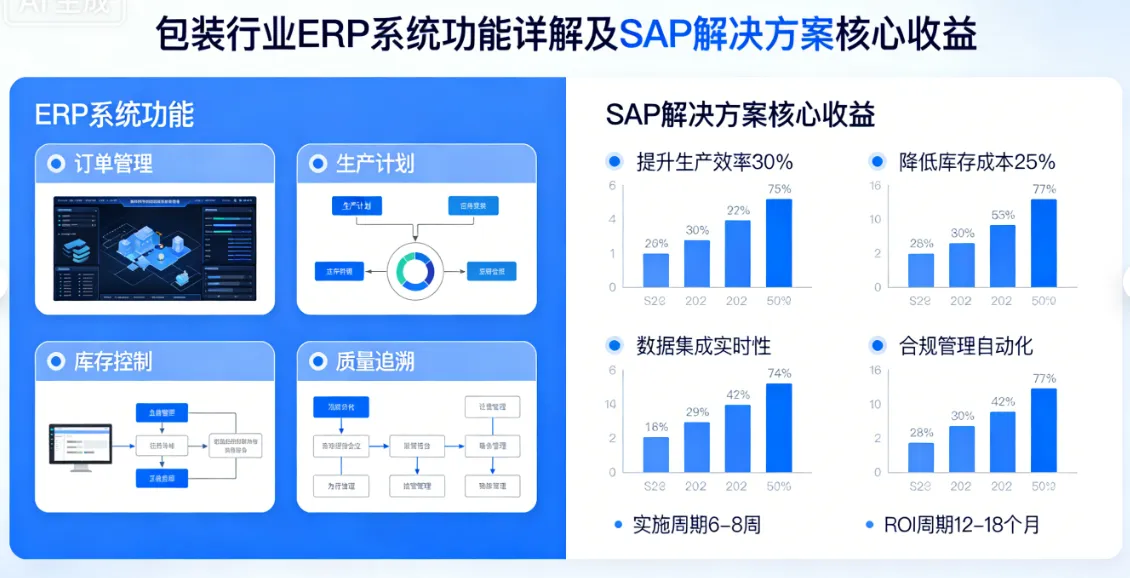
The core functional dimensions of ERP systems in the packaging industry
The design of ERP systems in the packaging industry must closely align with the unique business processes and management requirements of the industry. In terms of production management, the system needs to support the full process tracking from order to delivery, especially in dealing with the production mode of short delivery time, multiple varieties, and small batches unique to the packaging industry. The advanced scheduling function can comprehensively consider raw material supply, machine equipment capacity, and order priority, generate the optimal production plan, and minimize mold replacement time and equipment idle time. The quality management system runs through the entire process from raw material inspection to finished product delivery, ensuring that each link meets customer standards and industry norms.
Supply chain management holds special importance in the packaging industry. The system needs to manage a wide variety of raw materials, including paper, plastic, metal, ink, adhesives, etc. Each material has different suppliers, price fluctuations, and storage requirements. The intelligent procurement module can automatically generate procurement suggestions based on production plans, inventory levels, and market trends, optimizing procurement quantities and timing. Inventory management needs to address the different characteristics of raw materials and finished products, such as batch tracking of rolls, special management of hazardous chemicals, and optimization of three-dimensional warehousing for finished product packaging.
Cost control is the lifeline of packaging enterprises. The ERP system provides refined cost accounting functions, which can accurately calculate the direct material cost, direct labor cost, and manufacturing cost of each order and product. Especially for complex scenarios in the packaging industry such as joint production and waste material utilization, the system can automatically allocate costs and provide a realistic analysis of product profit margins. This enables businesses to identify profitable products and loss making orders, providing data support for pricing strategies and production decisions.
Customer relations and order management also require industry-specific design. Customers in the packaging industry often have strict delivery requirements and quality standards, and the system needs to support a complete process management from inquiry, sampling, confirmation to mass production. The integrated customer portal allows customers to submit requirements online, view production progress, and download quality certificates, greatly improving customer experience and collaboration efficiency.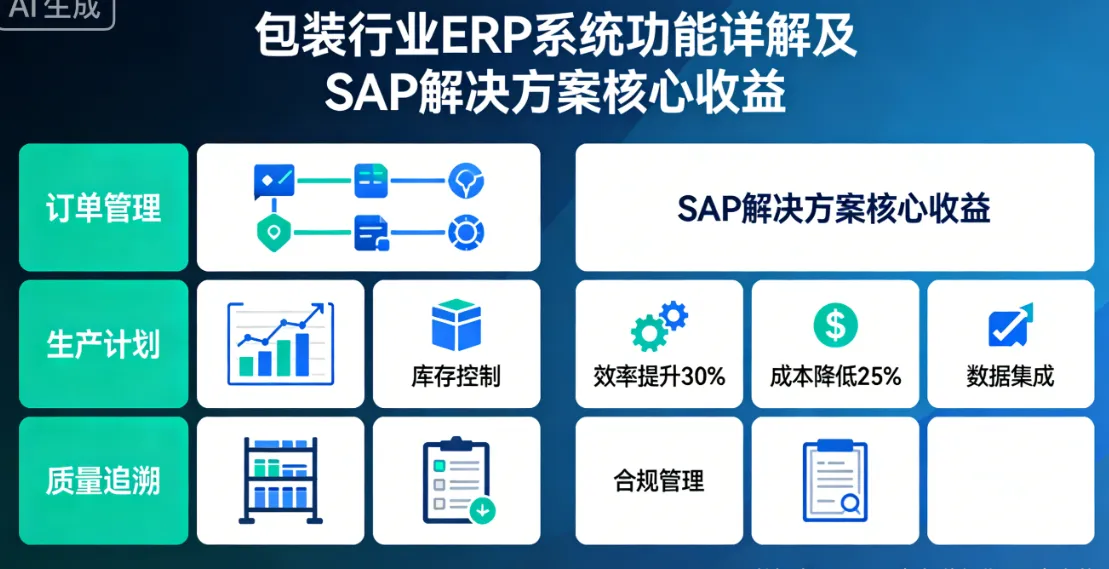
The core architecture of SAP packaging industry solutions
SAP's solutions for the packaging industry are based on its deep industry experience and technological platform advantages, providing a comprehensive and integrated management framework. The core of the solution is the SAP S/4HANA platform, which is an in memory computing platform that can process massive business data of packaging enterprises in real time, providing real-time insights and predictive analysis.
At the production and operation level, SAP solutions support the unique production mode of the packaging industry. For mixed production environments of digital printing and traditional printing, the system can optimize production scheduling and maximize equipment utilization. Deep integration with manufacturing execution systems enables closed-loop management from ERP planning to workshop execution, real-time monitoring of production progress and equipment status, and rapid response to production anomalies.
Supply chain collaboration is a prominent advantage of SAP solutions. Through the SAP Ariba network, enterprises can establish digital connections with global suppliers, achieving automation and transparency in the procurement process. Inventory optimization tools are based on machine learning algorithms that can predict demand fluctuations, dynamically adjust safety stock levels, and minimize inventory costs while ensuring supply. For the common VMI (Vendor Managed Inventory) model in the packaging industry, the system provides specialized functional support to optimize the inventory distribution throughout the entire supply chain.
Quality management runs through every aspect of SAP solutions. From raw material incoming inspection to production process control, and then to finished product factory testing, the system records every quality event and inspection result. The statistical process control function monitors key process parameters in real-time and alerts potential quality deviations. The integration with the laboratory information management system further enhances the accuracy and traceability of quality data.
The core benefits brought by SAP solutions to packaging enterprises
Implementing SAP packaging industry solutions can bring multi-level strategic value to enterprises. The most direct is the comprehensive improvement of operational efficiency. Through process automation and real-time visualization of data, enterprises can shorten order delivery cycles, improve equipment overall efficiency, and reduce operating costs. After implementing SAP solution, a medium-sized packaging enterprise reduced order processing time by 40%, increased inventory turnover by 25%, and achieved on-time delivery rate of over 98%.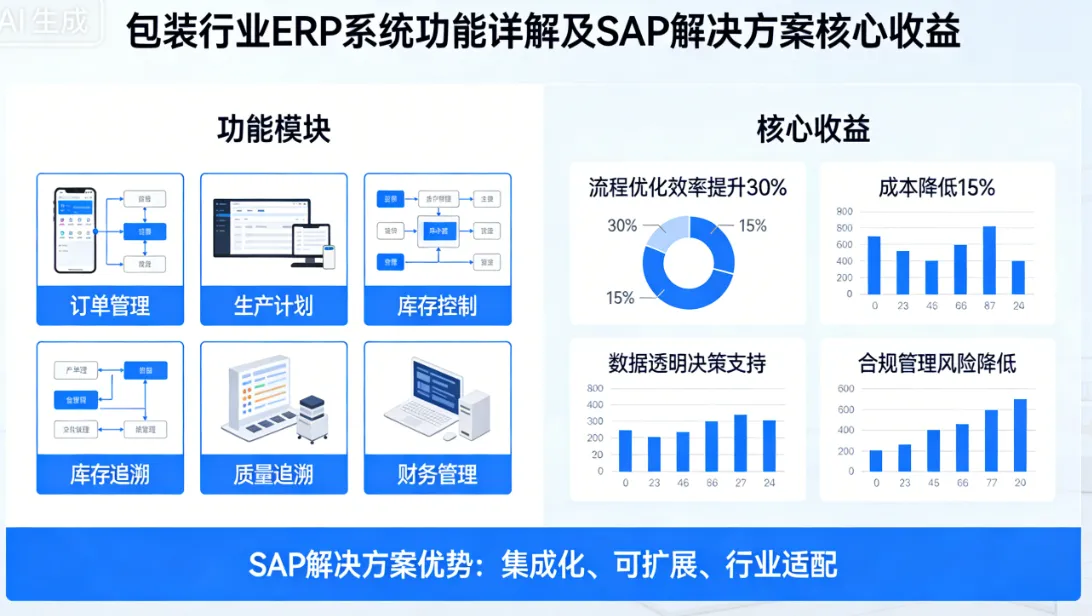
The data-driven decision-making ability is another key benefit. SAP solutions provide a unified business data platform, breaking down information silos between departments and providing comprehensive, real-time, and consistent business views for enterprise managers. Advanced analysis tools can identify production bottlenecks, cost overruns, and changes in customer preferences, supporting fact based strategic decision-making. The predictive maintenance function can provide early warning of faults and reduce unexpected downtime by analyzing device sensor data.
In terms of customer service and innovation, SAP solutions enable enterprises to respond to market demands faster and provide a higher level of customer experience. The integrated customer collaboration platform shortens the cycle from concept to product, enabling enterprises to seize market opportunities. Digital twin technology allows enterprises to simulate packaging design and production processes in a virtual environment, reducing physical sampling costs and time, and accelerating product innovation.
Compliance and sustainable development are important challenges facing packaging companies today, and SAP solutions provide comprehensive support. The system can track the source and composition of each material to ensure compliance with strict regulations in industries such as food contact materials and pharmaceutical packaging. The carbon footprint tracking function helps companies quantify the environmental impact of their production processes and supports the achievement of sustainable development goals. Especially in the context of new regulations such as the EU plastic tax, this traceability capability has become particularly important.
Implementation Path and Success Factors
The successful deployment of ERP systems in the packaging industry requires scientific implementation methods and continuous organizational investment. Enterprises should adopt a phased implementation strategy, prioritize addressing the most urgent business pain points, quickly demonstrate value, and gradually expand system functionality. The redesign and optimization of business processes are key to successful implementation, and enterprises need to go beyond simple automation and rethink and improve core business processes.
Change management is equally crucial. Employees of packaging companies may have resistance to new technologies and processes, requiring systematic training programs and continuous support mechanisms. Establishing a cross functional implementation team and ensuring deep involvement of business departments is an important measure to ensure that the system meets actual needs. Choosing experienced implementation partners, especially consulting firms with a deep understanding of the packaging industry, can significantly reduce implementation risks and accelerate value realization.
Looking ahead to the future, ERP systems in the packaging industry will continue to develop towards intelligence, cloudification, and ecologicalization. Artificial intelligence and machine learning will be more deeply integrated into production optimization, quality prediction, and demand planning; Cloud deployment mode will reduce IT complexity, improve system flexibility and scalability; An open platform architecture will enable enterprises to easily integrate various professional applications and build a complete digital ecosystem.
For packaging companies pursuing excellence, investing in a professional ERP system is not a cost, but a strategic layout for future competitiveness. Mature solutions such as SAP provide not only software functionality, but also management practices and technology platforms validated by thousands of enterprises worldwide. Through the comprehensive implementation and deep application of ERP systems, packaging enterprises can build more agile, efficient, and innovative operational systems, win sustained competitive advantages in rapidly changing market environments, and ultimately achieve a successful transformation from traditional manufacturing to digital and intelligent enterprises.