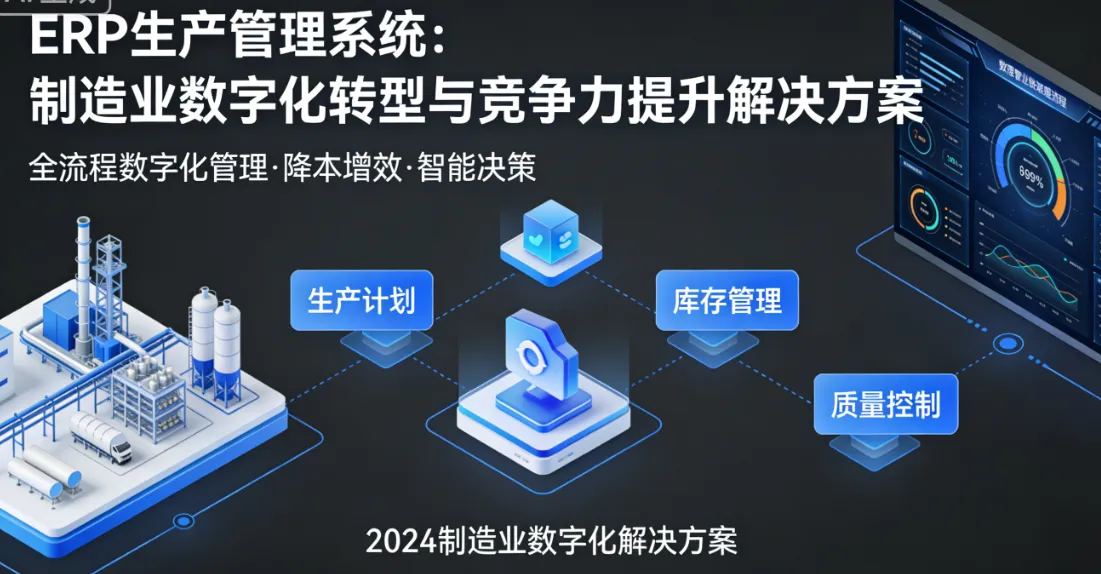
ERP Production Management System: Solution for Digital Transformation and Competitiveness Enhancement in Manufacturing Industry
At the critical historical period when the manufacturing industry is moving towards "Made in China", digital transformation is no longer a multiple-choice question, but a must answer question related to survival and development. However, many manufacturing companies often fall into misconceptions on their transformation path: either indulging in single point automation equipment upgrades, or stacking multiple isolated systems that cannot be interconnected, resulting in data silos and no fundamental improvement in operational efficiency. True transformation requires a core system that can connect the entire chain of business operations and link the physical and digital worlds. The production management system with ERP as its core is a system level solution to solve this dilemma and transform digital investment into sustainable competitiveness. It is not only a software tool, but also an operating system that carries advanced management ideas and drives the evolution of manufacturing industry from "experience driven" to "data intelligence driven".
The core value of the production management system in the manufacturing industry is first reflected in its construction of a globally collaborative and accurately responsive "digital command center".In the traditional manufacturing model, sales, planning, production, procurement, and warehouse departments often work independently and rely on inefficient collaboration through phone calls and spreadsheets. When customer orders or design changes occur, information transmission is delayed or distorted, resulting in frequent adjustments to production plans, material shortages or backlogs, and delivery delays. The ERP system achieves seamless automatic conversion from sales orders to production work orders, and then to procurement requests through a unified platform. It is based on accurate product structure lists and real-time inventory data to perform efficient material requirement planning calculations, ensuring that the right materials and resources are allocated to the right production tasks at the right time. This deep integration and collaboration have twisted the internal value chain of the enterprise into a single rope, significantly shortening the order delivery cycle and improving customer response speed. This is the fundamental ability for manufacturing enterprises to gain an advantage in market competition.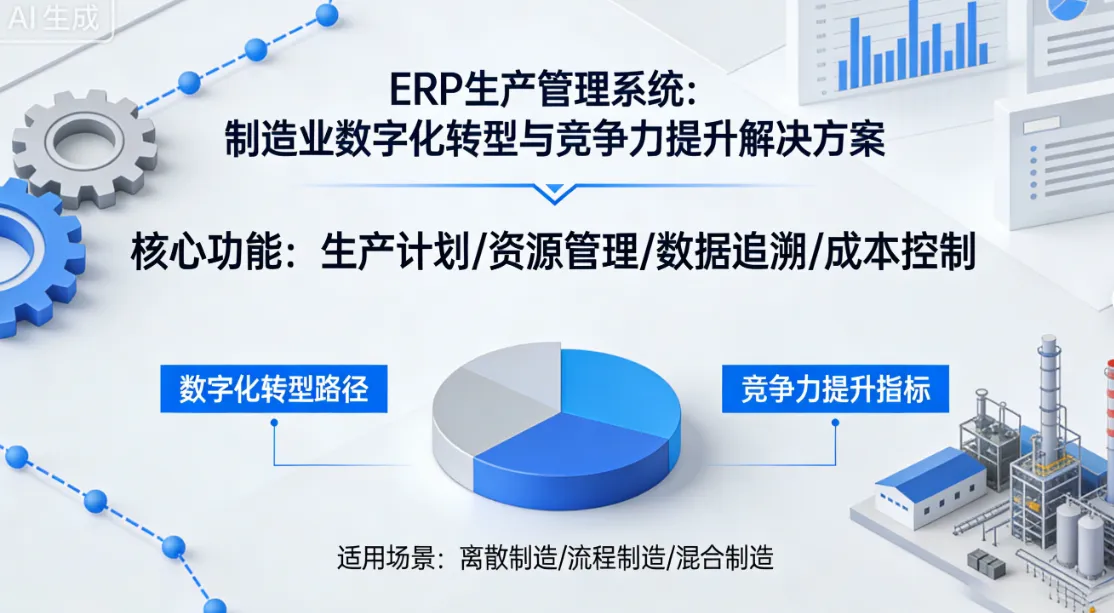
However, excellent operations are not only about planning collaboration, but also about transparency, precision, and continuous optimization at the workshop execution level. This is exactly modernDeep integration of ERP production management system and manufacturing execution systemThe direction of the applied force. MES is responsible for collecting real-time data from the production site, such as equipment status, process progress, quality inspection results, and worker performance, while ERP acts as the brain, assigning business meaning to these data (associated with specific customer orders, cost centers, and production batches). Through this integration, managers can gain real-time insights into the execution progress of each work order, the overall efficiency of each device, and any bottlenecks that may affect delivery, as if they were physically present on the ERP dashboard. The production status has changed from a "black box" to a "white box", making real-time scheduling and decision-making based on data possible. For example, when critical equipment suddenly malfunctions, the system can immediately assess its impact on all ongoing orders and automatically suggest or initiate a production plan to minimize losses.
At a deeper level, a mature ERP production management system is essential for the manufacturing industryRefined cost control and scientific decision-makingThe cornerstone. In the traditional mode, product cost accounting is often extensive, making it difficult to accurately distinguish the actual resource consumption of different orders and batches. The ERP system can achieve cost collection and accounting by order or even by process by tracking the receipt of each material, the reporting of each process, and related manufacturing expenses during the production process. This provides companies with a realistic and fine-grained perspective on profit analysis: companies can clearly identify which product lines are profitable and which orders are actually eroding profits, thereby guiding pricing, order taking, and product portfolio strategies. At the same time, the massive production data accumulated by the system, through business intelligence analysis, can reveal the root causes of quality problems, the optimal maintenance cycle of equipment, and the optimization potential of process flow, driving continuous improvement and innovation.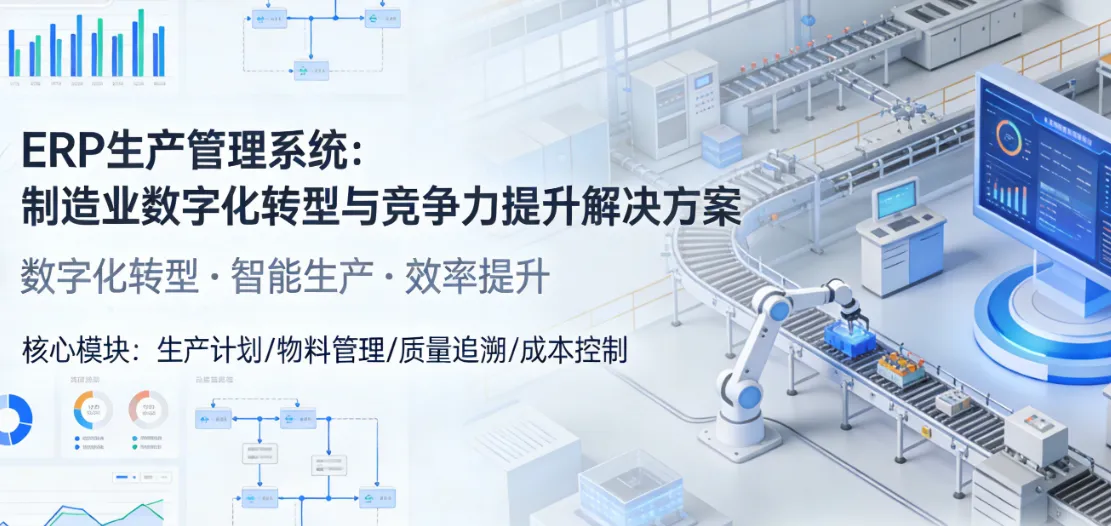
Therefore, implementing an ERP production management system is essentially a process carried out by the manufacturing industryGene recombination of operation modeIt solidifies advanced management concepts such as lean production, flexible manufacturing, and quality from design into daily operations through digital means. The competitiveness enhancement it brings is comprehensive: internally, it achieves a qualitative change in operational efficiency, resource utilization, and cost control capabilities; Externally, it has built customer service capabilities characterized by rapid response, reliable delivery, and continuous innovation. In the era of global competition and personalized demands coexisting, this system solution helps manufacturing enterprises not only efficiently "manufacture products", but also flexibly "create value", thereby occupying a more advantageous position in the industry chain and laying the digital foundation for long-term development. This is not only an upgrade in technology, but also a necessary path towards the integration and symbiosis of management intelligence and digital technology, leading to the future of intelligent manufacturing.