
ERP System Training Program | Layered Customized Training | Job Practice and Online Learning
In the lifecycle of enterprise ERP system implementation, the completion of technology deployment often only marks half of the project's success. The key bottleneck for whether an advanced and integrated system can truly be transformed into an organization's core competitiveness lies in "people" - whether employees can understand, accept, and efficiently use the new system, directly determining the value realization of millions or even tens of millions of investments. The traditional "one size fits all" comprehensive classroom training has limited effectiveness due to weak targeting and detachment from actual business scenarios, often leading to user resistance, frequent errors, and process backflow after the system is launched. Therefore, a scientific and systematic training program must followLayered customizationThe core principle of deep integrationPractical operation of the position与Online learning platformTransforming knowledge transmission from 'informing' to 'empowering', ensuring that system capabilities are effectively absorbed and continuously utilized by the organization.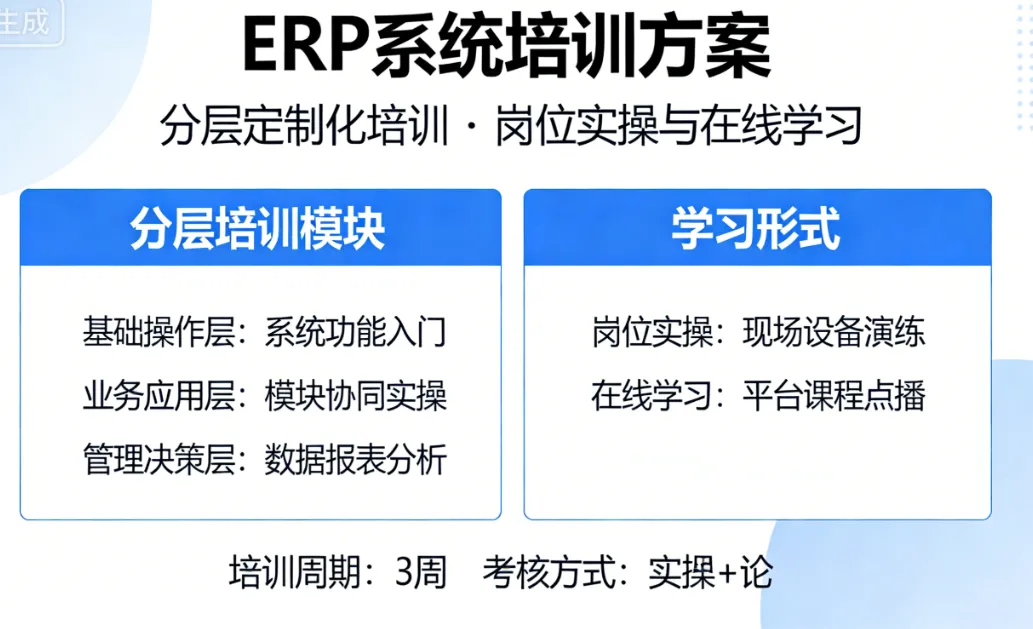
Layered customization is the soul of effective training, which requires us to design distinctly different training objectives, content, and methods based on the responsibilities, decision-making levels, and depth of use of different roles within the organization.ForSenior managers and decision-makersThe focus of the training is not on the operation buttons of the system interface, but onDigital LeadershipThe shaping. They need to understand how ERP can change the way businesses acquire data and make decisions: what real-time, integrated key performance dashboards can the system provide to replace past monthly reports? How to discover operational bottlenecks and market opportunities through data insights? This type of training should be conducted in the form of strategic seminars, executive briefings, and sandbox simulations, with the goal of making leaders "preachers" of system value and promoters of application, rather than bystanders. ForMiddle managers and key users(Usually the backbone of each department's business), they are the core hub for smooth process operation. Training needs to focus onProcess Management and Problem SolvingThey not only need to master the deep operation of modules in their department, but also understand the logic of upstream and downstream links, learn to use system data to monitor process efficiency, analyze root causes of anomalies, and take on the role of internal "experts" and frontline support. ForFirst line end usersTraining must be extremeScenarios and PrecisionDirectly target the specific tasks that need to be completed in their daily work, such as how salespeople create orders and how warehouse managers perform scanning and warehousing. The content should strive for simplicity and intuitiveness, with the goal of enabling them to "know how to do it and do it right" in the shortest possible time, reducing fear and rejection of the new system.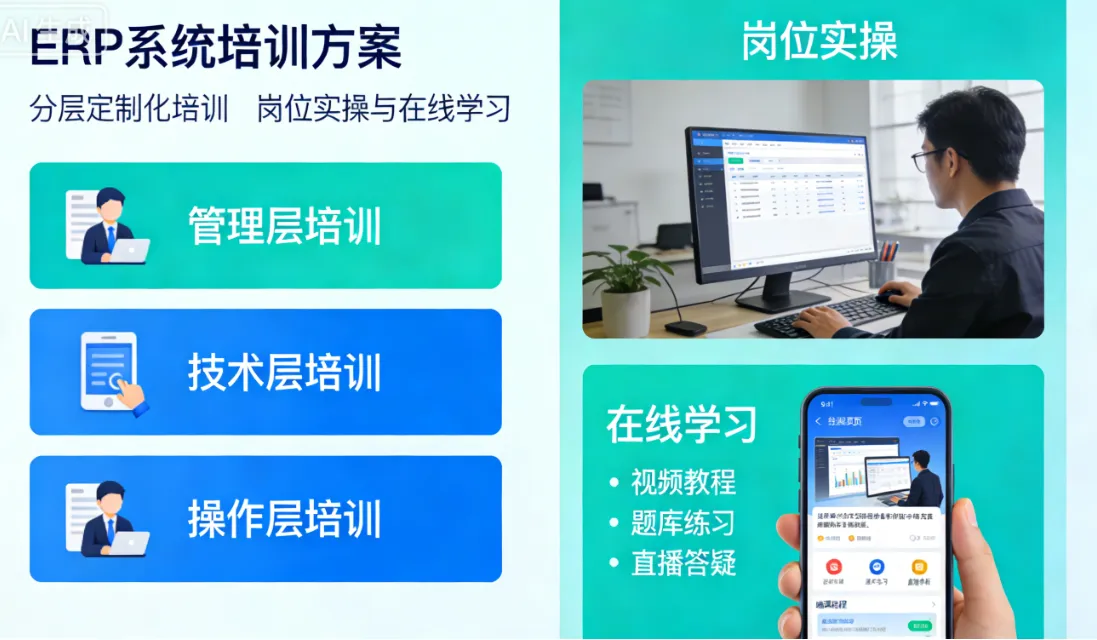
Practical exercises on the job are a necessary path to transform theoretical knowledge into muscle memory and conditioned reflexes, ensuring that training outcomes can seamlessly integrate with real work.Training that is detached from specific business backgrounds is like talking on paper. The best practical training should be provided inSimulation environmentIn the middle stage, this environment completely clones the configuration and data of the production system, but allows users to boldly try and make mistakes without worrying about affecting real business. Trainers should design a series of practice tasks based on real business cases, such as simulating a complete end-to-end process from customer inquiry, contract signing, production scheduling, material requisition to shipment, and invoicing, allowing cross departmental key users to team up and collaborate to complete them. Through this immersive and high-pressure exercise, students can not only familiarize themselves with the operating steps, but also deeply understand the internal logic of process connection and data flow, personally experience the consequences of process breakpoints, and establish correct process awareness and collaborative habits before the system goes live. For frontline users, practical operations should be carried out directly at their actual workstations in the future, simulating real work scenarios and pressures to ensure that skills are learned and applied immediately.
Online learning platforms provide the infrastructure for building a sustainable, all inclusive knowledge empowerment ecosystem.Centralized face-to-face training is limited by time, location, and instructor resources, making it difficult to repeat and provide personalized coverage. A fully functional online learning platform that can host all training materials, including well recorded instructional videos, interactive simulation exercises, illustrated quick guides, and regular knowledge quizzes. Its core value lies in providingOn demand acquisition, fragmented learning, and continuous updatesThe ability. When new employees join, they can be automatically assigned learning paths according to their positions; When senior employees encounter infrequently used functions, they can quickly search for relevant tutorials on "instant charging"; After each upgrade and release of new features, relevant micro lessons and instructional documents can be pushed to affected users in a timely manner. The platform can also track learning progress and assessment results, providing data support for evaluating training effectiveness and identifying skill gaps, making learning a normalized self empowerment process rather than a one-time project activity.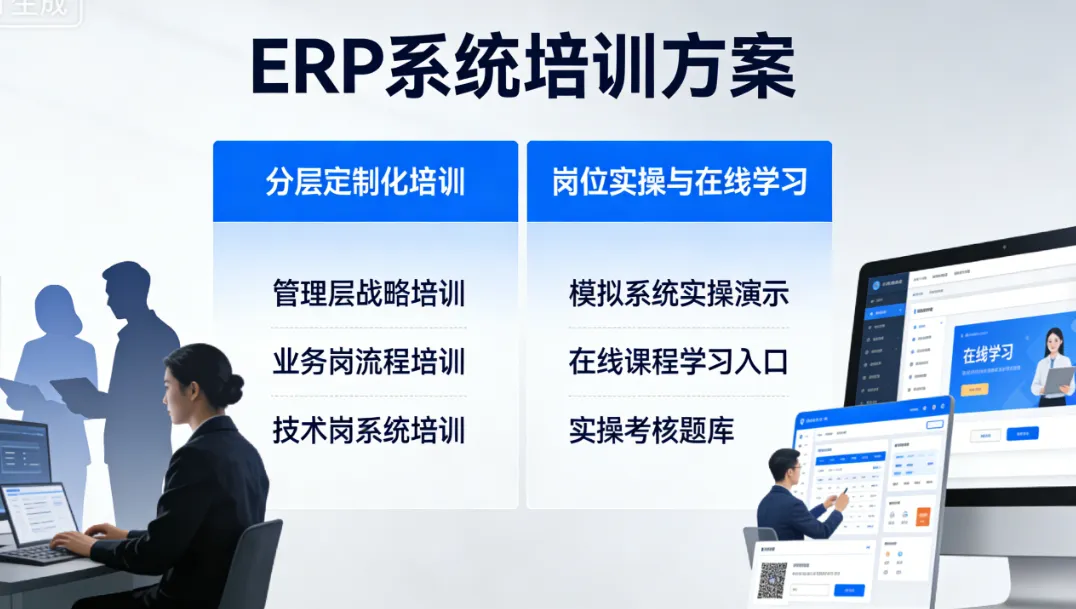
Therefore, an excellent ERP training program is a systematic engineering that integrates strategic communication, skill transformation, and knowledge accumulation. It ensures precise empowerment through layered customization, applies what is learned through practical job operations, and ensures continuous evolution through online platforms. Through the organic combination of these three, enterprises are not only teaching software operation methods, but alsoDrive a profound cultural and work style transformationTo ensure that every employee can become a creator of value in the ERP system, thereby thoroughly transforming expensive IT investments into tangible organizational capabilities that drive enterprise efficiency improvement and intelligent decision-making.