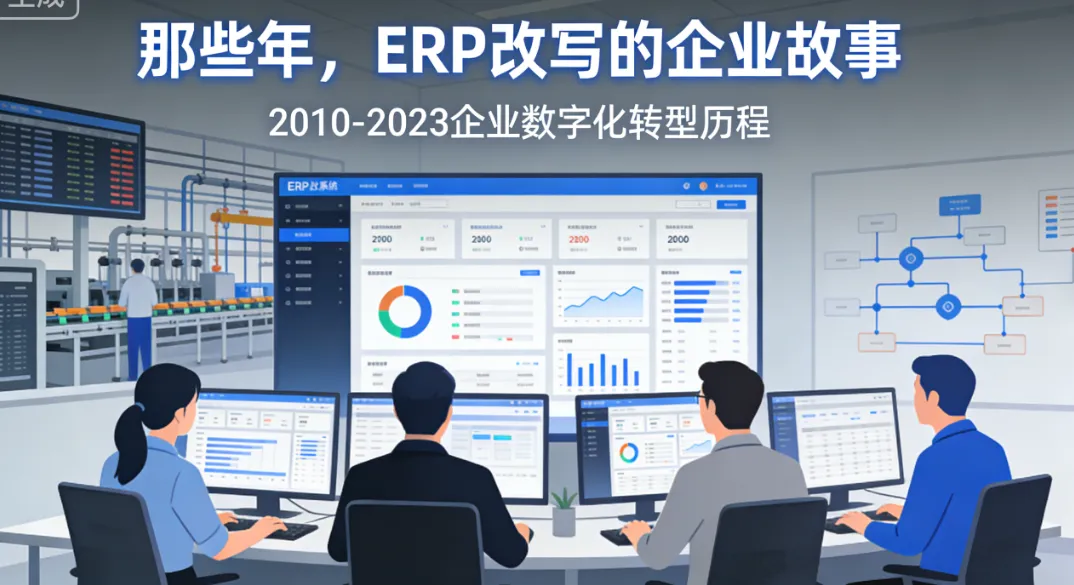
In those years, the enterprise story rewritten by ERP
In the long river of business development, the wave of technology continues to wash over the business landscape of enterprises. Among them, the introduction and popularization of ERP (Enterprise Resource Planning) system is undoubtedly one of the most profound and widespread transformative forces in the past thirty years. It is far more than just a complex set of software, it is more like a precision social technology surgical knife, cutting into the body of enterprise operations, reshaping its processes, data, decisions, and even culture. Countless enterprises have experienced the transformation from chaos to order, from experience to data, from isolation to collaboration during this journey, leaving behind many enterprise stories rewritten by ERP. Behind these stories, intertwined with the pains of transformation, the wisdom of breaking through, and the joy of rebirth, together outline a magnificent history of modern enterprise evolution.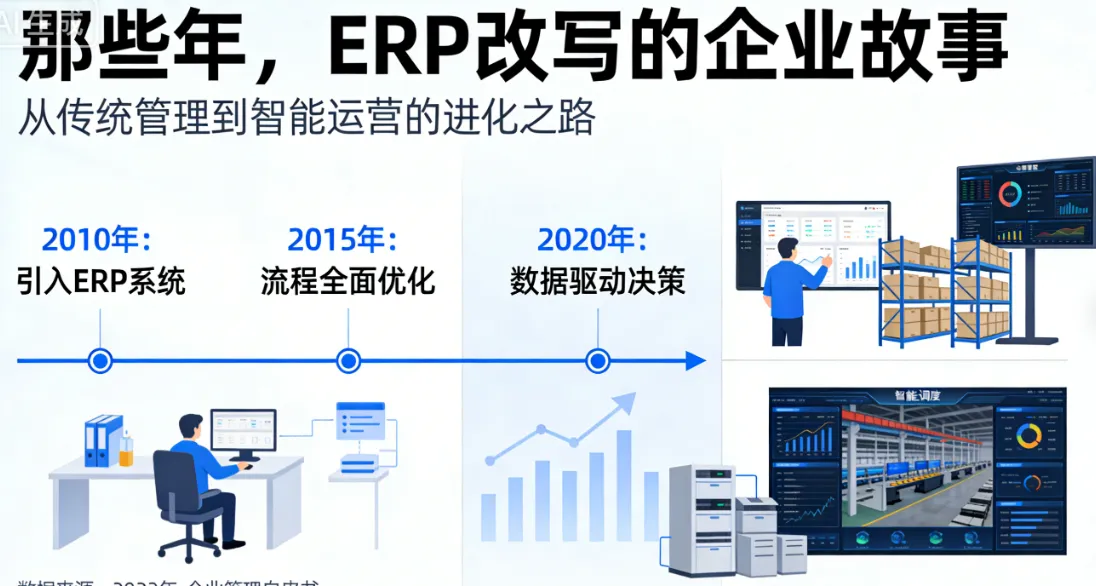
In the global journey of multinational giants, ERP is the "digital constitution" that unifies language and achieves centralized control.In the late 1990s, as Huawei's business expanded rapidly from China to over a hundred countries worldwide, a fundamental challenge emerged: how to manage this vast and dispersed empire? Financial languages vary in different regions, processes are fragmented, and data is like isolated islands. Huawei has chosen to collaborate with IBM to launch an integrated financial services transformation centered around ERP. The core of this transformation is not simply software installation, but the mandatory unification of global business processes, data standards, and management languages through ERP as a carrier. Through this system, Huawei can map any transaction from any corner of the world to its headquarters in real-time and transparently, reducing the time for financial statement processing from days to hours. This is not only a leap in efficiency, but also a revolution in management mode. ERP has injected the precise genes of global operations into this Chinese company, rewriting the story of Huawei's transformation from a company primarily driven by manpower and passion to a world-class enterprise driven by processes and data. The theme of this story isStandardization and Globalization 。
In many traditional manufacturing workshops, ERP is a "lighting system" that penetrates the "black box" and achieves lean production.A typical Chinese manufacturing family enterprise that has long relied on the experience of experienced craftsmen and manual ledger management for production. Production planning relies on estimation, material inventory relies on memory, and cost accounting is a confusing account. When market orders become complex and delivery deadlines are demanding, this system completely fails. After the introduction of ERP, the enterprise went through a painful process reengineering: all materials had unique codes, production orders were accurately associated with material lists, and workshop processes began scanning codes to report work. At first, employees who were accustomed to casual operations had strong resistance, but the management resisted the pressure. After the system was launched, the effect gradually became apparent: the production stoppage caused by material shortages was significantly reduced, the on-time delivery rate of orders was significantly improved, and more importantly, through the cost module, managers saw for the first time the true profit composition of each product and order. ERP rewrites the story of a traditional enterprise transitioning from an agricultural era driven by experience and fuzzy management to an industrial era driven by data and lean operations. The theme of this story isTransparency and Precision 。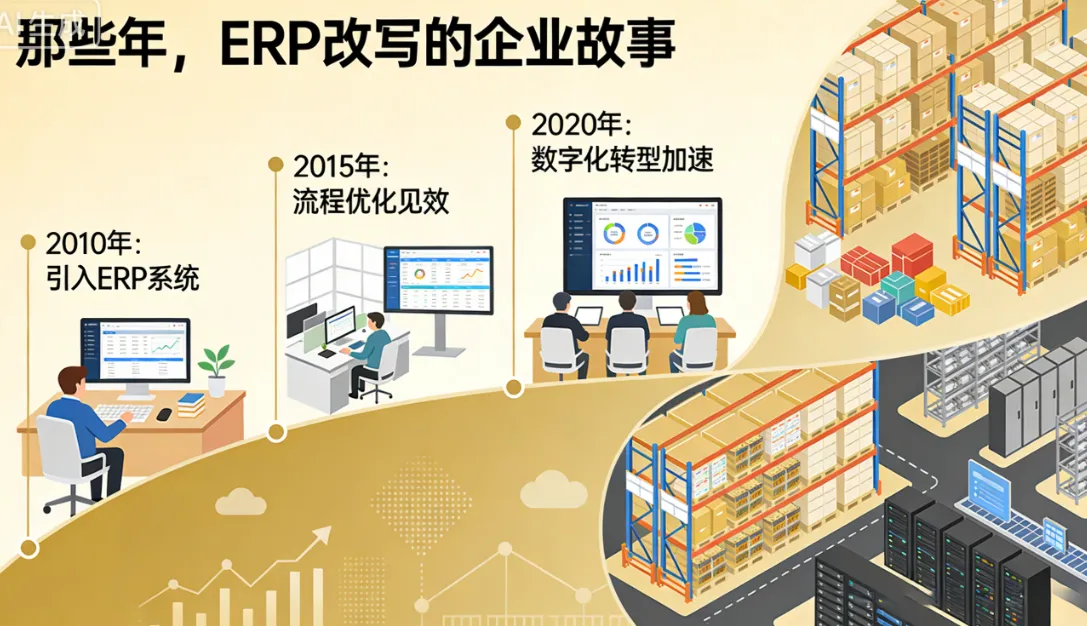
In the face of crisis and risk tests, the value demonstrated by ERP is often its resilience as the "digital nerve" of the enterprise.The story of a consumer goods company is quite representative. Once, the market provided feedback that a batch of its products had potential quality issues. In traditional mode, this means a catastrophic, weeks long, all staff manual inspection. However, due to the deep integration of its ERP system with production execution and quality management modules, it has achieved full process forward and backward traceability from raw material batches to finished product outbound. In just a few hours, the company accurately identified the batch of problematic raw materials, the scope and specific flow of all affected products, and quickly initiated a precise recall to minimize brand reputation damage and financial impact. This crisis has become the most powerful proof of the value of ERP. It rewrites the story of a company's ability to cope with uncertainty and transform risk control from passive response to proactive prevention. The theme of this story isTraceability and resilience 。
These stories of enterprises rewritten by ERP, although different industries and starting points, have highly similar cores: they are all stories about how enterprises can use an integrated and data-driven system to break through internal barriers, respond to external challenges, and reshape their core competitiveness. It has witnessed countless financial directors bidding farewell to the late night of month end overtime reconciliation, sales managers making accurate predictions based on real-time data for the first time, and decision-makers transitioning from facing a pile of conflicting reports to having a unified strategic dashboard. The journey of ERP is full of challenges, but for those enterprises that successfully cross the gap, their gains far exceed a set of software. They harvest a modern organizational capability, a new language for survival and competition in the digital age. Looking back at those years, ERP not only rewrote a series of performance figures, but also the organizational genes and future destiny of enterprises. These stories are still ongoing, and in the era of cloud computing and artificial intelligence, a new chapter is being written.