
The Application of Artificial Intelligence in ERP Systems: Driving a New Era of Intelligent Management for Enterprises
The wave of information technology is sweeping across the globe, and artificial intelligence technology is penetrating into all levels of enterprise management with unprecedented breadth and depth. As the core hub of enterprise management, enterprise resource planning systems are undergoing a profound transformation from automated tools to intelligent decision-making partners. The integration of artificial intelligence and ERP systems has not only changed the way enterprises operate, but also reshaped management philosophy itself, ushering in a new era of intelligent management for enterprises.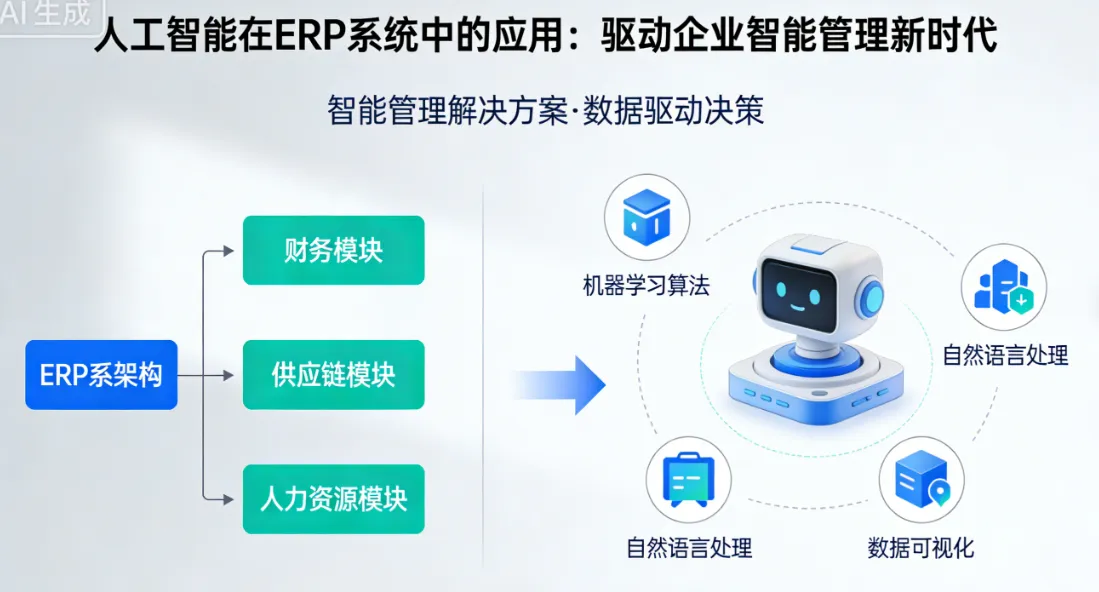
Traditional ERP systems, with their standardized processes and centralized data management, have greatly improved the operational efficiency of enterprises over the past few decades. However, in the face of increasingly complex and changing market environments and massive heterogeneous data, the limitations of traditional ERP systems are gradually becoming apparent. They excel at recording and processing structured data, but have limited abilities in predictive analysis, anomaly recognition, and adaptive decision-making. It is this gap that creates opportunities and necessity for the integration of artificial intelligence technology.
The application of machine learning algorithms in ERP systems enables enterprises to discover hidden patterns and associations from massive historical data. Through in-depth analysis of supply chain data, intelligent ERP systems can more accurately predict changes in market demand, identify potential supply interruption risks, and automatically optimize inventory levels. This predictive ability not only reduces the operating costs of enterprises, but also enhances their resilience in uncertain environments. Compared to traditional fixed rule-based prediction models, machine learning models can continuously learn new data, optimize prediction accuracy, and make business decisions more closely aligned with market trends.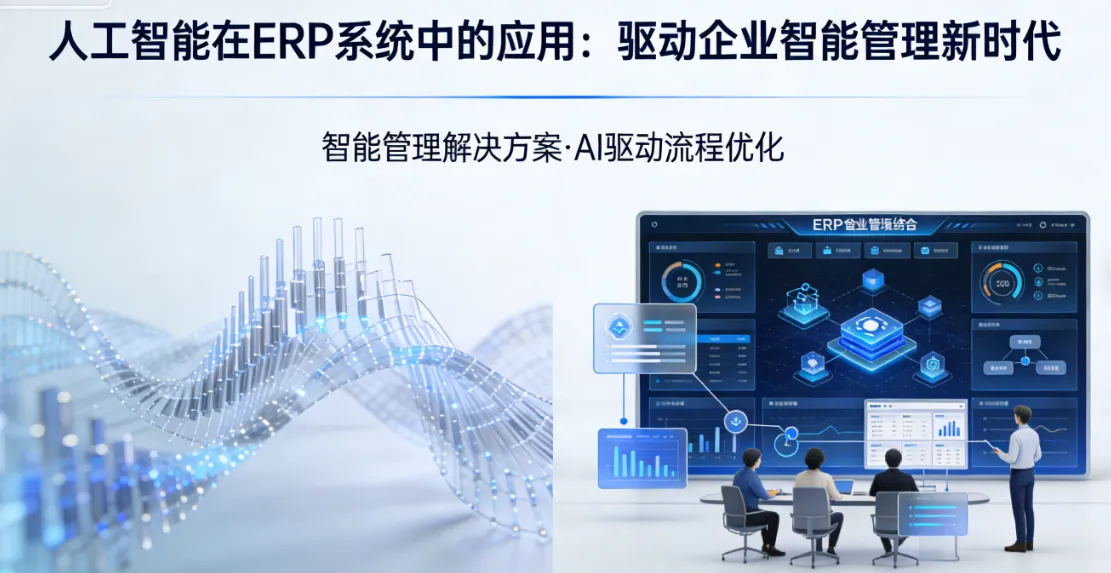
Natural language processing technology has given ERP systems a new dimension of interaction. Traditional ERP systems rely on structured form inputs and predefined query statements, while intelligent ERP systems can understand questions raised by employees in natural language and extract relevant information from complex data to present answers in an intuitive way. This not only lowers the technical threshold for system usage, but also significantly improves the efficiency of information acquisition. Enterprise managers no longer need to rely on technical teams to generate reports, but can directly communicate with the system to obtain real-time business insights.
In the field of financial management, artificial intelligence technology is revolutionizing traditional auditing and risk control methods. Intelligent ERP systems can monitor financial transaction flows in real time, identify abnormal patterns, and alert potential fraudulent behavior. By analyzing the historical performance of suppliers, market credit data, and industry trends, the system can provide more accurate credit assessment and risk scoring. These capabilities not only enhance the financial security of enterprises, but also provide possibilities for more flexible and dynamic financial management strategies.
The production and manufacturing process also benefited greatly. The intelligent ERP system can optimize production scheduling in real time, predict equipment failures, and automatically adjust maintenance plans by integrating IoT sensor data and production planning information. This predictive maintenance capability significantly reduces unplanned downtime and improves overall equipment efficiency. More importantly, the system can continuously optimize production process parameters based on real-time data, ensuring product quality while reducing energy consumption and raw material waste, achieving green and intelligent manufacturing.
Under the empowerment of artificial intelligence technology, the customer relationship management module has also achieved a qualitative leap. By analyzing customer interaction history, purchasing behavior, and social media data, intelligent ERP systems can build a 360 degree customer view, identify cross selling and upselling opportunities, and provide personalized product recommendations and service solutions. This customer-centric intelligent management not only enhances customer satisfaction, but also creates sustained business growth momentum.
However, the road to the integration of artificial intelligence in ERP systems is not smooth. The challenges of data quality, system integration, algorithm transparency, and employee skill transformation cannot be ignored. Enterprises need to establish a high-quality data governance framework to ensure that the training data for artificial intelligence models is representative and accurate. Meanwhile, the decision logic of algorithms requires a certain degree of interpretability, especially in areas involving significant business decisions. In addition, companies also need to invest in employee training to cultivate compound talents who understand both business and data analysis.
Looking ahead to the future, the integration of artificial intelligence and ERP systems will become even deeper. With the development of edge computing, federated learning and reinforcement learning technologies, ERP systems will become more distributed, adaptive and autonomous. The future intelligent ERP system may no longer be just an enterprise management tool, but a cognitive partner that can independently optimize business processes, predict strategic opportunities, and participate in high-level decision-making.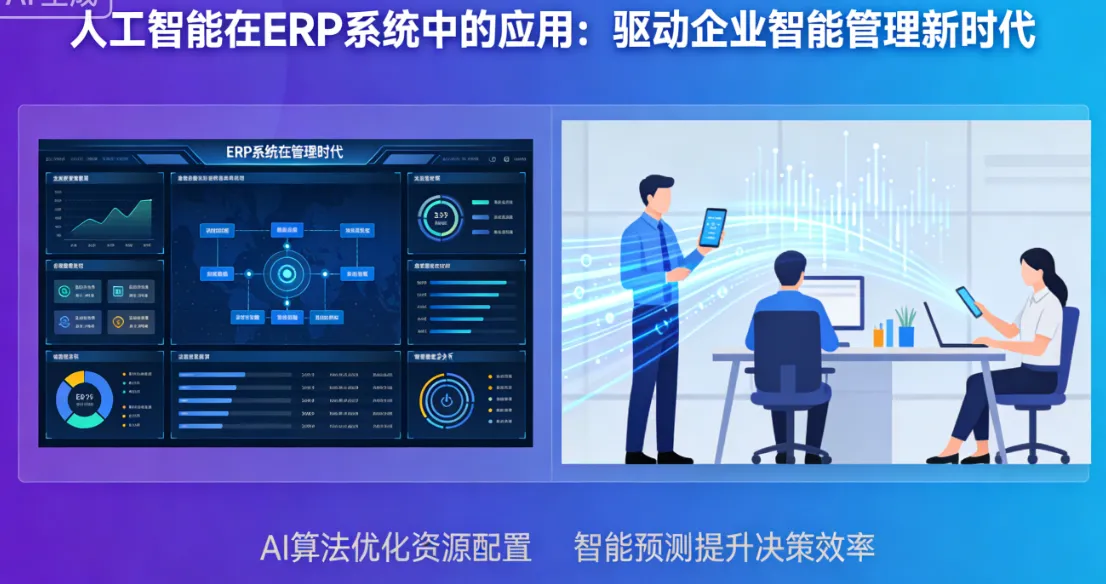
The transformation of ERP systems driven by artificial intelligence is essentially a management revolution. It enables enterprises to shift from experience based decision-making to data-driven intelligent decision-making, and from passively responding to market changes to actively shaping the future of the industry. In this new era of intelligent management, the competition among enterprises is not only about the quality of products and services, but also about the ability to perceive data and the speed of intelligent decision-making. Enterprises that can successfully integrate artificial intelligence and ERP systems will gain unprecedented agility, insight, and innovation capabilities in the rapidly changing business environment, truly becoming leaders in the era of intelligent economy.