
On December 16, 2024, the ERP concept sector fell 1.42%, with a net outflow of 136 million yuan from the main capital, and significant stock differentiation - reasons analysis and future prospects
Comprehensive analysis of market performance
On December 16, 2024, the overall performance of the ERP concept plate was weak, with a closing decline of 1.42%. The net outflow of main funds was 136 million yuan, becoming a more obvious subdivision of the technology plate on that day. From the perspective of individual stock performance, there is a significant differentiation feature: some traditional ERP vendors such as UFIDA Network and Kingdee International fell by 2.1% and 1.8% respectively, while a few companies focused on cloud services and industry solutions such as Hande Information rose slightly by 0.3% against the trend. This structural difference reflects the market's reassessment of the different development paths of the ERP industry.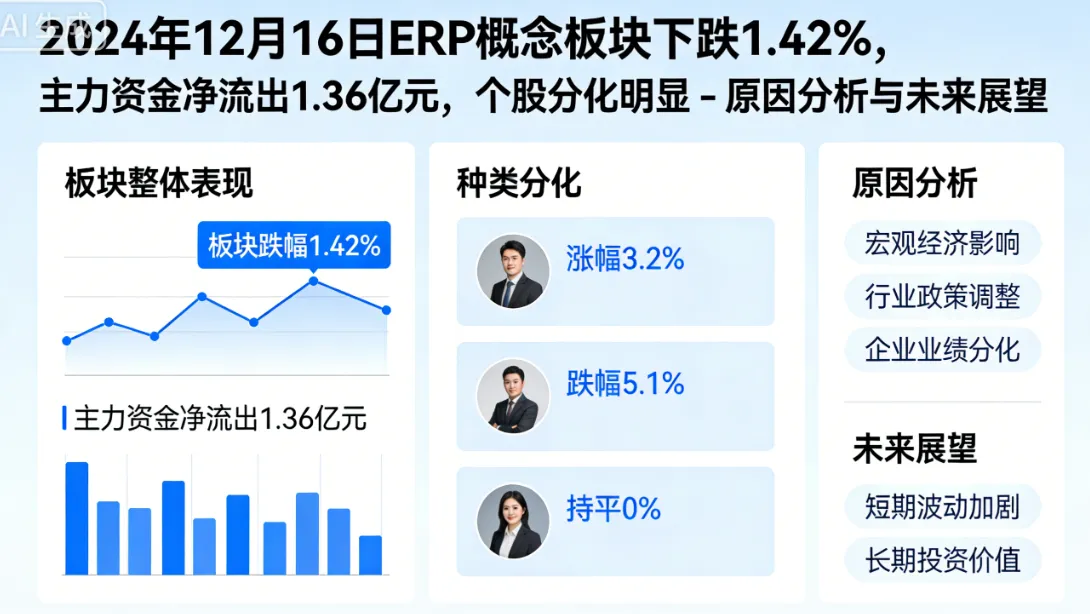
From the perspective of capital flow, the main net outflow of funds is mainly concentrated in traditional software service providers, while the outflow of funds to cloud native and industry vertical solution areas is relatively moderate. The daily transaction volume increased by about 15% compared to the average of the previous five trading days, indicating that market divergence has intensified and the long short game is fierce. This market performance is not an isolated event, but a continuation of the continuous oscillation and adjustment of the ERP concept sector since the third quarter of 2024, during which the sector as a whole has accumulated a decline of about 8.7%.
Multiple factors drive market adjustment
There are complex multiple factors driving this adjustment. From a macro perspective, the downward adjustment of global economic growth expectations has had a direct impact on companies' digital investment decisions. In a report released in early December, the International Monetary Fund lowered its global economic growth forecast for 2025 from 3.2% to 2.9%, which has led many companies to postpone or reduce large-scale ERP upgrade plans, especially for traditional on premises deployment projects. This expected change directly affects investors' judgment of the future profitability of ERP enterprises.
The changes in the competitive landscape of the industry have also intensified market concerns. With the continuous increase of cloud computing giants, the competition in the ERP market has expanded from traditional software vendors to comprehensive competition with platform based technology companies. Enterprises such as Microsoft, Amazon, and Alibaba Cloud are eroding the market share of traditional ERP vendors by integrating basic cloud services with enterprise applications and launching more price competitive solutions. This structural change forces investors to reassess the long-term moat of traditional ERP enterprises.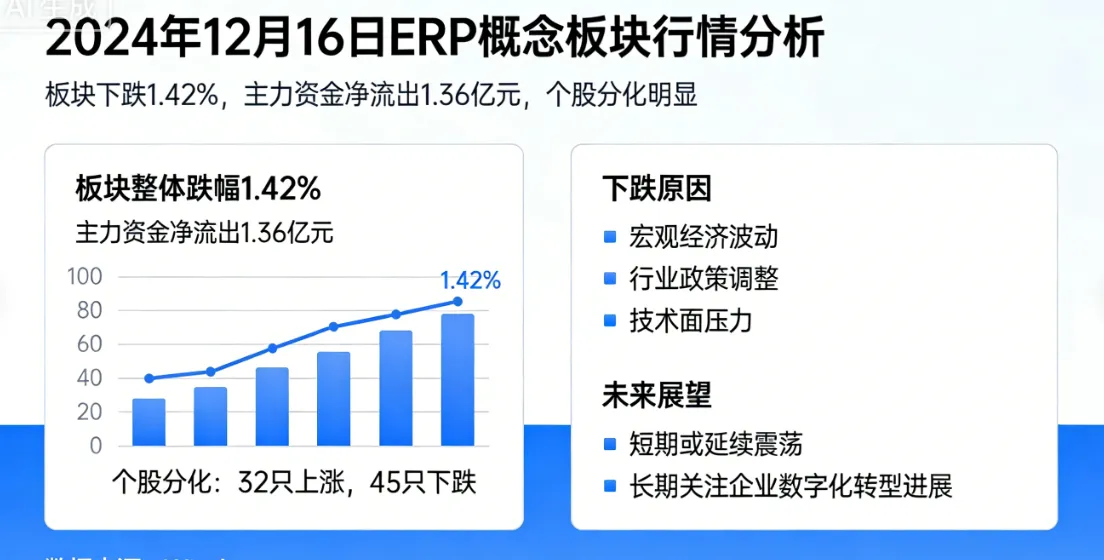
The acceleration of technological change is also one of the influencing factors. The deep integration of generative artificial intelligence and machine learning in enterprise management software has changed the value distribution pattern of the ERP industry. Enterprises that can productize AI capabilities faster have gained more market attention, while traditional enterprises with slower transformation are facing valuation pressure. In early December, several major ERP vendors released AI function roadmaps with significant differences, and the market reacted differently to this, further exacerbating internal division within the sector.
From a seasonal perspective, December is usually a relatively low season for enterprise software procurement, and institutional investors often adjust their position structure at the end of the year to lock in annual returns. ERP concept stocks have shown relatively stable overall performance in the first 11 months of this year, with some individual stocks accumulating significant gains, making them natural targets for profit taking at the end of the year. According to the data on fund flow, northbound funds showed a continuous net outflow trend towards the software services sector in December, which is basically in line with the pace of sector adjustment.
Analysis of structural differentiation within the sector
The differentiation of individual stock performance reveals the structural changes within the ERP industry. The progress of cloud transformation has become a core indicator for market evaluation of enterprise value. Enterprises with a high proportion of cloud business revenue and rapid growth clearly demonstrate stronger resilience to downturns. For example, the Q3 2024 financial report shows that ERP vendors with cloud service revenue accounting for over 50% generally have smaller stock price adjustments than those relying on traditional license revenue. The market is voting with funds to clearly favor enterprises that have successfully completed or are close to completing their cloud transformation.
The ability to verticalize industries has also become an important dimension for differentiation. Enterprises that provide universal ERP solutions face greater pressure, while vertical solution providers that specialize in specific industries such as manufacturing, retail, and healthcare demonstrate stronger resilience. This difference stems from the higher customer stickiness and stronger pricing power of vertical solutions, which are particularly valuable in times of increased economic uncertainty.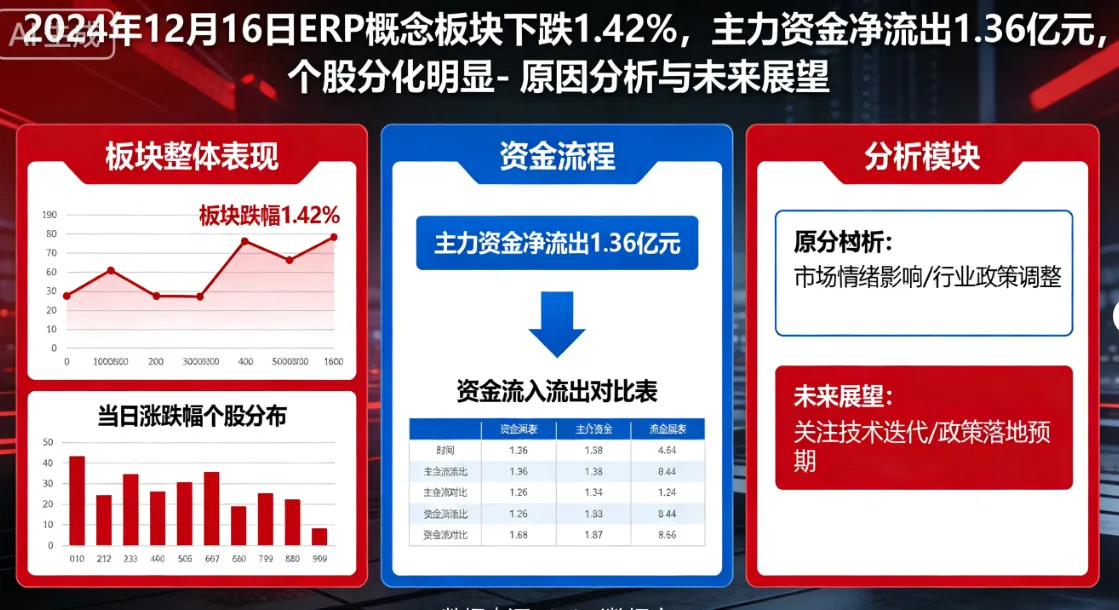
The progress of artificial intelligence integration is another critical watershed. The market valuation gap is widening between ERP companies that have already launched mature AI features such as intelligent prediction, automated processes, and natural language interaction, and those that are still in the planning or preliminary testing stage. Investors are increasingly aware that AI capabilities may determine the ultimate landscape of the future ERP market, and are therefore highly sensitive to related developments.
The degree of internationalization also affects the performance of enterprises. ERP companies that overly rely on a single market (especially in regions with slowing economic growth) face greater pressure, while companies with balanced business layouts and strong growth momentum in emerging markets demonstrate stronger resilience. Geopolitical factors have also influenced market sentiment to a certain extent, especially in the context of technological autonomy and controllability, where the long-term development prospects of different enterprises are evaluated differently by the market.
Future prospects and investment logic reconstruction
Looking ahead to 2025, there will be several clear trends in the development of the ERP concept sector. The digital transformation of enterprises will shift from large-scale system replacement to precise functional enhancement, which means that "modular procurement" may become mainstream. Enterprises are more inclined to choose the best solution for specific pain points rather than completely replacing the system. This trend will benefit ERP vendors that provide modular and interoperable solutions.
The integration of artificial intelligence and ERP will enter the stage of substantial implementation, and AI functions will shift from "icing on the cake" to "essential elements". ERP enterprises that can provide AI functions that truly reduce operating costs and improve decision-making efficiency will gain more market share. The market may reassess the value of ERP enterprises, shifting from traditional license sales models to evaluation frameworks based on usage value and business outcomes.
The penetration rate of cloud ERP will continue to increase, but the focus of competition may shift from infrastructure to application layer innovation. With the increasing standardization of cloud infrastructure, differentiation will be reflected more in industry knowledge, business process optimization capabilities, and user experience. This transformation may reshape the competitive landscape of the industry and create opportunities for innovative small and medium-sized enterprises.
In terms of regional markets, the digital demand of emerging markets may become an important growth driver. The digital transformation of enterprises in Southeast Asia, the Middle East, and Latin America is accelerating, and there is a strong demand for ERP solutions that meet local needs. Enterprises that can effectively serve these markets may achieve growth beyond the average level.
summary
The adjustment of the ERP concept sector on December 16, 2024 is not a single event, but a reflection of the market value reassessment during the industrial transformation period. With the acceleration of technological change and the evolution of market demand, the ERP industry is undergoing multidimensional changes from product form to business model. Investors need to go beyond traditional evaluation frameworks and have a deeper understanding of key dimensions such as cloud transformation progress, AI integration capabilities, industry vertical depth, and global layout. Enterprises that can quickly adapt to changes and continue to innovate, although they may face short-term market fluctuations, are more likely to stand out in industrial transformation and create long-term value.