
New generation integrated ERP solution - helping industrial enterprises break down upgrade barriers and achieve digital transformation
Today, as the digital wave sweeps across the global industrial sector, traditional industrial enterprises are standing at a critical crossroads of transformation and upgrading. Faced with increasingly complex market environments, personalized customer demands, and urgent requirements for lean production, many enterprises are struggling on the path of digital transformation. Fundamentally, the limitations of traditional ERP systems have become an important obstacle to industrial enterprises breaking through the bottleneck of upgrading - problems such as system silos, data gaps, and process fragmentation have long plagued enterprise decision-makers.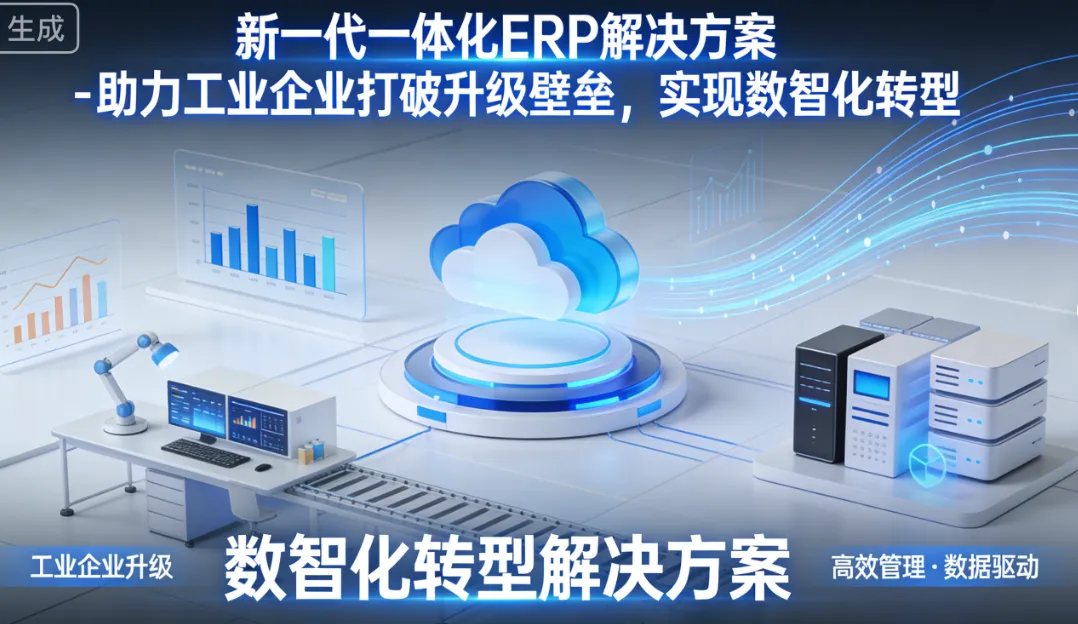
Traditional dilemma and transformation barriers
Most industrial enterprises are still using ERP systems deployed over a decade ago, which often adopt modular design. Core business modules such as finance, production, and supply chain are independent of each other, making it difficult for data to flow. When enterprises attempt to introduce new digital technologies, they have to face the complex engineering of integrating old and new systems, which not only has a long implementation cycle but also incurs high costs. More seriously, traditional ERP systems lack native support for modern technologies such as industrial Internet of Things and real-time data analysis, making it difficult to meet the high requirements of intelligent manufacturing for real-time and collaborative performance.
The equipment sensors in the production workshop generate massive amounts of data every second, but these valuable data cannot directly enter the ERP system to participate in decision-making; The information exchange between upstream and downstream enterprises in the supply chain still relies on traditional email, telephone, and even paper documents; Management often takes several days to obtain key business indicators, missing out on market opportunities. These pain points together form the "high wall" of industrial enterprises' digital transformation, making many companies hesitant to undergo the transformation.
Breakthrough Architecture of the New Generation Integrated ERP
It is in this context that a new generation of integrated ERP solutions has emerged, whose core innovation lies in breaking through the architectural limitations of traditional systems. This solution adopts a modern architecture of "cloud native+microservices", where all business modules are designed as interconnected and data sharing systems from the beginning. Unlike before, this integration is not a simple interface integration, but a deep reconstruction from data models, business processes to user experience.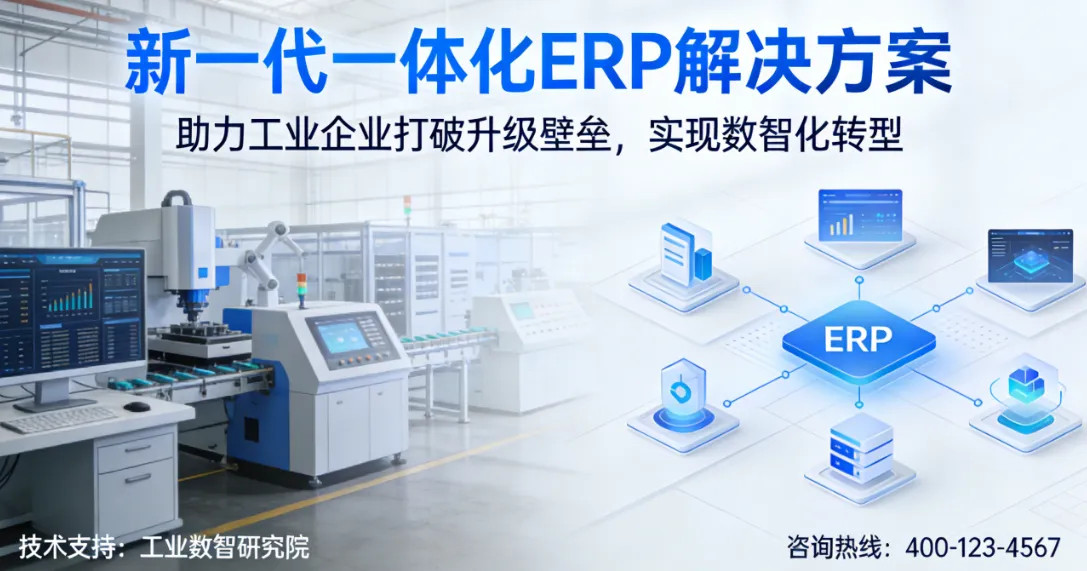
The breakthrough of the new generation of integrated ERP is reflected in three aspects: in terms of technical architecture, it is built on a cloud computing platform, with elastic scalability, and can flexibly adjust resources with the growth of enterprise business; On the data level, it has built a unified data center to achieve real-time collection, cleaning, and integration of data across the entire business chain; At the application level, it deeply integrates traditional ERP functions with cutting-edge technologies such as the Internet of Things, artificial intelligence, and big data analysis to form intelligent decision-making capabilities.
Empowering the core values of industrial enterprises
For industrial enterprises, the new generation of integrated ERP has brought unprecedented transformation assistance. In the field of production and manufacturing, the system can directly connect various devices and sensors on the production line to monitor equipment status, production progress, and quality data in real time. Through built-in machine learning algorithms, the system can predict equipment failures, optimize production schedules, and even automatically adjust process parameters, achieving a shift from "experience driven" to "data-driven" production mode.
In terms of supply chain collaboration, integrated ERP has built a digital network that covers suppliers, manufacturers, distributors, and customers. All participants can share demand forecasts, inventory status, and logistics information on a unified platform, significantly reducing efficiency losses caused by the "bullwhip effect". When raw material prices fluctuate or logistics are disrupted, the system can quickly simulate multiple response plans to help managers make optimal decisions.
The deep integration of finance and business is another major highlight. In traditional enterprises, financial data often lags behind business occurrence by several weeks, while the new generation of integrated ERP has the ability to generate financial data as soon as business occurs. Every purchase, every production, and every sale can be reflected in real-time in financial data, enabling enterprises to achieve true real-time cost control and precise profit analysis.
Implementation Path and Transformation Strategy
The successful deployment of a new generation integrated ERP requires a carefully designed implementation strategy. Enterprises should not pursue revolutionary changes that are implemented in one step, but should adopt a gradual path of overall planning and step-by-step implementation. Firstly, start with the core business processes that have the most obvious pain points and are most easily reflected in value, such as production execution or supply chain collaboration, and gradually expand to other fields after achieving significant results.
When selecting technology partners, enterprises need to focus on the depth of suppliers' industry understanding, progressiveness of technology architecture and integrity of service ecology. The ideal partner should not only provide advanced software platforms, but also have rich industry implementation experience and a complete talent training system, which can accompany the enterprise to complete the entire transformation journey.
Organizational change is also the key to success. The implementation of integrated ERP is inevitably accompanied by business process reengineering and organizational restructuring. Enterprises need to establish cross departmental digital transformation teams, cultivate compound talents who understand both business and technology, and establish a data-driven decision-making culture so that employees at all levels can gain value from the new system.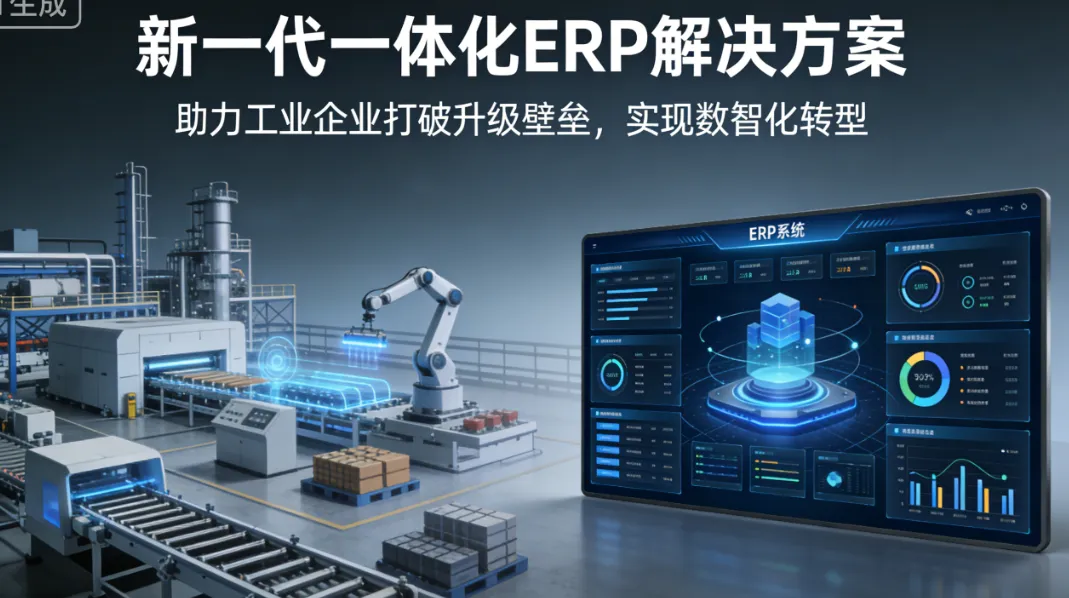
Future prospects and development trends
Looking ahead, the new generation of integrated ERP will continue to deepen its integration with emerging technologies. Digital twin technology will enable enterprises to fully replicate physical factories in virtual space for production simulation and optimization; Blockchain technology will enhance the credibility and transparency of supply chain data; Augmented reality technology will change the way devices are maintained and employees are trained.
More importantly, integrated ERP will gradually evolve into the "digital hub" of industrial enterprises, connecting product research and innovation upwards, production execution and equipment control downwards, integrating resource management and decision support inward, and expanding supply chain collaboration and customer service outward. This system is no longer just a tool to support business operations, but will become the core engine driving enterprise innovation.
For Chinese industrial enterprises, the application of the new generation of integrated ERP is timely. Against the backdrop of "Made in China 2025" and industrial upgrading, this technological solution provides a historic opportunity for enterprises to break through transformation barriers and achieve overtaking on the curve. Those enterprises that can embrace this change first will establish significant advantages in efficiency, agility, and innovation, and occupy a favorable position in global competition.
From a broader perspective, the popularization of the new generation of integrated ERP will drive the digital reconstruction of the entire industrial ecosystem. As more and more enterprises achieve deep integration of internal business processes, collaborative innovation at the industry level will become possible, ultimately promoting the comprehensive transformation of China's manufacturing industry towards a high-quality, intelligent, and sustainable development model.