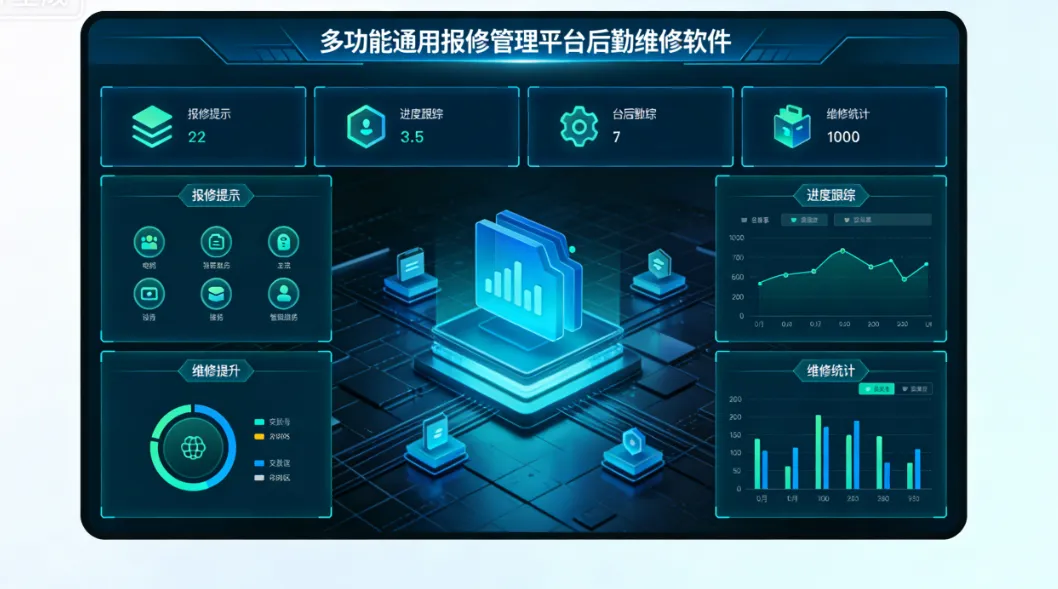
Multi functional universal repair management platform logistics maintenance software
Hidden pain points and digital blind spots in logistics maintenance management
Logistics maintenance is a severely underestimated management complexity within many organizations. On the surface, reporting a repair is just a simple closed loop of "fixing when it's broken". However, upon closer inspection, it becomes apparent that the entry points for reporting repairs are scattered - employees discover damaged light tubes and are unsure whether to call the administrative department or the property center. After dialing, they repeatedly describe the location of the malfunction; The repair process is not transparent - after the repair applicant submits the application, they are stuck in a long wait, not knowing whether the technician has accepted the order, when they will come, and whether the accessories are complete; Fuzzy maintenance performance - managers are unclear about which technician is efficient, which equipment malfunctions frequently, and how much budget is reasonable. What's even more tricky is that the repair scenarios are extremely diverse: from lighting, air conditioning, and door locks in the office area, to machinery and equipment in the production workshop, water and electricity pipelines, to desks and chairs on campus, showers in student dormitories, and kitchen utensils in the cafeteria. The types of faults, response times, and repair qualification requirements vary greatly in different scenarios. The traditional management model that relies on telephone orders, paper dispatching, and Excel statistics is completely inadequate when facing complex and diverse repair requirements. The multifunctional universal repair management platform logistics maintenance software is designed to solve this systematic dilemma. It takes the full lifecycle management of repair work orders as the core, connects the five major links of declaration, dispatch, maintenance, evaluation, and analysis, and builds a standardized, transparent, and efficient digital logistics operation and maintenance system for various organizations.
Omnichannel repair access: zero threshold for fault reporting
The first threshold of the traditional repair mode is "the entrance is too narrow". Employees need to know which department is responsible for which type of maintenance, remember the repair phone number, and accurately describe the location information on the phone. When the organization expands in size, office floors are scattered, and maintenance categories are diverse, this threshold blocks a large number of sporadic faults from the repair system - the light tube does not light up, endure it, the water dispenser leaks and connects to a basin, until small problems accumulate into safety hazards. The primary function of the universal repair management platform is to expand the repair portal from a single telephone line to a multi-channel access matrix.
Employees can submit repair application through various terminals such as WeChat, Staple, Flybook, WeChat official account, Alipay applet, APP, and Web portal. The system automatically identifies the building, floor, and room number of the repair person based on LBS positioning, or accurately anchors the fault location by scanning the room QR code and door number. The minimalist design of the repair form allows employees to simply select the fault category (lighting/air conditioning/plumbing/office equipment, etc.), upload on-site photos or short videos, briefly describe the abnormal phenomenon, and the system automatically recognizes the image content to assist in classification. For logistics personnel and cleaning aunties who are not accustomed to using smartphones, the system retains the telephone voice reporting function, and customer service representatives will automatically generate work orders after answering and inputting. After applying the omni channel repair module in a certain university, the willingness of teachers and students to report repairs increased by 62%, and the proactive detection rate of water and electricity leakage problems that were previously overlooked due to being too lazy to report increased by nearly three times.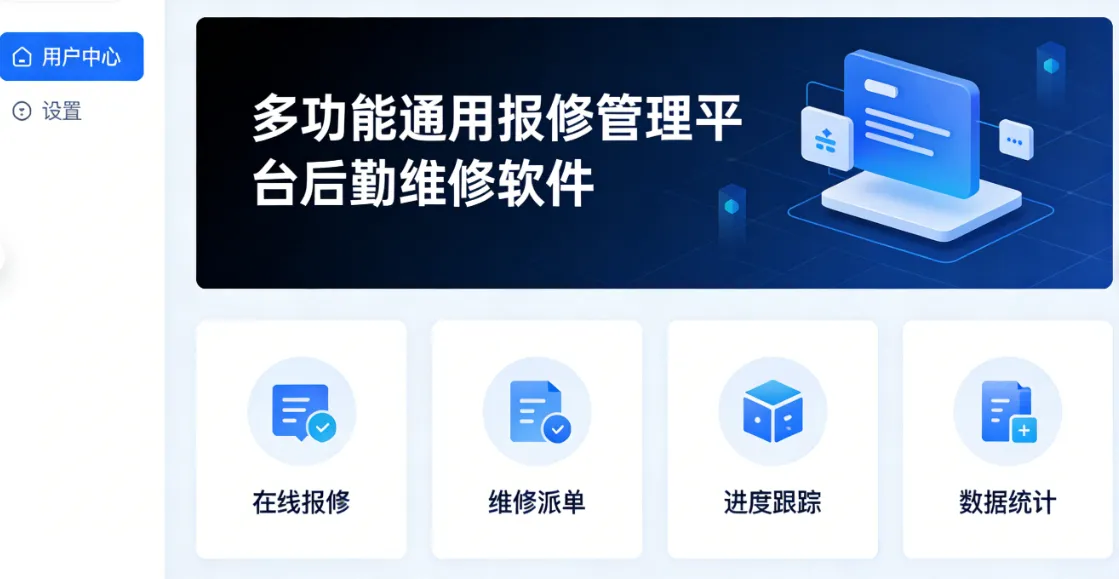
Intelligent dispatch engine: allowing the right people to handle the right things
The core bottleneck of repair management lies not in accepting orders, but in dispatching workers. The logistics maintenance team is usually composed of different types of workers such as electricians, plumbers, carpenters, air conditioners, IT operations and maintenance. The skills, qualifications, areas of expertise, and current workload of each type of worker are different. Traditional dispatching relies on the personal experience of dispatchers. After receiving a repair request, they call one by one to confirm who is available and who knows how to fix it. During peak hours, there is a backlog of work orders and uneven availability. The intelligent dispatch engine upgrades this decision-making process from manual judgment to algorithmic matching.
The system establishes a digital file for each maintenance technician, recording their job qualifications, skill tags, historical maintenance performance, current task load, and real-time location trajectory. When generating a new work order, the engine automatically calculates the most suitable repair candidate based on multidimensional conditions such as fault category, faulty equipment, urgency level, and repair location - prioritizing the closest distance, skill matching, and high availability. The dispatch results are instantly pushed to the repair technician terminal through the APP or SMS, and the technician can view the work order details, customer notes, and historical repair records. Work orders that have not been accepted within 15 minutes will be automatically upgraded and redistributed or pushed to the logistics supervisor for intervention and scheduling according to the second best matching rule. After a property management company applied the intelligent dispatching module, the average response time for work orders was reduced from 47 minutes to 16 minutes, the daily effective working hours utilization rate of maintenance technicians increased from 61% to 83%, and the number of dispatch personnel was reduced from 4 to 1.
Digitization of Maintenance Sites: Making Service Processes Transparent and Visible
In the traditional repair mode, after the repair applicant submits the application, they are trapped in an information black box - they have no way of knowing whether the master has accepted the order, when they can arrive, how long they need to wait, and how the repair is progressing. This uncertainty leads to a large number of anxious inquiries, with repair personnel repeatedly calling logistics phone numbers to urge for orders, and repair technicians being frequently interrupted during work, resulting in a loss of experience for both parties. The general repair management platform incorporates the maintenance site into the full process visual control through the mobile work order execution module.
The repairman receives the work order through the APP, clicks on the "accept order" status to synchronize and push the repair report to the person in charge; Click on 'departure' and the system will automatically start the navigation trajectory recording, with the estimated arrival time updated in real-time; After arriving at the site, click "sign in" and upload photos of the on-site environment. When starting the repair, click "start work" and the system will start the work hour timer. If spare parts need to be applied for during the maintenance process, the master can directly initiate a material requisition application on the APP, associate it with the work order number and the required accessory model and quantity. The warehouse administrator will receive the order and prepare the materials, and the cost budget of the work order will be deducted synchronously from the accessory delivery. When the repair is completed, the master uploads completion photos, fills in the repair results, and records the details of replacement parts. The system automatically calculates the actual working hours and associates them with performance evaluation. The repair personnel can view the entire process status of the work order in real time through the mobile phone, without the need for phone reminders, and their anxiety is significantly reduced. After applying the maintenance visualization module to a commercial complex, the customer service center received a 74% decrease in inquiries about repair progress, and the satisfaction rating of the repair personnel increased from 3.2 points to 4.7 points.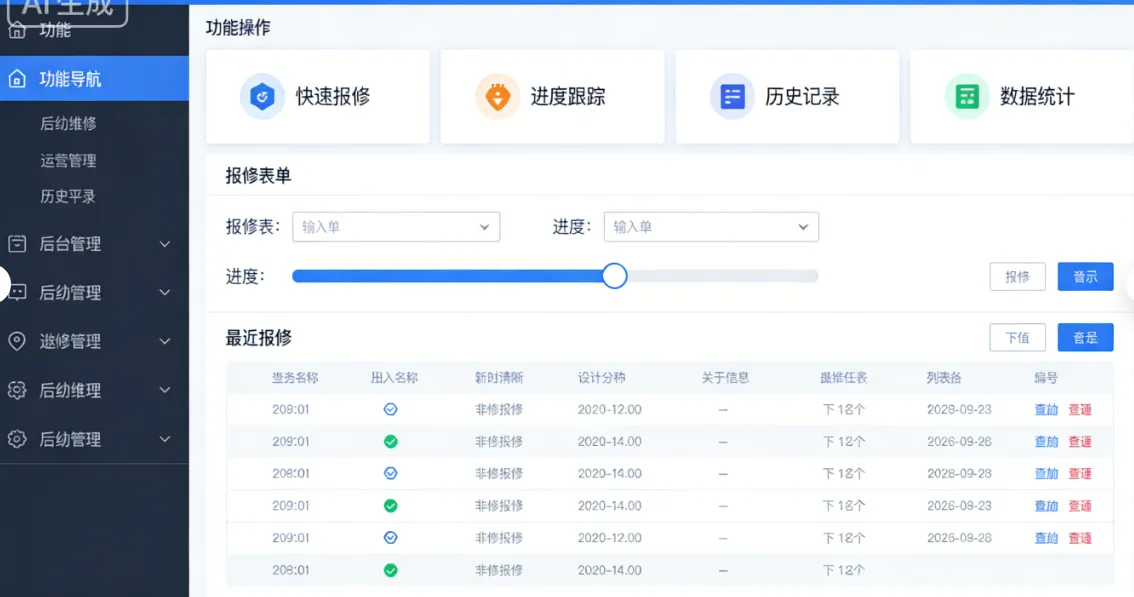
Collaboration between spare parts and suppliers: from temporary procurement to planned replenishment
The core component of maintenance costs is not labor, but spare parts. In the traditional mode, spare parts management is detached from the repair process - maintenance workers discover missing parts, verbally inform their supervisors, supervisors make temporary inquiries for procurement, and equipment is shut down and waiting for several days. Emergency procurement has high prices, uncontrollable cycles, and sporadic inventory backlog and shortage of spare parts coexist. The general repair management platform integrates spare parts management into the work order loop and collaborates with the supplier system.
Establish a spare parts archive in the system, linking brand, model, applicable equipment, safety stock, and supplier information. When applying for spare parts in a maintenance work order, the system automatically reduces inventory and generates an outbound record. When the inventory of a certain spare part falls below the safety threshold, the system automatically triggers the replenishment process, pushes the purchase demand to the designated supplier, and the supplier provides an online quotation and confirms the delivery date. After the purchase order is generated, it is synchronized with the associated work order cost collection. For standard spare parts with high frequency consumption, strong universality, and transparent prices, the system supports direct connection with supplier APIs to achieve full process automation from inventory warning to order issuance, shipment confirmation, and inventory listing. After a certain chain hotel group applied the spare parts collaboration module, the frequency of emergency procurement decreased by 82%, the turnover rate of spare parts inventory increased by 2.3 times, and the average waiting time for maintenance was reduced by 3.6 days.
Data Analysis and Continuous Improvement: From Passive Firefighting to Active Prevention
The ultimate value of the universal repair management platform lies in transforming daily maintenance records into physical examination reports on the health of organizational facilities and equipment. The system automatically aggregates work order data and generates management insights from multiple dimensions.
The fault heat map reveals which buildings, floors, and rooms are high-risk areas for repair, assisting managers in identifying design defects, equipment selection issues, or abnormal usage intensity. The analysis of equipment failure frequency accurately identifies the failure rate significantly higher than similar brand models, providing a guide for avoiding pitfalls in subsequent procurement selection. The analysis of maintenance hours and costs clearly presents the average maintenance cost and efficiency of each job type, supplier, and equipment category, supporting the performance evaluation and optimization of outsourcing service providers. A manufacturing enterprise found through system data analysis that the failure rate of a certain model of equipment in its injection molding workshop was 3.2 times that of similar equipment. After professional testing, it was confirmed that the batch of equipment had design defects. After contacting the supplier for centralized recall and renovation, the downtime of the equipment in the workshop decreased by 70%, and the annual maintenance cost was saved by more than one million yuan. The deeper value lies in the transition from passive firefighting to active prevention - the system predicts the high probability period of the next failure of key equipment based on historical fault data and equipment operation time, and pushes preventive maintenance suggestions to managers. When maintenance is upgraded from "repair when it breaks down" to "maintain before it breaks down", logistics management completes its role transformation from a cost center to a value center.
Empowering diverse scenarios with a universal platform
The reason why the multifunctional universal repair management platform is named "universal" is that its design concept is not customized for a single industry, but abstracts the common logic of repair management and adapts to multiple scenarios through highly configurable parametric settings. The property management company will distribute building facility repair templates to various projects, universities will use dedicated repair channels for student dormitories and teaching buildings, hospitals will deploy dual track medical equipment maintenance and logistics repair, and chain stores will uniformly configure equipment maintenance processes for thousands of branches across the country. A set of systems, a set of data models, and a set of governance logic, carrying the maintenance management needs of different organizational forms, asset types, and service standards. When repair work orders are no longer isolated fault records, but are integrated into the digital river of organizational asset lifecycle management, the logistics maintenance department evolves from a passive "firefighting team" to an active "asset manager" - this is the most profound identity reshaping that digitalization has given to logistics management.