
Clothing SAAS Inventory ERP System - Full Chain Management+Intelligent Prediction | Shuntong
The dilemma of inventory in the clothing industry: from selling out of popular products to stockpiling on a seesaw
There is a joke in the clothing industry that has been circulating for many years: what sells well is never enough to sell, and what cannot be sold is never sold out. Behind this joke is a true portrayal of the pain that countless clothing operators have experienced firsthand. A women's clothing e-commerce company develops hundreds of new styles every season, of which about 20% become bestsellers, but is forced to remove pre-sale links during peak sales periods due to delayed restocking; Another 30% became unsold items, which were cleared at a 30% discount at the end of the season, devouring all the profits brought by explosive products. The structural contradiction of "out of stock hot products and long tail backlog" is rooted in the capability boundary of traditional inventory systems - they are good at recording goods in and out, accounting for transactions, but cannot answer the two most critical questions: which products should be stocked more? Which products should be discounted in advance? The birth of the clothing SAAS inventory ERP system is a systematic response to this core pain point. It deeply integrates the recording function of inventory with the decision-making functions of supply chain planning, sales forecasting, and intelligent replenishment, and builds a full chain intelligent management loop for clothing enterprises from design to payment collection, from prediction to replenishment.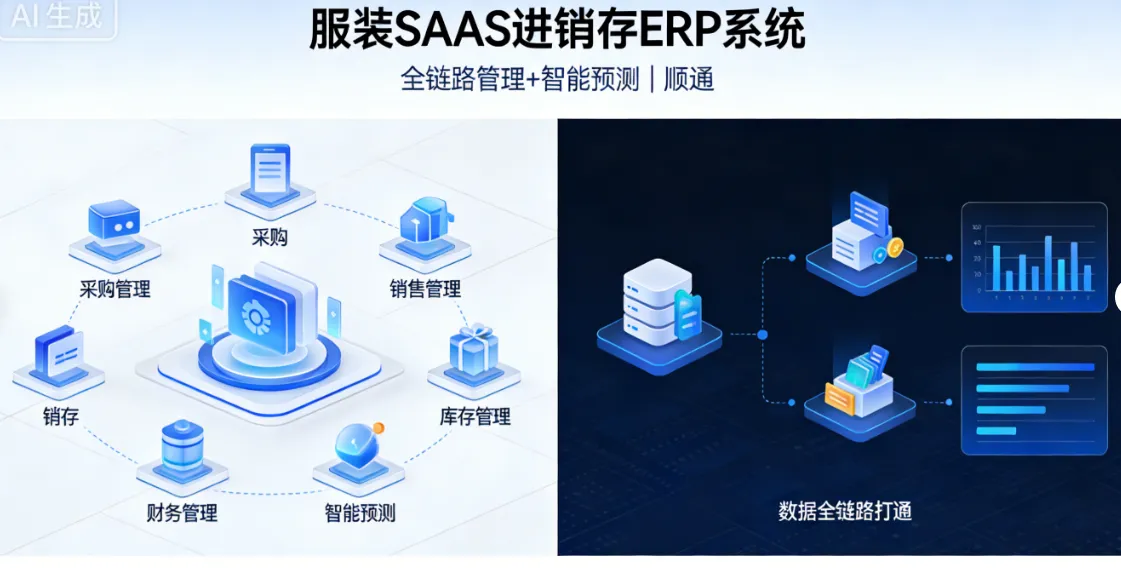
Full link product file: complete mapping from fabric composition to size and color
Clothing products are one of the most complex data entities in inventory management. The same dress may come in three colors and five sizes, forming fifteen inventory units; Different batches of the same style may result in slight adjustments to the size standard due to differences in fabric shrinkage rate; E-commerce exclusive products and offline products need to distinguish channel inventory, but after-sales maintenance needs to be associated with the original parent product. Traditional inventory management software simplifies clothing products into regular SKUs, losing the hierarchical relationship of style, color, and size, resulting in the inability to place orders by style during procurement, analyze by color code during sales, and accurately estimate restocking.
The Shuntong Clothing SAAS inventory ERP system has reconstructed the clothing product model at the bottom of the data architecture. The system establishes a product master file with "style" as the core, linking design drawings, fabric composition, process description, tag price, and cost range; Hanging a two-dimensional matrix of "color" and "size" under the style, it automatically expands into a complete SKU list. Purchase orders are issued based on style and color, and suppliers scan the code to confirm the actual quantity received for each size when shipping; The sales report can drill down infinitely by style, color, and size. It is clear at a glance which size is missing for popular products and which color is unsold and backlogged. The whole process visualization of commodity life cycle status - from design proofing, first order placement, warehouse listing, hot sale replenishment, mid season price adjustment, end of season clearance to final delisting and sealing, the inventory strategy is automatically switched at each stage. After a certain clothing brand applied this module, the efficiency of SKU management increased by 4 times, and the return and exchange rate decreased by 57% due to "size deviation between different batches of the same product".
Omnichannel inventory hub: keep every item on standby at the optimal location
The inventory of clothing companies is being fragmented in an unprecedented way. Offline stores display seasonal new products, e-commerce warehouses stock up on popular items, live streaming bases store exclusive welfare funds, distributors distribute consignment products, and even pre-sale orders on WeChat mini programs are waiting to be stocked in virtual inventory. Under the traditional model, these inventories are independent and invisible to each other, making it difficult for operators to accurately allocate them, resulting in a coexistence of headquarters inventory backlog and store stockouts, e-commerce platform code interruptions, and offline warehouse color accumulation.
Shuntong Clothing SAAS inventory ERP system builds a multi-channel inventory center, integrating all inventory from headquarters warehouses, regional sub warehouses, store warehouses, pre warehouses, and virtual warehouses into a unified digital pool. The system collects real-time inventory snapshots and real-time changes from various channels. The e-commerce platform automatically deducts the corresponding channel inventory for each order generated, and stores update the central inventory ledger synchronously for each sales completed. When a popular e-commerce product is out of stock, the system automatically retrieves real-time inventory of that size from nearby stores, supporting store delivery fulfillment, not only digesting store inventory but also ensuring e-commerce experience; At the end of the season, the system predicts the optimal inventory distribution plan based on the historical turnover rate of each channel, and concentrates redundant inventory in discount channels. After applying the omni channel inventory center, a clothing company's overall inventory turnover rate increased by 34%, the e-commerce out of stock rate decreased by 62%, and the proportion of unsold products in stores being digested through cross channel allocation reached 27%.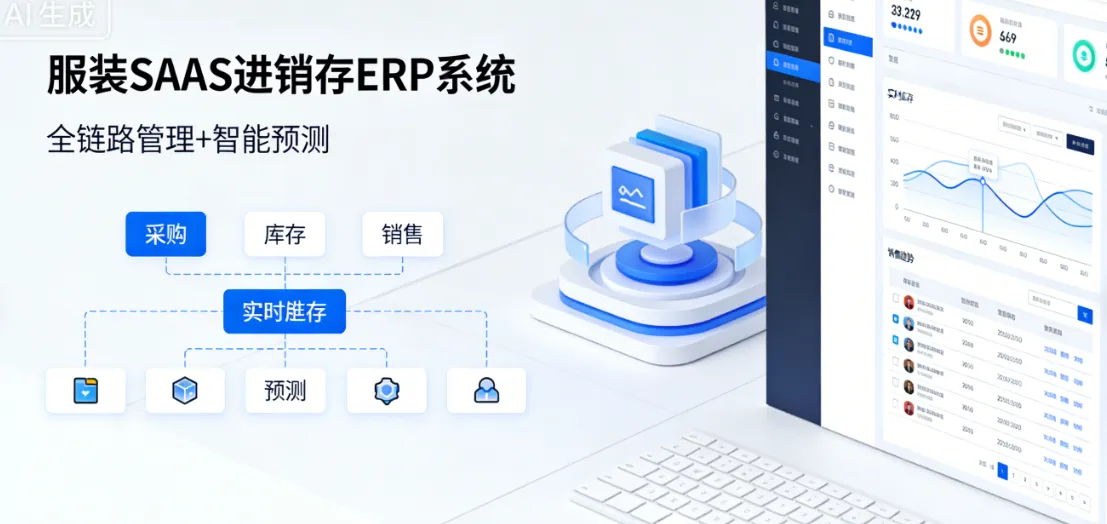
Intelligent prediction engine: from experience based stocking to algorithmic decision-making
The most difficult part of clothing inventory is never bookkeeping, but stocking up. Being too prepared, the end of season clearance devours profits; Shortage of inventory leads to a shortage of popular products and missed sales opportunities. In the traditional mode, procurement personnel take orders based on experience, while bosses cut orders based on intuition. Every stocking is a gamble. The core breakthrough of Shuntong Clothing SAAS inventory ERP system lies in introducing machine learning algorithms into demand forecasting and intelligent replenishment.
The system constructs a single item level demand forecasting model based on multidimensional variables such as style historical sales data, seasonal factors, promotional calendars, traffic trends, and competitor intelligence. When there is no historical data for the launch of a new product, the system uses a "similar style matching algorithm" to calculate the similarity between the design features of the current style (such as pattern, fabric, price band, target audience) and the historical popular style database, and output the first order stocking suggestion. When the sales enter the replenishment stage, the system monitors the sales speed, inventory balance, and procurement cycle in real time, dynamically calculates the optimal replenishment time and quantity, and finds the best balance point between the risk of out of stock and inventory backlog. After a certain women's clothing brand applied the intelligent prediction module, the first order hit rate increased by 26 percentage points, the out of stock rate of popular products decreased by 53%, and the proportion of unsold inventory at the end of the season was reduced from 38% to 21%.
Intelligent replenishment and allocation: Get inventory moving
The improvement of prediction accuracy is a prerequisite, and converting predictions into accurate replenishment and allocation instructions is the key to realizing value. The intelligent replenishment engine of Shuntong Clothing SAAS inventory ERP system upgrades "how much inventory should be stocked" to "when, where, and how much inventory should be stocked".
The system monitors the sales speed and inventory days of each SKU in various channels in real-time. When the daily sales of a certain e-commerce exclusive product suddenly accelerate on platform A, the system automatically determines whether replenishment is needed, suggests replenishment quantity, which warehouse to replenish to, and which supplier to use. After the replenishment suggestion is generated, the system automatically pushes it to the procurement approval process. After approval, a purchase order or production work order is generated with one click. For multi store chain brands, the system automatically generates cross store transfer suggestions on a weekly basis: transfer redundant inventory from unsold stores to best-selling stores, and transfer excess sizes from color stores to stores with missing sizes. The transfer order is automatically issued, and after confirmation by the store manager, picking tasks and transportation waybills are generated. After a certain chain clothing brand applied the intelligent allocation module, the response time for store allocation was shortened from an average of 5 days to 24 hours, and the offline transaction loss caused by size breakage was reduced by 41%.
Supplier Collaboration Portal: Incorporating External Production Capacity into the Planning System
The complexity of the clothing supply chain lies not only within the enterprise itself, but also in the collaboration between the enterprise and upstream suppliers. Brand manufacturers cannot predict the material preparation cycle of their suppliers, and clothing processing factories cannot lock in future orders from brand manufacturers in advance. Both parties amplify inventory fluctuations in the game. The Shuntong Clothing SAAS inventory ERP system moderately opens up planning and execution data to core suppliers through the supplier collaboration portal.
Brand owners will desensitize their rolling demand forecasts and push them to the supplier portal, based on which material suppliers can prepare materials and reserve production capacity in advance; The processing plant confirms the order receiving capacity online and locks the machine schedule. After the purchase order is issued, the supplier confirms the delivery date, ships in batches, prints the box label, and uploads the shipping notice on the portal. The brand warehouse arranges the receiving manpower in advance based on the shipping forecast. The reconciliation between both parties is completed online, with automatic verification of the matching of purchase receipts, supplier shipping orders, and financial invoices, and real-time collaborative processing of differences. After applying the supplier collaboration module, a certain clothing group reduced the average procurement cycle of materials by 9 days, increased the delivery rate of garment processing factories from 74% to 91%, and reduced emergency air freight costs by 67% due to information lag.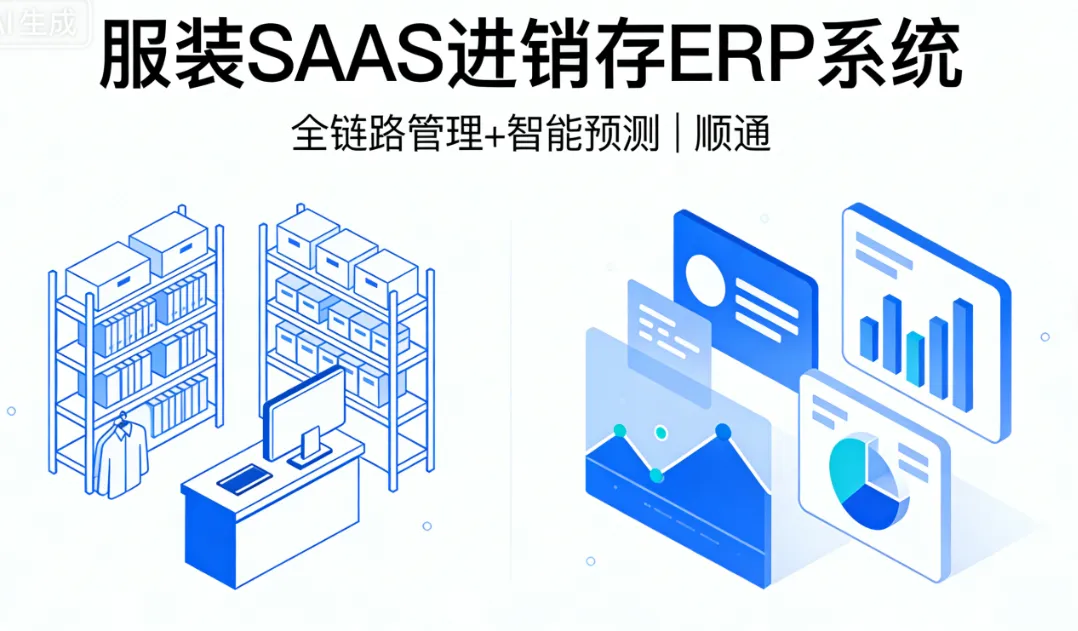
Integration of Business, Finance, and Taxation: Automatic Circulation from Business Documents to Financial Vouchers
The disconnect between clothing inventory and financial accounting is an invisible management cost for many enterprises. The purchase receipt is in the inventory system, the purchase invoice is in the financial system, and the payment request is in the OA system. Monthly reconciliation consumes a lot of energy from financial personnel; After sales are released, manual verification of platform settlement statements is required, resulting in delayed revenue recognition and extensive account period management. The Shuntong Clothing SAAS inventory ERP system integrates financial accounting capabilities natively, achieving business and financial integration.
Purchase inventory is completed, and the system automatically generates an estimated payable voucher based on the inventory receipt and purchase contract; The supplier invoice verification is passed, and the system automatically generates accounts payable vouchers and offsets the estimated amount. E-commerce order shipment confirmation, the system automatically generates sales revenue vouchers and accounts receivable vouchers based on the actual received amount and platform deduction details, and synchronously verifies the platform settlement statement. The cost accounting granularity penetrates to the SKU level, and the system uses moving weighted average or monthly weighted average to automatically collect sales and outbound costs and generate main business cost vouchers. After a clothing e-commerce enterprise applied the integrated finance and taxation module, the monthly financial settlement time was reduced from 12 days to 3 days, and the reconciliation variance rate decreased by 82%. The finance team was streamlined from 8 people to 4 people and transformed into value-added work such as profit analysis and budget management.
From recording system to decision-making system
The essential difference between Shuntong Clothing SAAS Inventory ERP System and traditional inventory software is that it is no longer satisfied with answering record based questions such as "where the goods went and where the money went", but actively responds to decision-making questions such as "where the goods should go and where the money should be spent". It upgrades the core competence of purchase, sales and inventory management of clothing enterprises from the post inventory to the intelligent intervention in advance - early warning and replenishment before the occurrence of stock outs, prompt for price adjustment before the formation of slow sales, and adjust the plan before the inventory backlog. When the rhythm of clothing management evolves from a pulse like response of "selling out one batch and preparing for the next" to a continuous adaptation of "selling one piece, replenishing one piece, and counting one piece", the most stubborn paradox of "out of stock hot items and long tail backlog" in this ancient business finally faces the possibility of being systematically broken. In today's fast-paced fashion world where iteration accelerates and consumer patience decreases, this transition from passive recording to active prediction is evolving from a competitive advantage of leading clothing companies to a survival baseline for the entire industry.