
Clothing Factory Scan Code Inventory ERP - Solving Size and Style Inventory Problems - Precise Calculation of Piece Rate Wages
In 2026, the clothing industry will enter a period of long-term growth and deep cultivation. The green transformation driven by policies, the flexible demand generated by consumption upgrading, and the competitive pressure brought by the increase in industry concentration will force clothing factories to transform from extensive management to refined operation. Inventory management and salary accounting, as the core links of clothing factory operation, are directly related to enterprise cost control, production efficiency, and employee stability. However, the pain points under traditional management models are becoming increasingly prominent, becoming bottlenecks that restrict enterprises from improving quality and efficiency, and achieving long-term growth. The shoe and clothing exclusive ERP system is equipped with a scanning function, which accurately solves the problems of disorderly size and style inventory and piece rate wage calculation deviation, and builds a digital management base for clothing factories, activating long-term growth momentum.
The uniqueness of products in the clothing industry determines that the complexity of inventory management far exceeds that of other manufacturing industries. A garment often needs to cover multiple color and size combinations, resulting in dozens of SKUs. If a company operates hundreds of products simultaneously, the total number of SKUs can easily exceed 10000, which poses a great challenge to inventory counting. The traditional manual inventory model relies on paper records or Excel spreadsheets for input, which is not only time-consuming and labor-intensive, but also prone to data errors - either confusion of sizes and colors leading to discrepancies between accounts and reality, or omission of batch information causing difficulties in tracing defective products. Some small and medium-sized enterprises even need to stop work for 2-3 days for a single inventory, seriously affecting production progress. What is more prominent is that manual management cannot achieve real-time synchronization of inventory data, and information in warehouses, workshops, and sales departments is fragmented. This often leads to the embarrassing situation of best-selling products missing out on business opportunities and unsold items piling up and occupying funds. Low inventory turnover has become a common pain point for most clothing factories, restricting the company's capital turnover and long-term development.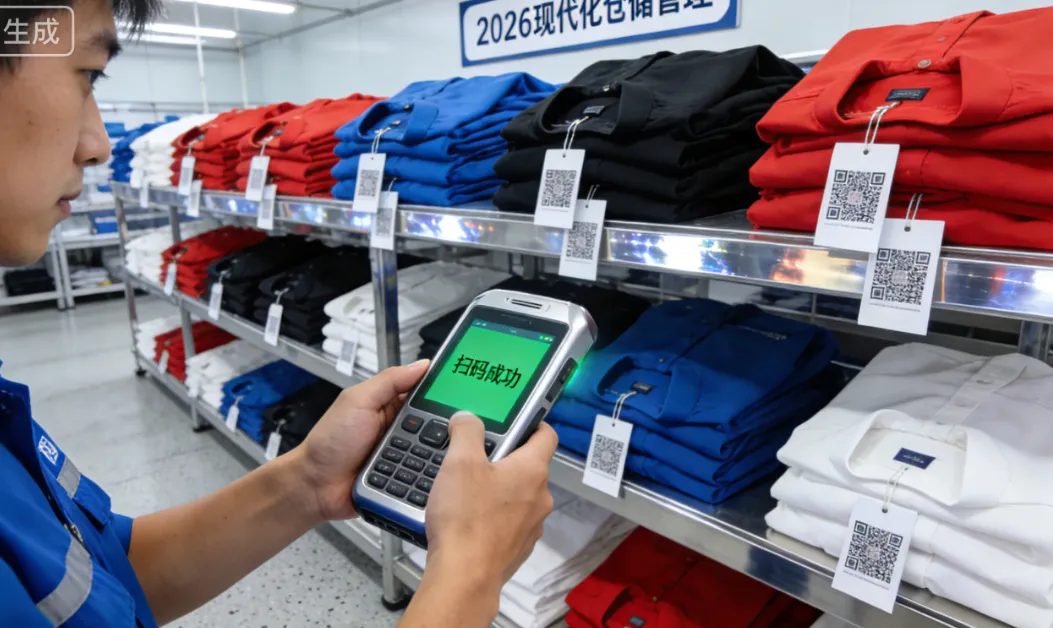
At the same time, the accuracy of piece rate wage accounting directly affects employee motivation and the stability of enterprise employment. The production process of clothing is complex, with different piece rate standards for cutting, sewing, nailing, ironing, and other processes. The same process may correspond to multiple styles and sizes of products. When manually counting the workload of employees, problems such as omissions, errors, and duplicate statistics are prone to occur. This not only increases the accounting burden of the finance department, but also easily leads to salary disputes between employees and the enterprise, affecting team cohesion. For growing clothing factories, salary accounting disputes not only consume management energy, but may also lead to the loss of skilled workers, indirectly increasing recruitment and training costs, which contradicts the company's goal of improving quality, efficiency, and long-term growth.
In the wave of digital transformation in 2026, the QR code inventory ERP system has become a key lever for clothing factories to solve the two core pain points mentioned above. Its core value lies in realizing the digitization, standardization, and precision of inventory management and salary accounting, laying a solid foundation for long-term growth of enterprises. At the inventory management level, the ERP system combines QR code or RFID technology to generate unique identification codes for each piece of clothing and batch of fabric, covering core information such as style, size, color, and production batch, fully adapting to the management needs of multiple SKUs in the clothing industry. The staff can complete single item warehousing in 3 seconds and batch inventory of 100 items in 10 seconds by scanning the code with PDA or mobile phone. This not only greatly shortens the inventory time, but also improves the inventory accuracy to 99.9%, completely eliminating the tedious and error of manual recording.
The deep application of the QR code inventory ERP system has further realized the visualization and control of the entire inventory process. The system synchronizes the inventory dynamics of each warehouse and SKU in real time, automatically sets inventory warning lines, and reminds procurement and replenishment in a timely manner when the inventory of a specific size of clothing is below the safe value; For unsold inventory, generate analysis reports based on sales data to provide data support for enterprise clearance promotion and optimization of production plans. In addition, the system can achieve linkage between inventory and production/sales processes, and the production department can query fabric inventory in real time to avoid production stagnation caused by material shortages; The sales department can synchronously view finished product inventory, accurately match order demand, reduce oversold and missed delivery issues, improve customer satisfaction, and reduce the pressure of capital occupation caused by inventory backlog, optimize enterprise cash flow, and inject vitality into long-term growth.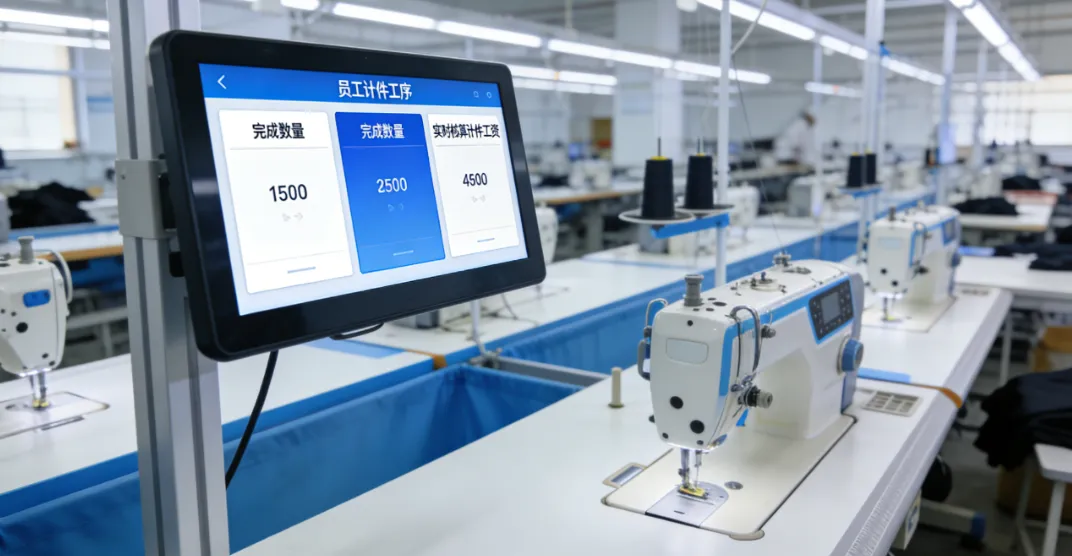
At the level of piece rate wage accounting, the ERP system has achieved closed-loop management of automatic workload statistics and accurate salary accounting. The system can be integrated with intelligent terminals in the production workshop to record in real-time the completed processes, qualified product quantities, and reworked product quantities of each employee. It automatically matches the preset piece rate standards for each process and generates personal and team salary details without manual intervention. This accounting model not only significantly reduces the workload of the finance department, but also completely eliminates problems such as omissions and errors, ensuring fairness, impartiality, and transparency in salary accounting, effectively reducing salary disputes, and enhancing employees' work enthusiasm and sense of belonging.
From the perspective of long-term growth of enterprises, the application of QR code inventory ERP system not only solves the current management pain points, but also promotes the upgrading of enterprise operation mode. Through precise inventory control and cost optimization, enterprises can invest more resources in product research and development and brand building, enhancing their core competitiveness; A standardized salary accounting system helps stabilize the workforce, reduce labor costs, and improve production efficiency. For clothing factories with overseas layout or multi-channel sales, the system can also connect with cross-border e-commerce platforms and multi store inventory to achieve global inventory collaboration and compliance management, and cope with the uncertainty of market changes and industry competition.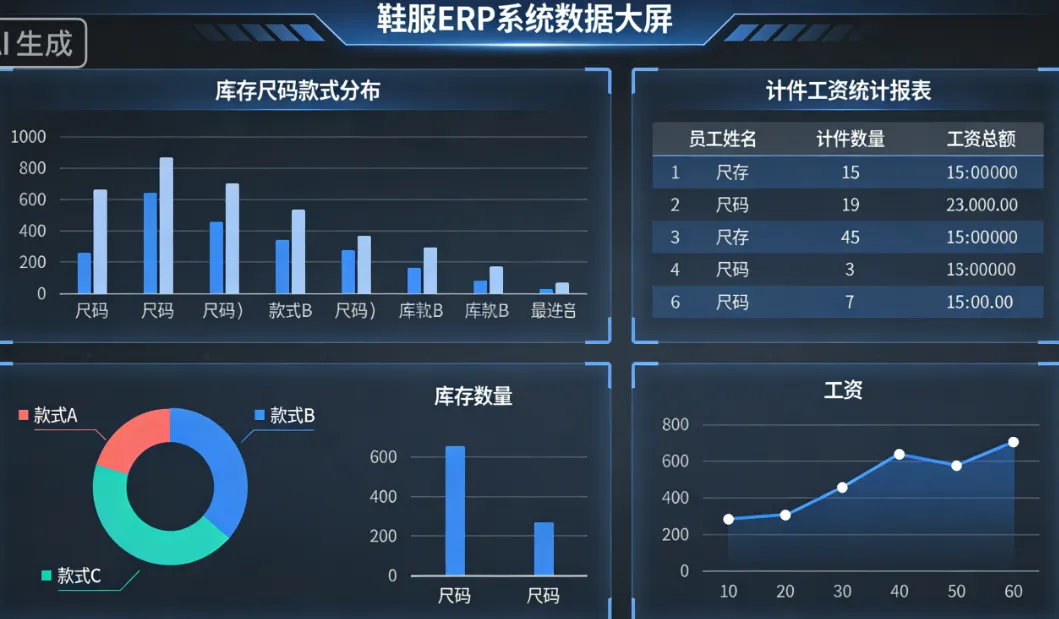
In 2026, the competition in the clothing industry has upgraded to a competition of refined operations, and the level of refinement in inventory management and salary accounting directly determines the survival and development capabilities of enterprises. The QR code inventory ERP system has solved the core pain points of difficult size and style inventory and accurate piece rate wage calculation in clothing factories with a precise and efficient solution, achieving multiple goals of cost reduction, efficiency improvement, and team stability. For clothing factories pursuing long-term growth, introducing a dedicated ERP system is not a simple technological upgrade, but rather a reshaping of their operational model. Only by using digital tools to break through management bottlenecks and achieve refined operations throughout the entire chain can they stand firm in industry integration and achieve high-quality and sustainable long-term growth.