
Breaking through pain points in the supply chain of shoe and clothing factories, Shuntong ERP helps you operate efficiently
In 2026, the footwear and apparel industry will enter a new stage of lean competition, with fast fashion iteration accelerating and small batch multiple orders becoming the norm. Coupled with external pressures such as fluctuations in raw material prices and poor supply chain coordination, most footwear and apparel factories are deeply trapped in the supply chain dilemma of "high cost, low efficiency, and high risk". Especially for small and medium-sized shoe and clothing factories, limited by funds, technology, and talent, supply chain management relies heavily on manual ledgers and experiential decision-making. Problems such as chaotic procurement, production disconnection, inventory backlog, and logistics lag are stacked layer by layer, which not only compresses profit margins but also restricts the scale development of enterprises. Shuntong ERP is based on the supply chain characteristics of the footwear and apparel industry, with full chain digital collaboration as the core, accurately solving industry pain points, breaking down barriers in the entire process of procurement, production, warehousing, and logistics, helping footwear and apparel factories achieve efficient supply chain operation, and building market competitiveness.
The pain points in the supply chain of shoe and clothing factories have distinct industry characteristics, running through the entire chain and interrelated, forming a closed loop of "one pull affects the whole body" dilemma. The procurement process is the starting point of the supply chain and also the core link where pain points are concentrated. The production of shoes and clothing requires a variety of fabrics, leather, shoe soles, accessories, and other categories, and needs to match the production needs of multiple styles, sizes, and colors. Traditional manual procurement is prone to problems such as "missing, wrong, and overbought" - either due to a shortage of raw materials causing production to stop and wait for materials, or excessive procurement causing inventory backlog. The proportion of stagnant materials in some small and medium-sized factories is as high as 18%. At the same time, supplier management is decentralized and lacks a systematic assessment mechanism, making it difficult to control delivery punctuality and material qualification rates. In addition, raw material prices fluctuate frequently due to market supply and demand, as well as the global trade environment, making it difficult to control procurement costs and further squeezing the profitability of enterprises.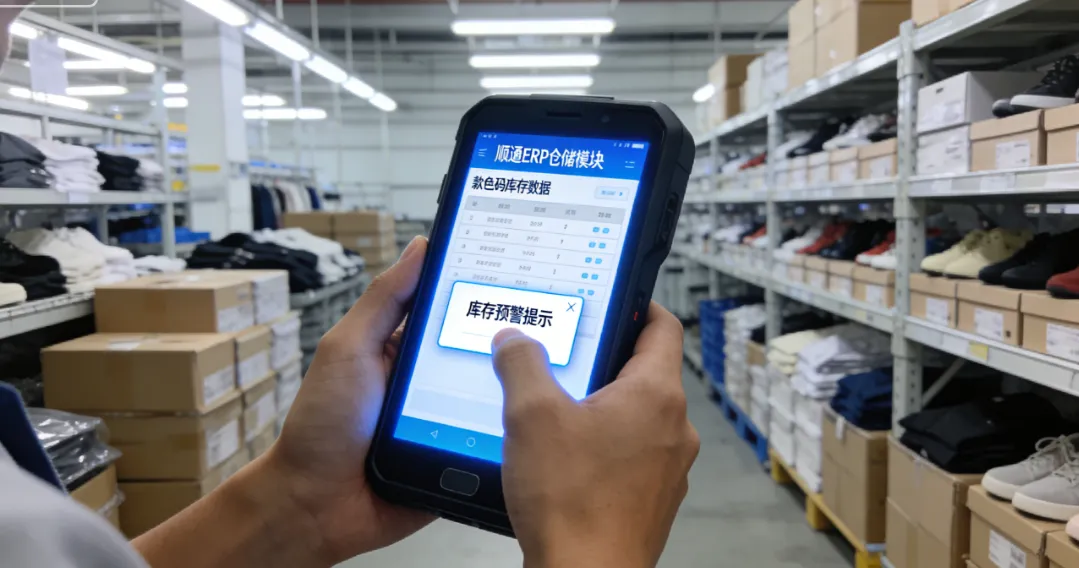
The disconnect between production and procurement further exacerbates the inefficiency of the supply chain. The production process of shoes and clothing is complex, from cutting, needle sewing, molding to quality inspection, with significant differences in the process routes of different styles. Traditional manual production scheduling cannot balance order priority, equipment capacity, and material delivery progress, and is prone to problems such as poor process connection, waste of production capacity, and insufficient emergency order response. Most shoe and clothing factories that have not introduced ERP have a on-time delivery rate of less than 80%. Some factories miss orders due to delayed production progress or fail to meet product quality standards due to rush work, resulting in a dilemma of "difficult to accept orders and difficult to deliver". What is more prominent is that material consumption during the production process cannot be tracked in real time, and the raw material loss rate remains high, with an industry average loss rate of 8% -12%. However, small and medium-sized factories often have higher loss rates due to the lack of refined control, further pushing up production costs.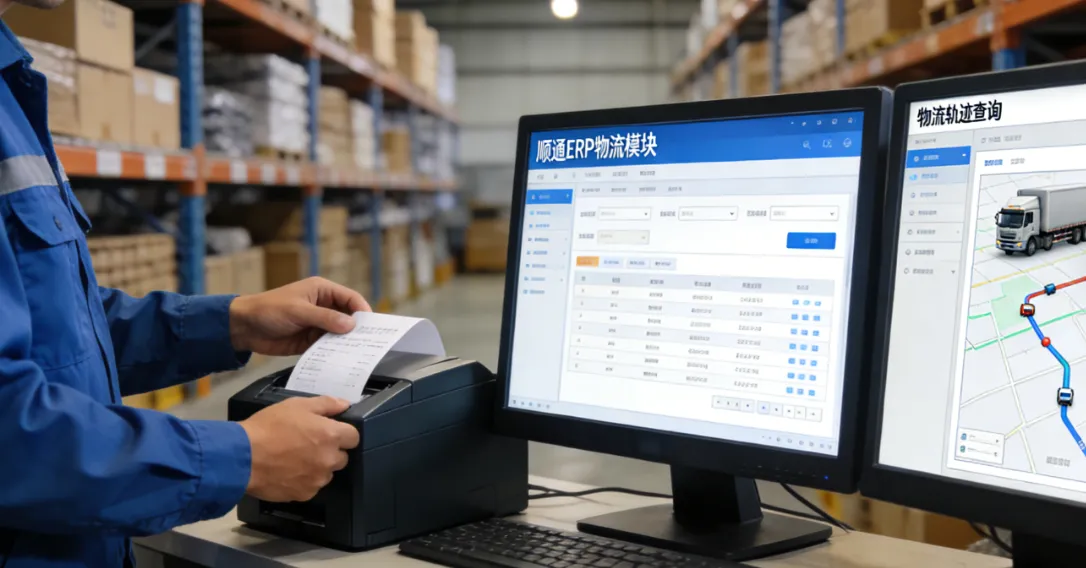
The shortcomings in warehousing and logistics have become stumbling blocks to the efficient operation of the supply chain. The characteristic of multiple SKUs in shoe and clothing products has doubled the difficulty of warehouse management. Finished shoes are stored by style, size, and color, and raw materials need to be controlled by batch and specification. Traditional manual inventory is inefficient and prone to errors, and discrepancies between inventory and reality have become the norm. This not only leads to a shortage of best-selling items and a backlog of unsold items, but also causes a large amount of capital accumulation. In the logistics process, there are problems such as insufficient collaboration and unclear trajectories, which can lead to errors and omissions in shipping, as well as being disconnected from logistics platform data. The progress of goods transportation cannot be tracked in real time, and problems such as lost items and delays occur frequently, not only affecting customer experience but also damaging brand reputation. In addition, the data of the entire supply chain is fragmented, and the data of procurement, production, warehousing, sales and other links cannot be synchronized. Managers find it difficult to fully understand the dynamics of the supply chain, rely on experience for decision-making, and cannot quickly respond to market changes and supply chain risks.
As an exclusive digital solution for the footwear and apparel industry, Shuntong ERP abandons the "one size fits all" model of general ERP and focuses on the pain points of the entire supply chain. Through customized functional modules, it achieves precise breakthroughs and helps footwear and apparel factories operate their supply chains efficiently. At the procurement management level, Shuntong ERP has established a full process control system of "supplier procurement plan arrival acceptance", which can establish a complete supplier archive, record supplier qualifications, on-time delivery rate, quality qualification rate and other information, achieve supplier grading management and scientific examination, and help enterprises screen high-quality partners. At the same time, the system can combine production planning with inventory gaps to automatically generate purchase suggestion forms, marking material specifications, quantities, and arrival times, synchronously comparing quotes and delivery times from multiple suppliers, optimizing procurement decisions, avoiding blind procurement, and setting up raw material price warnings to help enterprises cope with price fluctuation risks and reduce procurement costs.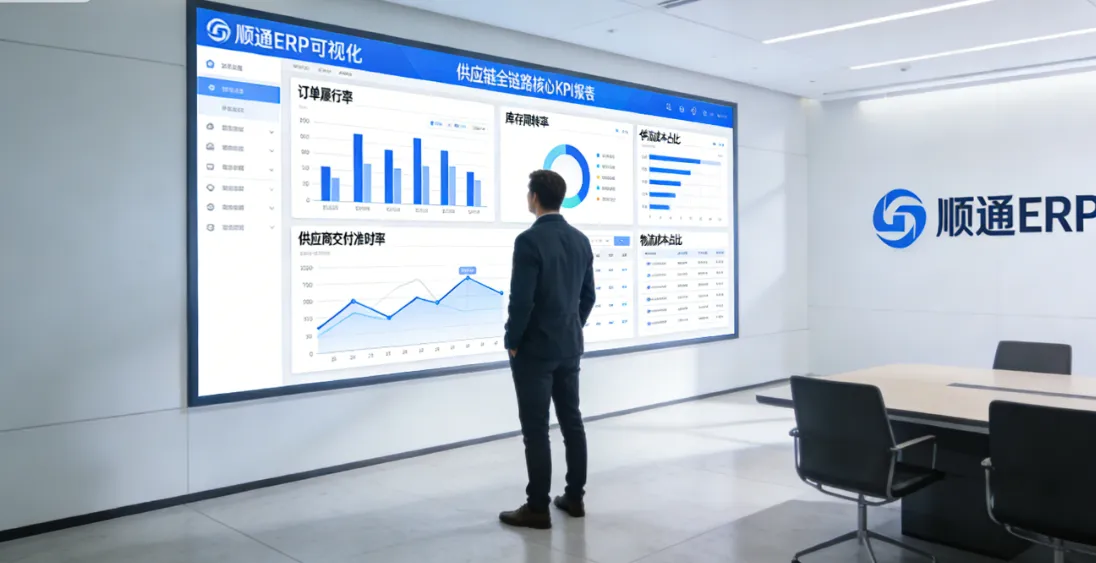
In response to the pain point of the disconnect between production and procurement, Shuntong ERP connects procurement and production data to achieve intelligent scheduling and material collaboration. The system is equipped with an intelligent scheduling module exclusive to the footwear and apparel industry, which can automatically generate scheduling plans based on order priority, equipment capacity, and process dependencies. It supports rapid adjustment of emergency insertion orders and synchronously distributes them to various workshops and teams to ensure smooth process connection. The material management module can track the real-time progress of raw material delivery and link it with the production schedule. If the material is delayed in arrival, the system will automatically push an alert and adjust the production schedule to avoid production downtime and waiting for materials. At the same time, the system supports real-time collection of material consumption during the production process. Workers can scan codes on their mobile devices to report work, accurately record the usage of materials in each process, set loss thresholds, and automatically warn if the threshold is exceeded. This helps enterprises reduce the raw material loss rate to below 5% and achieve refined cost control. In addition, the system integrates piece rate salary accounting function, automatically generates salary details based on reported work data, reduces financial accounting burden, and minimizes salary disputes.
At the level of warehousing and logistics management, Shuntong ERP achieves digital control and full process collaboration, solving the problem of multi SKU management. The warehousing module supports building inventory data structures based on "product code+size+color+batch", assigning unique identity codes to each batch of materials and finished products. Through scanning the codes, inventory operations can be completed, increasing inventory efficiency by more than 80% and inventory accuracy by up to 99.9%, without the need for downtime inventory points. The system has a built-in inventory warning mechanism that can set safety stock thresholds based on production and sales needs. It automatically triggers reminders when best-selling items are out of stock or unsold items accumulate, helping enterprises optimize inventory structure, accelerate inventory turnover, and release accumulated funds. The logistics module can be integrated with mainstream logistics platforms to automatically generate and scan delivery notes for verification, avoiding errors and omissions. At the same time, the transportation trajectory is synchronized in real time, and both managers and customers can check the progress of goods, respond to logistics anomalies in a timely manner, and improve delivery efficiency and customer experience.
More importantly, Shuntong ERP achieves data integration throughout the entire supply chain, breaking down information silos and providing accurate decision-making support for managers. The system integrates data from the entire supply chain, including procurement, production, warehousing, and logistics, and automatically generates multi-dimensional visual reports covering core indicators such as capacity utilization, inventory turnover, material loss rate, and order delivery rate. Managers can gain real-time insights into supply chain dynamics, accurately identify management pain points, and make scientific decisions. In response to the needs of small and medium-sized shoe and clothing factories, Shuntong ERP adopts a lightweight deployment model, which does not require a large amount of hardware equipment investment. It is subscribed annually and functional modules are selected as needed. The cost is only 1/5-1/3 of traditional customized ERP, and the operation is simple and easy to understand, without the need for a professional IT team. Workshop workers and warehouse managers can get started after simple training. At the same time, a professional after-sales team is equipped to quickly respond to operation and maintenance needs and solve the concerns of "difficult transformation and landing" of small and medium-sized factories.
In 2026, competition in the footwear and apparel industry has escalated to competition in supply chain efficiency. The stability and efficiency of the supply chain directly determine the survival and development of enterprises. Shuntong ERP takes the characteristics of the footwear and apparel industry as its core, accurately solves the pain points of the entire supply chain, achieves refined procurement, collaborative production, intelligent warehousing, and visualized logistics, helps footwear and apparel factories reduce costs, improve efficiency, and avoid risks, transforming the supply chain from a "mess" to a "smooth and seamless" one. For the vast number of small and medium-sized shoe and clothing factories, Shuntong ERP is not only a management tool, but also a "booster" for supply chain breakthrough. It can achieve digital transformation without large investment. With an efficient supply chain system, it can stand firm in fierce market competition and achieve large-scale and high-quality development.