
Scan the code to manage customers! Shuntong Network's new system solves pain points in enterprise customer management
Customers are the core assets for the survival and development of enterprises. The efficiency and accuracy of customer management directly determine the acquisition, conversion, retention, repurchase, and market competitiveness of enterprises. However, currently, both small and medium-sized enterprises and large-scale enterprises are deeply mired in multiple challenges in customer management: scattered and chaotic customer data, untimely follow-up, high churn rates, low data utilization, and the increasing cost of acquiring customers year by year. Traditional management models are no longer able to meet the operational needs of customers in the digital age. According to industry research, over 65% of enterprises indicate that "customer operations are difficult to continuously improve," with less than 40% of digital applications being widely used. Many enterprises "have customer resources but are unable to efficiently activate them. Shuntong Network is based on the core demands of enterprises and has launched a new "Scan Code to Manage Customers" system, which features lightweight operation, full process empowerment, and low-cost implementation. It directly targets the core pain points of customer management, reconstructs a new model of customer operation, and helps enterprises achieve efficient accumulation and maximization of customer assets.
The pain points of enterprise customer management run through the entire chain of "customer acquisition follow-up retention repurchase data analysis", and the pain points of enterprises of different sizes are differentiated and overlapped. Traditional management methods such as Excel ledger and decentralized records cannot achieve systematic cracking, and instead exacerbate operational internal consumption.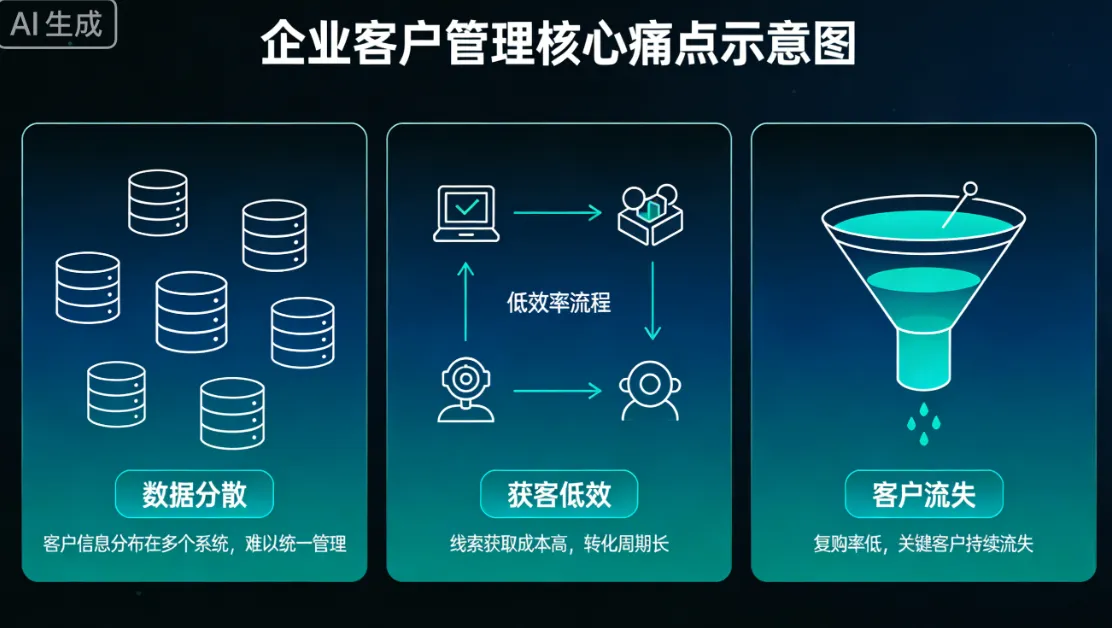
Pain point one: Customer data is scattered and fragmented, forming information silos. This is the most common core pain point in enterprise customer management, whether in the retail, service, or trade industries, customer information is often scattered in salespeople's personal WeChat, mobile phone contacts, laptops, or different systems, lacking a unified management carrier. The customer leads from the marketing department cannot be synchronized with the sales team, sales follow-up records cannot be shared with the service department, and financial data is disconnected from customer transaction information, resulting in the inability of the enterprise to form a 360 degree panoramic view of customers. More importantly, customer data standards vary, with duplicate, outdated, and erroneous data flooding in. This not only leads to multiple salespeople following up on the same customer, resulting in resource waste, but also leads to missed conversion and repurchase opportunities due to ineffective contact information and incomplete customer demand records. Some companies have a customer churn rate of over 30% due to data chaos.
Pain point two: cumbersome customer registration and inefficient conversion of leads. In scenarios such as offline exhibitions, store reception, and customer promotion, traditional customer registration relies on manually filling out forms, which is not only time-consuming and laborious, but also prone to problems such as information omission and filling errors, resulting in poor customer experience; The leads for online customer acquisition need to be manually entered into the system, which has strong latency and often misses the best follow-up opportunity. Studies have shown that the conversion rate of customer leads followed up within 24 hours is 7 times higher than that of follow-up. However, most companies cannot achieve rapid response due to cumbersome registration and entry, resulting in a large number of idle leads being lost.
Pain point three: Lack of standardization and reminders in customer follow-up, making retention difficult. Most enterprises lack standardized customer follow-up processes, and sales personnel rely solely on personal experience to arrange follow-up rhythms. Some customers are left unattended for a long time, while others are repeatedly followed up, causing customer resentment. At the same time, there is no unified standard for follow-up records, and customer needs, objections, feedback, and quotation information are scattered and disorderly. Newly taken over sales personnel need to "break the ice" again, greatly reducing follow-up efficiency. In addition, the lack of intelligent reminder function makes it difficult to synchronize key information such as customer birthdays, renewal milestones, and demand follow-up cycles in a timely manner, making it difficult to achieve refined retention and operation.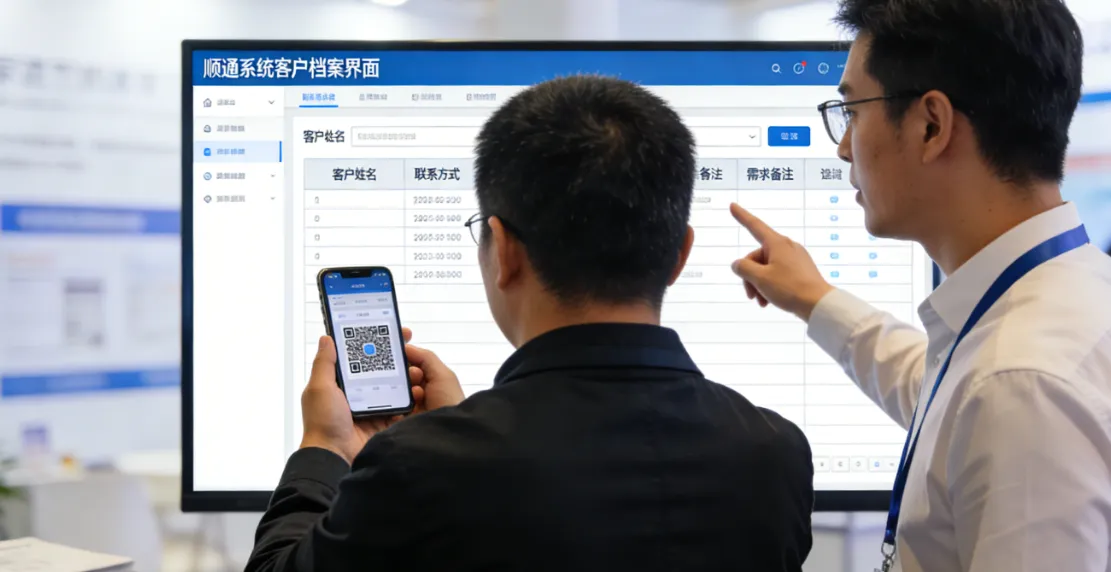
Pain point four: Privatization of customer assets and prominent risk of loss. Many companies' core customer resources are in the hands of individual salespeople, with customer contact information, follow-up details, and other information being privately controlled. Once salespeople leave, they often take away a large amount of customer resources, resulting in the loss of corporate customer assets. Reconnecting with customers is not only time-consuming and labor-intensive, but may also miss long-term cooperation opportunities. The head of a small and medium-sized enterprise once admitted that a senior salesperson left and took away more than 200 core customers, and it took the company six months to re-establish contact, resulting in a direct loss of over 500000 yuan.
Pain point five: Low data utilization and lack of support for decision-making. Enterprises have accumulated massive customer data, but are unable to convert it into business insights that drive business growth, falling into the dilemma of "owning a golden mountain but not mining it". Under the traditional management model, data analysis relies on manual statistics from the IT department, resulting in lengthy processes and slow responses, which cannot meet the flexible analysis needs of business departments; At the same time, the lack of professional analysis tools makes it difficult for frontline employees and managers to quickly grasp core indicators such as customer segmentation, follow-up conversion rate, and repurchase rate. They can only rely on experience to make decisions, resulting in a disconnect between marketing and operational strategies and customer needs.
In response to the above pain points, Shuntong Network's new "Scan Code to Manage Customers" system takes "minimalist operation, full chain closed-loop" as its core, relying on QR code technology and digital management capabilities. It does not require complex training or large hardware investment, achieving "scan to record, scan to follow, and scan to manage", accurately solving the full process problems of enterprise customer management, and adapting to the operational needs of customers in multiple industries and scenarios.
Cracking the pain point of data fragmentation: scanning code synchronization, building a unified customer profile. Shuntong's new system generates exclusive customer QR codes for enterprises. Sales personnel only need to ask customers to scan the code in any scenario to quickly complete information registration - customers can independently fill in basic information or authorize one click synchronization through WeChat, without the need for manual input, greatly improving registration efficiency and information accuracy. At the same time, the system automatically integrates customer information, follow-up records, transaction data, service feedback and other comprehensive content to form standardized customer files, supporting multi terminal synchronization (mobile and computer), breaking down departmental barriers. Marketing, sales, service, finance and other departments can view customer data with corresponding permissions as needed, achieving real-time data sharing and completely solving the problem of information silos. In addition, the system has built-in automatic deduplication and data cleaning functions to prevent duplicate filing and erroneous data entry from the source, ensuring the standardization and accuracy of customer data.
Cracking the pain point of low customer acquisition efficiency: adapting to multiple scenarios to achieve rapid lead precipitation. The system is deeply adapted to various customer acquisition scenarios such as exhibitions, store receptions, ground promotion, and event promotions. The exclusive QR code can be printed, posted, embedded in posters, and forwarded to friends' circles. Customers can complete clue registration by scanning the code, and the information is automatically synchronized to the enterprise backend without the need for manual secondary input, achieving "customer acquisition and file establishment". For online customer acquisition scenarios, the system can dock with e-commerce platforms, official account, short videos and other channels, and the leads will be automatically synchronized to the customer files, while triggering follow-up reminders to ensure that sales personnel can dock with customers within 24 hours to maximize the efficiency of lead conversion. After being used by a certain retail enterprise, the offline customer registration efficiency increased by 80%, and the lead follow-up timeliness rate increased from 60% to 95%.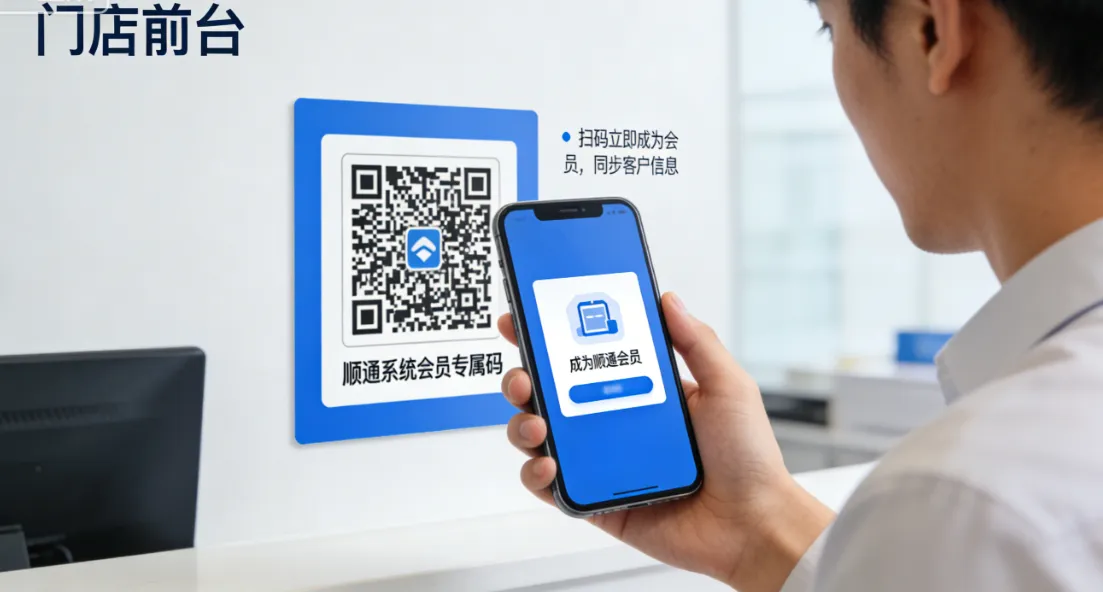
Cracking the pain points of non-standard follow-up: Standardized processes+intelligent reminders, building a solid defense line for customer retention. The system has a built-in standardized customer follow-up process, where sales personnel can quickly record follow-up content, customer needs, quotation information, etc. by scanning the code. It supports uploading in multiple forms such as text, images, and files. Follow up personnel can view the complete follow-up records with just one click, without the need for repeated communication. At the same time, the system supports custom follow-up plans, which can set key nodes such as customer follow-up cycles, renewal reminders, birthday wishes, etc., and automatically push reminders upon expiration to avoid customers being missed. In addition, the system supports customer hierarchical management, which can automatically classify customer levels based on dimensions such as customer transaction intention, consumption amount, and cooperation period, helping sales personnel focus on high-value customers, achieve refined follow-up, and reduce customer churn rate.
Cracking the pain points of customer asset privatization: Enterprise management and control to avoid the risk of loss. The system implements enterprise level control of customer assets, and all customer data registered by scanning the code belongs to the enterprise. Sales personnel only have corresponding permissions to view and follow up, and cannot export or delete customer information without authorization. When sales personnel resign, customer resource handover can be quickly completed through the system. New employees can easily take over all follow-up records and customer details with just one click, achieving seamless connection of customer follow-up and completely eliminating customer loss caused by personnel turnover, firmly safeguarding the core customer assets of the enterprise.
Cracking the pain point of data inefficiency: intelligent analysis empowers scientific decision-making. The system has a built-in multi-dimensional data analysis module, which eliminates the need for manual statistics and automatically generates core reports such as customer segmentation, follow-up conversion rate, repurchase rate, and customer acquisition channel effectiveness. These reports are presented through visual dashboards, allowing managers to grasp customer operational dynamics in real time. Whether it is comparing the cost-effectiveness of different customer acquisition channels or analyzing the behavioral preferences of high-value customers, accurate insights can be quickly output to help enterprises optimize marketing and promotion strategies, adjust follow-up plans, achieve data-driven refined operations, and maximize the value of every customer resource.
Compared to traditional customer management systems and similar products, the "Scan Code to Manage Customers" system of Shuntong Network is more in line with the actual operational needs of enterprises, highlighting three core advantages and balancing practicality and cost-effectiveness. One is that it is lightweight and easy to use, without the need for a professional IT team for operation and maintenance. Sales personnel and store employees can proficiently operate it after 10 minutes of training, adapting to the digital transformation needs of small and medium-sized enterprises with "low cost and fast landing"; The second is multi industry adaptation, which can flexibly adapt to various industries such as retail, catering, services, trade, exhibitions, etc. Whether it is enterprises that mainly acquire customers offline or enterprises that integrate online and offline operations, they can be accurately matched; The third is low-cost and high return, adopting SaaS cloud deployment mode, without the need for self built servers, annual subscription, and on-demand selection of functional modules. The initial investment is only 1/5 of traditional CRM systems, and it can be launched and used as early as one week, helping enterprises achieve digital upgrading of customer management at the lowest cost.
In the digital age, the core of customer management has shifted from "passive retention" to "active operation", and efficient customer management tools have become the key to breaking through growth bottlenecks for enterprises. Shuntong Network's new "Scan Code to Manage Customers" system solves complex pain points with minimalist operations and empowers customer assets throughout the entire process. It not only solves the current problems of customer dispersion, inefficient follow-up, and high churn rate in enterprises, but also provides solid support for long-term customer operation and decision-making. Whether it is small and medium-sized enterprises that want to achieve standardized management of customer resources, or large-scale enterprises that need to optimize customer operational efficiency and accumulate core assets, they can reconstruct customer management models through this system, reduce operating costs, enhance core competitiveness, firmly grasp customer resources in fierce market competition, and achieve long-term growth.