
Digital transformation and efficiency improvement, led by ERP manufacturing
In the wave of transformation and upgrading in the manufacturing industry, digitization has shifted from a "differentiation advantage" to a "survival bottom line", and efficiency improvement is the core demand for enterprises to break through growth bottlenecks and seize market opportunities. Currently, most manufacturing enterprises are facing pain points such as redundant production processes, prominent data silos, inefficient resource allocation, and lagging market response. Traditional management models are difficult to adapt to the trend of multi variety, small batch, and fast iteration production, and digital transformation has become the key to breaking through the situation. ERP system, as the core carrier of digital transformation in manufacturing industry, leads the way in promoting manufacturing enterprises to leap from "extensive operation" to "fine control" and achieve dual improvement of efficiency and value with the ability of full chain resource integration, full process control, and full data intelligent analysis.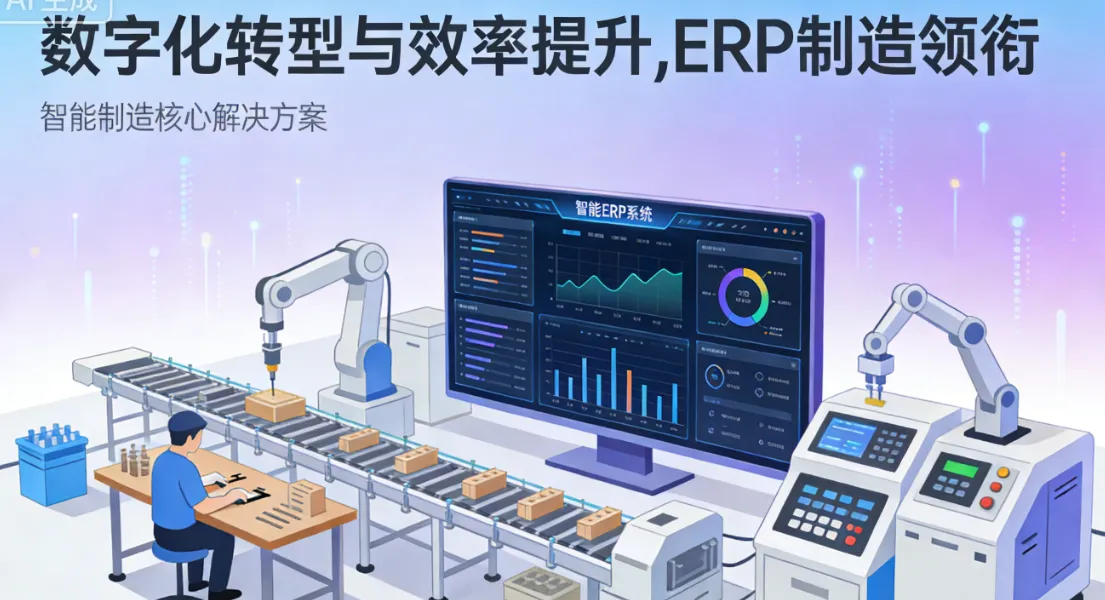
The core pain points of digital transformation in the manufacturing industry are essentially "data barriers, inefficient processes, and poor decision-making", while the core value of ERP is to break down barriers throughout the entire chain and lay a solid foundation for transformation. In traditional manufacturing enterprises, departments such as procurement, production, inventory, sales, and finance operate independently, with production data, material data, and order data stored separately. Manual transmission is inefficient and prone to errors, resulting in a disconnect between production plans and market demand, and an imbalance between material procurement and production progress. For example, the production department is unable to obtain real-time inventory material surplus, which can lead to work stoppages and material shortages; The sales department is unable to accurately grasp the production progress and synchronize delivery milestones with customers; The finance department relies on manual reconciliation, resulting in lagging cost accounting and difficulty in supporting pricing decisions. These pain points not only constrain efficiency improvement, but also hinder the implementation of digital transformation.
ERP breaks down information silos through data collaboration and builds a core hub for the digital transformation of the manufacturing industry. Different from the management tool of a single module, ERP system integrates the core data of the whole business chain of the manufacturing enterprise, and realizes the real-time flow and seamless connection of data in purchase, production, inventory, sales, finance and other links. Through a unified data standard and coding system, ERP will consolidate and integrate data scattered across departments, forming a globally visible digital management platform. Management personnel can access core data such as production progress, inventory levels, and order status in real time, achieving global control over enterprise operations. For example, mechanical manufacturing enterprises can synchronize production drawings, process parameters, material requirements, and other data to each workshop through ERP systems, ensuring precise connection in the production process; Electronic manufacturing enterprises can achieve full process data traceability such as component procurement, surface mount assembly, and finished product testing through ERP, greatly improving management transparency.
ERP leads efficiency improvement, with the core of solving the inefficient problems of traditional production and operation through process optimization and intelligent control. At the production management level, the ERP system is equipped with intelligent scheduling algorithms, which can automatically generate the optimal production plan based on order priority, equipment load, and material availability, clarify the task allocation, time nodes, and responsible persons of each process, and completely replace the tedious and inefficient traditional manual scheduling. During the production process, real-time data on process progress and equipment operation status is collected through functions such as scanning codes to report work progress and device networking. Once problems such as process delays or equipment failures occur, the system can automatically warn and assist management personnel in quickly allocating resources, troubleshooting bottlenecks, shortening order delivery cycles by 25% -40%, and improving production efficiency by more than 30%.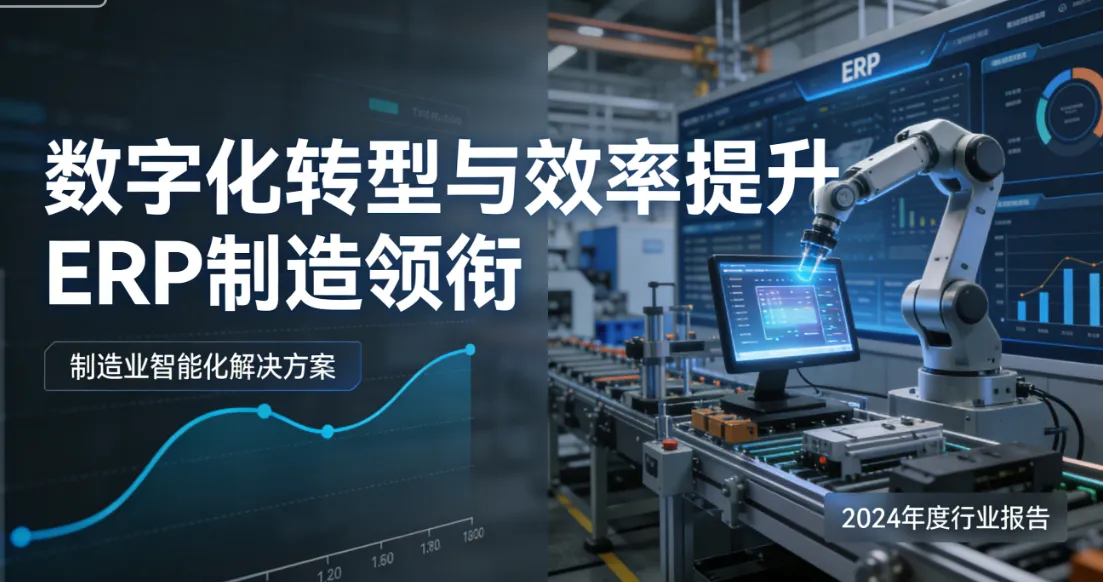
At the level of inventory and procurement management, the refined control capability of ERP effectively reduces resource waste and revitalizes capital flow. Manufacturing enterprises have complex material specifications, and traditional manual management is prone to inventory backlog or stockouts. However, ERP systems support multi-dimensional inventory control, which can be classified and managed according to material types, specifications, and uses. Real time inventory data is updated, safety stock thresholds are set, and automatic shortage warnings and intelligent reminders for stagnant inventory are achieved. At the same time, ERP links production and procurement data, automatically generates procurement requirements, accurately matches supplier resources, achieves synchronous procurement plans and production requirements, avoids blind procurement, reduces procurement costs by 10% -15%, shortens inventory turnover days by 30%, and effectively revitalizes enterprise funds.
The adaptability and scalability of ERP support the digital transformation and efficiency improvement of manufacturing enterprises of different scales and sub sectors, demonstrating its leading position. For large manufacturing enterprises, ERP can achieve cross workshop and cross regional global collaboration, integrate resources at the group level, optimize resource allocation, and support large-scale and diversified operations; For small and medium-sized manufacturing enterprises, lightweight ERP solutions can avoid high investment, focus on improving efficiency in core business processes, and help enterprises quickly achieve digital entry. In segmented fields, process manufacturing enterprises can optimize production line flow efficiency through ERP, discrete manufacturing enterprises can rely on ERP to achieve flexible control of multi variety production, and emerging manufacturing fields such as new energy and high-end equipment can connect with intelligent manufacturing equipment through ERP to promote deep integration of digitization and intelligence.
Currently, the digital transformation of the manufacturing industry has entered a deep water zone, and simple technological accumulation is difficult to achieve long-term development. ERP, as an integrated platform of "data+process+control", can not only promote efficiency improvement for enterprises, but also accumulate core data assets for enterprises, supporting advanced digital applications such as AI intelligent prediction and digital twins in the future. For example, through the production and market data accumulated by ERP, enterprises can accurately predict market demand, optimize production plans, achieve "production based on sales", and avoid the risk of production and sales imbalance; With the data analysis capability of ERP, the cost structure can be accurately disassembled, breakthroughs in cost reduction and efficiency improvement can be found, and the profitability level of enterprises can be improved.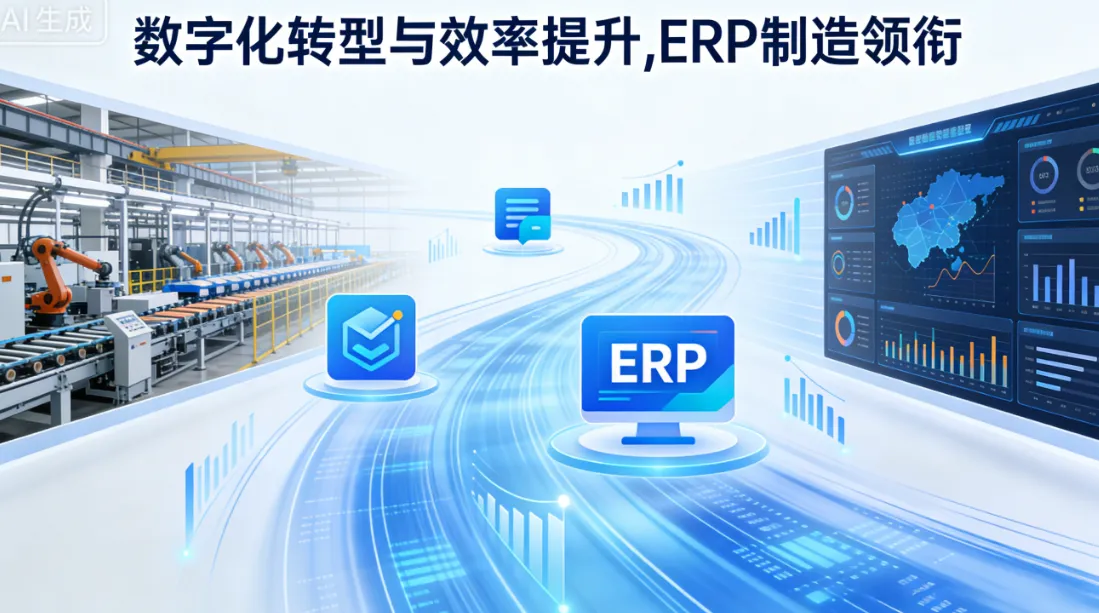
In summary, digital transformation is an inevitable choice for the high-quality development of the manufacturing industry, and efficiency improvement is the core goal of transformation. ERP, with its advantages of full chain data collaboration, full process intelligent control, and full scene adaptation and expansion, has become the core leading force in promoting the digital transformation of the manufacturing industry and achieving efficiency improvement. In the wave of digitalization, manufacturing enterprises can only rely on ERP systems to break through traditional management barriers, achieve data-driven, process optimization, and precise control, in order to break through growth bottlenecks in fierce market competition, achieve dual improvement in efficiency and value, build a solid foundation for digital transformation, and move towards a new stage of high-quality development.