
Introduction to ERP for Small and Medium sized Enterprises: How to Achieve Value Maximization with Minimum Cost
For small and medium-sized enterprises, digital transformation is not a "multiple-choice question", but a "survival question". However, the reality of limited funds, weak technology, and lack of talent has led many enterprises to fall into the dilemma of "high investment, slow effectiveness" when ERP is implemented - either blindly pursuing a "large and comprehensive" system, resulting in costs exceeding the budget but not using core functions; Either ignore their own needs and select wrong options, ultimately making ERP a mere decoration. In fact, the core logic of ERP entry for small and medium-sized enterprises is "precise matching, streamlined implementation, and continuous optimization". There is no need to pursue high-end configurations, just focus on core needs, control key links, and achieve maximum value with minimal cost, laying a solid foundation for digital transformation.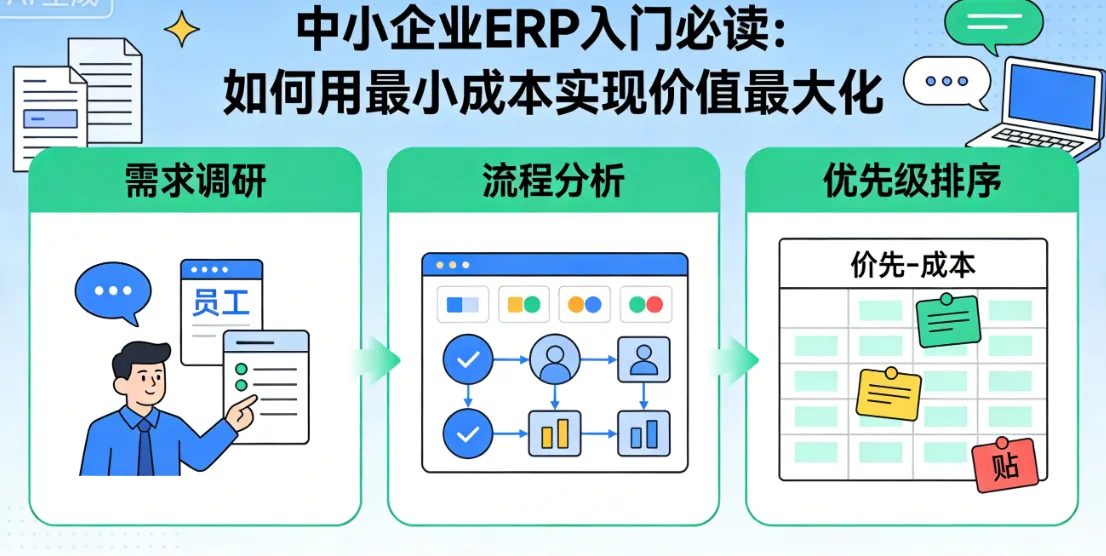
The first and most crucial step in implementing ERP for small and medium-sized enterprises isAccurately sorting out core requirements——This is a prerequisite for controlling costs and avoiding waste. The misconception of many small and medium-sized enterprises is to blindly follow the ERP requirements of large enterprises and pursue full business and process coverage, ultimately leading to complex systems and cumbersome operations. This not only increases procurement and implementation costs, but also increases the difficulty of employee learning and operation. The correct approach is to base on the characteristics of the industry and operational pain points, abandon "non essential functions", and focus on needs that can solve core problems and bring direct value.
When sorting out requirements, a small team composed of core position employees (procurement, production, finance, sales) and management can be formed to focus on the three core goals of "cost reduction, efficiency improvement, and risk control", and to sort out the core pain points of existing businesses. For example, small and medium-sized manufacturing enterprises can prioritize production scheduling, material control, inventory warning, and other needs to solve problems such as work stoppages and material waste; Retail small and medium-sized enterprises can focus on functions such as order management, inventory synchronization, and simple financial accounting to break down barriers to omnichannel operations; Service oriented small and medium-sized enterprises can focus on modules such as customer management, work order follow-up, and revenue statistics to improve service efficiency and customer retention. At the same time, it is necessary to clarify the boundary between "current essential needs" and "future expandable needs", prioritize the implementation of essential functions, avoid increasing upfront costs due to reserving too many expansion functions, and gradually upgrade after the enterprise grows and expands.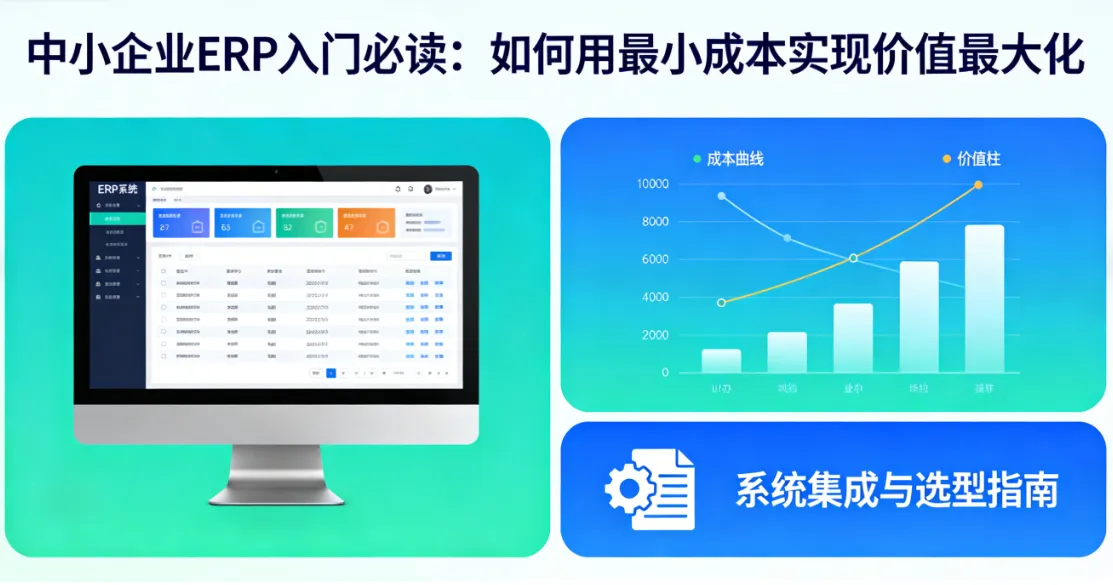
After clarifying the requirements, the second step isScientific selection——Choosing the right ERP system for adaptation is equivalent to half the success, and it is also the core link to achieving "minimum cost". When selecting small and medium-sized enterprises, there is no need to be fixated on well-known brands or high-end customized systems. Instead, focus on the four characteristics of "lightweight, high adaptability, low cost, and easy operation and maintenance", and prioritize choosing solutions that are suitable for their own industry and have high cost-effectiveness.
When selecting, priority should be given to three types of ERP solutions, balancing cost and practicality. One is lightweight SaaS ERP, which does not require local deployment and is paid annually (subscription based). It has low initial investment and does not need to bear the costs of server procurement, data center construction, etc. Moreover, vendors are responsible for system upgrades and operations, greatly reducing the technical pressure on small and medium-sized enterprises, making it suitable for startups and small businesses; The second is industry-specific ERP, focusing on a specific sub industry (such as footwear, hardware, catering), with functions that fit the pain points of the industry, no need for additional customization, relatively affordable prices, and short implementation cycles, which can quickly achieve results; The third is modular ERP, which allows for the selection of modules as needed. In the early stages, only core modules are purchased, and in the later stages, they are gradually added according to business development to avoid excessive one-time investment. At the same time, it is necessary to focus on examining the service capabilities of manufacturers, and give priority to selecting manufacturers with similar enterprise implementation cases, who can provide one-on-one guidance and after-sales support, in order to avoid problems that may arise in the later stage due to inadequate service and increase additional operation and maintenance costs. In addition, to avoid the "low price trap", in addition to software procurement costs, implicit costs such as implementation fees, training fees, and post operation and maintenance fees need to be accounted for to ensure overall cost control.
The third step isSimplify implementation——Reject the "big and comprehensive" implementation model, focus on quickly launching core functions, and reduce implementation costs and cycles. Small and medium-sized enterprises have limited funds and manpower, and cannot undertake long-term and complex implementation processes. Therefore, when implementing, they need to follow the principles of "simplification, efficiency, and implementation", avoiding excessive optimization of processes and pursuing perfect configuration.
During the implementation process, a "phased implementation" strategy can be adopted, prioritizing the launch of core modules (such as finance+inventory, orders+inventory), completing the digital transformation of basic business, and expanding the modules after employees adapt to the system and business gradually standardize. At the same time, simplifying business processes does not require forcibly copying complex manual processes into the system. Instead, by combining the functional characteristics of ERP, simple and efficient standardized processes are optimized, which not only reduces implementation difficulty but also enhances employee acceptance. In addition, by leveraging the implementation resources of manufacturers, internal manpower investment can be reduced, and targeted employee training can be carried out - without the need for comprehensive and in-depth training, focusing on training core position employees in basic operations to ensure that employees can quickly get started and avoid system malfunction caused by high training costs and unskilled operation of employees.
The fourth step isLong term operation and optimization——Explore the maximum value of existing systems, avoid "going live and idle", and achieve maximum value. After the implementation of ERP in many small and medium-sized enterprises, only basic functions are used, and the system value is not fully realized, which is equivalent to wasting the initial investment. At the same time, improper operation and maintenance can also increase later costs, so it is necessary to do good maintenance and optimization work to ensure that ERP continues to create value for the enterprise.
In terms of operation and maintenance, small and medium-sized enterprises do not need to form a professional IT operation and maintenance team. They can arrange 1-2 core position employees to take on the role of daily operation guidance, simple troubleshooting, and complex problem coordination with manufacturers' after-sales service, greatly reducing operation and maintenance costs. At the same time, regularly review employee feedback, optimize system operation processes, improve employee efficiency, and avoid employee resistance and system idle caused by cumbersome operations. In terms of optimization, focus on the deep application of core functions and explore the data value of the system - for example, optimize replenishment strategies through inventory data to reduce inventory costs; Analyze customer preferences through order data and develop precise marketing strategies; Identify cost loopholes through financial data and enhance profitability. In addition, the system can be gradually upgraded or modules can be added according to the development of the enterprise's business to avoid duplicate procurement and ensure the continuous release of the value of the initial investment.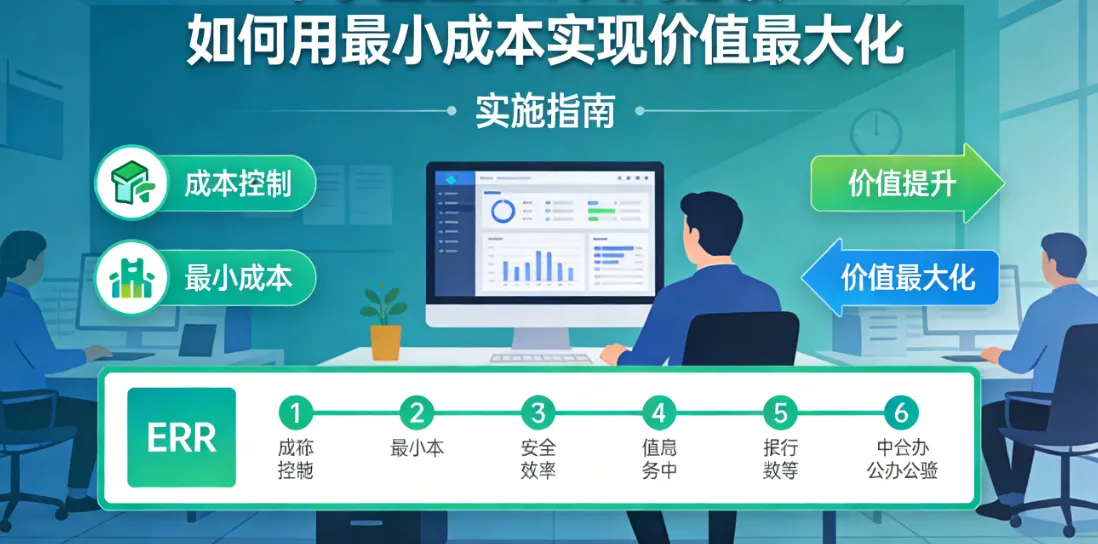
Finally, small and medium-sized enterprises need to abandon the misconception that "ERP is omnipotent". The core value of ERP is "assisting management and improving efficiency", and its implementation effect not only depends on the system itself, but also on the execution strength and process standards of the enterprise. In the process of getting started with ERP, it is important to focus on "full participation", enhance employees' digital awareness, and encourage them to actively adapt to the system; At the same time, establish a simple assessment mechanism to urge employees to use the system in a standardized manner, ensuring the accuracy and completeness of system data - the more accurate the data, the more the value of ERP can be fully realized, in order to truly achieve "minimum cost, maximum value".
Conclusion: For beginners in ERP for small and medium-sized enterprises, there is no need to pursue a "one-step solution". The core is "precise matching, streamlined implementation, and continuous optimization". Based on our core needs, selecting the right lightweight system, focusing on the rapid implementation of essential functions, and doing a good job in long-term operation and value mining, we can achieve business process standardization, operational efficiency improvement, and cost control enhancement with the help of ERP at the lowest cost, opening up shortcuts for enterprise digital transformation and building core competitiveness in fierce market competition.