
ERP system assists in the digital transformation of supply chain for footwear and apparel enterprises: reducing costs, increasing efficiency, and enhancing competitiveness
In today's rapidly changing fashion trends and increasingly personalized consumer demands, the footwear and apparel industry is experiencing unprecedented supply chain challenges. The time pressure of seasonal changes, the complexity of managing massive inventory units, the flexibility requirements of fast response supply chains, and the operational difficulties of omnichannel integration collectively constitute the eternal game of "speed and inventory" unique to the industry. In this context, the digital transformation of the supply chain centered on enterprise resource planning systems is no longer a viable topic, but a key strategic measure that determines the survival and development of enterprises. The essence of this transformation is throughdata-driven和Intelligent collaborationReshaping the entire value chain from design to delivery, while reducing costs and improving efficiency, building market competitiveness that is difficult to replicate.
Traditional dilemma: the eternal game between speed and inventory
Before digital transformation, many footwear and apparel companies relied on experience and manual labor for their supply chain management, presenting typical efficiency bottlenecks. Data fragmentation in each link: the design department is disconnected from market demand, procurement and production plans are not synchronized, store sales data feedback is lagging, and inventory distribution is like a ship sailing in the mist. A new product often requires a long cycle from planning to launch, while the market hot topic cycle may only be a few weeks. When potential explosive products appear, the supply chain cannot respond quickly and misses sales opportunities; When the product is unsold, the accumulated inventory continues to devour the company's profits. This "push" supply chain based on estimation and experience is becoming increasingly cumbersome and fragile in today's market environment that pursues agility and precision.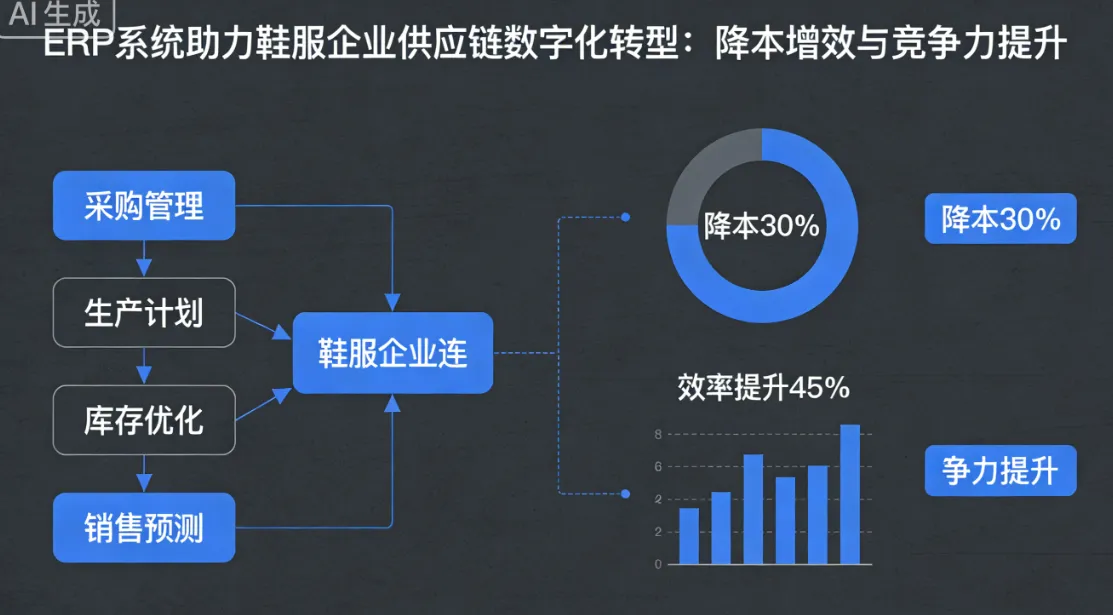
Transformation Core: Building a Smart and Agile Digital Neural Center
The introduction of modern enterprise resource planning systems provides a systematic framework for solving the above-mentioned difficulties. It is not simply digitizing offline processes, but aims to build a unified, real-time, and intelligent digital hub to drive fundamental transformation of the footwear and apparel supply chain.
Firstly, the system is committed to achievingFull link visualization and integrated collaborationIt is like connecting the "Ren Du Er Mai" of enterprises, linking all links from product planning, material procurement, production and manufacturing, warehousing and logistics to terminal retail. All business departments work on a unified platform, sharing unique and accurate real-time data. This enables design inspiration to be quickly transformed into specific material requirements, production progress can trigger intelligent replenishment suggestions in real time, and every store transaction data can be fed back in real-time, becoming a precise signal for adjusting global operational strategies.
Secondly, the key to transformation lies in establishingData driven precision prediction and intelligent planning capabilitiesWith the help of modern systems that integrate artificial intelligence and machine learning algorithms, enterprises can go beyond empirical judgment. The system can comprehensively analyze a vast amount of historical sales data, real-time trends, regional weather changes, and even public sentiment on social media to generate highly granular demand forecasts. Based on this, enterprises are able to develop scientifically accurate procurement, production, and distribution plans, minimizing blindness from the source and promoting the transformation of the supply chain from traditional "push" to a "pull" virtuous cycle driven by market demand.
Finally, the system empowers enterprises toDynamic inventory optimization and omnichannel flexible fulfillmentBy establishing a global inventory view, the inventory of all warehouses and stores online and offline is no longer isolated information islands, but forms a visible, sellable, and intelligently transferable "elastic inventory pool". The system can automatically calculate and execute the optimal inventory allocation and order fulfillment plan based on real-time sales dynamics, geographic location, logistics costs, and delivery commitments. Whether it is supporting "online ordering and rapid delivery in stores" or achieving "in store try on and off-site stock transfer", they have become routine operations to improve customer experience and operational efficiency, converting static inventory costs into efficient working capital.
Value realization: from cost savings to reshaping competitiveness
Through the deep transformation driven by the enterprise resource planning system, the returns obtained by footwear and apparel enterprises are comprehensive and far-reaching.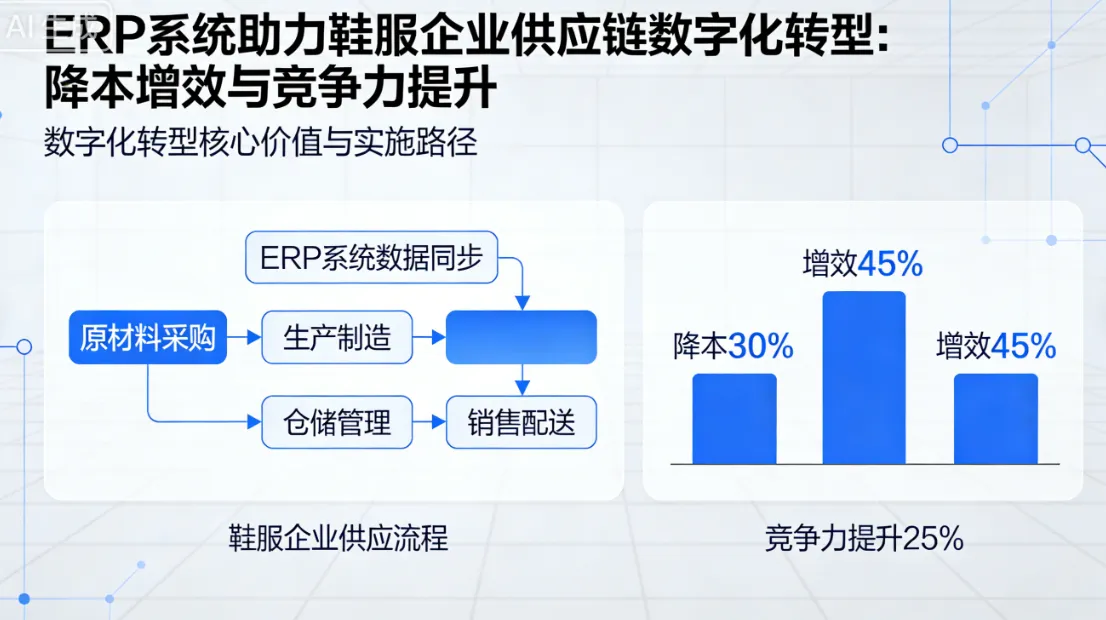
The most direct manifestation is at the operational levelcost reduction and efficiency improvementAccurate demand forecasting and dynamic inventory management can significantly reduce overall inventory levels, accelerate capital turnover, and reduce significant impairment losses caused by out of season goods. The automation and collaboration of processes liberate employees from tedious and repetitive manual operations, greatly improving the efficiency and accuracy of processing from procurement to settlement. At the same time, through efficient online collaboration with suppliers, the launch cycle of new products has been astonishingly compressed, allowing companies to respond and even lead market trends at an unprecedented speed.
The deeper value lies inSystematic reshaping of core competitiveness of enterprisesThis is reflected in creating the ultimate omnichannel customer experience, meeting consumers' expectations for a seamless shopping journey; Cultivate a data-driven decision-making culture within the organization, making agility the gene of the enterprise; Building a more resilient supply chain network, managing risks in a transparent and intelligent manner, and accommodating external uncertainties; Ultimately, it lays a solid foundation for exploring innovative business models such as subscription services, personalized customization, and sustainable fashion, and opens up new opportunities for value growth.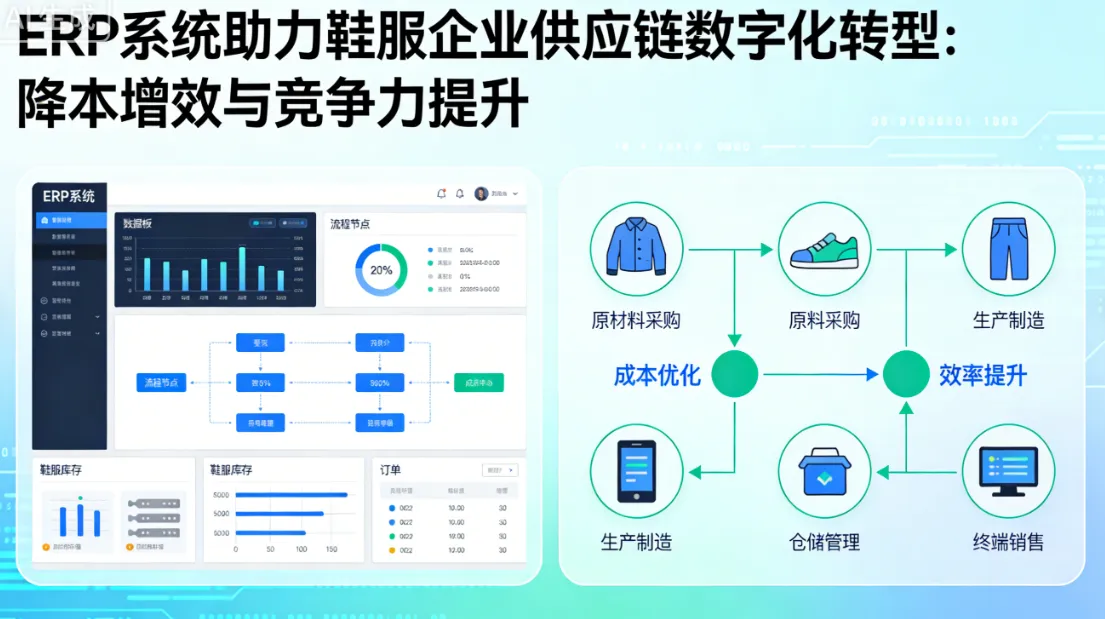
Towards the Future: A Continuous Evolutionary Journey
Successful digital transformation is never an overnight endpoint, but a continuous evolutionary journey. It begins with enterprises consolidating a unified and clean master data foundation, selecting technology partners who can deeply understand the particularities of the industry. The key is to focus on core scenarios that can quickly create visible value, using points to lead the way, while bravely promoting the matching transformation of organizational culture and talent structure.
For footwear and apparel companies aspiring for the future, the digital supply chain built around an intelligent enterprise resource planning system has evolved from a backend support function to a front-end competitive engine. It is no longer just about cost and efficiency, but also about whether a company can gain profound customer insights, win the market quickly, and create new business value in a rapidly changing world. This transformation will ultimately determine who can lead the trend and stand firm in the future fashion landscape.