
ERP and Big Data Integration: Real time Data Analysis and Visualization Drive Enterprise Intelligent Decision Making
In an era where data is hailed as the "new oil," enterprise resource planning systems are undergoing a profound paradigm shift. It is no longer just a backend system for recording transactions and solidifying processes, but has evolved into a system that can deeply integrate with big data technologyReal time perception, intelligent analysis, and intuitive presentationThe 'smart brain' of enterprise operation panorama. The core of this integration lies in utilizing real-time data analysis and dynamic visualization technology to transform massive and multi-source data assets into clear insights and action instructions that drive intelligent decision-making in enterprises, fundamentally reshaping the decision-making mode and competitiveness of enterprises.
The essence of fusion: a paradigm shift from process recording to data-driven
The core value of traditional ERP lies in process standardization and information integration, and its data is mostly structured transaction data recorded afterwards. And big data technology has brought the ability to process massive, high-speed, and diverse (including unstructured data) information. The integration of the two marks the transition of ERP systems from "process optimization tools" to "data value mining platforms". The system can now absorb and process real-time production sensor data from IoT devices, market sentiment from social media, location information from logistics GPS, and operation data from machine logs. This ability greatly compresses the temporal and spatial scale of enterprise decision-making: from relying on monthly and weekly reports for post review, to relying on minute or even second level real-time dynamics for forward-looking intervention and synchronous optimization.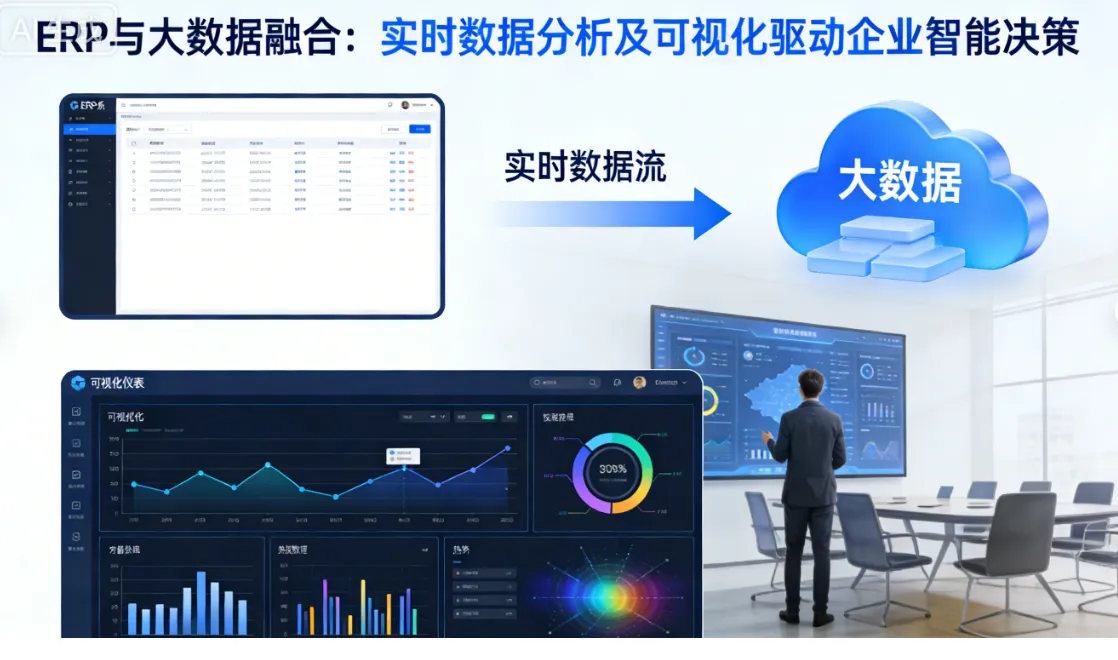
Technical architecture: Building an intelligent data center that integrates flow and batch
The implementation of this transformation relies on the reconstruction of the underlying technical architecture. Modern intelligent ERP systems are building a "flow batch integrated" data processing hub.
On the "flow" side, by integrating a flow computing engine, the system can process and analyze real-time data streams continuously generated, such as production line sensor data, online transaction flow, and warehouse sorting dynamics, in real-time. For example, at the moment each product is taken offline, its quality inspection data is analyzed in real-time. Once abnormal patterns are detected, the system can immediately alert and pause the relevant workstations, achieving "in-process intervention" for quality control rather than "post disposal".
On the "batch" side, the system utilizes the powerful computing power of big data platforms to deeply mine and train models on the accumulated historical data. This includes using machine learning algorithms to predict equipment lifespan, discovering hidden risks in the supply chain through correlation analysis, or building customer segmentation models to predict purchasing tendencies. The intelligent models generated by batch processing will be continuously injected into the real-time stream processing flow, making their analysis more predictive. Ultimately, all integrated and analyzed real-time and historical data is transformed into interactive cockpits, dynamic charts, and intelligent reports through a powerful data visualization engine, providing decision-makers at different levels with clear decision support that matches their responsibilities.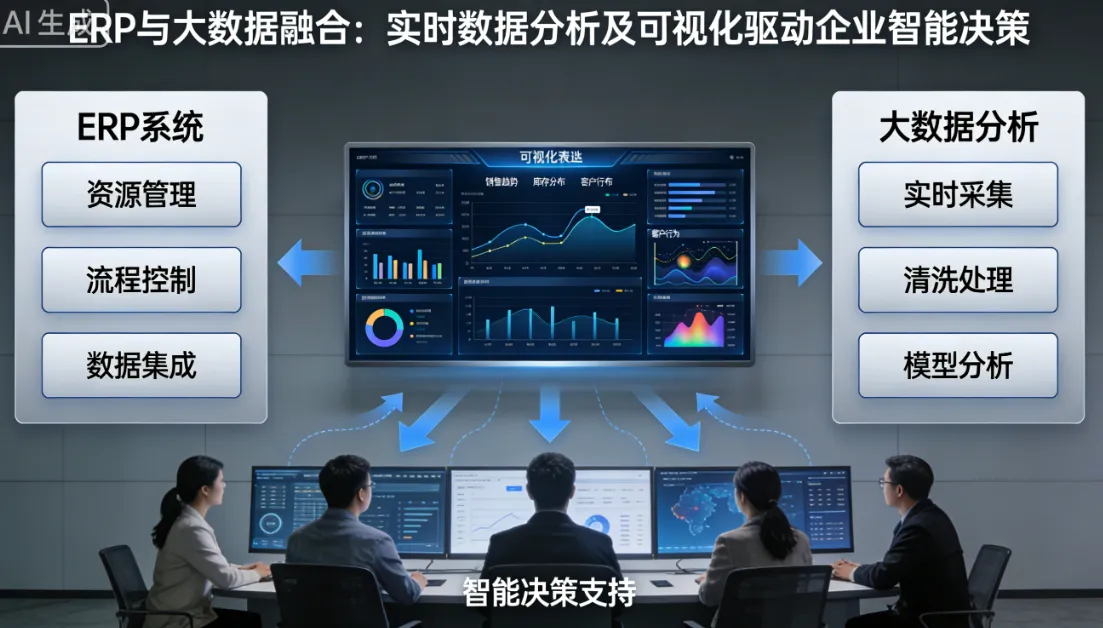
Decision Empowerment: Visual Insights Triggering Precise Actions
The combination of real-time data analysis and visualization directly drives intelligent decision-making in critical business scenarios, creating unprecedented value.
In the field of supply chain management, visualizing the global supply chain map is no longer a static image, but a dynamic system that can display the location, expected arrival time, cost consumption, and associated order status of each batch of materials. The big data algorithm evaluates in real-time the impact of port congestion, weather events, or geopolitical risks on multiple alternative routes, and visualizes and pushes the optimal emergency adjustment plan to managers, transforming supply chain decision-making from passive response to active navigation.
At the production and operation level, the factory's digital twin dashboard has become the standard interface. It is no longer a simple 3D model, but a visual interactive interface that aggregates multiple data such as real-time energy consumption, equipment comprehensive efficiency, personnel flow, and work in progress inventory. Managers can instantly locate bottleneck processes that affect overall equipment efficiency through drag and drop, and the system will simulate different optimization solutions based on historical big data (such as adjusting production scheduling, restructuring teams) and their potential efficiency improvement predictions, making complex decisions intuitive and efficient.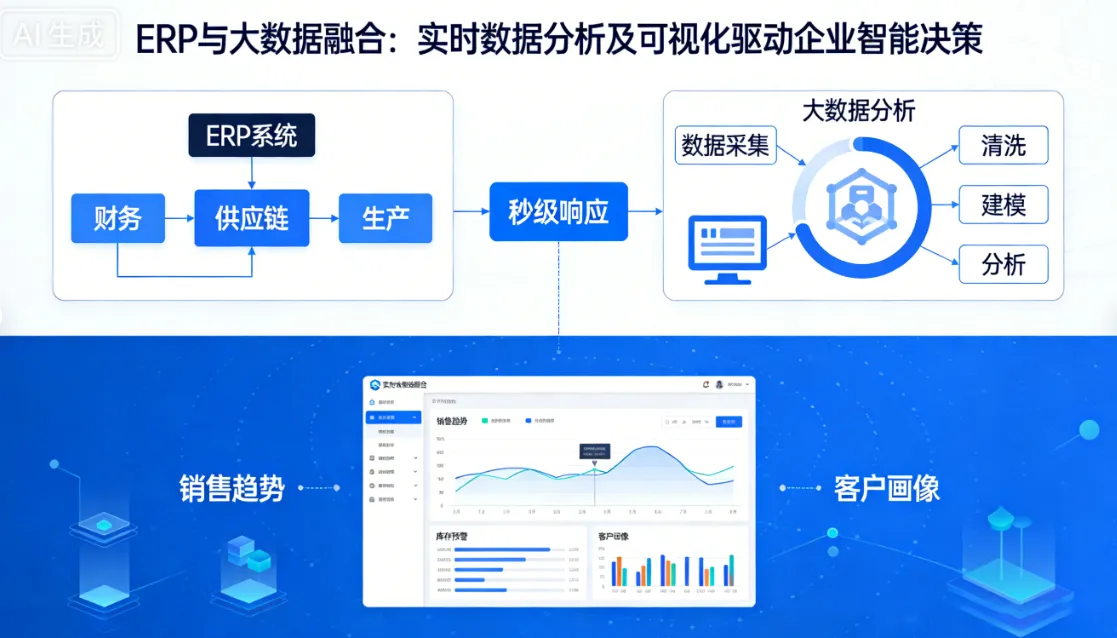
In terms of customer and market insights, enterprises can build visual dashboards that integrate real-time sales data, customer service ticket sentiment analysis, social media hotspots, and competitor dynamics. The marketing department can intuitively see the real-time change curve of customer conversion rates and the hot word cloud map of public opinion feedback in various regions after a new marketing campaign is launched, so as to judge the effectiveness of the campaign within a few hours and decide whether to increase investment resources, achieving agile optimization of marketing strategies.
Future outlook: Towards autonomous decision-making and ecological synergy
Looking ahead, the integration of ERP and big data will evolve towards a more intelligent and autonomous direction. The current "visual insights assisted decision-making" will gradually move towards "automated decision execution based on preset rules". For example, when the visualization system predicts that the price of a certain raw material will continue to rise within the next 72 hours and the confidence level exceeds a threshold, it may automatically obtain authorization to execute procurement instructions within the preset budget and quantity range.
Furthermore, future systems will break through the boundaries of enterprises and become collaborative decision-making nodes in the industrial ecosystem. Under the premise of ensuring data privacy and ownership through technologies such as blockchain, the ERP system of core enterprises can securely exchange and jointly analyze data with upstream and downstream partner systems. Visual dashboards will no longer be limited to within the enterprise, but will be able to present real-time health, capacity load, and risk heat maps of the entire supply chain network, driving collaborative prediction and collective optimization at the ecological level, achieving a leap from enterprise intelligence to collective intelligence.
Of course, this deep integration also puts higher demands on the data governance capabilities, cross disciplinary talent reserves, and organizational decision-making culture of enterprises. However, the trend is already clear: when ERP systems successfully integrate big data, real-time analysis, and visualization technologies, it lights up the beacon for enterprises towards a data-driven, real-time intelligent future. Decision making will become faster, more precise, and more confident as a result.