
Data Mining in the Shoe and Clothing Industry: A Comprehensive Analysis of Value Challenges and Precision Marketing Applications
In the eternal game of inventory and speed, the footwear and apparel industry is shifting from a "fashion gamble" based on intuition and experience to a "precision calculation" based on data and algorithms. Data mining, as a core technology for transforming massive and diverse raw information into business insights, has become the nerve center for leading brands to build differentiated competitive advantages. However, this transformation is not a smooth road, as it faces both industry specific challenges and enormous value in driving precision marketing and even reshaping the entire value chain.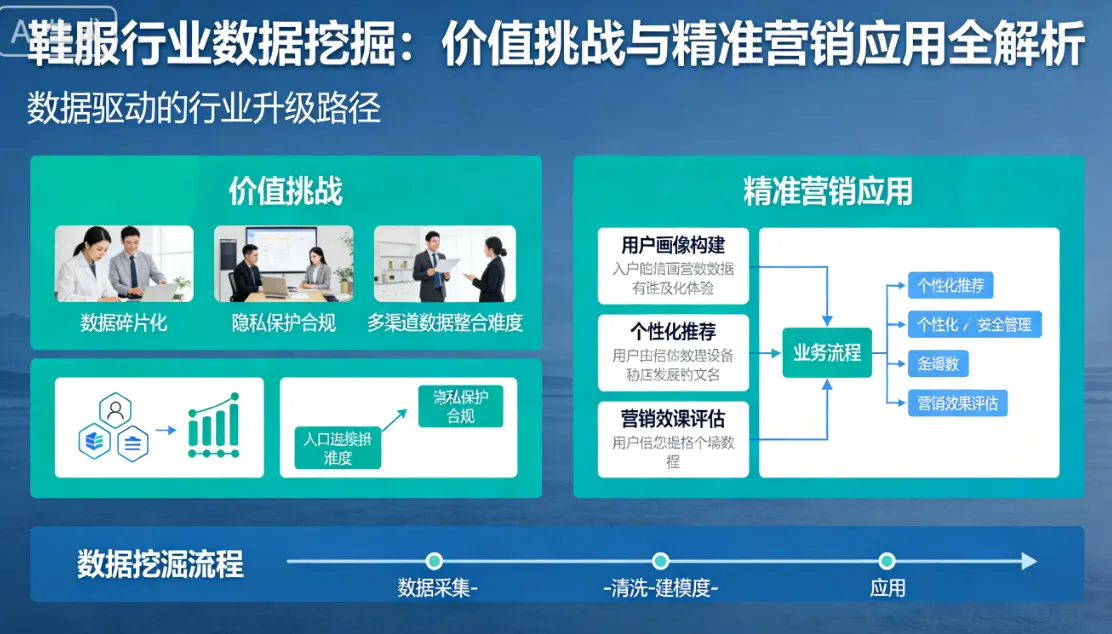
Core challenge: Paradox of "richness" and "barrenness" of data
Shoe and clothing companies seem to be in the ocean of data - from online browsing clicks, search favorites, to offline store entry trajectories and try on records, to material flow and production progress on the supply chain side. However, transforming this data into actionable insights faces unique and complex challenges:
-
The dilemma of data silos and integrationData often sleeps in dispersed systems. The sales data of e-commerce platforms, POS transaction data of stores, information of membership systems, social media interaction data, and supply chain data in ERP/WMS are disconnected from each other. The behavior path of a consumer browsing online, trying on clothes offline, and ultimately purchasing at a discount store on another platform cannot be fully characterized due to data barriers, resulting in a fragmented understanding of the consumer.
-
The timeliness of data and the rapid decay of fashionFashion trends are fleeting, and the value of data has strong temporal decay. The sales data of last year's best-selling products has limited guiding significance for this year's spring new products. Data mining models must be able to respond quickly and process real-time or near real time data streams (such as search buzzwords in the past 72 hours, interactive heat in live streaming rooms) to capture emerging trends, which places high demands on the agility of data processing techniques and analysis processes.
-
Low value density of unstructured dataThe data that best reflects trends and consumer sentiment in the industry - social media images, short video content, fashion show reports, user review texts - is precisely unstructured. Identifying popular colors and silhouettes from massive images, and mining subtle complaints about fabrics and patterns from comment texts, requires mature computer vision and natural language processing technologies, with high technical barriers and computational costs.
-
Small data scenarios and cold start challengesFor new products or niche styles, historical sales data is scarce or even zero (i.e. the "small data" problem), and traditional prediction models based on historical sales are ineffective here. How to use limited information such as style data, designer style tags, and early seed user feedback for accurate initial prediction and marketing is a major challenge in data mining.
Value Creation: From General Insights to Precise Marketing with 'One Person, One Strategy'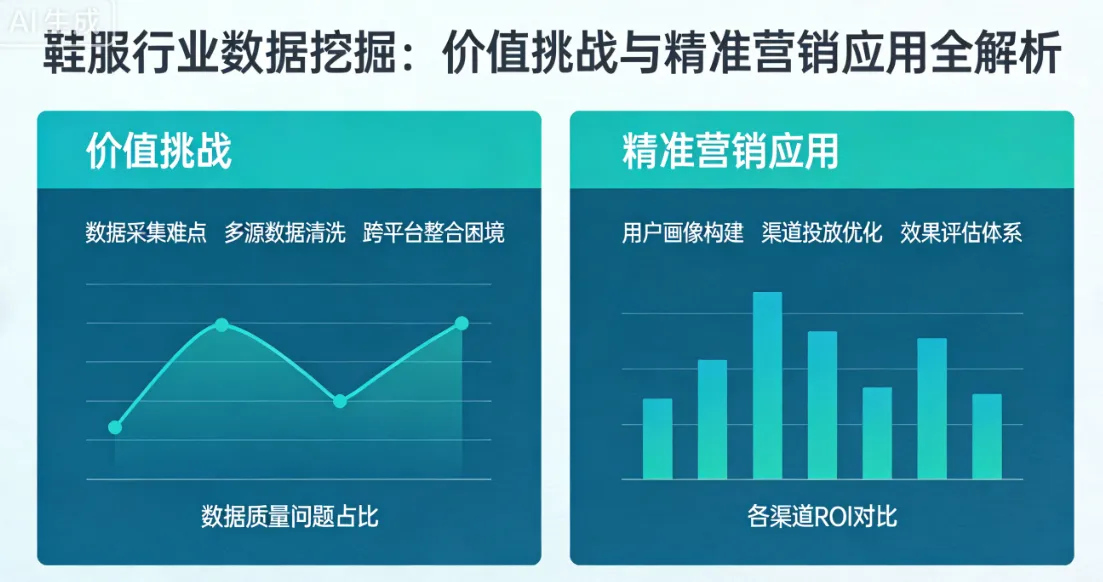
After overcoming the above challenges, the value released by data mining in the field of precision marketing of shoes and clothing is systematic and revolutionary, and its application runs through the consumer journey:
1. Consumer Insight and Dynamic Grouping: Beyond Traditional Labels
By integrating and analyzing diverse data from omnichannel transactions, browsing, social interactions, and geographic locations, brands can build dynamically updated360 degree customer profileThe clustering dimension deepens from traditional demographic (age, gender) and RFM (recent consumption, frequency, amount) models toStyle preference(such as "street trend followers", "minimalist commuting enthusiasts")Price sensitivity 、Shopping Scene(such as "self wearing procurement", "gift purchase") andValue proposition identification(For example, environmentally friendly customers who focus on sustainable materials). This allows marketing information to be upgraded from a "one size fits all" broadcast to a precise dialogue of "one size fits all".
2. Intelligent matching and personalized recommendation of products: connecting "people" and "goods"
Based on a deep understanding of 'people', data mining can achieve intelligent matching of 'goods'. This is not just a related recommendation of 'the person who bought this top also bought that pair of pants', but a more advanced one:
-
Style matching recommendationBased on the fashion knowledge graph and user historical preferences, recommend bottoms, shoes, and accessories that match the style of a newly purchased shirt to increase its association rate.
-
Cross scenario product discoveryFor a running enthusiast who has just completed a marathon, not only are running shoes recommended, but also sports and leisure clothing suitable for daily wear may be recommended based on their lifestyle data.
-
New product cold start accelerationAssociate the design elements of new products (such as color, pattern, material) with customer groups who have similar popular products and preferences in history, achieve accurate early targeted advertising, and quickly verify market response.
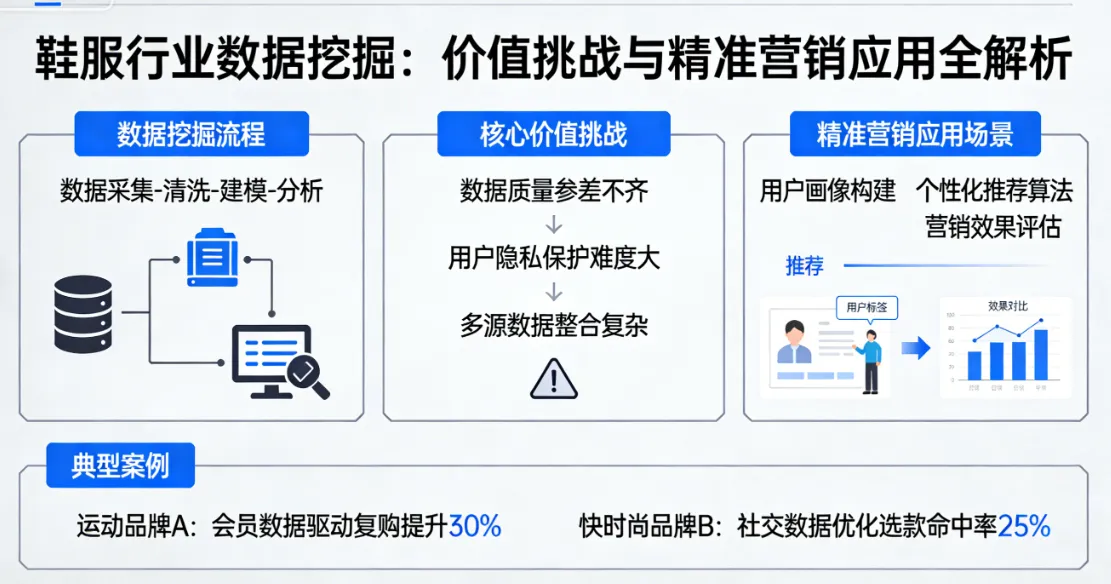
3. Omnichannel marketing optimization and touchpoint efficiency improvement
Data mining has shifted the allocation of marketing resources from extensive to scientific:
-
Channel effect attributionQuantify the true contribution of each marketing touchpoint (splash screen ads, KOL content, search keywords, store activities) in the final conversion path through a complex attribution model, in order to optimize budget allocation.
-
Predictive marketingPredicting future shopping needs or churn risks based on user behavior sequences. For example, identifying users who have not repurchased for a long time but have been high-value customers, automatically triggering personalized recall care activities (such as exclusive discounts or new product previews).
-
Content Creative OptimizationAnalyze the interaction data of different customer groups on marketing content (copy, visual style, video rhythm), automatically generate or select the most attractive creative materials for specific groups, and improve click through rates and conversion rates.
4. Reverse driven products and supply chain
The ultimate value of precision marketing is to form a closed loop of "market feedback → product decision-making". By mining popular styles on social media, improvement demands in user reviews, and the growth trend of search keywords across various channels, data can be used toDirect Feedback Product Planning (MD)Guide designers and buyer teams to determine which elements should be strengthened, which styles should be iterated, and even predict the approximate demand scale in the next season's product development, in order to achieve more accurate initial procurement and production arrangements and reduce inventory risks from the source.
Implementation Path: Building Data Centered Organizational Capability
To realize the value of data mining, footwear and apparel companies need to adopt a pragmatic approach:
-
Establish a solid data foundationPrioritize promoting the interconnectivity of key systems and establishing a unified master data (commodity, member) standard, which is the cornerstone of all advanced analytics.
-
Scene driven, take small steps and run quicklyDon't pursue a 'big data platform' that can be achieved overnight. Starting from a clear business scenario (such as "improving member repurchase rate" or "optimizing new product first order conversion"), form a cross departmental (business+IT+data analysis) small team to quickly verify value.
-
Technology integration and talent developmentActively introducing mature AI cloud services to process image and text analysis, internally cultivating "translation oriented" talents who understand both business and data, and building a bridge between technology and business value.
-
cultural transformationPromote the transformation of decision-making culture from "empiricism" to "data-driven", encourage business departments to propose hypotheses, conduct testing, and measure results based on data insights.
Conclusion
For the footwear and apparel industry, data mining is no longer an optional tool for icing on the cake, but a core survival skill for achieving breakthroughs in the red ocean competition. It is deconstructing the traditional linear process of "design production sales" and reshaping it into a system that starts with real-time consumer demand data, drives precision marketing, agile product development, and flexible supply chainsDynamic intelligent loopEnterprises that can take the lead in breaking through the challenges of data integration and application, transforming fragmented information into global business insights, will not only sell products, but also weave unique personalized fashion stories for every consumer, thus winning future markets and loyalty.