
The operation process of manufacturing ERP management system
In the complex and precise operational landscape of manufacturing, the enterprise resource planning system is like a highly collaborative digital central nervous system. It is not a stack of isolated functions, but a closed-loop system that connects core elements such as orders, materials, equipment, manpower, and funds, and drives their orderly flow. Understanding its operational process is the core logic of how modern manufacturing enterprises transform customer needs into tangible products and achieve optimal resource allocation and precise value accounting in this process. This process begins in the market and ends in value, forming a continuously rotating and optimized business flywheel.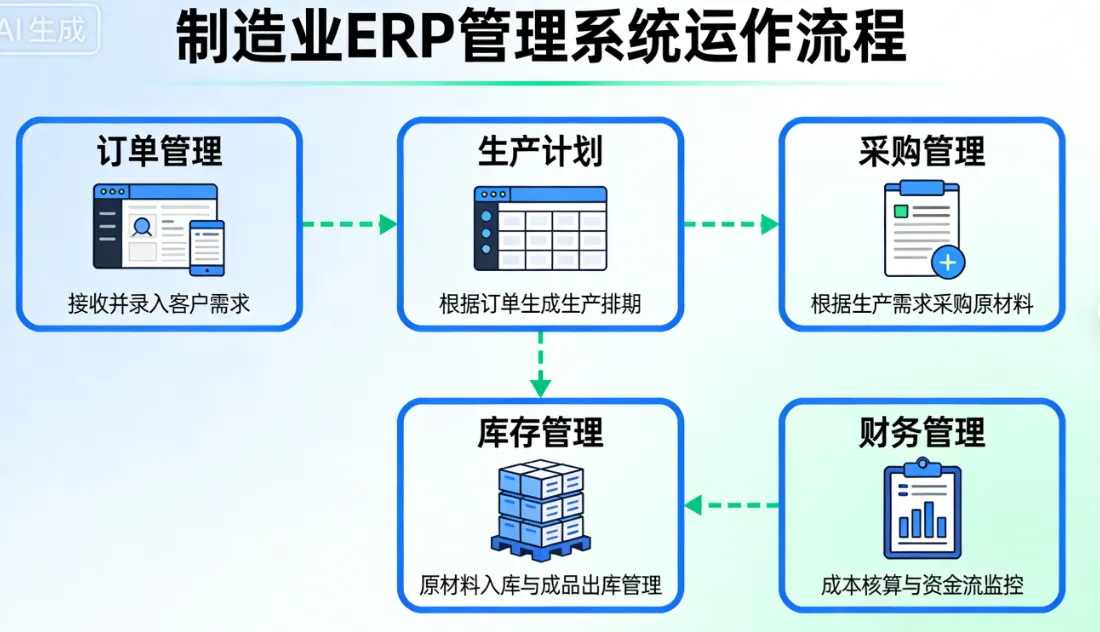
The initiation and anchor point of the process lies in sales and order management.When a customer order (or market forecast demand) enters the system, it triggers the switch of the entire manufacturing engine. This is not only a simple transaction record, but also a general outline for all subsequent activities. The order carries the specific requirements of the customer for product specifications, quantity, and delivery time. The system will conduct a real-time check of the promised quantity, which means quickly calculating and promising a reliable delivery date based on existing inventory, materials in transit, and existing production load. At the same time, order information will be directly converted into the source basis for subsequent production and procurement, ensuring lossless transmission of information from the market to the execution end, fundamentally avoiding misunderstandings and delays in traditional communication modes.
Immediately after,The planning layer becomes the brain that commands the overall situationConduct precise deduction. Based on orders and forecasts, the system first runs the main production plan to answer the strategic question of "when to produce how many final products". Subsequently, the material requirement planning engine was launched, which unfolded layer by layer based on the product structure list and calculated the precise demand quantity and required time for self manufactured and purchased parts. This process "explodes" the finished product plan into thousands of raw material and component demands, while simultaneously considering existing inventory, in transit orders, and safety stock, ultimately generating clear production proposal work orders and procurement proposal plans. Advanced scheduling further arranges specific production lines, work centers, and time windows for each work order under the constraint of limited production capacity, striving to achieve the best match of equipment, manpower, and materials in the time dimension and maximize production efficiency.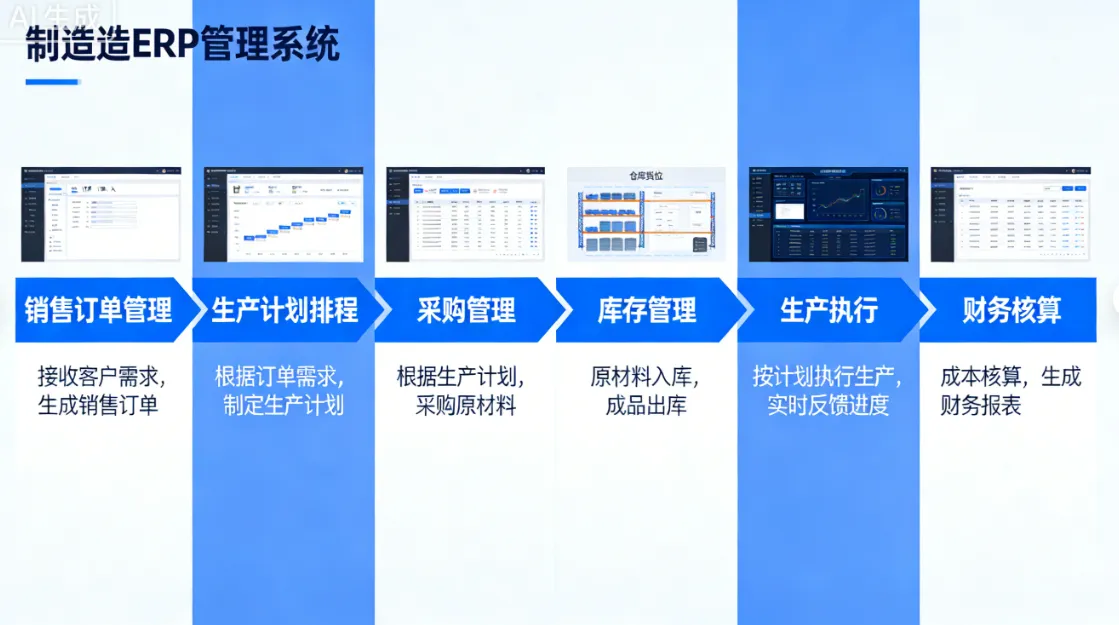
Once the plan is issued,Procurement and production execution go hand in hand, transforming digital plans into physical realityOn the procurement side, the system can automatically or assist in generating purchase orders based on the planned procurement suggestions, and send them to qualified suppliers. The subsequent arrival, quality inspection, and warehousing processes are all linked to the orders in the system, achieving full process tracking from requisition to payment. On the production side, production work orders are issued to the workshop. Through deep integration with the enterprise manufacturing execution system, work orders can be further assigned to specific machines or teams. The material warehouse prepares and distributes materials based on work orders and accurate ingredient lists, ensuring that the correct materials are delivered to the correct location at the correct time. The material requisition, work reporting, and quality inspection data during the production process are collected in real-time and fed back to the system, making the planned progress from "estimated" to "transparent and visible".
When the product manufacturing is completed,Warehousing, shipping, and financial closed-loop work together to achieve the ultimate realization of valueAfter passing the quality inspection, the finished products are processed for storage, and the system inventory can be updated. Subsequently, generate shipping orders based on the earliest sales orders, drive logistics execution, and complete the transfer of products to customers. At this moment of physical delivery, the most essential financial integration function of the enterprise resource planning system was triggered: inventory costs were transferred from the work in progress account to finished products, and then transferred to sales costs along with shipments; Meanwhile, accounts receivable are automatically generated. From purchasing invoices to payments, from sales invoices to receipts, all business activities are synchronized and automatically converted into general ledger entries, ensuring absolute synchronization between financial data and business reality, enabling enterprises to calculate profits and costs in real-time and accurately.
However, a truly modern manufacturing enterprise resource planning process does not end here.The continuous data aggregation and analysis constitute a smart cycle of process self optimizationThe massive data generated in all stages - from order fulfillment cycle, plan achievement rate, workshop equipment efficiency, to supplier delivery rate, inventory turnover days, and product gross profit contribution - are all precipitated by the system. Through business intelligence and analytics tools, these data are transformed into insights, continuously reverse engineered and optimized for front-end planning accuracy, production efficiency, and supply chain resilience. This transforms the entire operational process from a relatively rigid execution chain to an adaptive system with learning capabilities.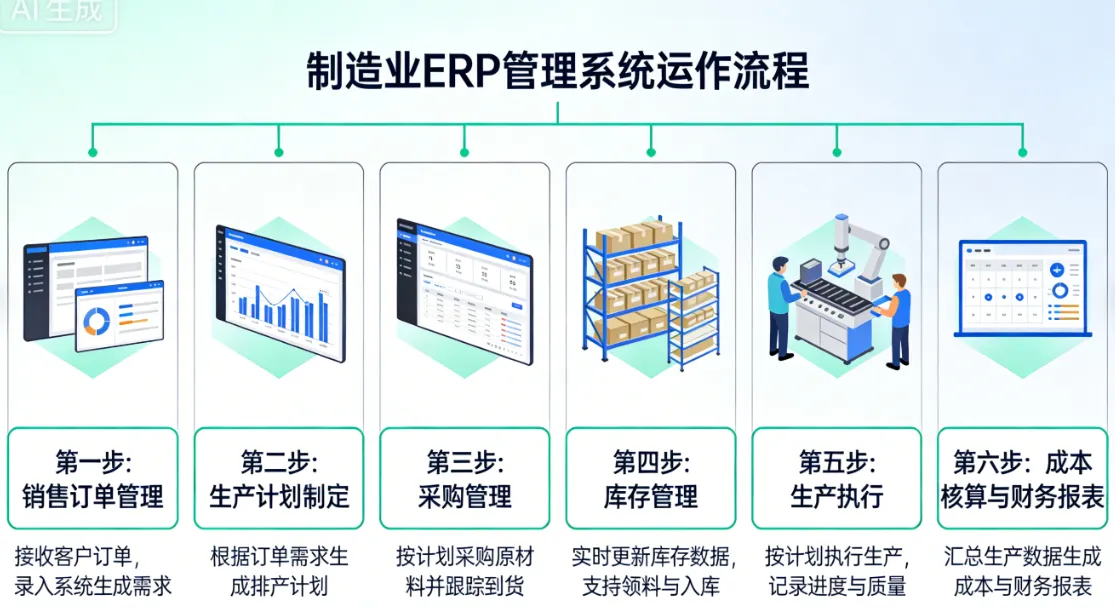
Therefore, the operational process of the manufacturing enterprise resource planning system is a dynamic value creation network that takes orders as inputs and products and financial data as outputs. It breaks down departmental walls, making sales, planning, production, procurement, warehousing, and finance no longer isolated islands, but a fleet sailing together on the river of data. By understanding this process, one can grasp the lifeline of the manufacturing industry to achieve refined and agile management through digitization, and also reveal how enterprises can build modern operational competitiveness with data-driven core, rapid response, and continuous cost reduction and efficiency improvement in the rapidly changing market.