
Manufacturing ERP system: a powerful tool for optimizing production processes, improving efficiency and quality control
In the wave of digital transformation in the manufacturing industry, standardization of production processes, maximization of efficiency, and controllability of quality are the key to breaking through development bottlenecks and enhancing core competitiveness for manufacturing enterprises. Currently, most manufacturing enterprises are facing pain points such as cumbersome production processes, poor departmental collaboration, chaotic material control, difficulty in quality traceability, and low capacity utilization. Traditional manual management and decentralized control models are no longer suitable for the needs of large-scale production and refined control, and have even become a "stumbling block" restricting the development of enterprises. As a digital management tool tailored for manufacturing enterprises, the manufacturing ERP system integrates procurement, inventory, finance, workshop, quality and other full process resources with production management as the core, realizing visual, standardized, and intelligent control of the entire production chain. It has become a core tool for optimizing production processes, improving production efficiency, and strengthening quality control, helping manufacturing enterprises transform from "extensive production" to "lean production" and achieve high-quality development.
The biggest difference between manufacturing ERP systems and general ERP systems lies in their deep integration with the production scenarios of manufacturing enterprises, focusing on the pain points and difficulties of the entire production process, incorporating every link of production management into a digital control system, breaking down information silos between departments, achieving seamless connection between production, procurement, inventory, quality and other links, optimizing production processes from the root, and reducing ineffective internal consumption. For manufacturing enterprises, the smoothness of the production process directly determines production efficiency and product quality. In traditional production models, production plans rely on manual preparation, which can lead to problems such as disconnection between plans and actual production capacity, and poor process connection; The disconnection between material procurement and inventory control can easily lead to material shortages, production shutdowns, or material backlogs that occupy funds and waste storage space; The lack of effective control in the workshop production process, opaque production progress, and difficulty in calculating process losses have seriously affected production efficiency and product qualification rate.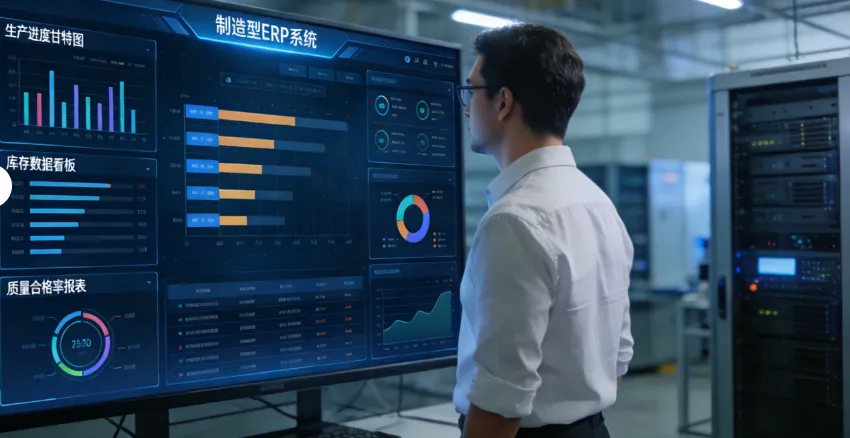
Optimizing production planning and process integration is the core lever for manufacturing ERP systems to improve production efficiency. The manufacturing ERP system relies on big data analysis and intelligent algorithms to integrate multidimensional data such as sales orders, inventory levels, production capacity, and material supply. It automatically prepares scientifically reasonable master production plans and material demand plans, completely eliminating the subjectivity and lag of manual planning. The system can break down the main production plan into specific workshop production plans and process production plans, clarifying the production tasks, production time, production personnel, required materials and equipment for each process, ensuring that the production plan is implemented layer by layer and based on evidence. At the same time, the system synchronizes the production progress of each process in real time. When there is a delay or abnormality in a certain process, an automatic warning is issued, and relevant departments are linked to adjust the production plan in a timely manner, optimize process connection, avoid production disconnection, downtime and waiting for materials, and ensure smooth and efficient production processes.
For example, after introducing a manufacturing ERP system, a certain mechanical manufacturing enterprise integrates order demand and production capacity data through the system, automatically generates monthly, weekly, and daily production plans, and accurately assigns production tasks to each workshop and position; The data linkage between processes is achieved through the system. After the previous process is completed, the relevant information is automatically synchronized to the next process. Workers can view the process requirements and production progress in real time without the need for manual transmission of documents or repeated communication. Through the optimization of production planning and process connection, the production cycle of the enterprise has been shortened by 30%, the phenomenon of downtime and waiting for materials has been reduced by 80%, and the production efficiency has been significantly improved.
Fine material and workshop control are important supports for manufacturing ERP systems to reduce costs and improve efficiency. The production process of manufacturing enterprises cannot do without a large amount of raw materials, components, and other materials. The degree of refinement in material control directly affects production efficiency and production costs. In the traditional material management model, material procurement relies on manual statistics and empirical judgment, which can easily lead to problems of excessive or insufficient procurement; The entry and exit of materials rely on manual bookkeeping, which can easily lead to discrepancies between accounts and reality, material loss, and other situations; The lack of standardized control over the use of materials in the workshop can lead to problems such as waste and misuse of materials, which can result in increased production costs and decreased production efficiency for the enterprise.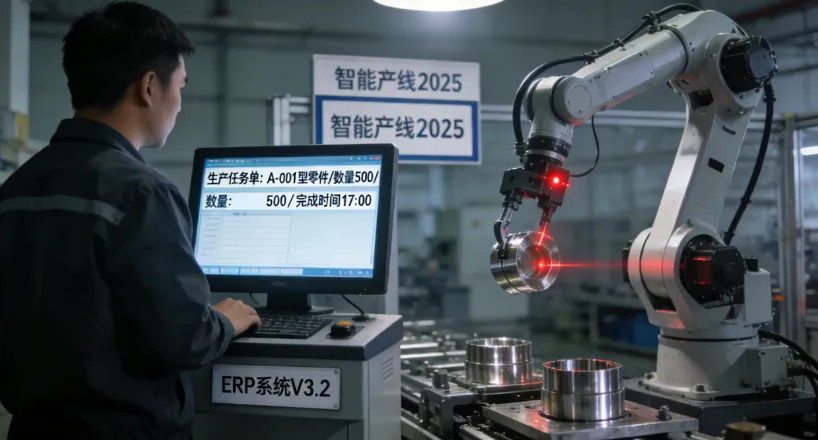
The manufacturing ERP system has built a full process material control module, achieving precise control over the entire lifecycle of materials from procurement, warehousing, storage, requisition, consumption to scrapping. The system can automatically generate a material procurement plan based on the production plan, specifying the specifications, quantity, quality requirements, and delivery cycle of the purchased materials, and linking with the procurement department to coordinate with suppliers to ensure timely, quality, and quantity supply of materials; When materials are received, relevant information is entered by scanning the code, and the system automatically generates a receipt document, updates inventory data in real time, and ensures that the accounts match the actual inventory; When storing materials, the system classifies and manages them based on their characteristics and specifications, sets inventory warning thresholds, and automatically triggers replenishment reminders when material inventory is below the warning value. When material inventory is above the warning value, management personnel are reminded to adjust the procurement plan in a timely manner to avoid material backlog; When collecting materials in the workshop, it is necessary to submit a requisition application through the system, specifying the purpose and quantity of the materials to be collected. The system automatically checks the inventory and can only be collected after approval. The requisition data is synchronized in real time to the inventory module to ensure that material consumption can be traced and controlled. At the same time, the system can provide real-time statistics on material loss, analyze the causes of loss, help enterprises optimize material usage plans, reduce material waste, and lower production costs.
Strengthening quality control and full process traceability are the core values of manufacturing ERP systems to enhance product competitiveness. For manufacturing enterprises, product quality is the lifeline of the enterprise. Only by ensuring stable product quality can they win market recognition and enhance brand influence. In the traditional quality control mode, quality inspection relies on manual operation, which is prone to problems such as inconsistent inspection standards and large inspection errors; After the occurrence of quality problems, it is difficult to trace the root cause of the problem and rectify it in a timely manner, resulting in the recurrence of similar quality problems and affecting the product qualification rate and corporate reputation.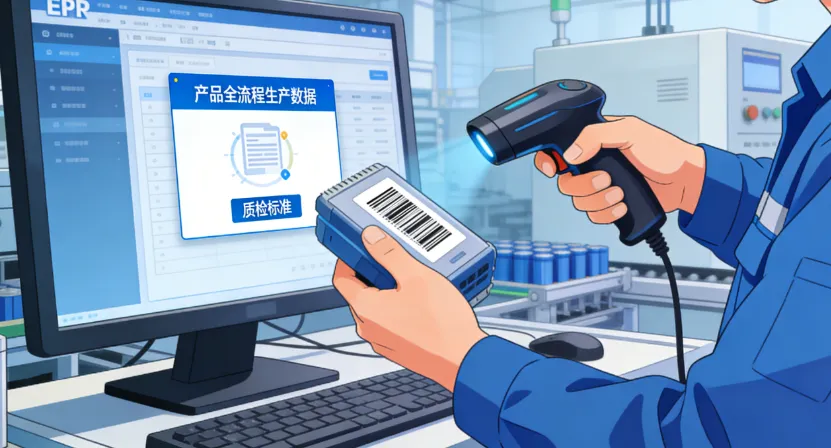
The manufacturing ERP system integrates quality control into the entire production process, building a comprehensive quality control system from raw material inspection, process inspection to finished product inspection, achieving standardization, normalization, and traceability of quality testing. In the raw material inspection process, the system requires that purchased materials must undergo inspection. The inspection personnel will enter the inspection results into the system, and only qualified materials can be stored. Unqualified materials will be linked to the procurement department for return and exchange processing, controlling product quality from the source; In the process inspection stage, the system sets quality inspection standards and inspection nodes for each process. After completing a process, workers need to submit an inspection application, and inspectors need to complete the inspection according to the standards. Only after passing the inspection can they enter the next process. If it is not qualified, it needs to be reworked and rectified. The system automatically records the rework situation and rectification results; In the finished product inspection process, the system conducts a comprehensive inspection of the finished products, records the inspection data and qualification status, and only qualified products can be stored or released. Unqualified products will be repaired or scrapped.
More importantly, the manufacturing ERP system realizes the full process traceability function of product quality. Each product has a unique traceability code, which allows real-time querying of raw material procurement information, production process information, quality inspection information, production personnel information, equipment operation information, etc. When a product has quality problems, management personnel can quickly trace the root cause of the problem through the system, clarify the responsible party, and promptly formulate corrective measures to avoid the recurrence of similar quality problems. At the same time, the system can automatically calculate data such as product qualification rate, quality problem types, and quality problem occurrence rate, generate quality analysis reports, help enterprises analyze weak links in quality control, optimize quality control plans, and continuously improve product qualification rate.
In addition to core production process optimization, efficiency improvement, and quality control functions, manufacturing ERP systems also integrate supporting modules such as financial control, equipment management, and personnel management, forming a comprehensive and integrated manufacturing enterprise management system. The equipment management module can achieve equipment ledger management, maintenance plan formulation, equipment operation status monitoring, timely remind management personnel to carry out equipment maintenance, reduce equipment failure downtime, and improve equipment utilization; The personnel management module can record the job responsibilities, work progress, performance evaluation, and other information of production personnel, providing a basis for personnel deployment and performance evaluation, and enhancing team execution; The financial control module can automatically connect with production, procurement, inventory and other links, generate financial vouchers, cost reports, profit reports, etc., to help enterprises accurately calculate production costs, control financial risks, and achieve cost reduction and efficiency improvement.
Currently, the competition in the manufacturing industry is becoming increasingly fierce, with severe homogenization competition, rising production costs, and changing market demand. Digital transformation has become an inevitable choice for the survival and development of manufacturing enterprises. As the core tool for digital transformation of manufacturing enterprises, the manufacturing ERP system not only solves the pain points of cumbersome processes, poor collaboration, and difficult quality control in traditional production management, but also helps enterprises optimize production processes, improve production efficiency, strengthen product quality, and reduce production costs. It promotes the transformation of enterprises from "extensive production" to "lean production" and from "experience management" to "data management".
Whether it is a small or medium-sized manufacturing enterprise, or a large manufacturing enterprise, a manufacturing ERP system can flexibly adapt and adjust according to the production scale, product type, and management needs of the enterprise, meeting the personalized needs of different manufacturing enterprises. For small and medium-sized manufacturing enterprises, the system can help them quickly standardize production processes, improve management efficiency, and get rid of the dilemma of manual management; For large manufacturing enterprises, the system can achieve collaborative management of multiple workshops, production lines, and product categories, supporting large-scale and refined production and enhancing core competitiveness. In the future, with the continuous iteration of technologies such as artificial intelligence, big data, and the Internet of Things, manufacturing ERP systems will continue to optimize and upgrade, incorporating more intelligent functions such as intelligent production scheduling, equipment failure prediction, quality problem warning, etc., providing manufacturing enterprises with more comprehensive and intelligent management solutions, helping them achieve higher quality development, and stand firm in the fierce market competition.