
Empowering OA/ERP+AI with Agents, Leading the Digital Transformation of Enterprises
Today, as enterprises enter the "deep water zone" of digital transformation, core business systems represented by OA (Office Automation) and ERP (Enterprise Resource Planning) are facing a paradigm revolution triggered by generative artificial intelligence. In the past, the application of AI in these systems was mostly manifested as isolated functional enhancements, such as intelligent form filling, report generation, or simple Q&A. However, a more disruptive force is emerging——AI AgentIt is not a single tool, but a 'digital employee' with autonomous perception, planning, decision-making, and execution capabilities. When AI agents are deeply integrated with OA/ERP systems, they will no longer just "assist" human work, but will be able toProactively drive and restructure business processesLeading enterprises from "process automation" to a new stage of transformation towards "operational intelligence".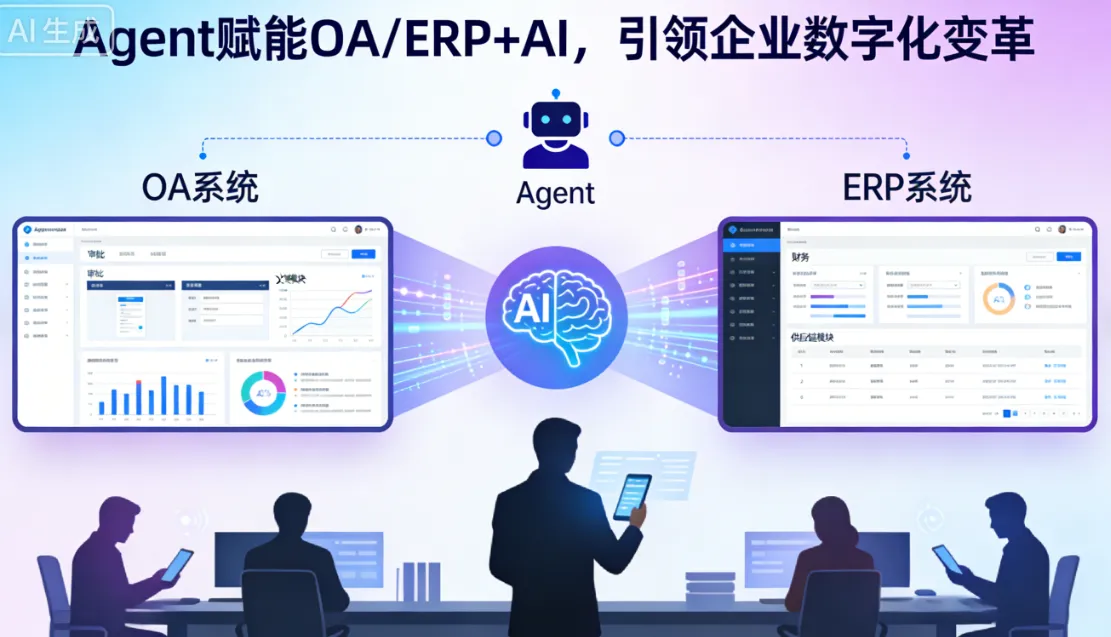
The core revolution of AI intelligent agents lies in their ability to empower systems with "goal oriented" autonomous actions.The traditional OA/ERP automation is based on a "if then" response with pre-set rules. AI agents, on the other hand, can understand higher-level business objectives and autonomously break them down into a series of tasks, dynamically coordinating internal and external resources to complete them. For example, in procurement scenarios, traditional automation may automatically generate purchase requests when inventory falls below a threshold. And onePurchasing intelligent agentsAfter receiving the goal of "ensuring stable material supply for a key production line in the next two weeks", it will proactively perform a series of complex operations: it first analyzes the production plan and current inventory in ERP, predicts accurate material requirements; Subsequently, automatically log in to the supplier portal or query real-time prices, inventory, and delivery times of multiple suppliers through APIs; Furthermore, it can compare the internal approval policies and contract terms of the enterprise, generate procurement proposal suggestions that include the optimal choices, and even initiate the approval process directly; After order confirmation, it can continue to track the logistics status and provide early warning of any delay risks. The entire process spans across the approval process of OA, the inventory and production modules of ERP, as well as external networks, forming aclosed-loop autonomyHuman employees only need to supervise or handle exceptions at critical nodes.
In the field of OA, AI agents are evolving from "process assistants" to "personal work collaborators and organizational efficiency catalysts".The future OA entrance may no longer be an interface filled with to-do lists, but a conversational workspace driven by personal exclusive intelligent agents. Employees can issue complex instructions such as' preparing for next quarter's product launch 'like having a conversation with a senior assistant. Personal intelligence experience automatically decomposes tasks: book meeting rooms in OA and coordinate participant schedules, query inventory and cost data of related products through ERP to prepare materials, automatically draft project plans and budget requests, track the completion status of various tasks, and proactively remind relevant personnel. It can not only handle structured processes, but also understand unstructured information in emails, documents, and meeting minutes, achieving automatic association and push of knowledge. Furthermore, multiple intelligent agents within the organization can work collaboratively. When a "financial compliance intelligent agent" discovers an abnormal expense in the OA process, it can actively communicate and verify with the "project manager intelligent agent" of the relevant project, solve the problem in its infancy, and thus improve the overall coordination efficiency and risk control of the organization.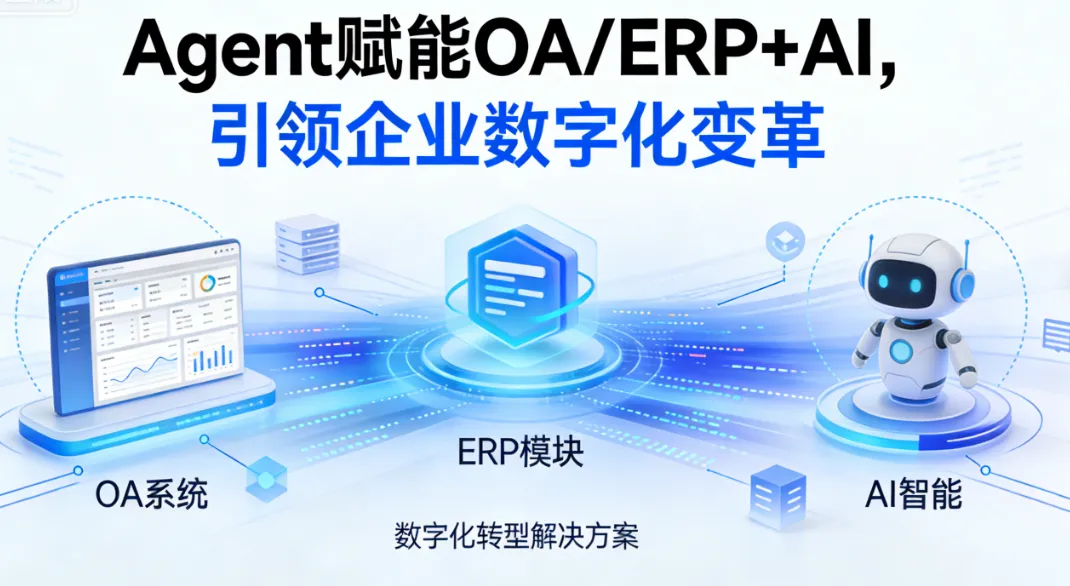
For ERP systems, the empowerment of AI agents will drive their transformation from an "enterprise resource recording system" to an "enterprise resource optimization and scheduling system".ERP has accumulated the most core and coherent business data of enterprises, which provides perfect fuel for the deep analysis and decision-making of intelligent agents. oneSupply chain resilience intelligent agentIt can monitor global news, weather, and shipping data 24/7, combined with real-time order and inventory information in ERP, predict and simulate potential supply chain interruption risks, and proactively generate multiple response plans (such as switching backup suppliers, adjusting transportation routes, and activating safety stock). oneDynamic Pricing and Profit Optimization Intelligent AgentBy comprehensively analyzing cost data, historical transactions, market demand fluctuations, and competitor dynamics in ERP, real-time pricing recommendations can be provided for products in different regions and channels, directly optimizing enterprise profits. These agents changed ERP from a "rearview mirror" that records history to a "navigator" and "auto drive system" that predict the future and self tune.
Therefore, the "OA/ERP+AI" empowered by agents marks the opening of a new digital paradigm. The core of enterprise competition will not only be having data and processes, but also having the ability to efficiently utilize these data and processesIntelligent agent "population" and its collaborative abilityThese digital employees, as powerful extensions of human employees, will undertake massive repetitive, complex analysis and cross system coordination work, thereby unleashing enormous creativity and strategic thinking space. This transformation requires companies to rethink their system architecture, build platforms that support the operation and evolution of intelligent agents, and cultivate a human-machine collaborative culture that is compatible with them. It can be foreseen that those enterprises that successfully deploy and control the army of intelligent agents will establish intergenerational advantages in efficiency, innovation, and agility, truly leading the next wave of digital transformation.