
Four major innovations in ERP systems for 2024: Avantra 25 AI automation, QAD intelligent scheduling, NetSuite payroll upgrade, and MADE 2 MANAGE. NET migration, helping enterprises optimize management efficiency
The evolution of ERP systems has always resonated with the wave of technology, and industry innovation in 2024 is responding to the core demands of enterprise management with unprecedented precision. Today, as digital transformation enters the deep waters, the four representative innovative cases are reshaping the capability boundaries of ERP systems from different dimensions, jointly depicting a new landscape of optimizing enterprise management efficiency in the era of intelligence.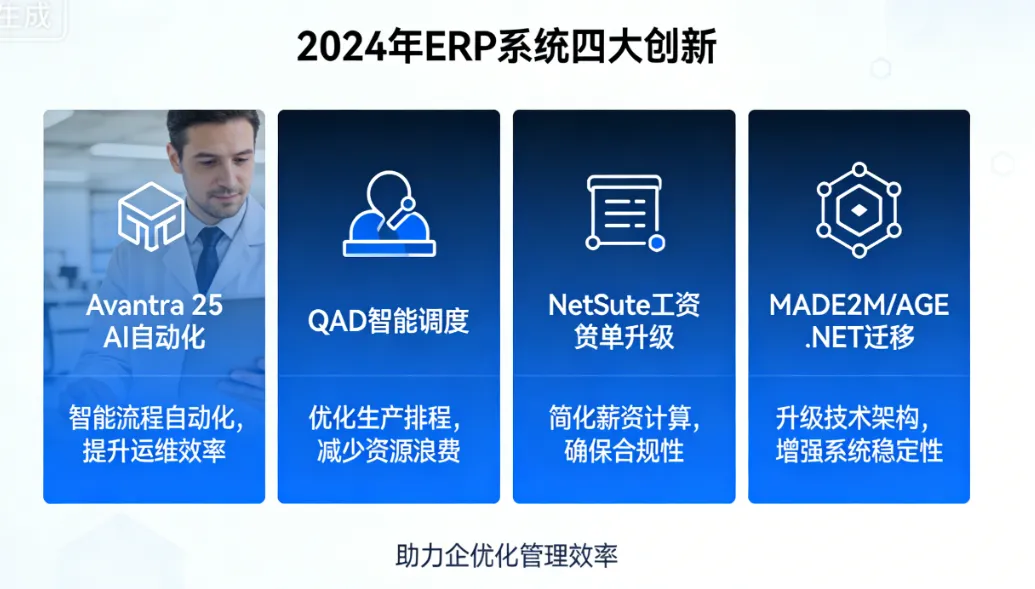
The AI automation architecture of Avantra 25 has brought disruptive changes to enterprise system operations. This innovation deeply integrates artificial intelligence into the daily operation of ERP, surpassing traditional rule-based automation operations. The core breakthrough lies in the construction of a system monitoring system that can autonomously learn and predict. By continuously analyzing massive log data and performance indicators, AI models can not only identify abnormal patterns in real time, but also predict potential system bottlenecks and risk points. In the practical application of multinational manufacturing enterprises, this system successfully predicted the database performance degradation of the supply chain module, started the optimization program 72 hours in advance, and avoided system interruptions that may affect global production plans. More noteworthy is that the intelligent agent of Avantra 25 can automatically adjust system resource allocation based on business priorities, dynamically increase the computing resources of the financial module during the month end settlement period, and prioritize the response speed of the manufacturing execution system during peak production periods. This automated management with situational awareness capability upgrades IT operations from passive response to proactive governance, significantly reducing system downtime and management costs.
The QAD intelligent scheduling solution has revolutionized the production management mode in the discrete manufacturing industry. This innovation deeply integrates operations research algorithms with real-time IoT data, creating a production scheduling engine with adaptive capabilities. The production scheduling in traditional ERP is often based on static parameters and linear assumptions, while intelligent scheduling systems can receive real-time multi-source data streams from equipment sensors, quality inspection points, and supply chain systems, and re optimize the entire production sequence every five minutes. When a CNC machine tool suddenly experiences tool wear, the system can rearrange the affected process within 45 seconds, synchronously adjust the relevant material distribution plan, and minimize delivery delays. More ingeniously, the system introduces digital twin technology, which can simulate the impact of different scheduling strategies on energy consumption, equipment utilization, and delivery cycles in a virtual environment, providing multi-dimensional decision support for production managers. This dynamic scheduling capability enables manufacturing enterprises to calmly respond to uncertain events such as emergency order insertion and equipment failures, elevating production flexibility and operational efficiency to new heights.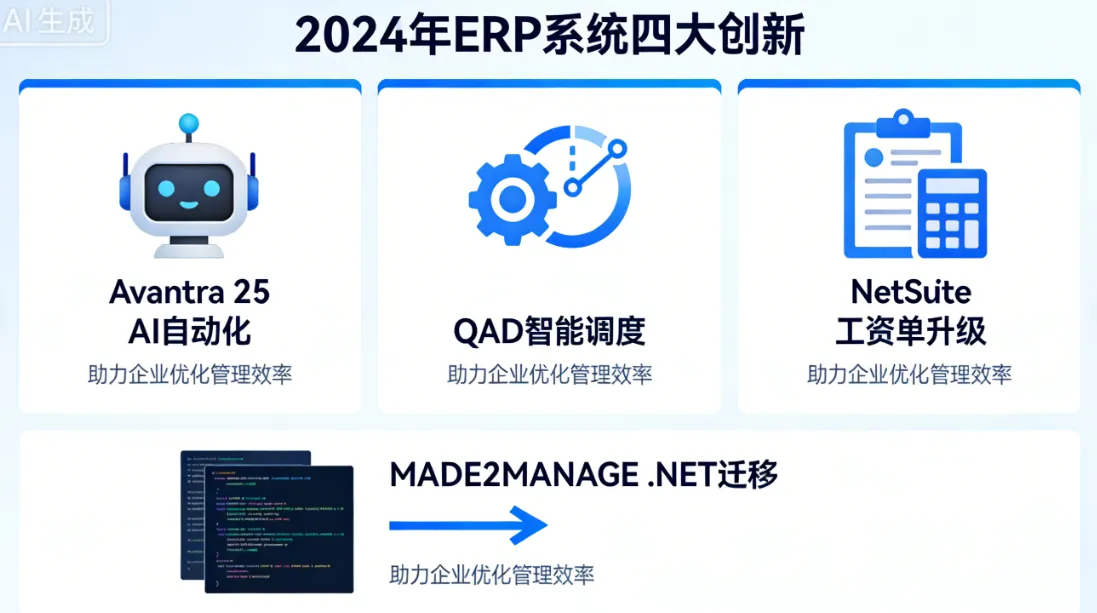
The NetSuite payroll upgrade feature demonstrates the deepening and expansion of cloud ERP in vertical fields. This upgrade is not simply a functional enhancement, but rather the construction of an intelligent ecosystem covering global salary management. The system integrates tax laws and social security policies from 136 countries and regions, and can automatically process cross-border employee salary calculations, tax declarations, and currency exchanges. In the actual deployment of multinational technology enterprises, the system successfully processed salary payments for employees distributed in 23 countries and automatically adapted to tax law changes implemented in 5 of these countries during the quarter. The innovation lies in the deep correlation between salary data and talent management module, providing quantitative basis for human resource strategy by analyzing the hidden relationship between salary structure, performance, and turnover rate. The system can also detect abnormal salary patterns and automatically alert potential compliance risks. The organic combination of global localization capability and data analysis enables enterprises to establish a standardized and dynamic global compensation system, while controlling labor costs and improving employee satisfaction.
MADE 2 MANAGE The migration project of NET interprets the modernization transformation path of traditional ERP systems. The restructuring of the technical architecture this time is not a simple platform transfer, but rather the deconstruction of the original system functions into microservice components Realize rebirth in the NET ecosystem. During the migration process, validated business logic was retained, while the design concepts of containerized deployment and API priority were introduced, enabling the system to maintain business continuity and achieve the agility of cloud native applications. After the migration of medium-sized manufacturing enterprises, the system response speed has increased threefold and the customized development cycle has been shortened by 60%. Of particular note is that the new architecture has opened up 47 standardized API interfaces, facilitating the integration of intelligent equipment and third-party SaaS applications for enterprises, forming a scalable digital ecosystem. This gradual modernization path provides feasible solutions for a large number of enterprises running traditional ERP, gradually gaining the advantages of modern technology architecture while ensuring the stable operation of core business.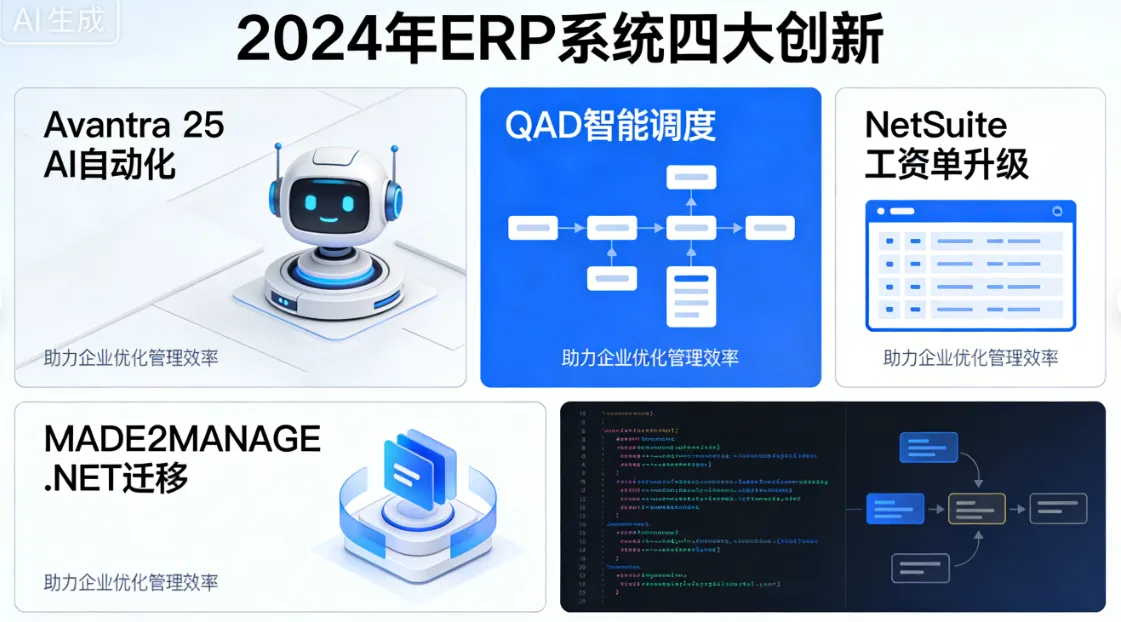
These innovative practices collectively point to a new paradigm of ERP system development: from process automation to intelligent decision support, from system integration to ecological interconnection, and from functional implementation to value creation. They do not exist in isolation, but are mutually reinforcing technological trends - artificial intelligence is becoming the nerve center of ERP systems, real-time data processing capabilities redefine business response speed, vertical fields deepen and expand system value boundaries, and modern architecture lays the foundation for continuous innovation. During the critical period of digital transformation, these innovations provide tangible upgrade paths for enterprises, helping organizations build sustainable competitive advantages in complex economic environments by improving management accuracy, response speed, and adaptability.