
Value Analysis of ERP Implementation in Footwear Industry | Data Integration, Efficiency Improvement, Decision Optimization - Shuntong Footwear ERP
In today's increasingly competitive footwear manufacturing industry, enterprises are facing multiple pressures such as rapid changes in market demand, shortened product lifecycles, and continuously rising production costs. The traditional management model relies on manual operations and decentralized systems, with poor information flow and decision-making relying on experience, making it difficult to meet the needs of modern production. As a solution specifically designed for the characteristics of the footwear manufacturing industry, the Shuntong Footwear ERP system creates significant value in three dimensions: data integration, efficiency improvement, and decision optimization, by systematically integrating core resources and business processes of the enterprise. It helps footwear companies to steadily move forward on the path of digital transformation.
Data integration: breaking down information silos and building a unified data view
One of the root causes of the complexity of shoe manufacturing enterprise management is the highly fragmented data. The sales department holds customer orders, the production department understands workshop progress, the procurement department is responsible for material supply, and the finance department performs cost accounting - these key data are often stored in different spreadsheets or isolated systems, forming insurmountable information barriers. The primary value of Shuntong Footwear ERP system lies in building an enterprise level unified data platform, integrating all core business data into a single, trusted data source.
The system establishes unique digital identities and complete attribute files for materials, products, customers, suppliers, etc. through standardized basic data management. After a new shoe model's material list is created, the relevant information will be synchronized in real-time to the procurement, production, inventory, and finance modules to ensure that all departments use completely consistent product data and material information. This data integration has completely changed the previous situation of inconsistent data and high communication costs among departments. After implementing Shuntong ERP, a medium-sized shoe company unified the management of data that was originally scattered in seven independent systems, reducing cross departmental data verification time by 80% and reducing report generation time from a few days to real-time availability, significantly improving operational transparency.
The deeper value lies in the fact that the integrated data can reveal business patterns that are difficult to discover under traditional models through correlation analysis. For example, the system can analyze the correlation between material consumption and yield of different shoe types, identify key factors that affect costs; It can track the chain impact of customer order changes on production planning and material procurement, and provide early warning of potential risks. This transition from data silos to data connectivity has laid a solid foundation for refined management and continuous improvement in enterprises.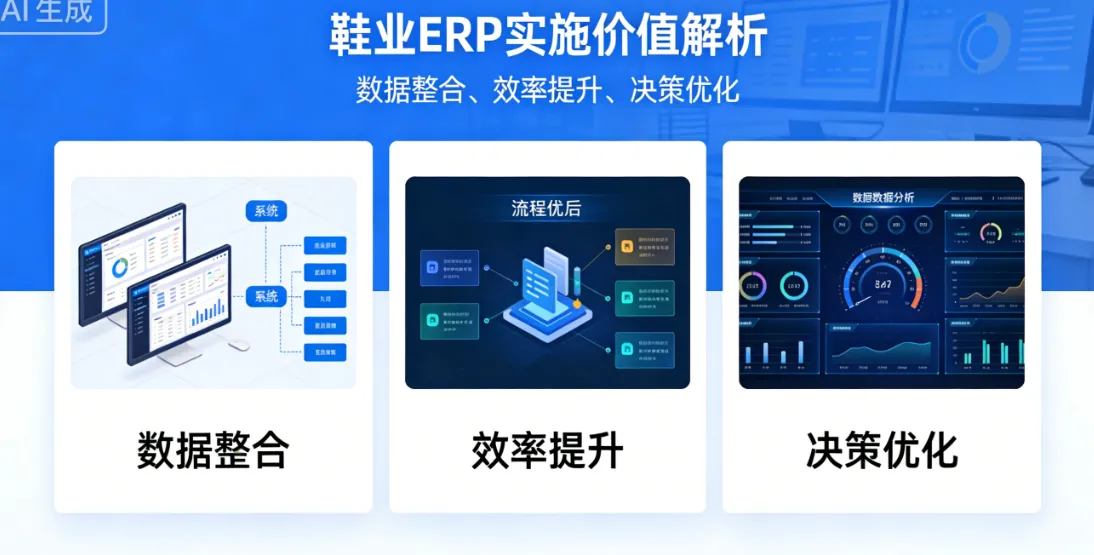
Efficiency improvement: Optimize core processes and unleash operational potential
Efficiency is the lifeline of manufacturing enterprises, and the Shuntong Footwear ERP system significantly improves operational efficiency in multiple dimensions through process automation and resource optimization. In the order processing stage, the system automates the traditional manual process, seamlessly connecting the entire process from order entry, technical review, material calculation to production scheduling. After sales personnel enter orders containing complex attributes such as style, color, size, etc. into the system, the system automatically checks material availability and production capacity, confirms delivery time in real time, and synchronously generates production instructions and procurement requirements, shortening the order processing cycle by an average of more than 50%.
The improvement in production and manufacturing efficiency is particularly significant. The system uses advanced scheduling functions to comprehensively consider order priority, material supply, equipment capacity, and personnel skills, generating the optimal production plan to minimize equipment waiting time and switching times. Integration with the workshop execution system enables real-time collection and monitoring of production progress, material consumption, and quality data, allowing management personnel to quickly respond to production anomalies and reduce downtime. After a certain sports shoe manufacturing enterprise applied Shuntong ERP, the comprehensive utilization rate of equipment increased by 25%, the on-time delivery rate of orders increased from 78% to 95%, the inventory of work in progress decreased by 30%, and the overall operational efficiency achieved a qualitative leap.
The efficiency of supply chain collaboration has also been significantly improved. The system achieves predictive sharing and order collaboration with key suppliers through the supplier portal and electronic data exchange, reducing purchase order processing time by 60% while improving the accuracy and timeliness of material supply. In terms of inventory management, the system is based on demand forecasting and safety stock models, intelligently optimizing inventory levels to reduce capital occupation while ensuring production continuity. These efficiency improvements directly translate into cost savings and improved customer service levels, enhancing the company's market competitiveness.
Decision optimization: data-driven insights empower scientific management
In the rapidly changing market environment, the speed and quality of decision-making directly affect the development of enterprises. The Shuntong Footwear ERP system upgrades enterprise management from experience driven to data-driven by providing comprehensive, accurate, and timely operational data and analysis tools, achieving systematic optimization of the decision-making process.
The built-in business intelligence module of the system transforms dispersed business data into intuitive management insights. Through pre configured analysis models and customizable dashboards, managers can grasp key performance indicators in real-time, such as sales trends, production efficiency, inventory turnover, cost composition, and customer profitability. These real-time data enable managers to quickly identify operational bottlenecks and market opportunities, and make timely responses. For example, by analyzing sales data and profit contributions of various shoe types, companies can optimize their product portfolio and focus on high-value products; By tracking fluctuations in raw material prices and supplier performance, more cost-effective procurement strategies can be developed.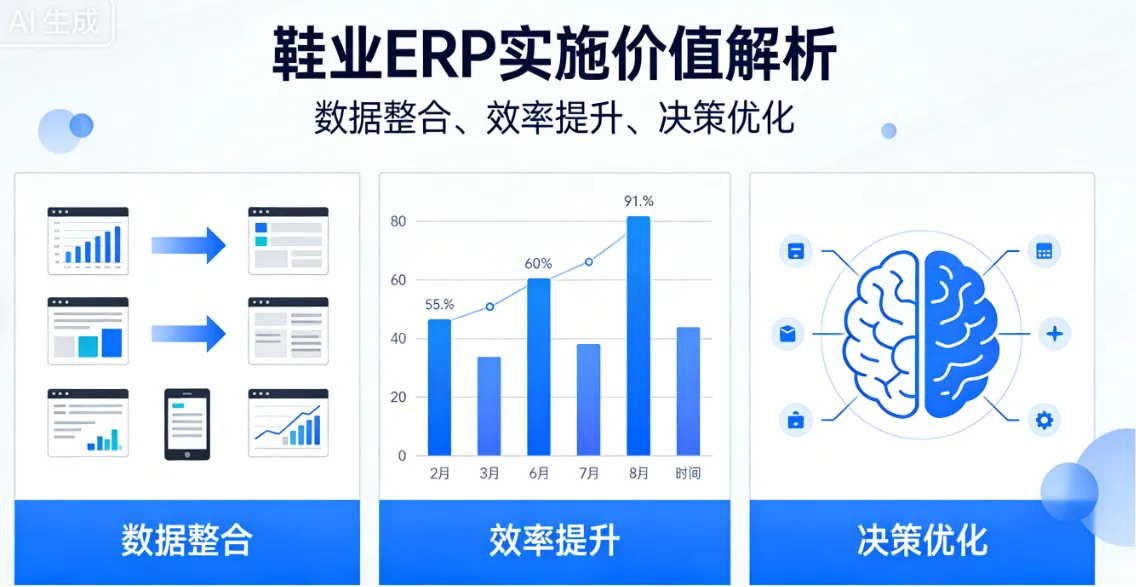
The ability to predict and plan is an advanced manifestation of decision optimization. Based on historical data and market intelligence, the system constructs a demand forecasting model to help enterprises more accurately predict future sales trends, providing scientific basis for production planning, material procurement, and capacity planning. The cost simulation function allows enterprises to estimate the cost impact of different configurations during the product design phase, supporting value engineering analysis. A certain leather shoe manufacturing enterprise used the predictive analysis of Shuntong ERP to improve the accuracy of sales forecasting by 35%, making seasonal inventory preparation more accurate and reducing out of season inventory by 40%.
Strategic decision-making also benefits from data support. The multi-dimensional profitability analysis provided by the system helps enterprises identify the most valuable customer groups and sales channels, and optimize resource investment. Supply chain risk analysis helps companies assess supplier stability and material availability, and develop risk mitigation plans. These deep insights based on data make business decisions more scientific and accurate, reducing blindness and uncertainty.
The continuous path of value realization
The value realization of Shuntong Footwear ERP system is not a one-time process, but a continuous accumulation and deepening process. In the initial stage of system launch, the value is mainly reflected in the transparency brought by data integration and the efficiency improved by process automation. As usage deepens, the accumulated data assets and optimized processes will bring deeper decision-making optimization and business innovation opportunities to enterprises.
Enterprises can continuously track the realization of value through the system, regularly evaluate the improvement of key performance indicators, and continuously expand the application scope of the system according to business development needs. From core order production management to broader areas such as product lifecycle management, supply chain collaboration, and omni channel retail support, ERP systems will gradually become the core platform for enterprise digital operations.
During the critical period of transformation and upgrading in the footwear manufacturing industry, the Shuntong Footwear ERP system not only provides a set of software tools, but also a systematic management method and digital transformation path. Through value creation in three dimensions of data integration, efficiency improvement, and decision optimization, the system helps shoe companies build operational capabilities and competitive barriers to adapt to rapidly changing market environments, and wins sustainable development advantages for enterprises in increasingly fierce market competition. When data becomes the new production factor, efficiency becomes the core competitiveness, and decision quality determines the development height, investing in and making good use of professional shoe ERP systems has become a wise choice and inevitable path for modern shoe enterprises to move towards high-quality development.